New city arts leader Gretchen Hollrah took one for the team | John Moore
An unforced error by Denver mayor ironically ends with a fully qualified leader for Denver Arts & Venues


If Denver’s new mayor hands out an award for taking one for the team, its namesake should be Gretchen Hollrah. Because she just helped save Mike Johnston’s bacon.
On Tuesday, Hollrah accepted Johnston’s appointment as Executive Director of the city’s vital department of Arts & Venues. Which was a 360-degree head-turner, given that, in August, Johnston named Hollrah one of his two Deputy Chief Operating Officers. She will retain that lofty title, but now she’s essentially working double-duty for the next four years. Which is kind of crazy. Why would she ever agree to it?
“That’s a great question, and one I’ve been asked a lot over the past couple of days,” Hollrah told the Denver Gazette.

It was also curious given that Hollrah was not among the three official – and four unofficial – finalists for the job. And why should she have been? She was already a Deputy COO of the entire city. But, because Hollrah did say yes, Johnston, ironically, has somehow ended up with the best person for the job not named Ginger White Brunetti – Hollrah’s highly accomplished and shabbily discarded predecessor.
Hollrah’s appointment will surely go a long way toward restoring some faith and credibility in the mayor’s office, both among city employees and key city partners. But this was, as they say in tennis parlance, an unforced error on the mayor’s part – one that ended with a lucky bounce.
This all went south in September when Johnston sparked a bonfire of the vanities by informing White Brunetti that she would not be retained as Executive Director of Arts & Venues.
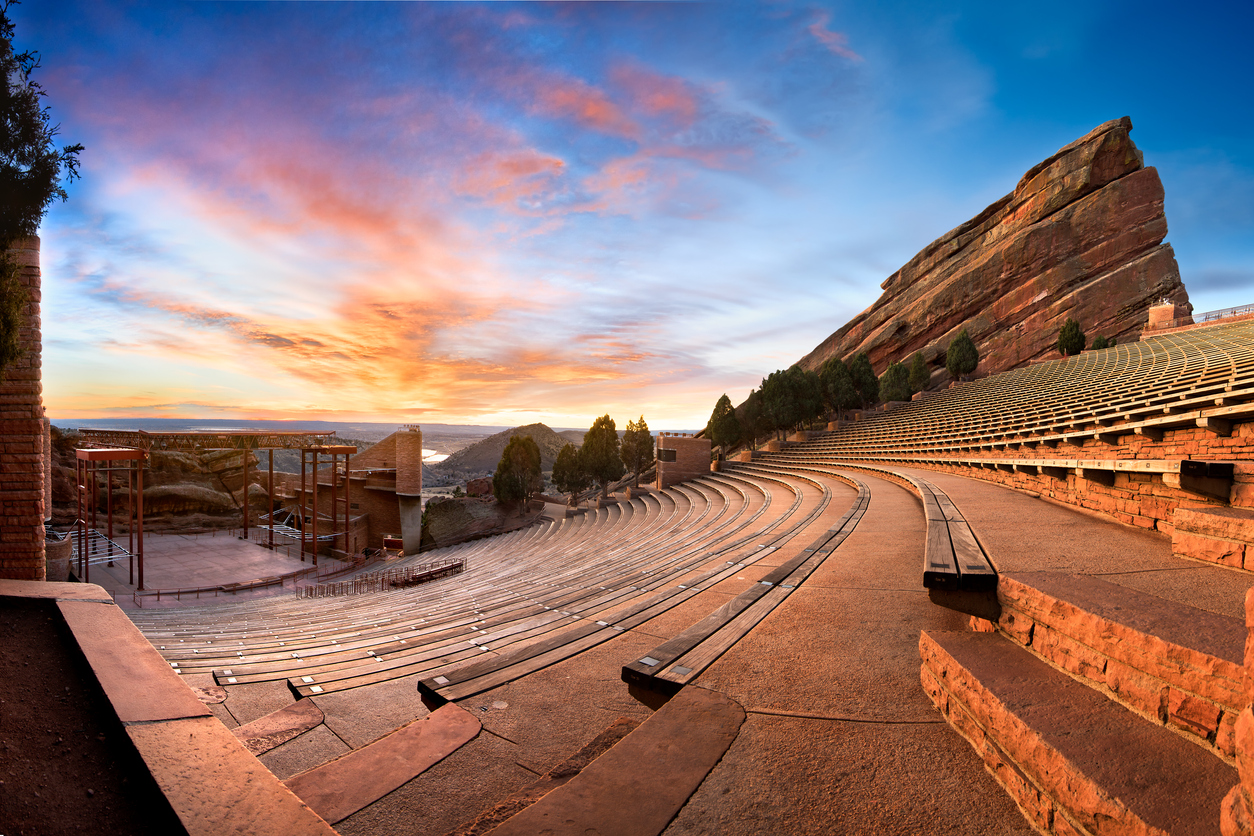
What’s that? Among other things, Arts & Venues manages city-owned venues including Red Rocks, the Denver Coliseum, the Colorado Convention Center, the Denver Performing Arts Complex and the McNichols Civic Center Building. We’re talking $90 million in annual revenue and attendance of nearly 3 million people a year. Arts & Venues also oversees the city’s public-art program, runs its own events like the Five Points Jazz Festival and implements Denver’s overall cultural strategy plan. At present, it is additionally tasked with raising $20 million to push the voter-approved reopening of the May Bonfils Stanton Theater on the former Loretto Heights College campus over the finish line.
All of which, but every account, was being capably managed by White Brunetti, who had 18 years of experience in the department over several mayoral administrations.
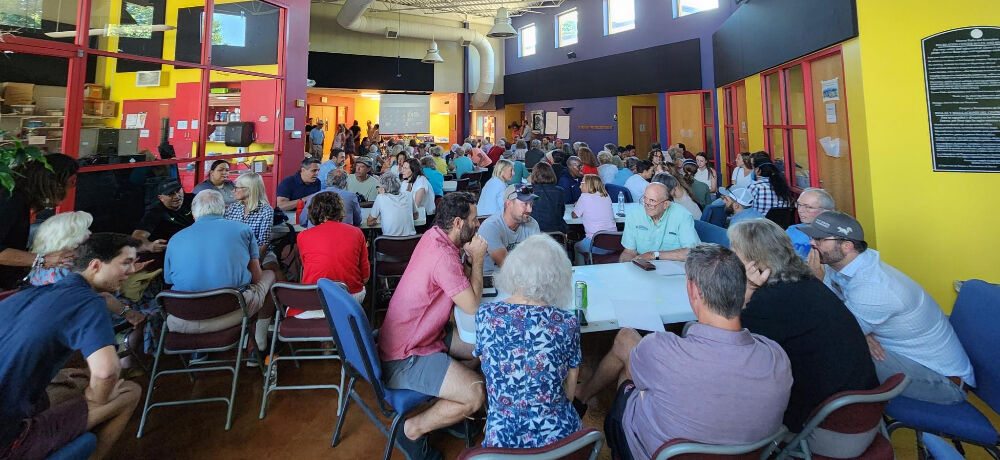
But this story really starts back with the July election, when the mayor-elect made a grandiose promise to put every significant city leadership position through a reapplication process that would involve 28 public task forces he collectively called “Vibrant Denver.” That sounded like a good idea for transparency and fresh starts and all, but was it fully necessary? It’s not exactly like Johnston’s election was a referendum against outgoing Mayor Michael Hancock – and certainly not against the well-oiled department of Arts & Venues. After all, nearly 90% of everyone who voted in the (nonpartisan) mayoral primary voted for a Democrat.
But the new mayor set out to fix something that wasn’t broke – and nearly broke it.
The Arts and Venues search committee, co-chaired by Museum of Contemporary Art Denver Director Nora Abrams and Colorado Music Ambassador Stephen Brackett, included 22 big-shot arts leaders like Bonfils Stanton Foundation President and CEO Gary Steuer; University of Colorado Foundation President (and former Arts & Venues leader) Jack Finlaw; and pioneering Denver Public Schools administrator Dr. Patty Baca. There were interviews and public forums. Hundreds of people gave input that was, in the end, fully disregarded by the mayor.
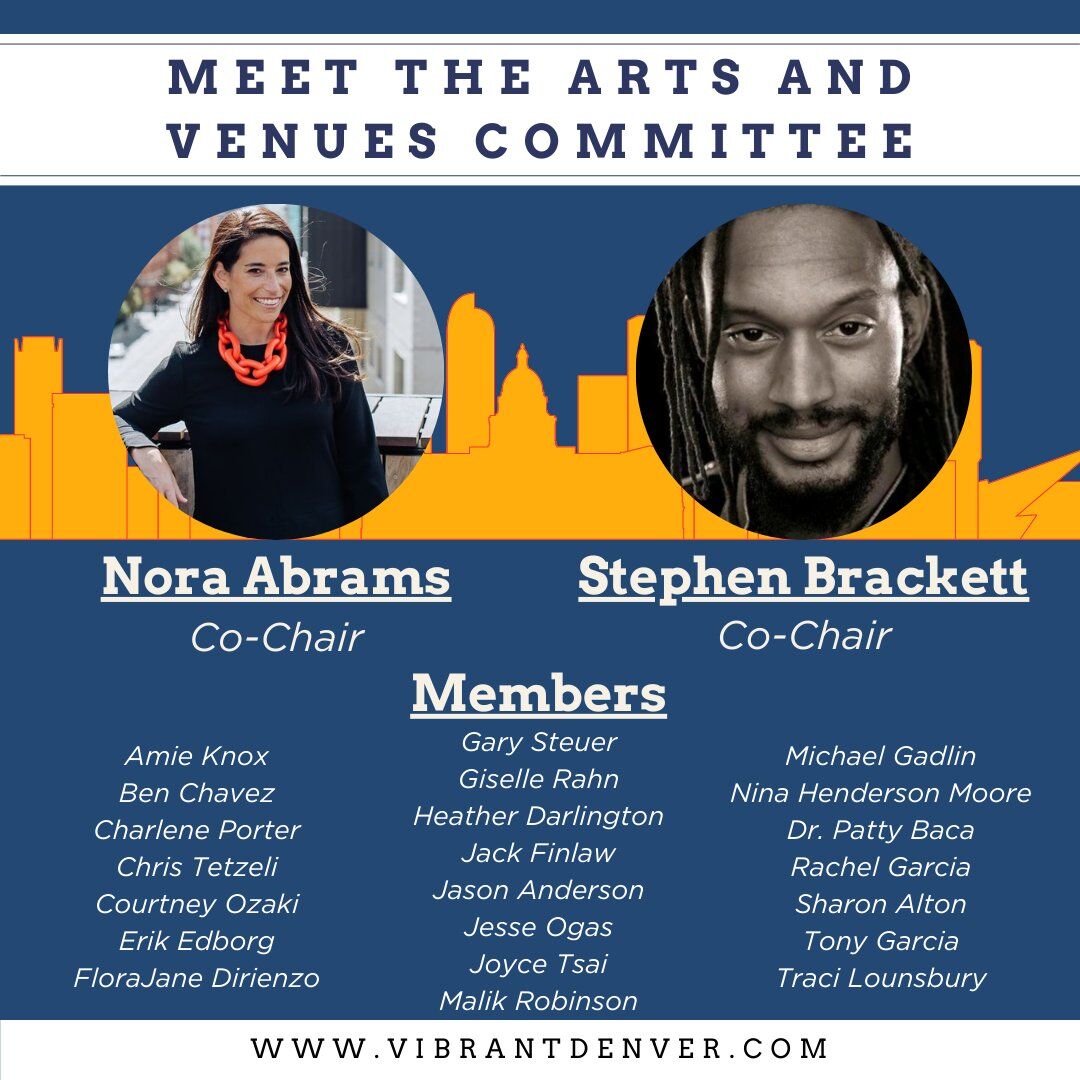
The committee had been tasked with recommending three finalists for Johnston to interview, and they did. One was White Brunetti, who was told on Sept. 28 that the mayor would be going in a different direction for the job, and she was out.
Reaction was swift, and it was brutal – really the mayor’s first significant sting of negative publicity. “Mayor Johnston can show true leadership by admitting he made a very bad decision and put White Brunetti back in a position she has led with integrity and a vision,” the Rev. Butch Montoya, Executive Director of the National Latino Faith Initiative and Denver’s deputy mayor under Wellington Webb from 1996-2000, wrote in an open letter to the mayor. City council members past (Susan Barnes-Gelt) and present (Kevin Flynn) were among many others also calling for Johnston to reconsider.
Not only was that not going to happen, it soon became clear the job was not going to go to the task force’s other two finalists, either – which is as close to an admission you’re going to get that 1. It was a bad decision to jettison White Brunetti, and 2. The task force was a complete waste of time.
So what of this unofficial fourth finalist? Speculation was rampant that the mayor would go off-script and offer the job to Democratic State Rep. Leslie Herod, who threw her support Johnston’s way after she lost in the primary and was quickly named to his transition team. But the past three directors of Arts & Venues have been urban planners by trade and education – and, despite her many accomplishments, Herod is not. Handing her the job might have looked like total political payback. Like when Al Gardner, another former mayoral rival, was named co-chair of Johnston’s General Services transition team in May – and five months later was named its new Executive Director.
I asked Herod straight out if she had either an interest in the job, or any expectation of getting it.
“While I am supportive of the mayor, and I appreciated the opportunity to lead his inauguration committee, I am committed to finishing my term in the legislature,” Herod said. “With so many rumors running around, hopefully this will start to put them to rest.”

Flynn’s biggest concern was the future of the Loretto Heights project, which is the city’s largest investment in southwest Denver in its history. Flynn urged the mayor to find a qualified replacement who knows how to oversee the development of a large capital project – and, in the end, that’s exactly what he did.
Hollrah worked in the Hancock administration as Executive Director of the Mayor’s Office of the National Western Center. There, she was responsible for overseeing strategic planning, general operations and construction efforts for the $765 million redevelopment that will eventually double the size of the 250-acre National Western Stock Show Complex. She had previously served simultaneously as both the city’s Deputy Chief Financial Officer and Denver Chief Projects Officer. In 2019, she became Chief Operating Officer of the Denver Center for the Performing Arts, a job that reunited her with Hancock’s former Chief of Staff, Denver Center President and CEO Janice Sinden – who is a big fan.
“Gretchen is exceptionally equipped to understand both the demands of a city agency as well as the needs of venue operations,” Sinden said. “Her experience makes her uniquely suited for the opportunity before her to elevate, renovate and activate the incredible venues owned and managed by the city of Denver.”
But if the idea from the start was to somehow distance Johnston from the Hancock administration, isn’t it ironic that, in the end, Johnston replaced one woman with a master’s degree in urban planning and 18 years working at the city of Denver – with another woman with a master’s degree in urban planning and 18 years working at the city of Denver? Both of whom worked under Mayor Hancock?
Hollrah said she and White-Brunetti are longtime friends and that she’s “looking forward to filling some pretty big shoes.” Arts & Venues, she added, is “well-positioned at this moment to move Denver forward in line with the Mayor’s vision.”
In time, Hollrah will be judged not by how she got the job but how she carries it off. She told the Denver Gazette her immediate goals are “to reinvigorate downtown through the Denver Performing Arts Complex, McNichols Building and Colorado Convention Center; to fulfill commitments made on new construction projects (like the renovation of Loretto Heights); to sustain our world-renowned venue at Red Rocks; and to support Denver’s local artists and economy.”
The clock starts now, and it will count down to Loretto Heights’ planned 2026 reopening.
“That is both an incredible vision and project to inherit,” said Hollrah, who is working with a design team to fully develop the scope, schedule and budget for the renovation.
“We have fundraising work to do in partnership with our Denver philanthropic community, and we will need to budget and plan for multiple phases of work. But we are confident in a theater reopening that will serve local arts organizations and broaden the reach and impact of the arts in southwest Denver. … The history of the site and potential future impact for Denver’s performing arts community is extraordinary, and our team remains fully engaged in the planning for re-opening.”
However we got here, it does seem clear that Arts & Venues is in good hands moving forward.
And in the arts world, that is what we call one surprise ending.

A CONVERSATION WITH GRETCHEN HOLLRAH
Denver Gazette: Why would you want to take on two jobs at once – Deputy Chief Operating Officer and Executive Director of Arts & Venues – and is that arrangement sustainable over time?
Gretchen Hollrah: There are some significant connections between my responsibilities (in both roles), especially with downtown activation efforts. Arts & Venues manages multiple, significant venues downtown and together with our partners, we have the opportunity to amplify and expand our reach, to engage more Denver residents and visitors, and to create moments of inspiration, connection and joy. The new Dynamic Downtown Denver grant program is a great example of this, and I’m looking forward to other activation opportunities with the Downtown Denver Partnership. It’s also important to recognize that the Chief Operating Office is a team effort, led by Janel Forde with multiple deputy positions. We are sharing the operations work together and finding synergies as we go.”
Denver Gazette: Appearances can be deceiving, but it certainly looks like you are taking one for the team here.
Gretchen Hollrah: I’m thrilled to take on this appointment at Arts & Venues. I want to use my past city experience to support an exceptionally talented team. It is an honor to follow in Ginger White Brunetti’s footsteps, and well as the incredible leaders that have transformed this department over the past several decades.
Denver Gazette: Your job requires a business background, but it is “arts” and venues, after all. What can you tell us about your own love for the arts?
Gretchen Hollrah: Connection to the arts has been a constant in my life. I took music and dance classes through high school and had two leading roles in school theater productions (and remain thankful that there are no recordings readily available). I took advantage of arts opportunities in adulthood, volunteering as an opera usher and supporting the arts as a patron. As a parent, my children spent their summers performing in theater-education programs long before I joined the team at the Denver Center. I believe that the arts connect us to each other and to our own humanity, and that people are seeking that connection more than ever post-pandemic. We’re all in this together, with our imperfections and differences. But together.