







Impaired driving deaths drop in Colorado, but pedestrian fatalities increase
CDOT claims blank blank are helping reduce fatalities
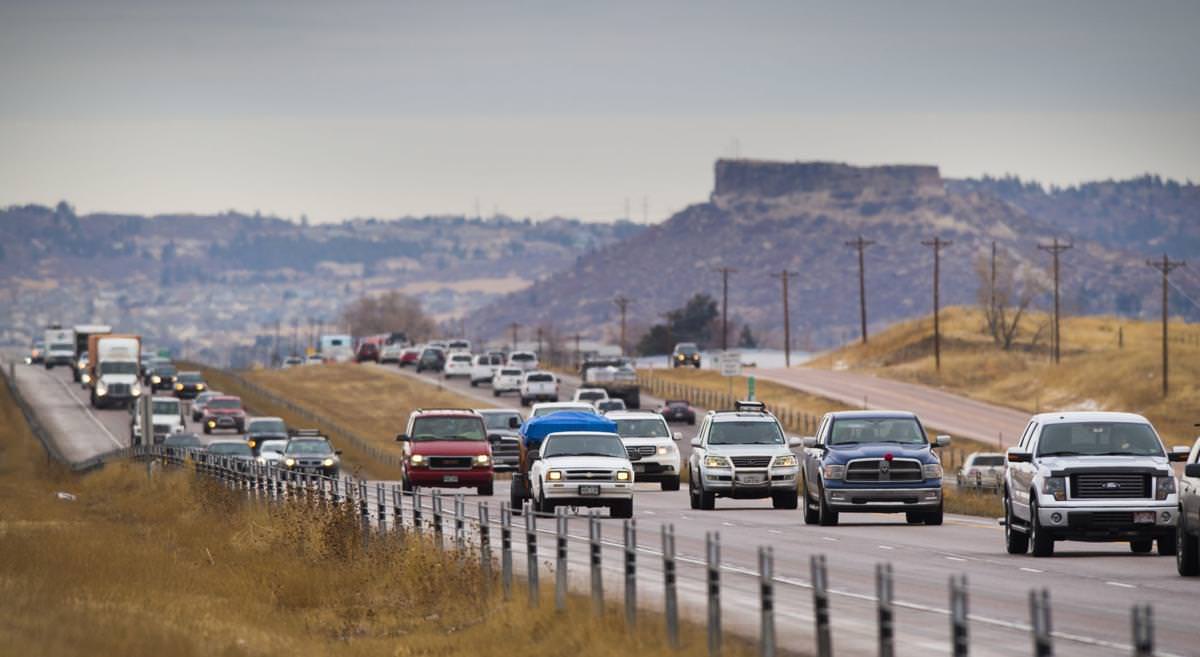
Deaths due to impaired-driving crashes decreased in Colorado so far this year, but the amount of pedestrian fatalities went up.
Denver is also seeing the same downtrend in deaths caused by impaired driving.
State statistics show 194 people have died in impaired-driving crashes through Nov. 1, according to data from the Colorado Department of Transportation.
The state saw 51 fewer deaths compared to the 245 impaired-driving fatalities by the same time period in 2022.
For the whole of 2022, the state recorded 278 impaired-driving deaths, a 6% increase from 2021 and a 60% increase from 2019, where there were only 163 impaired-driving deaths.
Impaired driving includes any type of influence — whether drugs or alcohol. Alcohol is the most common type of impairment, with THC, the main psychoactive constituent in marijuana, following second, according to the state data.
“Drivers arrested for DUI often have more than one drug in their systems,” Sam Cole, the safety communications manager at the transportation department, told The Denver Gazette.
While 2023’s final numbers likely won’t go below pre-pandemic levels, they are an improvement — something the transportation department attributed to the increase in enforcement, awareness and rideshare services.
“Impaired driving enforcement is continuing to ramp up since COVID, when it was scaled back,” Cole said. “We are working to publicize DUI enforcement efforts, especially over holiday periods.”
Along with the increase in DUI enforcement, Cole pointed to a new awareness campaign launched this year. That campaign focused on victims and the science behind impairment.
The department also noted private funding that provided $20,000 in ride-sharing discounts, typically $10 per ride. State officials believe that, too, helped to decrease the rate of impaired drivers on the road.
These efforts are helping to battle the alarming numbers seen in 2022, considered the deadliest year on Colorado roads since 1981. Last year, 754 people died during crashes. There were 756 deaths in 1981.
2023 looks to be a bit lower, with 494 fatal crashes, counting all causes, through beginning of November. There were 599 total fatal crashes in the same time period in 2022.
Denver, too, has seen a drop in impaired-driving deaths, with 89 so far this year. There were 103 at this point in 2022 and 88 in 2021.
Pedestrian deaths increasing
While impaired-driving fatalities decreased, pedestrian deaths rose, with 104 recorded so far through Nov. 1.
The state saw 94 pedestrian deaths in the same time period in 2022.
The increase mostly occurred outside of the Denver Metro area. Pedestrian deaths in the city stood at 61 as of the beginning of November, basically flat compared to the 62 year to date in 2022.
Cole said the increase of bigger vehicles over the past few years is among the likely reasons for the higher number of pedestrian deaths.
“The explosion of SUV and truck sales over the last couple decades has produced more vehicles with taller front ends, which are more harmful to pedestrians. Roadway infrastructure also plays a major role,” he said.
In October, Denver Mayor Mike Johnston proposed up to $1.6 million next year for “Vision Zero,” the city’s campaign to lower traffic-related death’s to zero by 2030.
Part of the plan, launched in 2015, includes upgrading 134 miles of bike lanes and 120 pedestrian crossings by 2029, as well as adding new public transportation lines.
City officials also want to reduce speed limits on major streets to 25 mph by 2028, a move that would require the approval of the CDOT.
Infrastructure improvement efforts could also help reduce pedestrian deaths, Cole said.
“Improving our infrastructure can make a significant difference,” Cole said. “Proven countermeasures being implemented by CDOT and municipalities include better lighting at crosswalks, more crosswalks, refuge islands in the middle of the road and reduced speed limits.”