







Editor who led Denver paper to a Pulitzer Prize for series on missing children dies
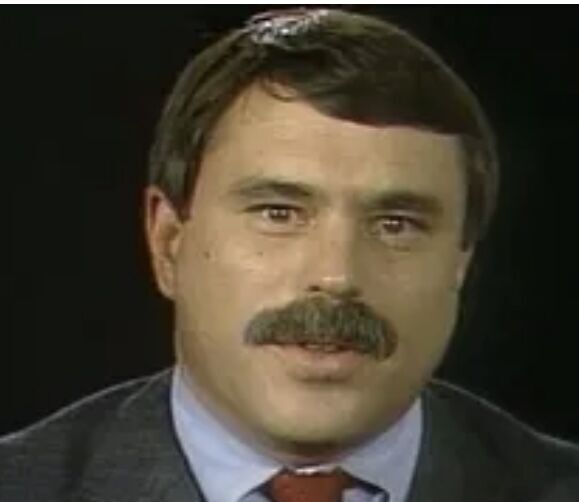
Anthony Campbell, the former executive editor and managing editor of The Denver Post who led the paper to a Pulitzer Prize for Public Service in 1986 for a series on missing children, has died, according to former associates at the Post. He was 82.
“There is no higher accolade than this: He was a helluva newspaperman,” said David Hall, former editor of the Post who hired Campbell in 1984. “When I became editor of The Denver Post in the spring of 1984, I knew one thing. Tony Campbell should be our managing editor.”
Before coming to Denver, Hall and Campbell had worked together at the Chicago Daily News and briefly together at The Chicago Sun-Times when Rupert Murdoch owned the feisty tabloid in another highly competitive two-newspaper town.
“The once proud and powerful Voice of the Rocky Mountain Empire was losing a competitive battle with the Rocky Mountain News,” Hall said. “The staff was in disarray and discouraged with little leadership. We were flat on our ass. The Post needed a big-city managing editor.”
The Post reclaimed the Sunday circulation lead under Hall and Campbell’s leadership and went on to eventually win the newspaper war with the Rocky Mountain News, which shuttered in 2009.
“He was a great editor,” Joe Bullard, who served as managing editor under Campbell when Campbell became executive editor, said in a statement, “full of ideas, easy to work with but never hesitant to tell you when you were wrong. He could immediately grasp the nut of a story and knew how to play it. He was one of the best newspapermen I have ever known. The four years I worked with him were the best years of my newspaper career.”
“In 1986, the Post won the Pulitzer Prize Gold Medal for public service,” Hall said, the highest honor the Pulitzer board bestows.
“A first-year reporter on a routine assignment thought the numbers regarding missing children didn’t make sense,” Hall said. “Her doubts got to Tony’s desk and he initiated not an investigation by a team of elite reporters,” but a series of daily followup stories by that first-year reporter, Diana Griego, adding other reporters to help along the way. “The Post exposed the milk carton campaign about missing kids to be hysteria with no basis,“ Hall said. Hardly any of those kids whose faces were featured on milk cartoons were kidnap victims, The Post found.
“Tony was the architect” of the effort, Hall said. “When the prizes were awarded at Columbia University, I sent Tony to accept the medal.”
Tony brought a gruff, street smart, larger-than-life Chicago-style to Denver under Times-Mirror’s ownership.
“Tony was highly educated, street smart, funny, sarcastic, sophisticated and deeply conservative,” Bullard said in his statement. “Tony knew a lot about a lot of things. Spending time talking with him usually resulted in you learning something you didn’t know before.”
Campbell was a paratrooper in the 101st Airborne during the Vietnam War and a defensive back at DePauw University in Indiana. He rode horses and hunted coyotes in the style of English fox hunts, and was an unabashed admirer of the British royal family, Hall said.
“He was the best-read man that I ever knew.”
Other Post staffers had similar praise for Campbell.
“I had a dream newspaper job at the Denver Post,” longtime reporter Jim Carrier said. “I was called the Rocky Mountain Ranger. Tony was a dream editor. He liked big ideas well executed. I would work months on projects – Autumn in the Rockies, Letters from Yellowstone, Down the Colorado River. When I returned from each one, he would say, “What’s next?”
“Tony was my first managing editor when I arrived at the Post in 1986,” said former Post Deputy Managing Editor Jim Bates, who also served as managing editor of The Denver Gazette when it launched in 2020. “I remember he was gruff but friendly, and that he said, ‘Well, you’re still young,” when Campbell was departing the paper, “as if there was hope for me yet.”
Shortly after the Post was sold to Dean Singleton in 1987, Campbell moved to the East Coast where he worked as a corporate headhunter and specialized in placing newspaper executives, according to Bullard’s statement.
Bullard persuaded Campbell to move back to Denver in 1991 and come to work with him at Publication Design, a design, printing and marketing company. Campbell retired in 2006. The cause of death was not immediately available.
Campbell always relished his time battling it out in the glory days of the newspaper war in Denver. “He knew how daily journalism functioned in a competitive market,” Hall said.
“There are good newspapers in a monopoly market, there are plenty of them,” Campbell once said in an interview on CSPAN. “But by and large people are treated to better, more in-depth, scrappier news with competition,” Campbell added. “The people profit.”