







Hervé Koubi: From dancing in Algeria’s streets to the world stage

Compagnie Hervé Koubi will perform his full-length "Ce que le Jour Doit à la Nuit" or “What the Day Owes to the Night” at the University of Denver's Newman Center on Tuesday, Jan. 23.
Courtesy photo, Compagnie Hervé Koubi



Back in 2002, Hervé Koubi received a degree in pharmacy at the University of Aix-en-Provence. But don’t let that fool you.
“I did that to please my parents,” the Frenchman said with an embarrassed smile during a Zoom call.
College was an excuse, it seems, since he had already found a passion for dance. He playfully blames his sister, who had taken him to her classes as a boy of 5.
“I loved to see people dance,” he said.
That was just the beginning of a strange and exotic journey leading to the creation of an all-male company that has dazzled audiences around the world for two decades.
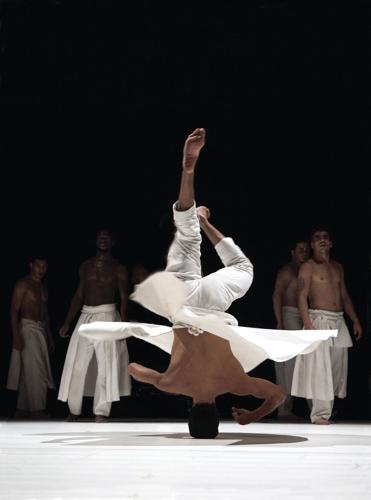
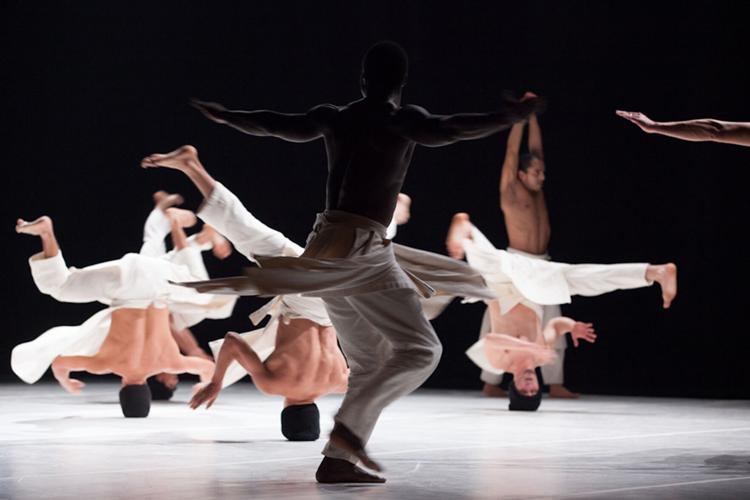
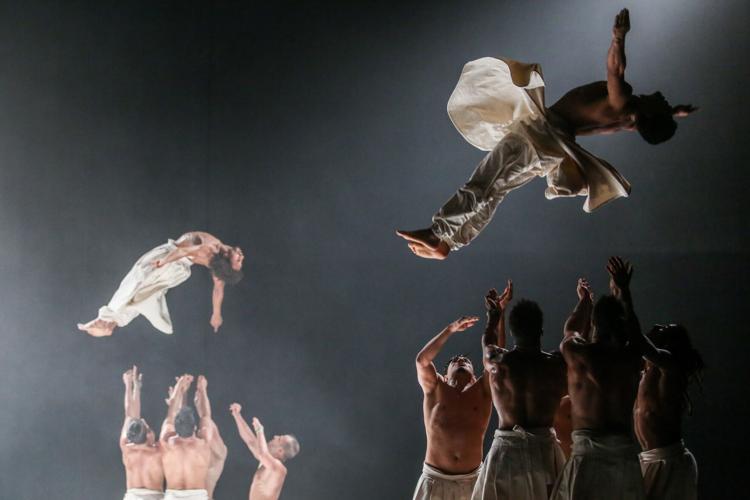
Composed of 13 or 14 athletic dancers who combine acrobatics, gymnastics, capoeira, modern and ballet moves, Koubi’s troupe moves to music ranging from Bach to traditional Egyptian to Sufi to contemporary string quartets, invoking images of Oriental paintings and Islamic architecture.
Compagnie Hervé Koubi will perform his full-length “Ce Que le Jour Doit à la Nuit,” or “What the Day Owes to the Night,” at the University of Denver’s Newman Center on Tuesday, Jan. 23.
Once he earned his pharmacy degree and began his real life (“I knew all along that my life was dance”), Koubi began studies at the Rosella Hightower School of Dance in Cannes, later joining three French companies with plans for a career as a performer. He followed his single dream: “All I ever wanted was to dance in America.”
But in 2009, at age 35, he knew it was over.
In search of … something … he traveled around the Mediterranean, and suddenly realized something about the geography of that great body of water.
“It was not a border (separating Europe from Africa). The Mediterranean was a link,” he said.
And so, he wandered the streets of cities in Algeria and Morocco, observing with renewed attention those amazing men who competed for tourist dollars by dancing with abandon and extraordinary athleticism.
The process of finding, recruiting, training, choreographing and rehearsing them did not come quickly.
“For each, it was a job,” he said. “I considered them professionals.”
It took three years, from 2009 to 2012, to find grant money and create a company of 12 with a 10-day trial in Algeria.
“I started to draw some movements and some shapes for them. I wanted to try to get the dancers together somehow,” he said. “I forced them to listen to each other.”
Finally, things began to gel.
“In 2012, I had my first generation of dancers — but by then, they had changed my whole approach. They were not from a (dance) school, training in front of a mirror,” Koubi noted. “I had told them at first, ‘I’m looking for dancers.’ They were acrobats. They didn’t consider themselves dancers. I realized it was not about (traditional) technique, not about solos or duets. They would be like a choir. I had to be completely open, and they would do that also. They would dedicate their skills to the meaning of what I was trying to create.”
But then, just what was Koubi trying to create?
“Most of my choreography consists of poetical movements drawn from oriental paintings. Many of the movements are about the (geographic) change from Algeria to France. They’re about group rituals, about East vs. West, about Jews, Muslims, Christians, Pagans.”
By the way, his long-held dream finally came true: In 2015, Compagnie Hervé Koubi made its much-praised American debut.
In the conversation during his Zoom call, shared with company co-founder Guillaume Gabriel, Koubi turned introspective about his unlikely life’s journey in dance. Discussing his time with those remarkable North African performers, he marveled at their openness.
“You know, most (formally trained) dancers hide behind their technique. But these dancers have an innocence onstage. They are authentic. When we are rehearsing, we remind them, ‘Do who you are. Do what you are.’ It is such a pleasure to work with them. It has been my joy in life to get people together with dance.”