







Colorado ranchers fear decimation as wolves roam Western Slope
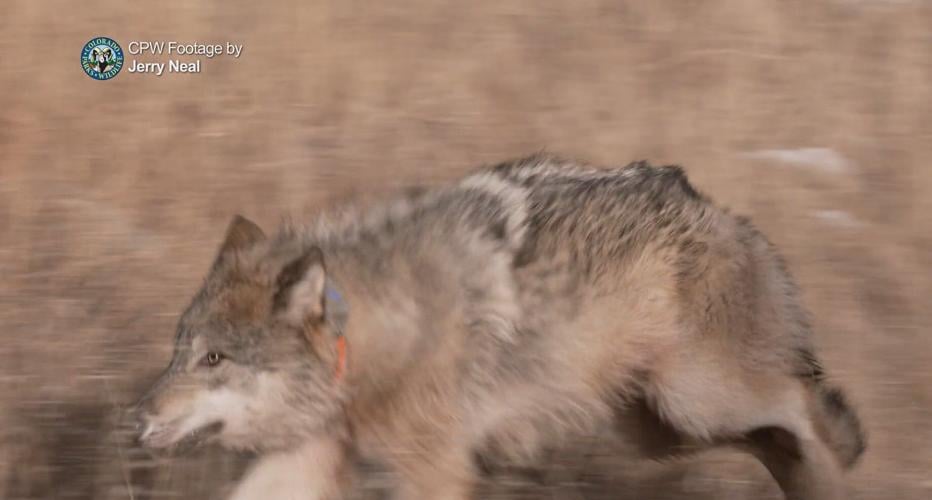
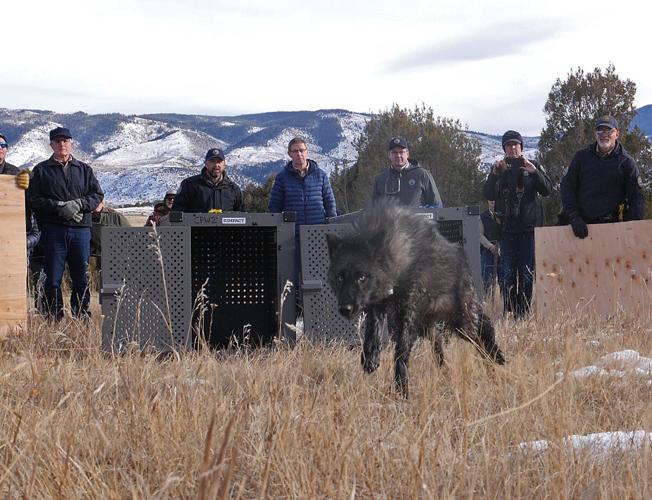
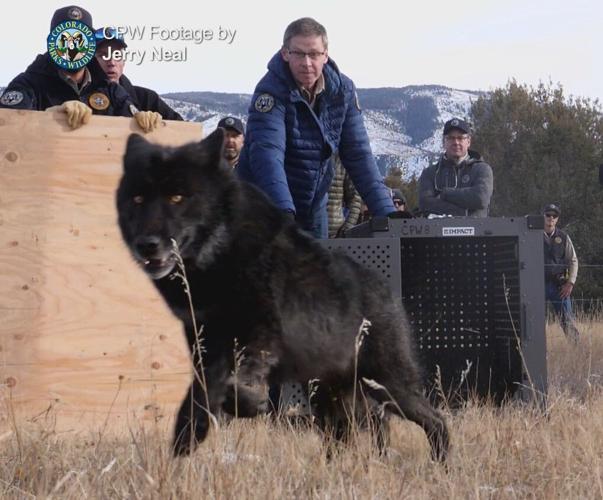
Wildlife experts captured wolves in Oregon and released them on Monday in Colorado. (PHOTO: Screengrab via Colorado Parks and Wildlife from video footage shot by Jerry Neal).
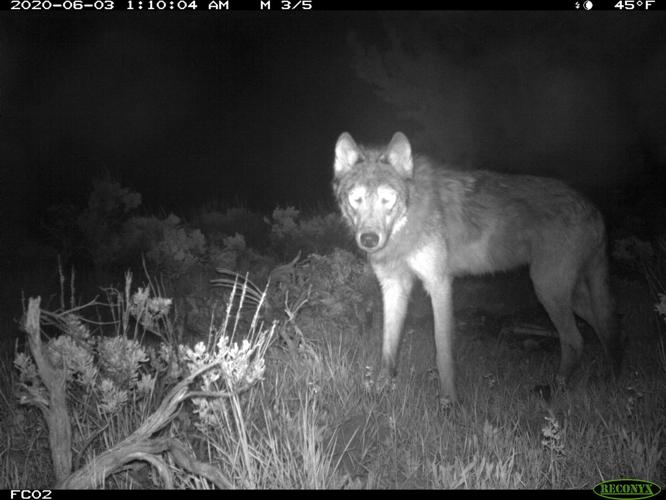
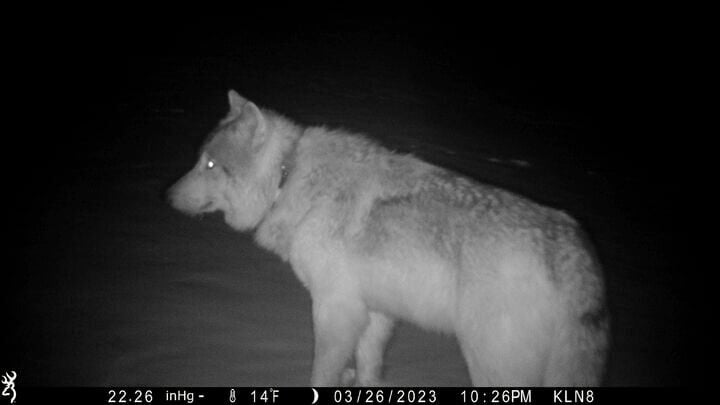
Don Gittleson, a rancher from Walden, Colorado, was out in the pasture in a noisy diesel pickup truck one night when he heard a disturbing noise at the far end of his herd.
His truck’s lights were on.
He drove toward the noise and, to his horror, saw three wolves attacking a calf.
He decided to drive straight at the wolves and was ”right on them” before two of the predators fled.
The third wolf, however, was still attacking the calf. Gittleson said he would have run it down had it not been for a deep irrigation ditch, separating his vehicle from the animal.
Gittleson, whose ranch lies some 200 miles north of Denver, has been at the epicenter of the depredation debate in Colorado since wolves found their way here in 2020. So far, Gittleson said seven of his animals — including one bull calf — have either been killed or injured by a pack that migrated from Wyoming into northwestern Colorado.
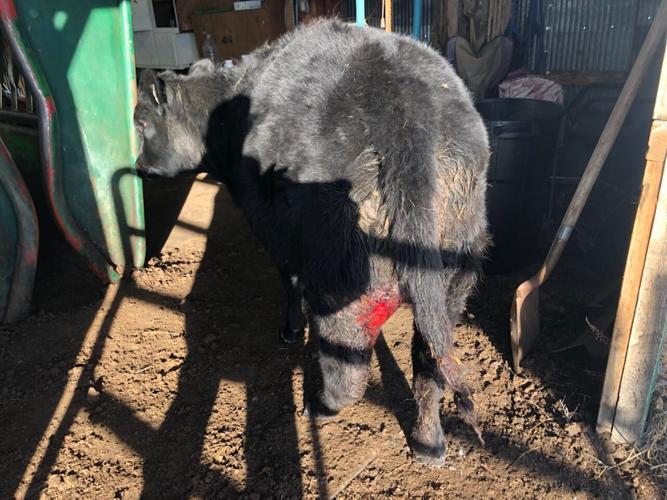
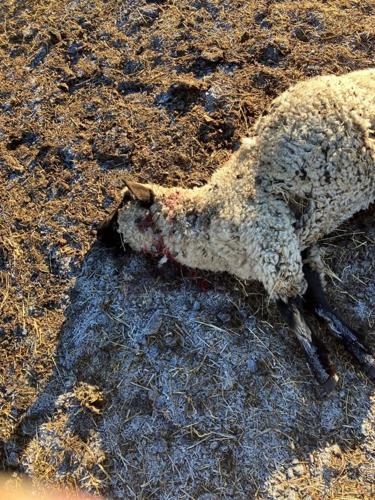
The latest victim is a heifer calf who suffered severe injuries to her hindquarters, a typical point of attack for wolves, he said. The wolf ripped off a large patch of hide on her left rear quarter, leaving bare muscle exposed.
“We’re still treating her,” he said. “She is doing better than she was a month ago, but she’s still going to be awhile before she’s healed.”
Gittleson’s experience epitomizes the worst fears among Colorado’s ranchers — that, as wolves begin to make the valleys, lakes and peaks of the north-central Rocky Mountains their new home, depredation will intensify. They worry that the Polis administration will renege on the state’s promise to manage and remove wolves that prey on their cattle and sheep. They complain that Colorado Parks and Wildlife, the agency tasked to manage the state’s new wolf population, has become less cooperative and less transparent with ranchers.
In response, the wildlife officials noted that livestock growers have been compensated for wolf damages. A spokesperson maintained that wildlife officials have conducted — and will continue to hold — outreach and education initiatives, and that the state is working hard to expand assistance to ranchers and farmers.
Supporters of the reintroduction program also insisted that the wolves would “restore balance to our state’s ecosystems.”
Ranchers fear industry’s decimation
Fear has permeated the ranching community since Colorado’s voters, almost entirely along the Front Range, approved a ballot measure in 2020 to reintroduce wolves west of the Continental Divide.
Residents in the counties where the wolves would be reintroduced overwhelmingly rejected the ballot measure, adding to a spate of perceived assaults on western Colorado’s rural communities, as the state’s Democratic leaders embrace clean energy and tourism, eclipsing economic mainstays, such as fossil fuel extraction and agriculture.
That fear was palpable at the National Western Stock Show in Denver, where cows, horses and sheep compete for attention, along with riders and business people offering all kinds of products, in an annual celebration of Colorado — and the West’s — ranching heritage.
Some attendees showing cattle at the Stock Show said they believe wolf depredation will decimate the livestock industry in Colorado — not because of the killings per se but because ranchers and farmers, particularly those who operate on the western side of the mountains, will ultimately decide against keeping their trade.
“For those of us who rely on bringing our cattle to the pastures in the mountains, it’ll end us,” said Kathi Creamer, who raises registered Angus on her ranch near Montrose.
Creamer, her daughter and son, regularly show cattle at the NWSS.
“My lifelong goal was achieved last year,” said Creamer. “I had the Grand Champion Angus Bull.”
But Creamer said she fears the next tranche of wolves might be released near Montrose, putting her operation at risk.
“Some people will have to just sell out because they won’t be able to afford to move anywhere else or won’t want to,” she said. “It will destroy the livestock industry in Colorado as we know it on the western side of the mountains.”
The way ranchers here and in Oregon described it, the past is prologue to what might happen in Colorado.
Kirk Scilacci, who breeds registered Angus cattle near Baker City, Oregon on 17,000 acres of private land and 1,500 acres of leased Bureau of Land Management area, was showing two female Angus and one bull at the Stock Show.
While Scilacci said the wolves have not attacked his cattle, his neighbor next door lost six heads in the last two months to a pack in the area.
Scilacci, his wife and two children moved to Oregon to ranch cattle about 18 years ago. He intends to turn the ranch over to his children eventually, he said.
That is, he said, if he’s not driven out of business by the wolves.
“We are very seriously thinking about not turning any cattle out this year on our range land. We’ve got 10,000 acres that borders that area where those wolves are,” Scilacci said.
He said the wolves have been “hanging out in a draw that is in our property.”
He encountered a wolf two days after the first kill on his neighbor’s property while he was out fixing fence, he said.
“I was hiking around checking some fence because some of that neighbor’s cattle got into our range land, and I came across the wolf maybe 25 yards in front of me,” he said.
Scilacci said the wolf was not afraid of him.
“He wasn’t concerned at all. He just looked at me and turned around and disappeared over the rocks, and that was the last I saw of him,” he said. “But he didn’t run. He just looked up and saw me and just turned around and went about his business.”
Negligible impact to industry, but devastating to individual ranchers
In 2022, gray wolves attacked domesticated animals hundreds of times across 10 states in the contiguous U.S. including Colorado, according to an Associated Press review of depredation data from state and federal agencies.
Attacks killed or injured at least 425 cattle and calves, 313 sheep and lambs, 40 dogs, 10 chickens, five horses and four goats, according to the data.
In other times, livestock simply went missing.
Their industry-wide impact is negligible: The number of cattle killed or injured in the documented cases equals 0.002% of herds in the affected states, according to a comparison of depredation data with state livestock inventories.
But such losses can be devastating to individual ranchers or pet owners.
“95% of ranchers in Colorado will never have a problem,” said Ed Bangs, a former U.S. Fish and Wildlife Service biologist who led the reintroduction of wolves in the mid-1990s to Yellowstone National Park and central Idaho. “4.5% will have the occasional problem every couple of years maybe, and maybe one or two guys will have a problem like every other year. I don’t think it’s enough to put them out of business.”
Did Colorado officials know wolves came from depredating packs?
Against this worry of depredation, The Fencepost Magazine reported that five of the 10 wolves from Oregon came from The Five Points and Noregaard packs, which are known to have depredated on livestock, citing Oregon wildlife officials.
Oregon Department of Fish & Wildlife spokesperson Michelle Dennehy told The Denver Gazette that Colorado knew some of the wolves came from depredating packs when they captured them.
“That sounds correct, but really, Colorado has all this information,” said Dennehy. “They had it all at the time of capture.”
Travis Duncan, the public information supervisor for CPW, didn’t directly address whether the report is true.
“Following the announcement on December 22, 2023, of the successful completion of gray wolf capture work in Oregon, CPW has received many questions on its selection process and whether the wolves came from packs that had been involved in depredation incidents,” he said in an email. “CPW strictly followed the Colorado Wolf Restoration and Management Plan in the selection of the gray wolves reintroduced from multiple packs in Oregon.”
The Center for Biological Diversity, a group that supports the wolves’ reintroduction, insisted that Colorado should adopt nonlethal methods, arguing they would make conflicts “less likely.”
“It appears that the 10 reintroduced wolves in Colorado have chosen to eat prey, like elk or deer, and that’s really encouraging,” said Alli Henderson, Southern Rockies director for the Center for Biological Diversity. “The science is clear that the best way to prevent conflicts between wolves and livestock is to use nonlethal methods, but unfortunately those aren’t required under Colorado’s wolf plan. The state’s plan should be revised to help make conflicts less likely.”
Earlier, Henderson cheered a court decision against last-minute efforts by cattlemen and livestock growers to scuttle the wolf reintroduction in December.
“I’m relieved that the court saw right through the livestock industry’s self-serving and meritless arguments,” Henderson said. “Both science and Colorado voters have very clearly told us that wolves belong here. Once wolves are reintroduced, they’ll help restore balance to our state’s ecosystems.”
Cost of compensation
Now that wolves are roaming Colorado’s Western Slope, more tension, both political and practical, is expected to follow.
Gittleson, for one, claimed that wildlife officials are not being honest with the public about how wolves attack and kill livestock.
“They are supposed to be transparent and educating the ranchers. They have not done any of that,” he said. “Their education consists of if your cattle get killed, this is how much you can get paid for ’em. And that’s it.”
CPW’s Duncan disputed that characterization.
“CPW has been and will continue to conduct outreach/education in areas that are likely to have wolves,” he said, adding the initiatives range from internal trainings to joint external presentations — to demonstrations, panels, and attending local meetings.
CPW recently entered into a memorandum of understanding with the Colorado Department of Agriculture on expanding assistance to farmers and ranchers to avoid wolf predation, he said.
“And the governor’s budget request that was submitted Jan. 2 requested additional resources in the Animal Health Division that will focus on providing support to farmers and ranchers for non-lethal deterrence,” he added.
Duncan said his agency will continue to work closely with U.S. Fish and Wildlife Service and the agricultural community to successfully implement the “impact-based management framework laid out in Chapter 5 of the Colorado Wolf Restoration and Management Plan.”
Such assurances have failed to assuage the ranchers’ worries. Some, like Scilacci, claimed that officials in Oregon have also been not helpful or transparent about wolves there.
“There a lot of interesting things going on, like they’re giving bad information about where they (wolves) are located,” he said. “(They say), ‘Oh, don’t worry about it, they’re way up here,’ when they’re actually somewhere else close by.”
In a statement to The Denver Gazette, Dennehy, the spokesperson from Oregon’s wildlife agency, said wolf location data is protected by law.
“We have never provided specific information about wolves’ locations to livestock producers or to anyone. ODFW provides some general pack location information to livestock producers to help them address conflict with wolves,” Dennehy said. “What the collar data is useful for (and what our staff use it for) is to identify potential areas of conflict (such as areas of seasonal overlap with livestock) or identifying attractants and/or carcasses that wolf points cluster around. In those cases, staff will contact specific producers to let them know the general area where there is potential for conflict so that the producer can respond appropriately.”
Others, like Creamer, the rancher near Montrose, argued that the West has changed dramatically since the days when the wolves originally roamed its lands.
“Colorado is not the state that Colorado was 50 years ago or 100 years ago. We have a larger population. We have areas that were once wide open. Spaces that are now covered in asphalt and brick,” Creamer said. “People have moved into to those areas. And for us to even think that we’re going to return to a time when that many people did not exist is ludicrous.”
Regardless of the political or philosophical arguments for against their reintroduction, the wolves have arrived in Colorado, and they are here to stay.
And the conflicts are inevitable.
According to CPW records, in fiscal year 2022, compensation costs amounted to $12,929.75 in settlement of four wolf damage claims.
Gittleson, who for 30 years now has been creating a specialized breed of Angus bulls that can flourish at altitudes of 8,500 feet, said there’s no compensation for him or his children when they have to spend all night guarding their herd.
The Associated Press contributed to this report.


Report says Denver’s restaurant industry in need of intervention
Bernadette Berdychowski
bernadette.berdychowski@denvergazette.com
Updated 1 day ago
Denver’s restaurant industry is struggling and facing “sustained structural pressure,” according to a report by local industry leaders. Last year, the city’s economic development department and Visit Denver created a six-month liaison program to research issues affecting the restaurant sector...

Bernadette Berdychowski
Reporter

RTD Transit Police begin patrols from new substations in Englewood, Boulder
Scott Weiser
scott-weiser@denvergazette.com
Updated 1 day ago
Regional Transportation District Transit Police started operating from two new substations on Friday to increase their visibility on the system and shorten response times across the eight-county service area. One substation is based at the Elati light rail facility in...
Scott Weiser
Reporter

Weld County wades into data center issue
Maren Prince
maren.prince@denvergazette.com
Updated 1 day ago
A county in Colorado seeks to define data centers and clarify where they can be built. Notably, Weld County wants to keep data centers within an industrial or agricultural zones, according to a news release from commissioners. Any new data...

Maren Prince
Reporter

34th annual Wine Festival of Colorado Springs blends flavor with fundraising
April Borjon
april.borjon@gazette.com
Updated 2 days ago
Sweet, bold or a little bitter, however you take your wine, Colorado Springs will be pouring it by the glassful next week. The 34th annual Wine Festival of Colorado Springs returns Wednesday and runs through March 7, bringing four days...

April Borjon
Reporter

Denver launches public process to update energy code, extending standards to single-family homes
Scott Weiser
scott-weiser@denvergazette.com
Updated 2 days ago
Denver launched a public process on Feb. 26 to update its energy code for new and renovated small buildings, including single-family homes and duplexes, that would extend efficiency and electrification-readiness standards that began with energy compliance goals for large commercial...
Scott Weiser
Reporter

Family housing coming to site of former Denver motel shelter
Bernadette Berdychowski
bernadette.berdychowski@denvergazette.com
Updated 2 days ago
More than two years after a motel-turned-homeless shelter in West Denver closed, plans to turn the site into permanent housing are starting to come to life. The Denver Housing Authority and the Colorado Coalition for the Homeless announced it teamed...
Bernadette Berdychowski
Reporter

IDC: Smartphone market set for biggest-ever decline in 2026 on memory price surge
Reuters
reuters@denvergazette.com
Updated 2 days ago
The global smartphone market is poised to suffer its biggest decline ever in 2026, sinking to a more than decade low in shipments, as surging memory chip prices drive up device costs, the International Data Corporation said on Thursday. Smartphone...

Reuters
Reporter

Instagram says it will notify parents if teens ‘repeatedly’ search for to suicide terms
The Associated Press
the-associated-press@denvergazette.com
Updated 2 days ago
Instagram said Thursday it will start alerting parents if their kids repeatedly search for terms clearly associated with suicide or self-harm. The alerts will only go to parents who are enrolled in Instagram’s parental supervision program. Instagram says it already...

The Associated Press
Reporter

Ozempic, Wegovy list prices to be slashed by up to 50%
New York Daily News
new-york-daily-news@gazette.com
Updated 2 days ago
Weight loss drugmaker Novo Nordisk will cut the list prices of Ozempic and Wegovy by up to 50% beginning in 2027, the company announced on Tuesday. Wegovy currently carries a list price of $1,349 per month, while Ozempic is listed at $1,028 for a one-month...

New York Daily News
Reporter

Mortgage rates hit 3-year low
The Associated Press
the-associated-press@denvergazette.com
Updated 2 days ago
The average long-term U.S. mortgage rate slipped this week below 6% for the first time since late 2022, good news for home shoppers as the spring home-buying season gets rolling. The benchmark 30-year fixed rate mortgage rate fell to 5.98%...
The Associated Press
Reporter
PREV
PREVIOUS
Denver-based homebuilder to be acquired by Japanese company
Japanese homebuilder Sekisui House Ltd. announced plans to buy Denver-based MDC Holdings, Inc., which has built Colorado homes under the Richmond American Homes moniker for almost 50 years, in a $4.9 billion deal. That’s according to a joint news release Thursday that outlined the terms of the all-cash buyout. MDC (NYSE: MDC) began in Denver […]

$88 million in federal funding to improve I-76 and US 160
The U.S. Department of Transportation approved $88 million in funding for repairs and safety improvements to two important Colorado highways, Gov. Jared Polis announced Thursday. The projects are for improvements to US 160 in La Plata County between Durango and Bayfield, and reconstruction and bridge replacements on I-76 in Morgan County between Fort Morgan and […]