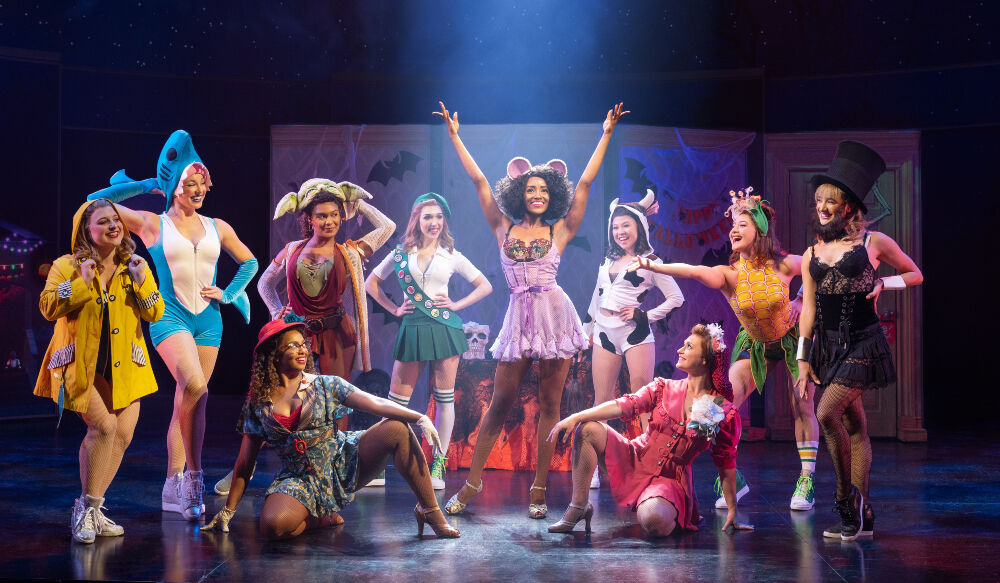
Why are movie musicals so ashamed of themselves? | John Moore
What marketers don't want you to know about 'Wonka,' 'Mean Girls' and 'The Color Purple'


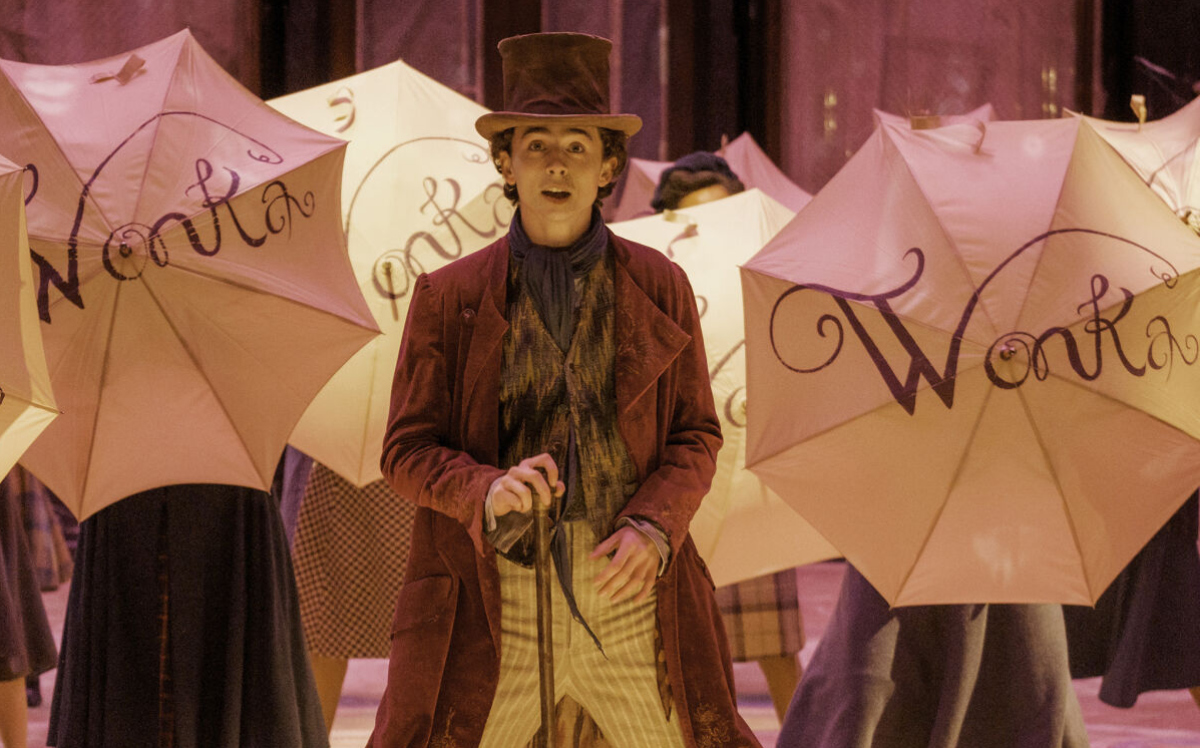
After seeing the new “Wonka” film, I feel a little oompa, loompa, doompa-dee duped.
As I settled in at my local Harkins to watch the highly anticipated reimagination of the Roald Dahl legend, I choked on my Everlasting Gobstopper when Timothée Chalamet opened his mouth to sing.
“Wait … this is a musical?” I thought, feeling rather sheepish, because knowing things like that kind of goes with my job. But I didn’t see it coming.
Then a work buddy told me that when he took his kid to see the film, he had the exact same reaction.
Was this some sort of state secret?
I remember taking to Facebook last summer after seeing a first tease for the new “Wonka” film. It said very little about the story but was so visually evocative that I was compelled to point out what an effective trailer it was. I was completely sold on the movie.
Then the official trailer came out in October, far more specifically setting up the wonderful storyline of how Willy Wonka came to be the magical purveyor of our innermost chocolate dreams. But it, too, included not one note from what turns out to be many fine original songs in the film. You have to pay pretty close attention to notice teeny flashes of ensemble dancing to get any clue that “Wonka” is, in fact, a musical.
It’s not an adaptation of a Broadway musical, so how would you know it was a musical unless something in the movie’s marketing blitz, I don’t know … told you?
Then I realized, duh: They don’t want you to know it’s a musical. Because the movie’s marketing department cynically believes that all that singing and dancing might be a box-office deterrent for everyday moviegoers.
Because, for a lot of people out there, hello: They are.
As a journalist who has attended, cheered and championed musicals both on stage and film for more than two decades, I have nothing but love for that most American of art forms. It has been wonderful to chronicle the resurgence of the movie musical since “La La Land” (almost) was named Best Picture in 2017.
But, OK, I am just going to say it: Now, don’t take this the wrong way, but … some of my best friends hate musicals. And that’s OK.
There are moviegoers out there who, if they see a trailer for a musical – they aren’t going to see that musical. And movie marketers know it. So they do what marketers do best: They lie to them. And those sneaky “Wonka” marketers are not alone.
If three makes a trend, movie musicals are a trend tight now. In addition to “Wonka,” two major movie adaptations of hit Broadway musicals were being released at the end of last year as well: “The Color Purple,” a film version of the 2005 Broadway musical, and “Mean Girls,” a film version of the 2018 Broadway musical. And, like “Wonka,” both trailers made the musical elements of their source material all but disappear. Combined, the three trailers run for seven minutes. Between them, they show one actor singing for all of one second.
Does this blatant misrepresentation ever come back to bite the movies in the … box office? Yes and no. “The Color Purple” surpassed expectations with an $18 million domestic opening. That was the largest box-office haul on Christmas Day in more than a decade. But over the next two days, during a week when filmgoers had a lot of free time on their hands, receipts fell to $7 million on Day 2 and $3.8 million on Day 3. The film is spectacularly made. The story is enduringly haunting. So what changed? You do the math. (OK, I will: Attendance dropped 79% in 48 hours.) It’s likely that as word of mouth got around that this latest version of the iconic story was now a musical, interest in seeing it dropped. (Their loss, frankly.)
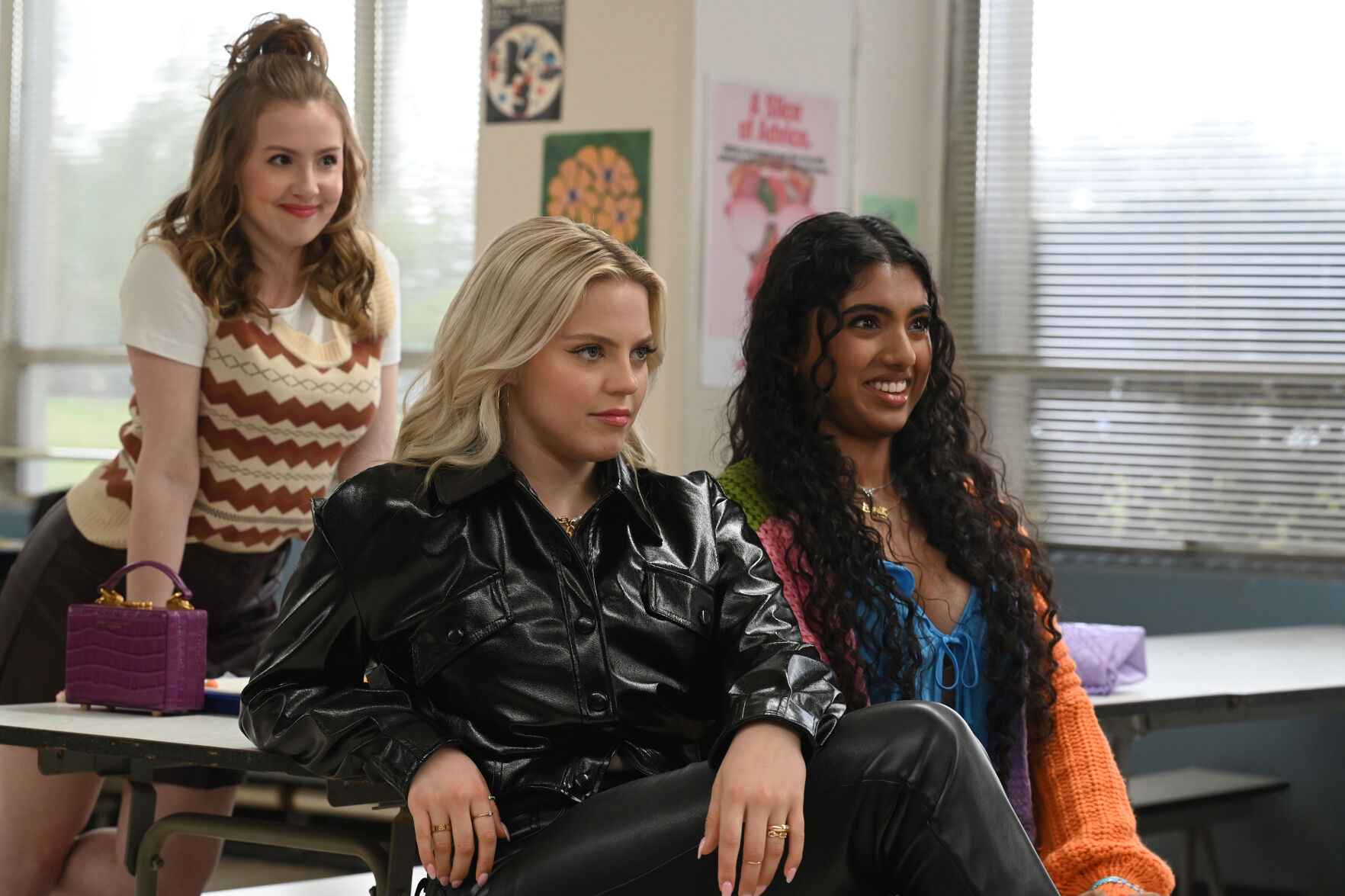
“Mean Girls” experienced a similar backlash: A 59% drop in its second weekend.
“Wonka,” on the other hand, is a bona fide juggernaut, grossing $555 million since Dec. 15.
Industry execs aren’t saying much to confirm or deny the now evident conspiracy that studios are actively avoiding marketing their movies as musicals. One refreshing exception is Paramount’s Marc Weinstock, who told Variety of “Mean Girls”: “We didn’t want to run out and say it’s a musical because people tend to treat musicals differently. This movie is a broad comedy with music. Yes, it could be considered a musical, but it appeals to a larger audience.”
Points for (dishonest) honesty.
It’s important to mention that these three particular musicals could not be more different, which makes drawing summary conclusions perilous. Times have significantly changed since “Mean Girls” became the zeitgeist movie of 2004 about ruthless bullying and figuring out how to be oneself. In the current culture, the best any remake of “Mean Girls” could possiby get away with being is “Not So Mean Girls.” Most critics have dismissed this benign new effort as one pleasant, extended music video that, in the end, is fairly plastic.
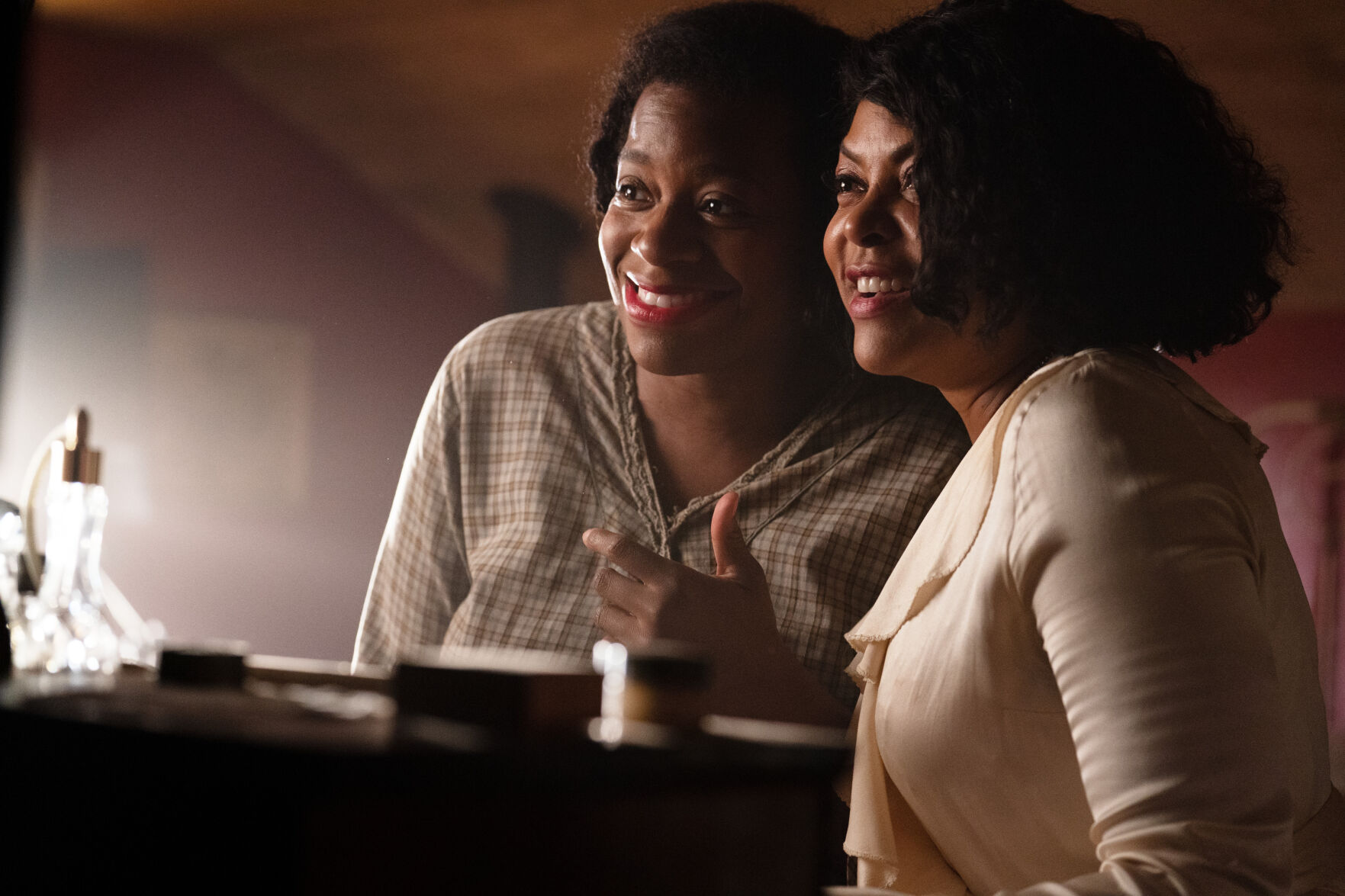
Perhaps no source material has transformed more fully from its origin than “The Color Purple,” which has evolved from a soul-scraping 1982 epistolary novel into a 1985 Oprah Winfrey film phenomenon into an empowering 2005 Broadway musical into, now, a mega-empowering Hollywood film.
The landmark book follows the subjugated life of a Black woman in 1900s rural Georgia through her relentlessly sorrowful series of letters to God. Its ultimate emergence as a spirit-affirming journey of redemption is achieved purely through the power of author Alice Walker’s words.
Turning that into a musical with singing and dancing necessarily means transforming it into something different – something more proactively performative, celebratory and triumphant. Singing and dancing afford the audience a momentary break from the sadness and the abuse to smile and cheer, but that inherently softens the edges of the unsparing book.
Perhaps “Wonka” is the runaway box-office hit among the three because it’s the one that lives most cozily in the world of the traditional musical. It is, after all, a family-friendly adventure fantasy where the odds are stacked against a pleasant everyman, the villains are utterly charming and the screen explodes with unending movie magic. Plus, the story is inherently musical in the tradition of “The Wizard of Oz,” which we don’t call a musical, but what is “The Wizard of Oz” without “Somewhere Over the Rainbow”? And what is “Wonka” without “Pure Imagination” and the “Oompa Loompa” dance? (Hugh Grant at his finest, BTW.) “Wonka” is as traditional a movie musical as anything Disney has presented over the past century.
Which brings us back to the question: Why are movie musicals so ashamed of themselves? So many of them advocate for learning how to embrace your authentic self. And yet here are all three hiding who they are in their marketing.
This question has become a hot topic on social media, with some saying the trailers are not lying, they are simply (and perhaps smartly) downplaying that aspect of their films. To that, I say: A movie musical denying that it is a musical would be a little like “The Lion King” downplaying that it’s a story about a lion. It’s pretty fundamental to its DNA). Others say the practice is out-and-out deception.
In the end, both can be true.
Musicals matter. Years ago, I conducted an exhaustive attendance survey that determined 1.7 million people had attended a theatrical performance somewhere in Colorado over a one-year period. And fully half of them had attended a touring Broadway musical presented by the Denver Center for the Performing Arts, most often at the Buell Theatre.
The reason the Denver Center is able to support the ongoing existence of the 45-year-old DCPA Theatre Company, which presents (mostly) homegrown, Broadway-quality plays – is because half of the total theatergoers in Colorado are filling their coffers by going to see visiting Broadway musicals across the archway.
So it is frustrating to see musicals hiding what and who they are when they finally have the chance to be seen by a much wider moviegoing audience.
The bottom line is, this is a Golden Era for movie musicals, and that was made possible by the success of “La La Land” and “The Greatest Showman,” which in 2016 and ’17 combined to bring in nearly $1 billion on the strength of A-list stars like Emma Stone, Ryan Gosling and Hugh Jackman. The more than dozen movie musicals that have come out since were green-lit largely on the success of those two films.
The next big chapter of this story has been playing out for 21 years, but (hopefully) comes to a climax in November. The long-delayed screen debut of “Wicked” is presently set for Nov. 27. That’s a full five years after its previously announced release date of Dec. 20, 2019. It’s since been split into two films, with Part 2 set to follow in late 2025.
Let’s hope that, by then, movie marketers will have been changed … for good. And we’ll see some of those iconic songs in a trailer a few months from now.
Then again, as they say in “Wicked: “Wishing only wounds the heart.”