







On rebounding: How Air Force’s Jayda McNabb overcame long childhood odds and learned to seize opportunities
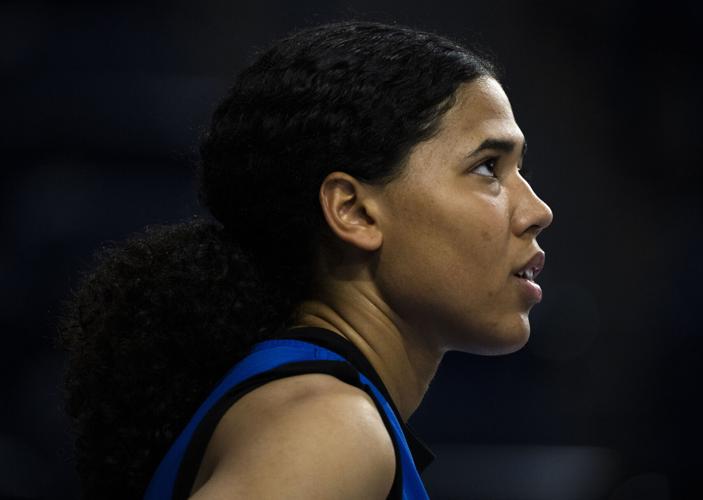
Air Force freshman guard Jayda McNabb watches during practice last week at Clune Arena on the Air Force Academy. The freshman, who was born into extreme poverty and rescued by her great-grandmother then adopted, has rebounded from her rough start and leads the Mountain West in offensive rebounds and is ranked 24th nationally.
Christian Murdock, The Gazette
Remove basketball from the equation, and Jayda McNabb’s life story remains all about rebounding.
McNabb, an Air Force freshman, leads the Mountain West Conference in offensive rebounds (90) and ranks 18th nationally. Listed generously at 5-foot-10, she’s the shortest player on that leaderboard.
The thing about rebounding is that its very nature hints at a story, something bubbling under the surface. Few statistics in sports can be attributed more to an individual’s drive and ability to anticipate an opportunity and then fight to seize it.
Find a great offensive rebounder, and there’s likely a trail of breadcrumbs leading to the source of that motivation.
Nothing, however, could have hinted at the complexity and improbable nature of this cadet-athlete’s rebound across her 19 years. McNabb was born into extreme poverty, was rescued as a toddler from a dire situation by a great-grandmother and, before third grade, was adopted into her elementary school principal’s family of five.
“It just ended so well,” said McNabb’s biological great-grandmother, Reva Blundell, pride beaming across the phone call from South Dakota. “It’s just amazing what she has done.”
Gift for rebounding
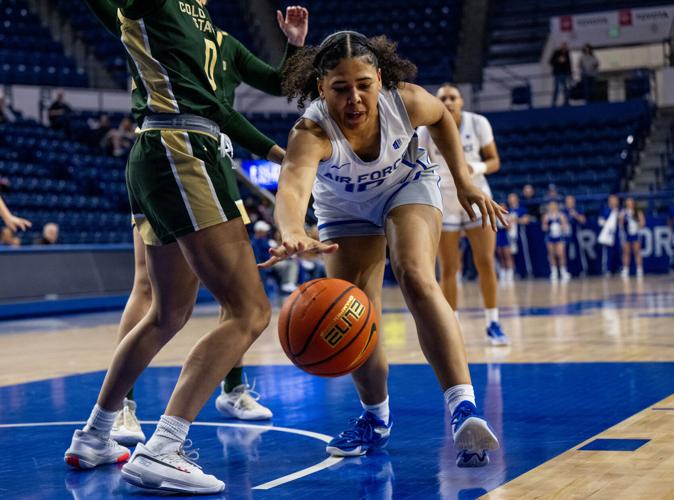
“Magnets as hands,” that’s how Air Force senior Dasha Macmillan describes Jayda McNabb’s gift for rebounding.
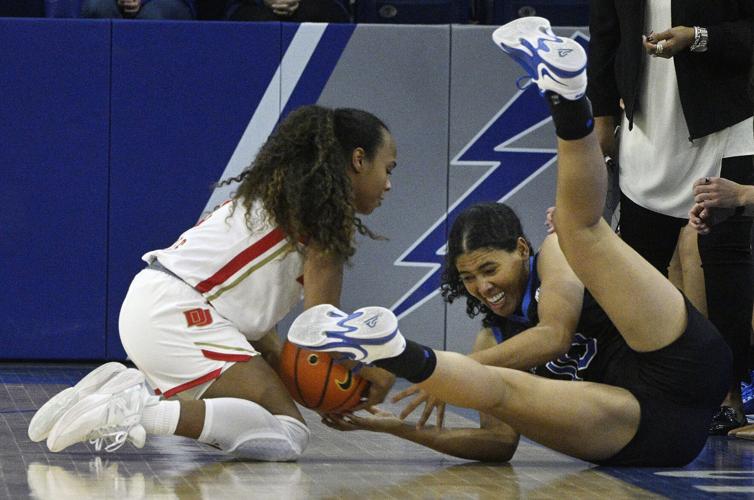
“The ball, just, somehow it appears,” Macmillan said. “You’ll see three girls on the ground, and there’s Jayda holding it.”
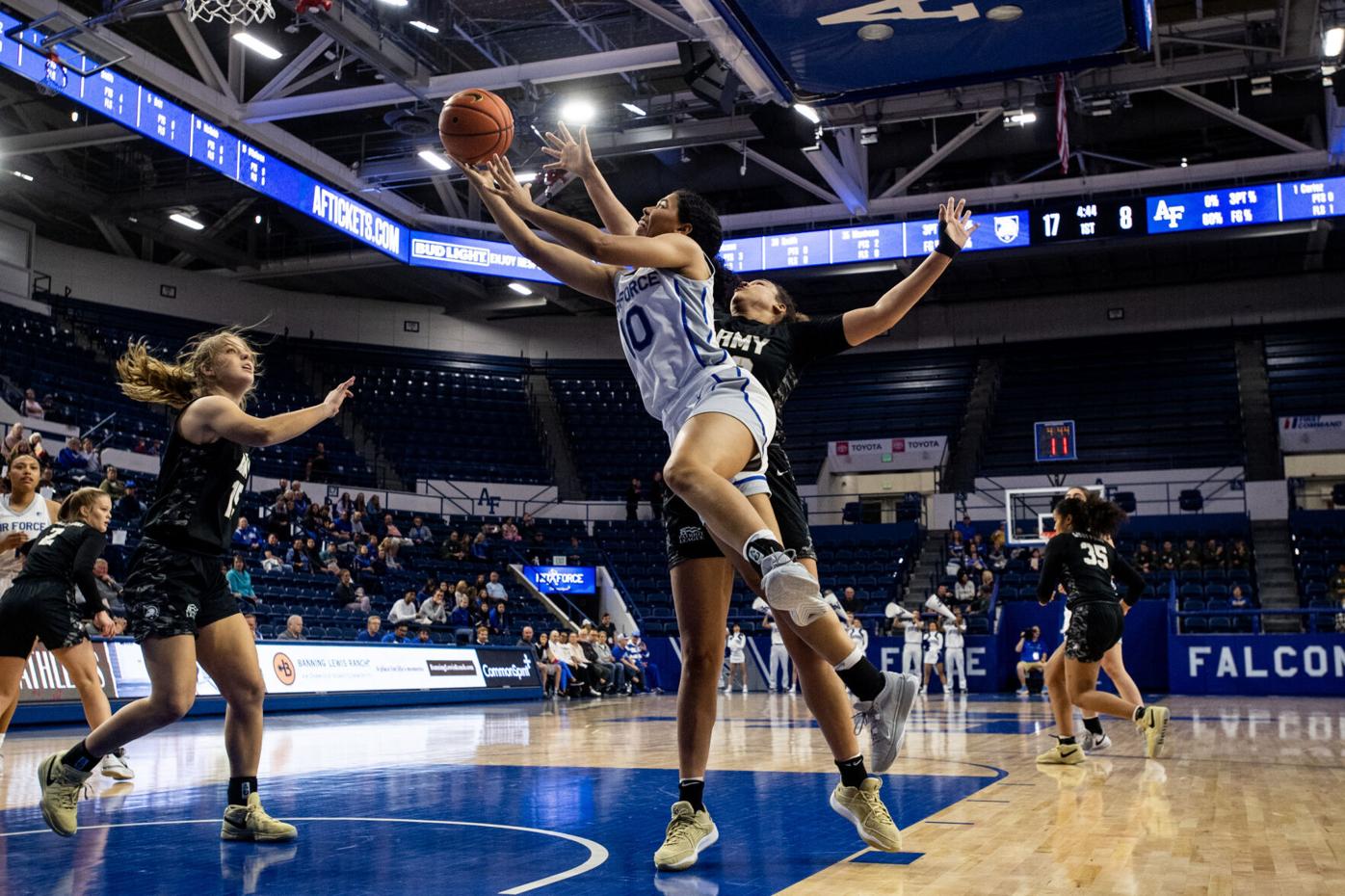
FAR LEFT: Air Force guard Jayda McNabb jumps for a layup against Army in November at the Air Force Academy.
Parker Seibold, The Gazette


FAR LEFT: Air Force guard Jayda McNabb jumps for a layup against Army in November at the Air Force Academy.
Offensive rebounding takes the skill one step further. Because a defender is usually positioned between an offensive player and the basket, they begin with the upper hand when a shot is released. Thus, offensive rebounds often start from a disadvantageous position and require all the more effort to achieve.
Air Force’s record book doesn’t distinguish between offensive and defensive rebounds, but McNabb’s total rebounds (139 through 23 games, an average of six per game) have her on pace for the program’s eighth 200-rebound season at the NCAA Division I level and first for a freshman.
“Rebounding, literally, is just all heart, and that’s Jayda,” fellow freshman Alexis Cortez said. “Those two definitions — Jayda and heart — are together.”
From the start
Reva Blundell will never forget the first time she saw her 21-month-old great-granddaughter.
Sitting in her rocking chair in her Rapid City, S.D., home, Blundell watched as Jayda would take a step, stop, and shoot a grin. Then repeat. It was a hesitant, adorable approach.
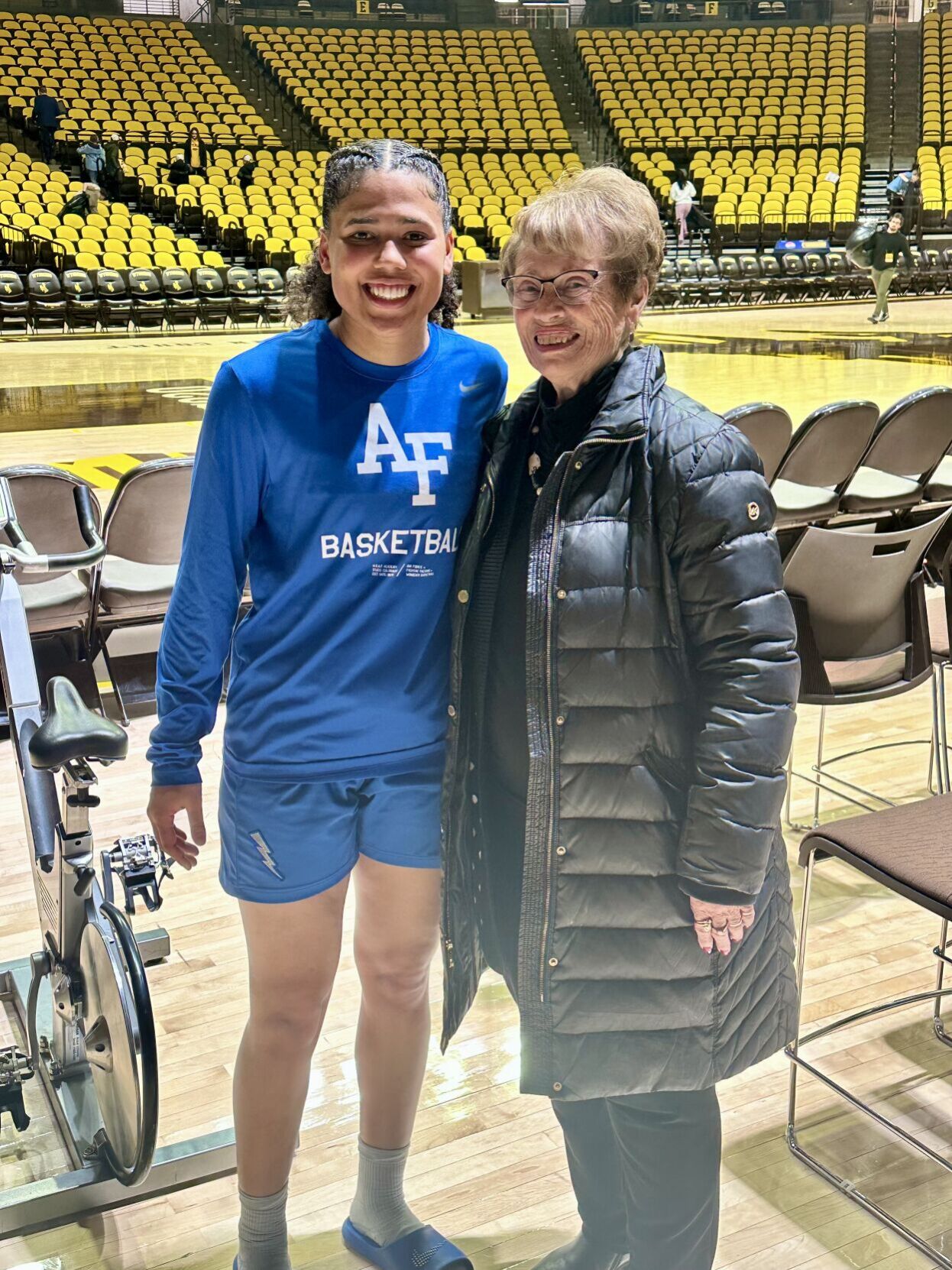
Jayda McNabb with her great-grandmother, Reva Blundell, in January as Air Force played at Wyoming.
COURTESY OF THE McNABB FAMILY


Jayda McNabb with her great-grandmother, Reva Blundell, in January as Air Force played at Wyoming.
A short while later during the visit, Blundell took Jayda for dinner at Pizza Hut.
“She would not get off my lap,” she said. “She had her arms around my neck and her feet around my waist. She didn’t want to go back to her mom that night, and I had never seen her before.”
When Jayda returned to Las Vegas with her birth mother, Blundell was heartbroken, fearing it was the last time she would see her.
But less than a year later, Blundell was asked if she would take Jayda for two months. Upon arriving in Las Vegas to retrieve the toddler and gaining an understanding of Jayda’s living conditions, Blundell decided the stay needed to be significantly longer.
“Her life was bad,” Blundell said. “She would tell me, ‘Mommy and I would go to garbage cans and my mommy would take food out for me to eat.’ Stuff like that. Just so awful. And she was such a sweet little thing. It tore me up to see how she was treated. Finally, I just decided I didn’t want her to go back, and I went to court and got her.”
Tale of the stats
The math of the stat sheet is something the Air Force women’s program closely tracks.

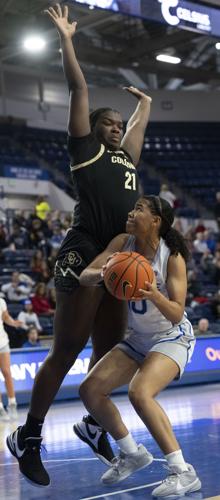
Air Force guard Jayda McNabb (10) is guarded by Colorado State University guard Sydney Mech (24) last month at Clune Arena.
Parker Seibold, the gazette


Air Force guard Jayda McNabb (10) is guarded by Colorado State University guard Sydney Mech (24) last month at Clune Arena.
Knowing their raw size and skill — most noticeable as it relates to shooting percentage — won’t stack up with most teams, the Falcons combat that with a defense that produces droves of turnovers. That, in turn, limits the shot opportunities of the opponents and is a reason Air Force has attempted 10 extra shots per game this season compared to its opponents. That tilts the equation closer in its favor.
McNabb adds two supplemental elements. With her handling the jump ball to open each game, the Falcons have won the extra possession with more frequency than any time in coach Chris Gobrecht’s tenure.
Also, her ability to extend possessions with offensive rebounds (her 87 this season are 54 more than anyone else’s) adds to the shot disparity.
In games where Air Force has an edge in second-chance points (opportunities created by offensive rebounds), the team is 9-3. In games where the opponent has the edge or the teams are equal in second-chance points, the Falcons are 1-8.
Sometimes, it goes beyond the math.
“It’s a backbreaker when someone like (McNabb) goes and gives us another possession,” Gobrecht said. “It’s the kind of thing that can really make the opponent feel like, ‘Oh, man.’”
‘I was Dad’
Reva Blundell lost her mother and brother to kidney cancer. She was certain it would get her, too.
Wondering what would become of the great-granddaughter she was raising if cancer or anything else caught up to her as her years advanced, Blundell reached out to Jayda’s school to see if there might be anyone connected to the school looking to adopt this second-grade girl.
Eventually word reached Gregg McNabb, the school principal.
“My nurse came to me and asked if I knew of anyone,” said McNabb, whose children at that time were around the ages of 13, 11 and 8. “I said, well …”
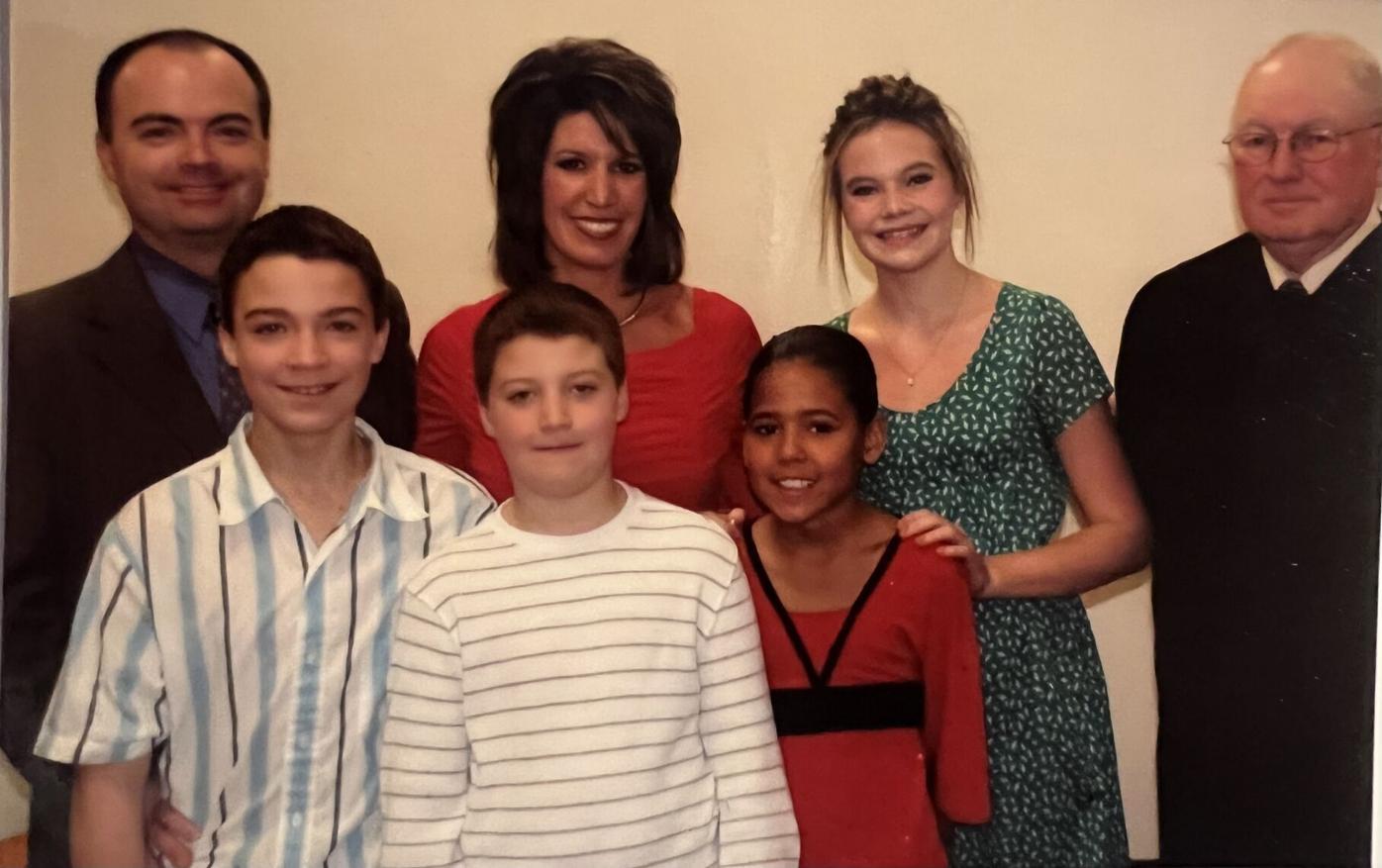
The McNabb family on the day Jayda’s adoption. Family members clockwise from back left: Gregg, Jena, Falon, Jayda, Jevon and Caden.
COURTESY OF THE McNABB FAMILY


The McNabb family on the day Jayda’s adoption. Family members clockwise from back left: Gregg, Jena, Falon, Jayda, Jevon and Caden.
A short time later, during their middle son’s fifth-grade graduation, McNabb tapped on his wife’s shoulder.
“He said, ‘What would you say if I told you I wanted to adopt a little girl?” Jena McNabb recalls of the conversation that would change multiple lives. “I said, ‘If that’s what your heart says, sure.’ He said, ‘I’m serious.’ I said, ‘So am I.’
Over that summer, the McNabbs and Blundell arranged for their children to spend time together without letting on what was potentially in the works. Ultimately, Jayda moved into the McNabb home before the school year and took their last name. The adoption was then finalized in December.
“I was Mr. McNabb in second grade,” Gregg McNabb said. “When Jayda started third grade, I was Dad. It was a unique transition and we, my wife and I, have always had the belief that we just gave Jayda an opportunity. Jayda’s the type of a person who just takes full advantage of every opportunity that’s provided to her.”
Getting better at it
The defense McNabb faced from Washington in a November tournament in Hawaii was unlike anything she had ever encountered.
The Huskies sagged, taking away her ability to drive past them and daring her to shoot from distance. She was not a 3-point shooter in high school — “Maybe attempted 10 3s her whole high school career,” her father said — and she attempted just two in her first six college games, missing both.
Against Washington, she attempted four, making one.
If this was going to be the opportunity teams were going to present, she knew she needed to improve.
“She came home, got in the gym,” Gobrecht said.
In 10 conference games, McNabb has made 11 of 23 3-point attempts, a clip of 47.8%. To put that in perspective, transcendent Iowa star Caitlin Clark — 39 points shy of becoming the women’s college game’s all-time leading scorer — is hitting 39.6% from 3 this season.
“That’s just her saying, ‘Golly, I’m not going to let that be something that hurts my team, so I better get better at it,’” Gobrecht said. “And she did.”
Constant activity
Over the course of a summer, 8-year-old Jayda McNabb had gone from an only child raised by her great-grandmother to a full-fledged member of a bustling, athletic family.
It was that constant activity that helped ease the transition.
“It was definitely a different environment going from being alone to having three other siblings,” she said. “Definitely a weird time, but it was fun. You have people the same age as you to play with now.”

The McNabb family, from left, Jayda, Jevon, Jena, Gregg, Caden and Falon.
Photos COURTESY OF THE McNABB FAMILY


The McNabb family, from left, Jayda, Jevon, Jena, Gregg, Caden and Falon.
The McNabb family consisted of daughter, Falon, now 25, who would go on to be part of her college dance team and now works for the Department of Homeland Security in Centennial. Her short distance from Colorado Springs allows her to attend all of Jayda’s home games. Caden, 23, played NCAA Division III football at the University of Minnesota-Morris and will begin law school in the fall. Jevon, 20, is playing NAIA football at Dakota State and studying cybersecurity. Jevon is just six weeks older than Jayda.
Jayda’s grandmother had introduced her to sports by enrolling her in camps at Stevens High School in Rapid City, the school she would later attend. Jayda also took ballet for seven years.
But in the McNabb household, she was fully immersed in a life of athletics. She eventually became a two-time All-State basketball player, taking her team to the state finals twice. She was a state champion in volleyball and her team MVP in both sports. She was also a state qualifier as a sprinter in track and field, taking a state title as part of a sprint medley.
“She was a very easy young lady to raise,” Jena McNabb said. “If you said don’t do that, she wouldn’t do it. If you said, we’re going to do this, she would do it. She’s very coachable, I would say.”
Basketball coaches from junior colleges through the Ivy League eventually reached out. Air Force came into the picture relatively late and appealed to Jayda only after she had talked through the myriad pros and cons with her parents.
But there was a catch. The exhaustive appointment process wasn’t complete, making Air Force less than a certainty, and the other coaches were growing frustrated while waiting for an answer.
“She turned down offers without an appointment,” said Gregg, a former college baseball player who said he offered guidance but allowed Jayda complete control of her recruiting decisions. “All her eggs were in one basket. It was just a great opportunity.”
Source of tenacity
Caden McNabb grew to be a 5-foot-10, 190-pound college linebacker; Jevon McNabb a 6-foot, 230-pound defensive end.
This was Jayda McNabb’s childhood competition for rebounds.
“They weren’t great basketball players, so they didn’t really know how to not foul you when we were playing in the driveway,” Jayda recalls. “It definitely made me tougher, for sure.”
Caden, in particular, likes to take credit for Jayda’s tenacity. He doubled as a standout wrestler, and he brought those skills to their court.
“He was boxing her out at 10, 11,” their father said. “There were a lot of elbows; get big and take up space. I just think having two older brothers that never gave her any slack and just worked her over made her tough, made her work for things.”
Through Jayda’s eyes
Jena McNabb often says she wishes people could see the world through Jayda’s eyes.
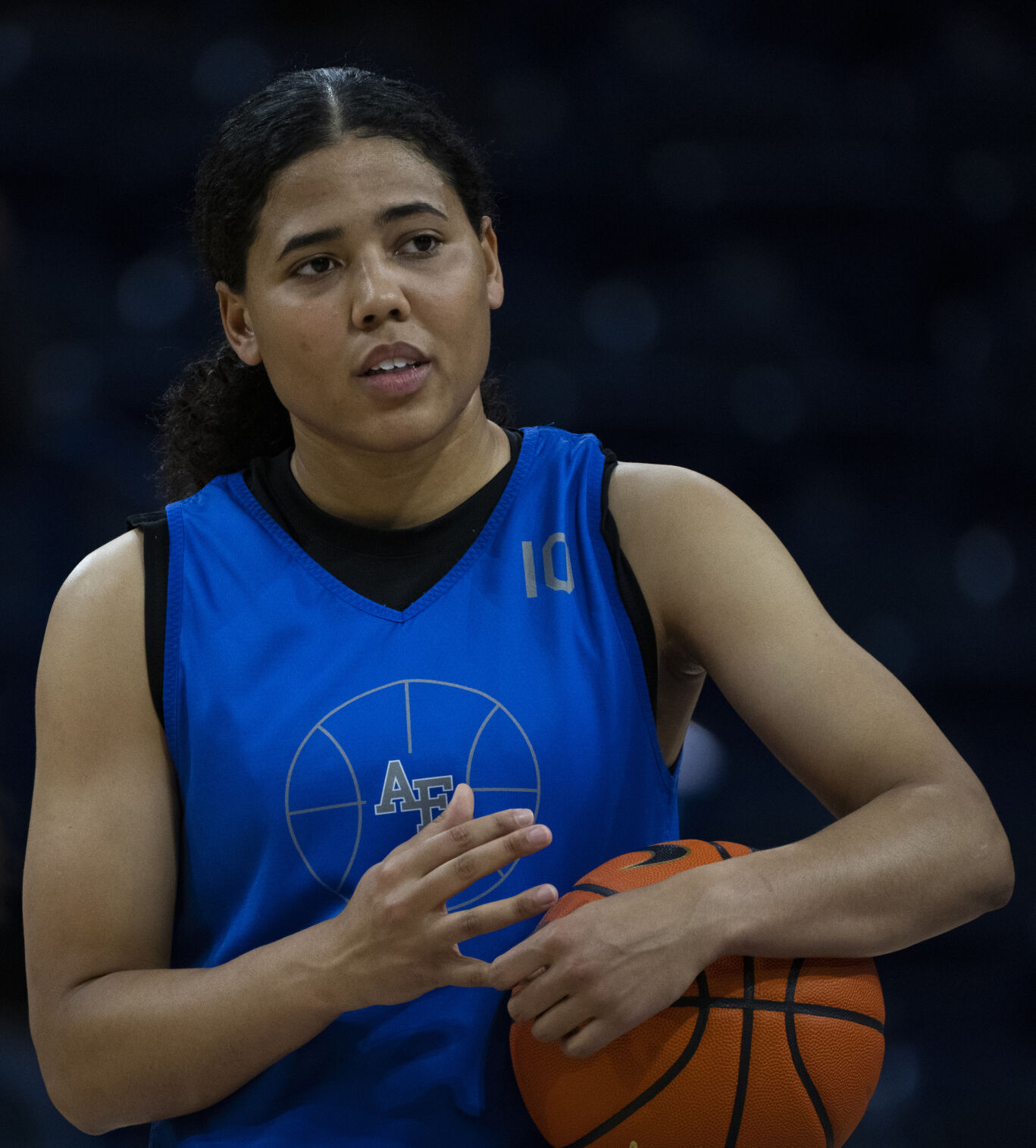
MIDDLE: Air Force freshman guard Jayda McNabb listens during practice before running a drill last week at Clune Arena on Air Force Academy.
Christian Murdock, The Gazette


MIDDLE: Air Force freshman guard Jayda McNabb listens during practice before running a drill last week at Clune Arena on Air Force Academy.
It’s a worldview without pronounced highs and lows, a matter-of-fact approach not burdened by emotion. State championship games weren’t seen as being bigger than other contests. Deaths of older loved ones were mourned, but with a keen understanding that this was a part of life. Coaching changes in all four years of high school left teammates in tears as they coped with the abrupt interruptions of continuity, but to Jayda such a reaction just didn’t register.
Jayda’s reports from Air Force preseason practices were a consistent, flat, “they’re fine.” The family was floored when relatives in Castle Rock, who serve as her sponsor family, reported before tipoff that Jayda was in the starting lineup for the exhibition opener.
Jayda is one of just two Falcons who have started each game this season.
“She’s taught me a lot in life,” Jena McNabb said. “If you look at things in those lenses, you see things very differently.”
This tendency to detach emotion from events doesn’t mean Jayda is free of drive. Quite the opposite. Somehow, both are likely the result of her unique story. Expose anything or anyone to an extreme environment, and exaggerated results will occur. In this case, her internal makeup and outside influences kept those outcomes pointed in positive directions.
“You know, I think many times, what would have happened if I hadn’t taken her? I just don’t know,” Blundell said. “It wouldn’t have been good.”
McNabb’s unique personality makes her the ideal fit for the Air Force Academy as a motivated, athletic, high-achieving student who is able to see some of the intentional psychological hurdles for what they are.
“Jayda’s a very intense woman,” Falcons coach Gobrecht said. “She really takes things to heart. It matters to her. It matters to her to do the best she can, it matters to her to do what she can for the team and she knows that’s her gift.
“I think Jayda’s a real prototype of the player we need to go after. She’s a really good player; she’s just a little bit undersized. And that’s OK. You may think she’s too small, but like I say all the time, it’s size of the fight in the dog.”
All of this can no doubt be traced to the bonds formed by those who opted to play an integral part of her life.
“When you have the opportunity to help another human in their current situation and provide them, just, hope,” Gregg McNabb said. “That’s all we wanted to do was provide her hope. And support. And guidance. And love. And we were able to do that. We had the resources to do that.”
Jayda can’t pinpoint where and how her internal fire was lit. Who can? But she knows who to thank for it.
“Just seeing (my great-grandmother) work multiple jobs and still raise a child has inspired me to be the best that I can today,” she said. “She gave me a shot at life to be great and I don’t take it lightly.
“And, of course, if I wasn’t adopted by the McNabb family I don’t think I would have the opportunity to be where I am today.”
An offensive rebound wipes the slate clean, creates an opportunity for a second chance.
That’s Jayda McNabb’s specialty.
From our archives
Inspiring family stories from Air Force athletes.
Zac Larrier overcomes early loss of father, long odds to thrive as Air Force cadet, quarterback
Paul Klee: A Christmas Story brought to you by an Air Force basketball player
Ramsey: Former Air Force football star draws on strength of loved ones for epic fight with cancer