







Colorado AG sues to block Kroger-Albertsons merger
Jessica Gibbs/Denver Gazette
Colorado Attorney General Phil Weiser is suing to block the nearly $25 billion Kroger-Albertsons merger, the official announced Wednesday.
In Colorado, Kroger operates 148 King Soopers and City Market stores, while Albertsons runs 105 Safeway and Albertsons stores.
In a press conference, Weiser claimed Kroger violated the state’s antitrust laws over its plans to merge with Albertsons, including having a “non-poach” agreement to keep striking workers from taking a job at each other’s stores.
“These fears are warranted because the market for grocery stores in Colorado is already very concentrated with too little competition,” Weiser said. “And the merger would make the problem worse.”
“We need to remember lessons from past grocery store mergers,” he added.
Colorado is the second state to file a lawsuit against the grocer after Washington Attorney General Bob Ferguson called for a stop to the merger in January. Weiser said he sued after completing a yearlong review done by the Colorado Department of Law that included 19 town halls across the state.
“We are disappointed in Attorney General Weiser’s premature decision to file a lawsuit while the merger is still under regulatory review, and we remain in active dialogue with the FTC and the other state Attorneys General,” Kroger and Albertson said in a statement.
The grocer said it is committed to defending itself in court and argued that efforts to block the merger would not help reduce competition, but rather favor retail giants, such as Walmart, Costco and Amazon.
Kroger announced it would buy Albertsons in 2022 and is waiting on the Federal Trade Commission to decide whether to allow the $24.6 billion transaction that could affect more than 250 stores in Colorado.
The size of the deal has gotten extra scrutiny from federal and state officials since the pandemic, said Phil Lempert, a grocery store analyst at supermarketguru.com.
“The grocery business has changed dramatically from supply chain issues to how they operate,” Lempert said, adding consumers are “skittish” from inflation.
Even as inflation eases, food prices continue to climb in the Denver metro area. In the last two months, grocery costs in the metro went up 1.5% between November and January, according to data from the Bureau of Labor Statistics.
While there’s significant pushback, Lempert said it’ll be difficult for attorney generals across the country to prevent a merger.
“They can delay it,” Lempert said. “I’m not sure they can stop it.”
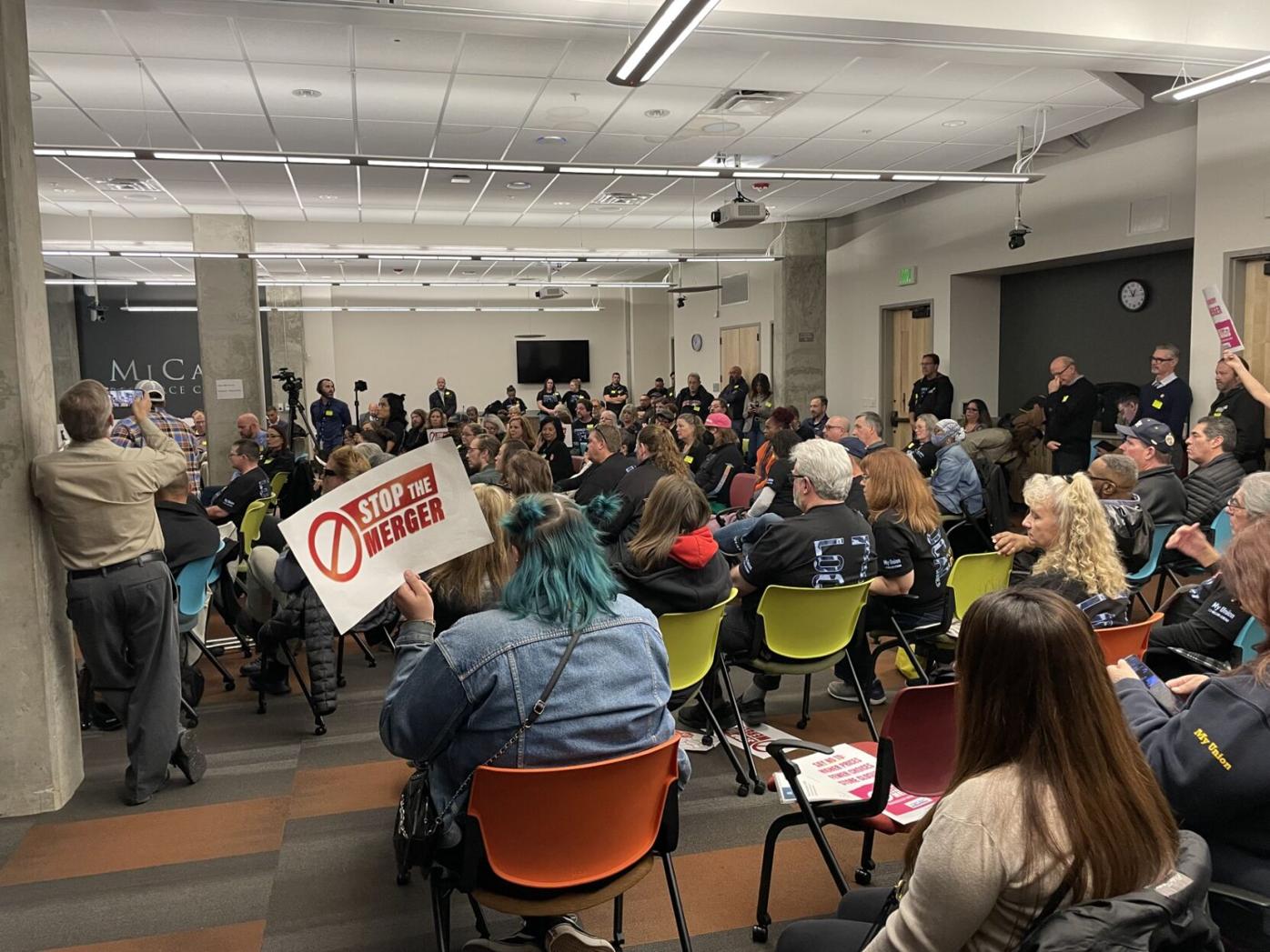
Union workers and consumer advocates also opposed the merger, arguing it would lead to a rise in food prices or loss of jobs.
Kroger announced Tuesday that it would commit to lowering prices if its deal with Albertsons closes and it would not layoff front-line workers.
While Kroger faces competition from other retailers nationally, Weiser’s office said the merger would have a larger effect on Colorado, where Kroger is the state’s largest grocery chain and Albertsons is the third largest.
Kroger would take up more than half of Colorado’s grocery market share if it bought Albertsons, Weiser said.
Smaller communities in Colorado with fewer grocery options are ”especially nervous,” Weiser added.
The Colorado union of grocery workers UFCW Local 7 applauded the attorney general’s decision to sue Kroger and Albertsons.
“The devastation resulting from the Safeway Albertsons merger nine years ago is still felt in communities across Colorado with closed stores and grocery deserts,” the union said in a statement.
Albertsons bought Safeway in 2015 and the FTC required the grocer to divest 168 stores. Many went to Haggins, which went bankrupt months after the sale, and the Albertsons company bought back many of its old stores later. While none of those were in Colorado, Albertsons shuttered 20 stores in the state two years after it took over Safeway to reduce redundancy, and the Colorado Attorney General’s Office said it worries something similar would happen if Kroger were allowed to absorb Albertsons.
In the lawsuit, Weiser claimed the merger would eliminate competition between the two supermarket chains and consolidate the market, which, he argued, would be “bad for Colorado shoppers, workers, and suppliers.”
“Coloradans are concerned about undue consolidation and its harmful impacts on consumers, workers, and suppliers,” Weiser said in a statement. “After 19 town halls across the state, I am convinced that Coloradans think this merger between the two supermarket chains would lead to stores closing, higher prices, fewer jobs, worse customer service, and less resilient supply chains.”
The two companies planned to divest more than 400 stores and other assets as a way to propel the merger, the Associated Press reported earlier.
In a news release, Kroger said divesting the stores to C&S Wholesale Grocers would ensure that no stores will close through the merger, that frontline associates will keep their jobs, that collective bargaining agreements will continue and that employees will continue receiving benefits.
“Following the announcement of our proposed merger with Albertsons Cos., we embarked on a robust and thoughtful process to identify a well-capitalized buyer who will operate as a fierce competitor and ensure divested stores and their associates will continue serving their communities in the ways they do today. C&S achieves all these objectives,” The Kroger Co. CEO Rodney McMullen said last year.