







U.S. DOT could punish airlines for breaking wheelchairs under new proposed rule
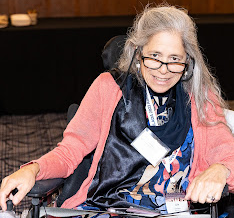
courtesy of Julie Reiskin
The U.S. Department of Transportation announced new proposed rule changes Thursday that are designed to protect disabled passengers on airplanes. Under the proposed rule, airlines would be punished for any “mishandled” devices.
“This makes it clear and direct that that is a violation that allows DOT much more straightforwardly to hold airlines accountable when there is that kind of violation,” Secretary of Transportation Pete Buttigieg said in a call with reporters.
The DOT rule change would be a robust overhaul of the way these claims are handled and give the agency clear mechanisms to enforce the law. DOT could fine the responsible airline up to $124,731 per instance of a device that was damaged, lost or delayed.
Julie Rieskin, a 59-year-old Denverite with multiple sclerosis, uses a specialized wheelchair that has been severely broken during flights at least three times. She said she was encouraged by the proposed rule and that it could not come soon enough. The new rules add robust training requirements for any airline employee who interacts with wheelchairs.
“It is a huge step in the right direction,” Rieskin said. “It is super exciting.”
According to the DOT, other elements of the proposed rule change include:
- Airlines would be required to pay for the repair or replacement cost for broken wheelchairs through the passenger’s preferred vendor.
- Airlines would have to give the passenger a loaned replacement chair that “fits their needs as much as possible” during repairs.
- Airlines would be mandated to provide “safe and dignified” assistance that includes help getting on and off of the plane as well as “prompt” updates when the wheelchair has been boarded or if it can not safely fit on the plane.
Rieskin said she was particularly excited that airlines would be required to promptly bring her wheelchair to the gate unharmed after a flight because she often waits for her device long after other passengers have departed. Most importantly, Rieskin said she is hopeful that automatic fines will motivate airlines to stop breaking assistive devices.
“We’ve needed this forever,” she said. “If they start getting fined every time they engage in this behavior, they’ll stop the behavior.”
Airline employees mishandle wheelchairs and scooters thousands of times each year. A Denver Gazette analysis of DOT damage reports found about one device was damaged for every 100 wheelchairs and scooters brought on board in 2022 — the last year with complete federal data.
“I think it reflects a culture where this is just treated as part of doing business,” Buttigieg said.
He said the proposed rule change would be a financial incentive for airline employees and contractors to pay attention. Buttigieg said it would be on airlines to figure out how to comply with the new rules.
“The focus here is on the results,” he said.
Another aspect of the proposed rule change is “practical” annual training for all workers that interact with passengers in wheelchairs or other assistive devices.
“This is about making sure that both the physical safety of passengers and the physical condition of mobility devices is contemplated,” Buttigieg said.
While Reiskin is excited by the proposed shift in regulations, the real dream is for the eventual reconfiguration of airplanes that would allow her to fly on a plane in her own wheelchair.
“That’s really what’s going to make this really work well,” she said.
Buttigeg said that is a future federal regulators are working towards, but they remain “years away from putting in place such a policy.
“Getting to that will require an enormous amount of research, but I believe it is a worthy goal because that is the ultimate way to ensure safe and dignified access for wheelchair-using passengers,” he said.
The announcement triggered a 60-day comment period where the public can submit their feedback on the possible rule changes on the federal register’s website.