







An overlooked town of hot springs, and more than meets the eye | Colorful Colorado
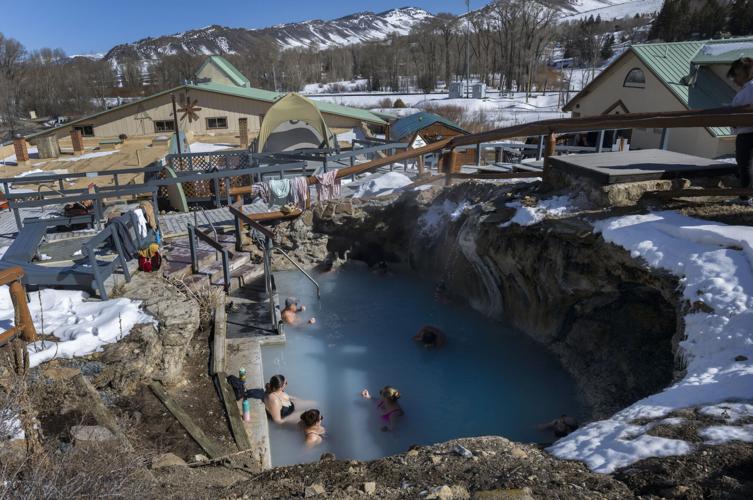
Visitors soak in one of the 16 natural pools at the Hot Sulphur Springs Resort and Spa on a winter day last month. The hot springs were a winter campground for Native Americans. In 1840, William Newton Byers, founder of the Rocky Mountain News in Denver, was the first European American to document the springs and took ownership of them in 1864 when he founded the town of Hot Sulphur Springs.
Photos by Christian Murdock, The Gazette
HOT SULPHUR SPRINGS • Drivers veering off Interstate 70 go up and over Berthoud Pass to meet the youngest addition to a storied, once-isolated land. Winter Park Resort joined Grand County to forever change it.
Should drivers continue on U.S. 40, they’ll meet Fraser, where in the old logging days it would’ve been hard to predict the likes of Safeway and Wendy’s and other chain names amid high-rise condos and apartments. Such development continues farther on in Granby.
And then the land clears again, along with the sky — the scene recounted by a “pleasure seeker” in 1862. She wrote of her traveling party “stimulated by our life in the open air.”
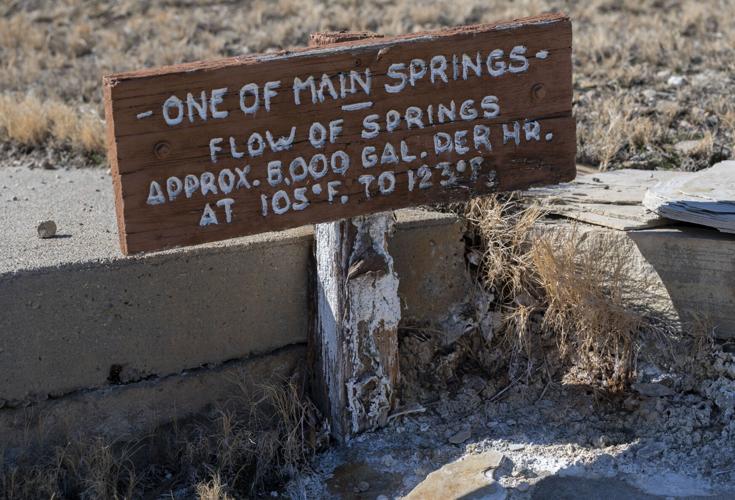
Maybe, just maybe, before entering Byers Canyon, drivers will stop in the little town that is easy to miss. There is no stoplight or stop sign to halt them. Nor is there much of anything, save for the Sinclair station that seems out of place here and, just before the canyon, steaming pools that seem a mirage.
Pull off the highway-turned-Byers Avenue, and you might find the museum tucked in the former schoolhouse. Inside you might find Samantha Missey, who could tell you all about Hot Sulphur Springs.
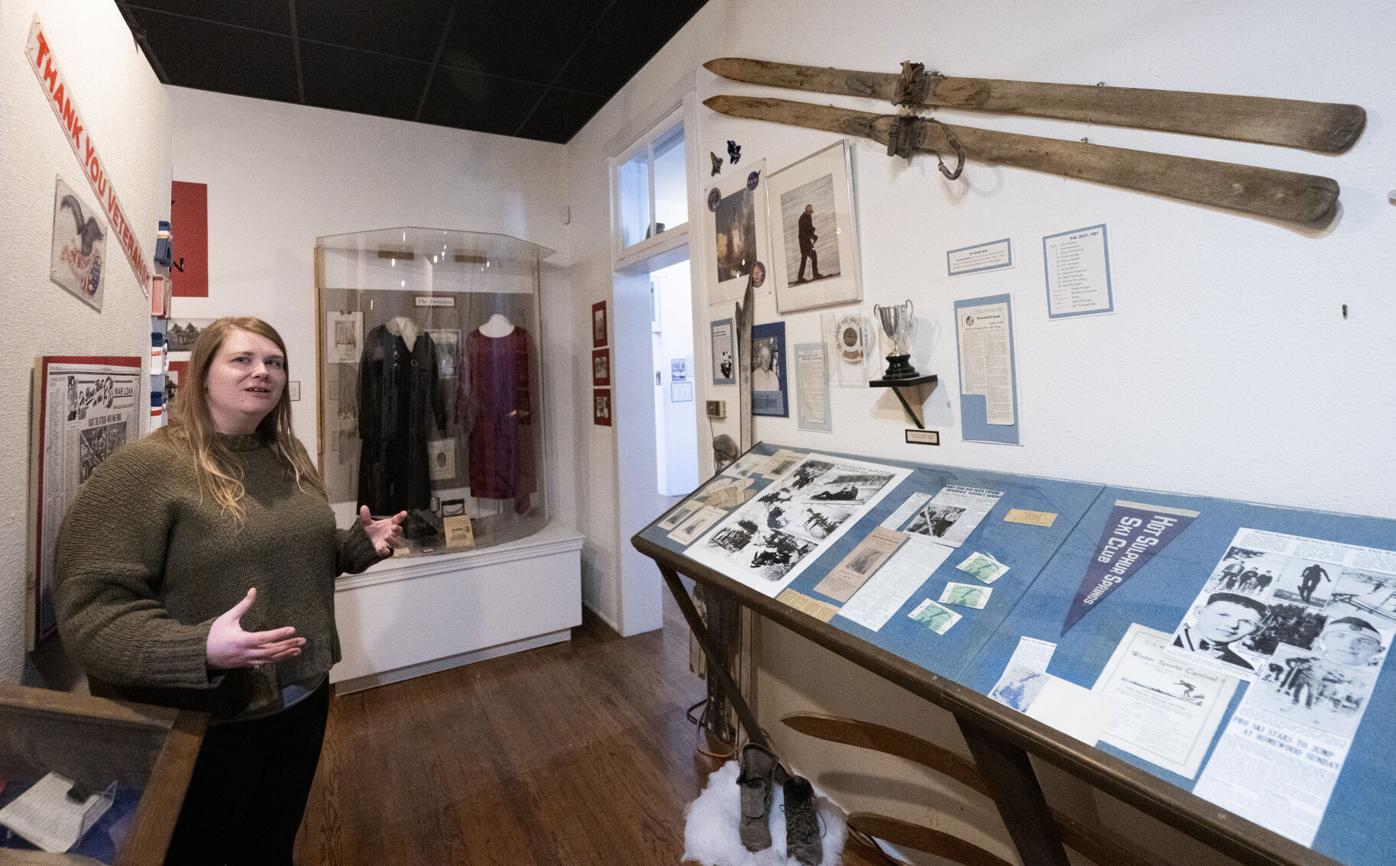
Samantha Missey leads a tour last month through the Pioneer Village Museum, including the ski history of Grant County, in the old Hot Sulphur Springs Schoolhouse in Hot Sulphur Springs.
Christian Murdock, The Gazette


Samantha Missey leads a tour last month through the Pioneer Village Museum, including the ski history of Grant County, in the old Hot Sulphur Springs Schoolhouse in Hot Sulphur Springs.
“We’re kind of a drive-by,” she says. “If you go by everything — Winter Park, Fraser, Granby — and you stop here, you must’ve been really interested to stop here.”
Most people are interested in those pools along the hillside: Hot Sulphur Springs Resort and Spa.
That 1862 pleasure seeker remarked on the mineral-rich waters oozing from the ground that, “like magic,” she wrote, “took all the weariness and aches from our tired bones.”
Colorado is home to better-known hot springs. One is reached by continuing on through Byers Canyon: Strawberry Park Hot Springs near Steamboat Springs.
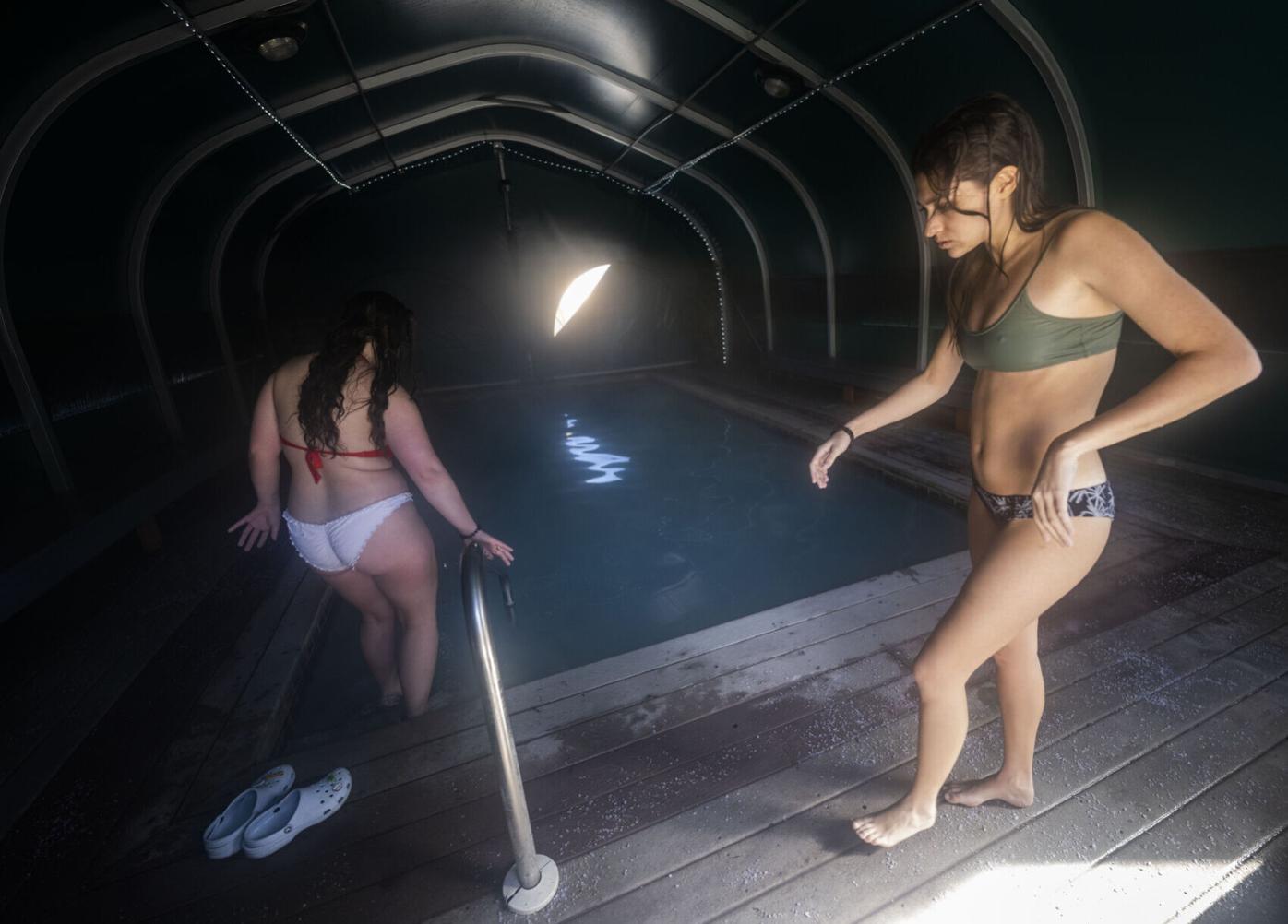
Melania Michaels, right, from Miami and Lindsey Piper from Michigan enter one of the 16 natural pools at the Hot Sulphur Springs Resort and Spa.
Christian Murdock/The Gazette


Melania Michaels, right, from Miami and Lindsey Piper from Michigan enter one of the 16 natural pools at the Hot Sulphur Springs Resort and Spa.
Compared with the state’s top soaking destinations, Hot Sulphur Springs Resort and Spa has remained modest. Its rustic aesthetic matches the town that has fiercely opposed the kind of growth emanating from the ski resort on the other side of the county.
“You hear a lot of people in Granby and Fraser complaining about how everything changed,” says Katie LaDrig, Hot Sulphur Springs’ town clerk. “You don’t get that here.”
You get a couple of roadside motels. You get the restaurant that is not always open (the other restaurant, the Dari Delite, closed not long ago, along with the candy shop). You get the gas station. And you get the hot springs, where weekend visitors might outnumber the town’s year-round population of about 650.
Those visitors find a different kind of experience, says Tara Mulder, the resort’s front desk manager. She points to the hill above the pools, where deer and elk are known to rest. She points to the cliffs on either side, where a golden eagle might fly back and forth.
In Hot Sulphur Springs, visitors might find more than meets the eye.
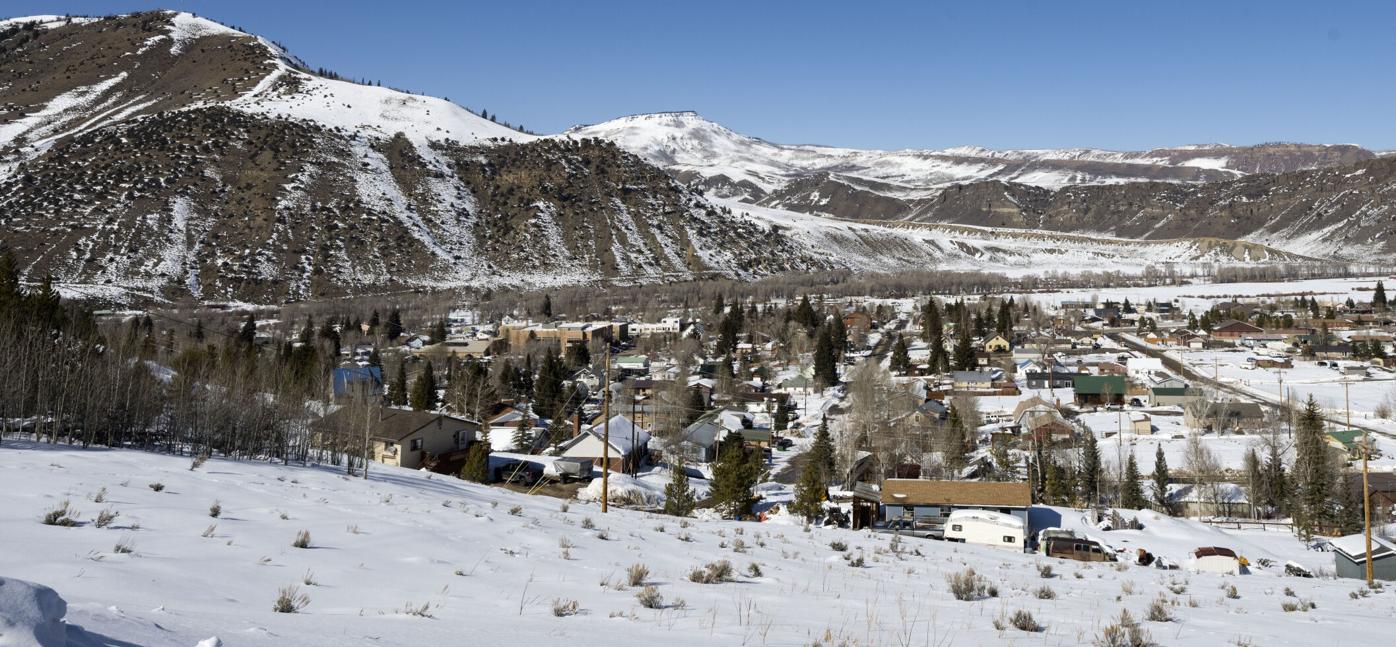
The town of Hot Sulphur Springs, pictured last month, is home to about 650 yearlong residents.
Christian Murdock, The Gazette


The town of Hot Sulphur Springs, pictured last month, is home to about 650 yearlong residents.
“You’d be surprised that Hot Sulphur has quite a bit of history for being so small,” Mulder says.
The welcome sign into town celebrates something other than the hot springs. “First in Winter Carnivals,” it reads.
“I got with (Colorado Department of Transportation) and had that made up,” lifelong resident Donald Dailey says. “Because I really wanted to hear those Steamboat people go, ‘Hot Sulphur? But I thought we were the first!’”
Steamboat’s winter carnival is considered the longest-continuing in the state, but Hot Sulphur indeed credits itself for the first in 1911. Fun on skates and sleds broke the doldrums of the season.
In 1912, along came a Norwegian named Carl Howelsen. He introduced ski jumping to the festival — a fad that caught widespread attention, soon attracting thousands of people to town.
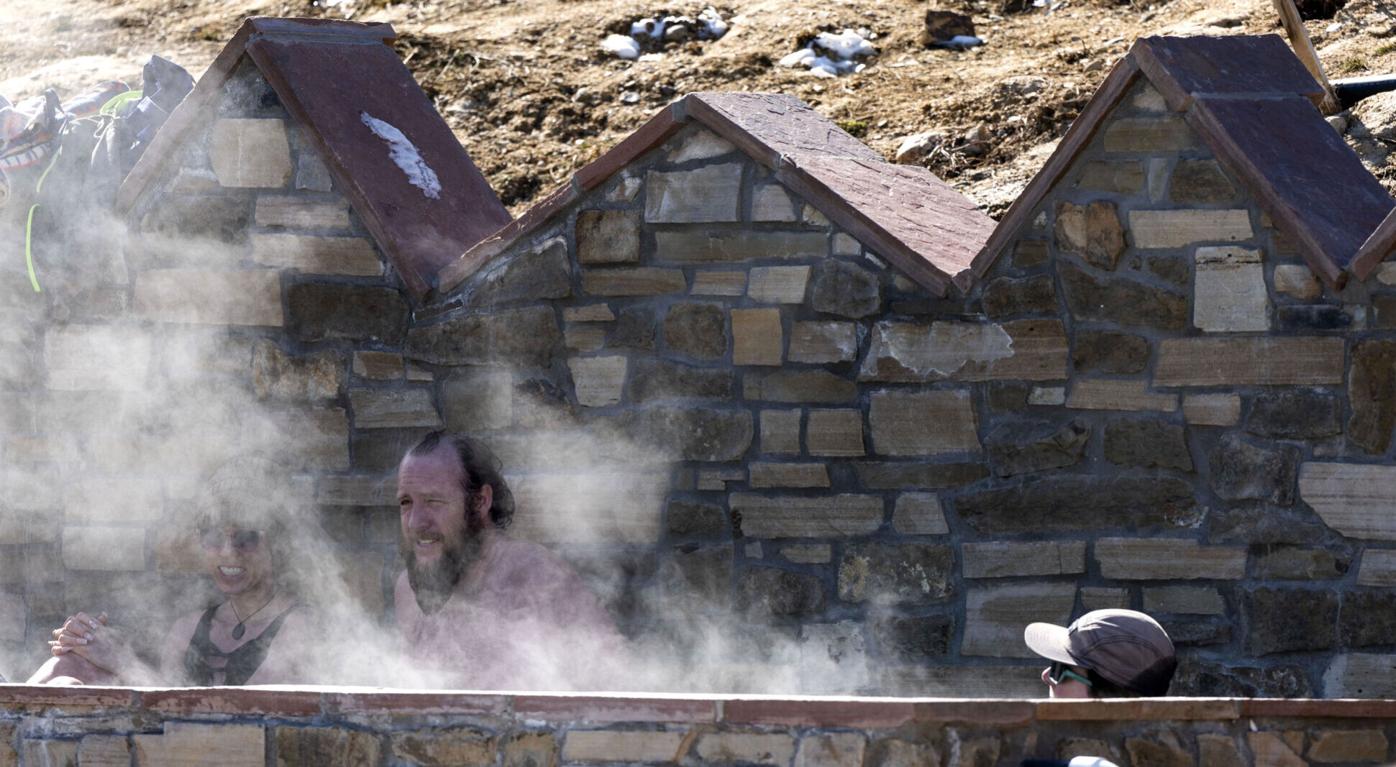
ABOVE: Steam rises from one of the recently remodeled pools at the Hot Sulphur Springs Resort and Spa last month in the small Grant County town north of Granby.
Christian Murdock, The Gazette


ABOVE: Steam rises from one of the recently remodeled pools at the Hot Sulphur Springs Resort and Spa last month in the small Grant County town north of Granby.
Howelsen went on to Steamboat to build what is today considered Colorado’s longest-going ski area. Winter Park in 1940 was followed by bigger resorts along I-70 that many say overshadow Hot Sulphur’s historical significance.
“Colorado’s ski industry got started right here,” Dailey says.
Dailey is a passionate historian of the town where his family goes back five generations. His great grandfather would have known skiing as a troubling mode of travel in these mountains before it was seen as something fun.
Dailey’s great-grandfather was William Thompson. In the 1860s, he was among explorers curious about the area that became known as Middle Park by earlier white waves of surveyors and trappers.
It was called Middle Park and also the Island of the Rockies, Missey says at the museum. “Because we’re separated on all sides by the Continental Divide.”
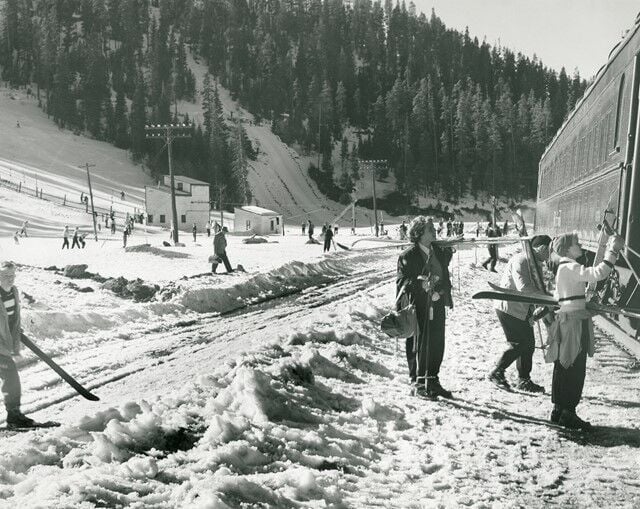
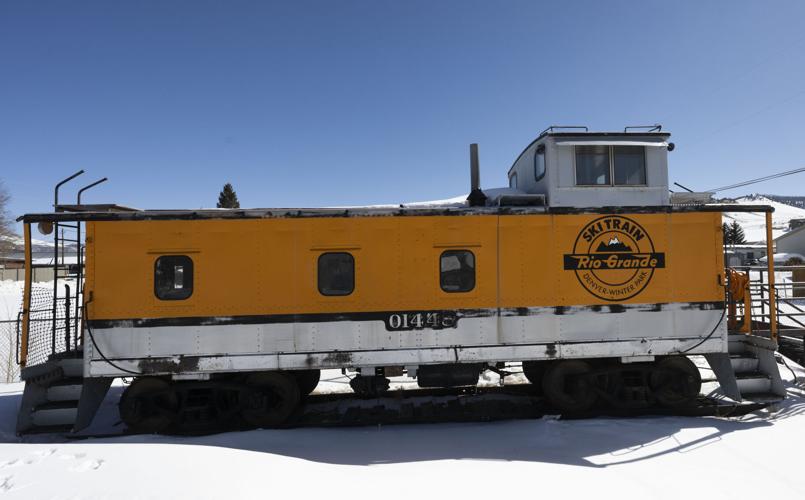
BELOW: A Winter Park Ski Train in the early 1950s. Skiers board the ski train.
courtesy of Grand County Historical Association


BELOW: A Winter Park Ski Train in the early 1950s. Skiers board the ski train.
That would make travel treacherous for tourists and settlers. But over many centuries, it’s believed tribes had established routes to the wide-open valley for hunting and enjoying summertime temperatures that were cooler than the plains.
And there were the hot springs.
In 1869, the writer Samuel Bowles observed travelers mingling with Native people around the waters.
“The invigorating effects are wonderful,” Bowles wrote. “Indians resort to them a good deal, put their sick horses into them, and are loath to yield control of them to the whites.”
The hot springs are but one flash point of the 19th century characterized by violence and broken promises.
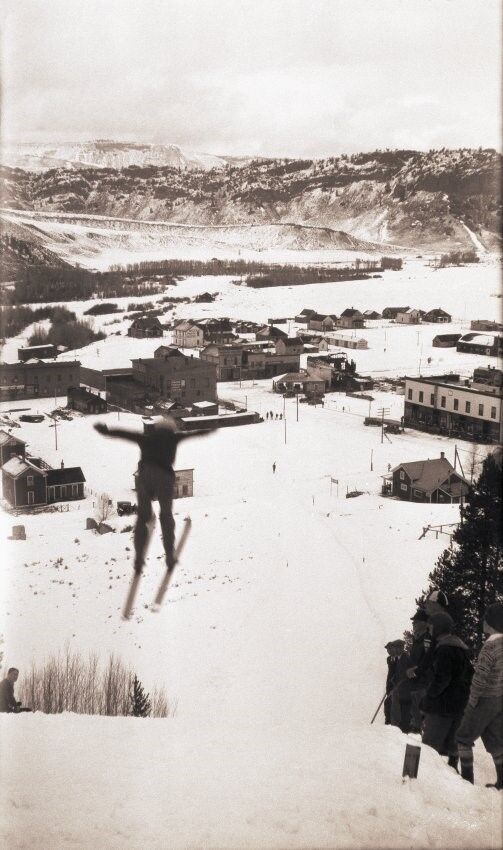
A child ski jumper at a Winter Carnival in Hot Sulphur Springs with the town in the background.
courtesy of the Grand County Historical Association


A child ski jumper at a Winter Carnival in Hot Sulphur Springs with the town in the background.
Homesteaders ran fences across Middle Park where the Ute people long roamed and hunted free — leading, it seems, to the fight that killed Chief Tabernash in 1878. A year later, farther west, the Meeker Massacre represented a tipping point for tribes being driven to confined reservations.
The hot springs were taken from them, too. The waters came under the ownership of William Byers by the mid-1860s. The Rocky Mountain News founder saw in Hot Sulphur Springs a “Saratoga West” — another amenity to promote Colorado ahead of statehood.
“I consider him to be Grand County’s first developer,” Missey says. “He was a big proponent of making Grand County its own county, partly for selfish reasons. He wanted Hot Sulphur Springs to be the county seat.”
It became so after the infamous Independence Day of 1883. In Grand Lake, a shootout over the county seat resulted in the deaths of four officials.
Bloodshed accompanied other developments, including perhaps the most pivotal for the modernizing county.
The completion of Moffat Tunnel was not without injury and death of several workers who cleared the way through the Continental Divide. A pioneering doctor of the county, Susan Anderson, is said to have protested the first train that rolled through in 1927.
She might have mourned while many others celebrated. Moffat Tunnel “really opened the world to Grand County,” Missey says.
That was the case for Hot Sulphur Springs, which became in much easier reach of Denver skiers. The 1920s and ’30s were a heyday for the sport in town.
An enthusiast from that era, Barney McLean, is quoted in an account maintained by Grand County Historical Association: “Hot Sulphur Springs may have been the birth or cradle of skiing in Colorado and the West, but from that humble beginning, the opening of Winter Park (in 1940) was the real beginning of Ski Country USA.”
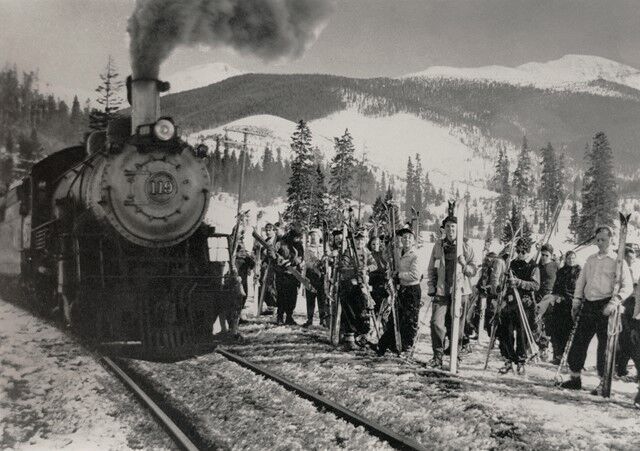
A pre-World War II train pulls up to Winter Park.
courtesy of Grand County Historical Association


A pre-World War II train pulls up to Winter Park.
Hot Sulphur’s original slopes now sit silent by a cemetery. Below, the town struggles for an economic identity.
Marketing is not in the town’s nature, but the hot springs would seem obvious. The resort and spa is looking to update and expand, says Mulder, the manager.
“The town’s gotta grow with us,” she says.
Infrastructure is top of officials’ minds; grants have been sought for overdue replacements and upgrades to water and sewer systems. Grants have been sought while town coffers have been short — especially in the wake of alleged embezzlement at town hall. That’s under investigation by the state.
“We’ve been working at a loss the last five years,” says LaDrig, who took over as town clerk in the wake of the scandal.
As a resident of 15 years, she says she was upset as anyone by this year’s 30% hike to water bills. The move, she says, underscores lingering tensions in a town reluctant to grow and thus limit its tax base.
“I’ve had to say it to residents that complain about that rate increase,” LaDrig says. “You want to keep the town exactly the way it is, and I understand that, because I love this town too. But you can’t have it both ways. You either need to allow more business and development to offset the costs, or you have to pay more to live here.”
To her, change seems inevitable. Dailey, the fifth-generation native, says he would fear something irreplaceably lost by change.
“It’s community,” he says. “We just help each other out. That’s what we do.”
Plows are seen clearing driveways in winter. Come summer, people wave on their porches and visit at the post office. The weekend of June 7 is set to return Hot Sulphur Days, featuring fireworks, barbecue and the softball match between the “hi hos” and “lo hos” — names for people living in the hills or flats on both sides of the road through town.
Many keep driving. Others stop for the hot springs, to soak and to perhaps admire a grotto as Mulder does.
“It changes every day,” she says of the rock.
It’s sometimes seen discolored by mineral runoff, sometimes steaming, sometimes cloaked in moss and other times in ice. The water trickles sometimes. Sometimes, it streams down like tears.