Denver dad creates unique employment program for young adults with autism
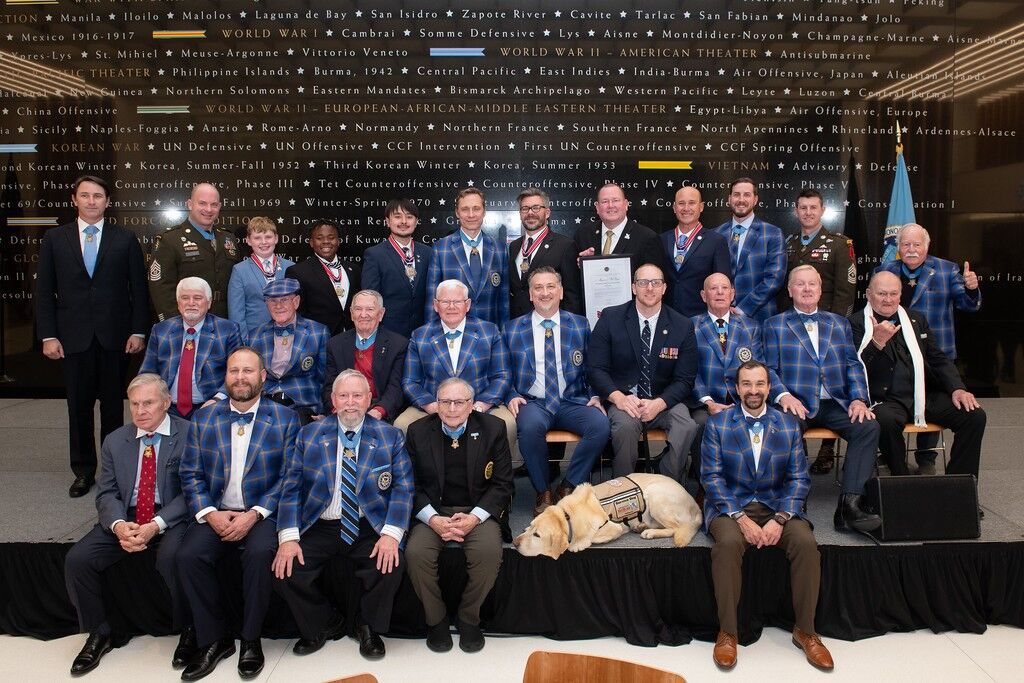
For his work, Danny Combs received the Service Act Honoree award as part of the Congressional Medal of Honor Society's Citizen Honors Awards
A lifetime ago, Danny Combs worked on platinum albums with Grammy and Oscar-winning artists and won a Grammy Enterprise Award for a program he designed for Nashville schools.
Then everything changed in 2009 with the birth of his first son, Dylan, who was diagnosed with autism.
“When we learned that he had autism, everything shifted,” Combs said.
But rather than accept one set of reality — that of a “dad that sat in a waiting room, I said, ‘No.'”
“My son needs something more,'” he said.
Fast forward to 2024 and Combs accepted the Service Act Honoree award as part of the Congressional Medal of Honor Society’s Citizen Honors Awards.
With a police escort winding through Washington D.C. and getting the honor during a ceremony in Fort Belvoir, Virginia on March 25, Combs said he couldn’t help but feel humbled.
“It’s wild how your son can change your life’s course into exactly where you’re supposed to be,” he said, pondering back at the journey that took him from Nashville to the Denver metro.
That journey led him to creating the Teaching the Autism Community Trades, a training-to-employment program for the autism community in the Denver area that boasts a one-of-a-kind mission — get young adults with autism into careers.
From music to trade
When Combs’ son was diagnosed with autism, a startling-yet-enlightening lightbulb flickered.
“13 years ago, and it’s not much different today, they gave you a book and said, ‘Good luck,’” Combs said of the diagnosis. “You learn that the thing that makes your child special has a name. You learn that it’s very expensive. You then learn that most of the programs out there are deficit-based.”
Around 1 in 36 children have been diagnosed with autism in the country, according to a 2023 study by the Center for Disease Control and Prevention.
The lifelong costs of supporting a person with autism can reach up to $2.4 million — a million more than those without a disability. That number was estimated in a 2014 study by JAMA Pediatrics — over a decade of inflation ago.
Combs took these costs and deficit-based programs into consideration when planning the next steps in young Dylan’s life.
To Combs, every trip to the doctor or therapist was disheartening. The conversation always led to what was wrong with Dylan, not what his abilities were, he said.
Combs quickly realized Dylan’s hands-on abilities by the time he was six. Dylan could build things before he could talk, but no local programs were available to work upon those skills.
The family moved out to the Denver metro to be closer to autism-based care, and after a chat with friend and legendary autism activist, Temple Grandin, Combs began TACT in 2016.
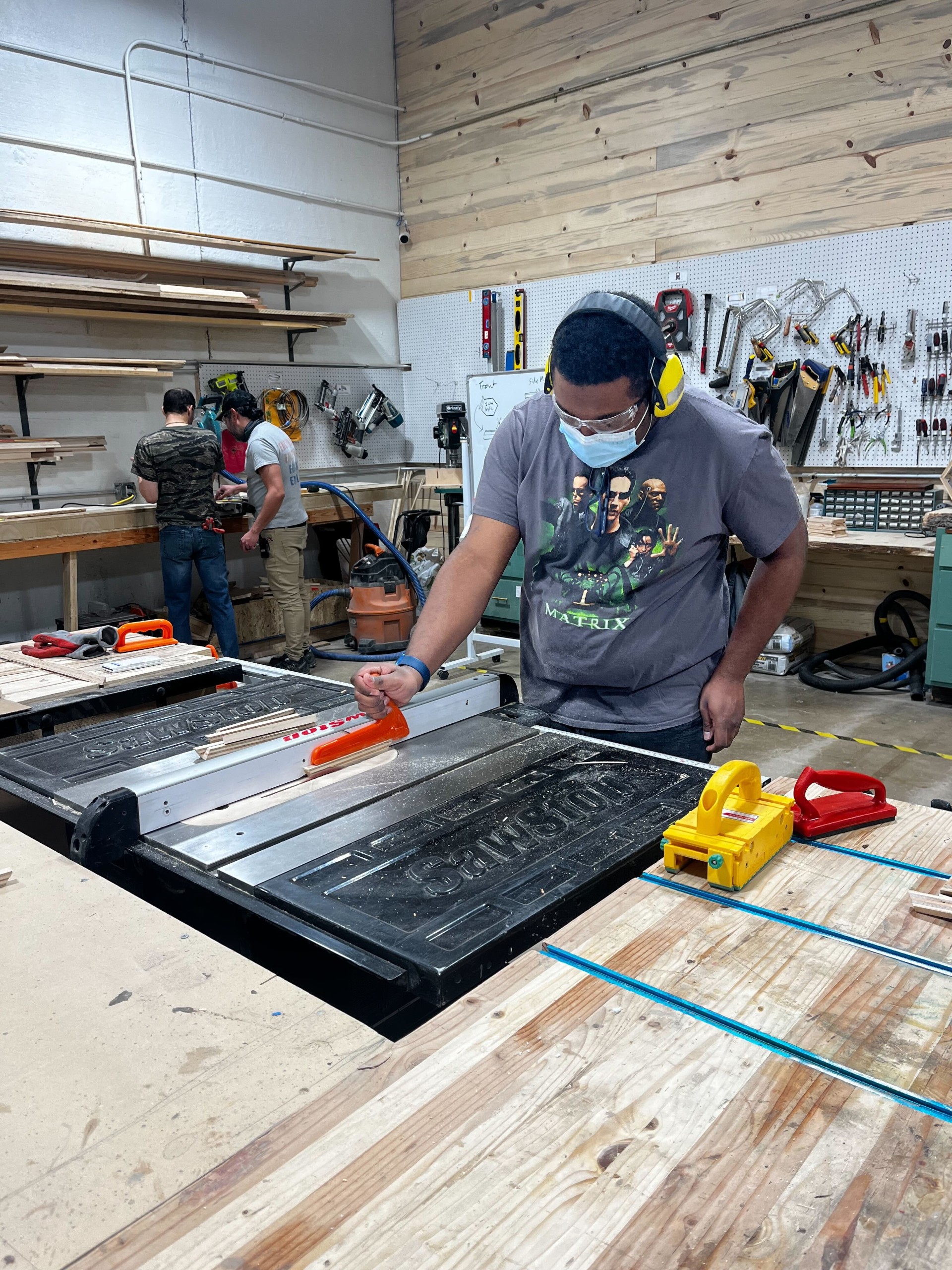
The first few years included traveling around in a pickup truck, teaching trades to children at churches, libraries and whoever else would have him.
Now, the program is based out of a training facility in Englewood with more than 100 current students.
Autism and the trades
TACT partners with local schools and businesses to teach the trades to young adults with autism, helping usher them into the working world.
In just eight years, the program has become the most successful transition-to-employment organization in Colorado, according to Combs, maintaining an 83.3% success rate at getting adults with autism jobs. The state, by contrast, only has a 12.2% success rate.
The nonprofit began teaming up with local businesses to teach people with autism from early childhood to young adulthood on various trades, such as engineering, auto mechanic work, carpentry and welding — focusing on the things that make each student special, not what’s considered a deficit.
“When they come to our program, we help them discover their strengths and we train them in them,” Combs said. “We then help them get placed into jobs with resumes and portfolios. Because we have all these great partnerships with over 60 local businesses, we’re able to get them into a career.”
Combs added that some of the strengths of the students are incredible but are often overlooked by employers due to the stigma of the disability.
“There’s a spectrum of autism, and we serve every part of that spectrum. We have students that have a 160 IQ and can do crazy math. We have students that can tell you the exact engine of a car by just looking at it,” Combs said. “People will say they don’t make eye-contact during an interview or will be standing on their toes. They’ll highlight these things as a reason to not hire them.”
“It’s interesting some of the barriers our community still faces,” he said.
Combatting these barriers remains the mission of Combs and the rest of the TACT team. As of 2024, the program has had over 2,000 students come through and get employed.
“We use the skill trades as the vessels to develop the employment skills. Not all of our students end up being carpenters or welders, but they do end up in a job,” he said.
Beyond Colorado
While being one of the five individuals to receive the Citizens Honors Awards medal at the National Medal of Honor Day ceremony on Monday was a “surreal” experience to Combs, he views it as only another milestone in his journey.
Combs and TACT’s next mission is to go nationwide.
TACT recently merged with The Fedcap Group nonprofit corporation on Monday, helping the program reach new heights.
“We regularly get people asking us to bring TACT to their state. We’re still the only program like this in the country, which is wild to me,” he concluded. “Our goal is to expand all over the country and Fedcap has the resources to make that possible. It’s very exciting.”
The group’s next event, a car show at the Vehicle Vault in Parker on April 27, will help highlight World Autism Month.