







‘Insane’ NCAA transfer portal is March Madness 2.0 | Paul Klee

Northern Colorado head coach Steve Smiley yells plays to his players during the second half of a game against Houston on Nov. 7, 2022, in Houston.
The Associated Press file
In the basketball Bible, the NCAA transfer portal giveth and taketh away.
Ask Northern Colorado coach Steve Smiley, who did God’s work this season with Greeley’s Bears.
“It’s even different than last year,” Smiley was telling me. “The portal feels like it’s on steroids.”
What’s madder than Oakland knocking off mighty Kentucky in the NCAA Tournament? The other March Madness: the NCAA transfer portal.
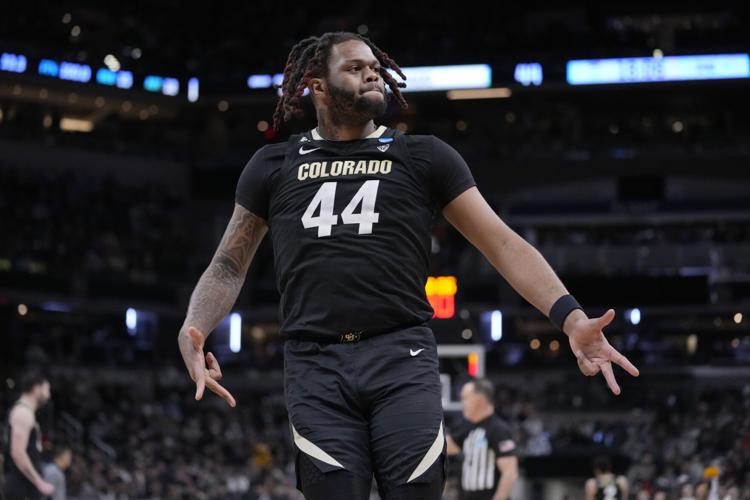
The floodgates opened March 18. Since then, the CU Buffs saw starters J’Vonne Hadley, Eddie Lampkin and Luke O’Brien leave through the portal. Colorado State had two players hit the exit. As of Friday afternoon, over 1,000 players had entered the portal, a mass exodus that makes conference realignment appear rational.
“It’s insane,” one Division I head coach said.
“No reason to recruit high school kids now,” a Division I assistant added.
No program has experienced the boom and the bust of the portal more severely than Northern Colorado, a Big Sky outfit with big aspirations.
Consider the Bears’ journey: Dalton Knecht leaves Greeley to become the SEC Player of the Year at Tennessee; Saint Thomas arrives in Greeley, via Loyola Chicago, to earn Big Sky all-league honors; Thomas last week reentered the portal, surely bound for a high-major operation.
Yes, college hoops is now a fluid situation.
How Smiley navigated the choppy seas should be considered one of the country’s best coaching jobs. Northern Colorado was picked eighth in the Big Sky and finished second — with a roster of half returning players and half brand-new players. Six years coaching at a junior college, where almost an entire roster can flip from one season to the next, worked to his advantage.
“Philosophically, we embrace (the transfer portal),” Smiley says. “If you get negative about it or wish for the old days, what’s that going to do?”
The portal is like many things these days that sound good but won’t work — and the little guys suffer for it. The only double-digit seed to reach the NCAA Tournament’s Sweet 16 was N.C. State, a power-conference program with the “name, image, likeness” money to entice transfers from elsewhere. N.C. State’s top seven players arrived via the portal, which widens the gap between the haves and have-nots.
At this rate, the little guys have no shot. Of the top 16 teams in Ken Pomeroy’s efficiency ratings, 13 reached the Sweet 16. The three outliers were sizable budgets at Clemson (ACC), San Diego State (Mountain West) and N.C. State (ACC). Cinderella now has an early curfew.
The argument in favor of unlimited transfers goes like this: Well, coaches move on. Why not players?
Players aren’t tied to contracts. They have no buyouts. As far as I can tell, no one has coached at four programs in five years. But the current landscape could get us to that point.
“The average coach out there, who’s not where I am, can’t do their job anymore,” Connecticut women’s guru Geno Auriemma told reporters Thursday.
Men’s No. 1 overall seed Connecticut was buoyed by East Carolina transfer Tristen Newton and Rutgers transfer Cam Spencer. Gonzaga’s ninth consecutive Sweet 16 doesn’t happen without Ryan Nembhard (from Creighton) and Graham Ike (Wyoming). Alabama would not upset North Carolina in the Sweet 16 without North Dakota State transfer Grant Nelson.
Colorado State dipped into the Division II pool for its NCAA Tournament berth. Joel Scott (Black Hills State) and Patrick Cartier (Hillsdale College) transitioned beautifully for the Rams.
Look for Front Range programs to continue to mine the Division II level for additional talent.
Colorado Mesa’s Trevor Baskin, who was named RMAC Player of the Year, had half the Big 12 and most of the Mountain West hitting his cell phone within 72 hours of the Pomona grad entering the portal.
When a Supreme Court ruling in December allowed athletes immediate eligibility upon transferring, coaches not at Duke or Gonzaga foresaw the madness creeping over the horizon.
“We thought: ‘Oh, boy. Here we go,’” Smiley says.
It’s not a fix, but one idea is hiring a de-facto general manager to monitor rival rosters during the season. (Texas Tech, for one, already has a GM.) Spot a former top recruit who isn’t getting playing time? There’s a potential portal-er.
Another tweak that must be considered: move back the date when the portal opens. Bump it from March 18 to the week after the Final Four. Allow a cooling-off period to preclude players from hunting greener pastures that don’t turn out greener. And fewer schools would decline NIT and CBI bids in favor of working the portal.
Take Northern Colorado, which gladly accepted an invite to the CBI after winning 19 games.
“What a cool opportunity for our guys,” Smiley says. “And we feel it helps us next season.”
Or keep the transfer portal the same.
March Madness 2.0 is madder than the original.