







South Broadway open-air drug use is a ‘societal issue,’ Denver library official says
Ross-Broadway library branch is a “harm reduction” center for drug addicts, homeless people
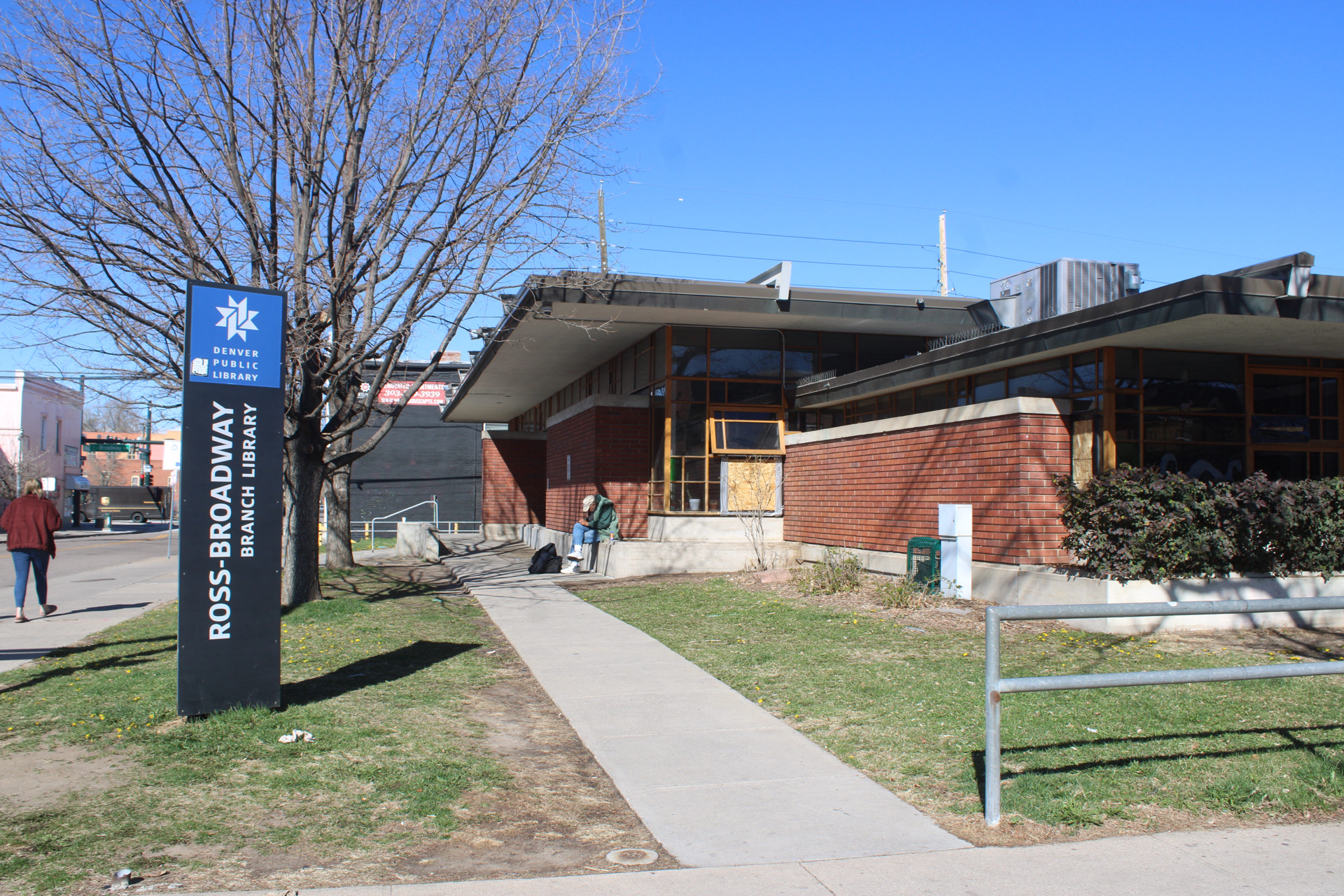
Open drug use, fecal matter, homelessness.
To local residents and businesses, these are an unwelcome but all-too common sight in the area around the Denver Public Library’s Ross-Broadway branch, located on Bayaud Avenue between south Broadway and Lincoln Street.
To library officials, these are social issues they feel compelled to help solve.
“You can’t be a library if you don’t provide services for the community,” Denver Public Libraries’ Director of Communications & Community Engagement Erika Martinez said in an interview with The Denver Gazette, which earlier reported about South Broadway’s open-air drug use.
“This wasn’t born at Ross-Broadway,” she said. “This is really a societal issue.”
The library, in addition to books, offers “harm reduction” services to drug addicts or homeless people. Notably, the library branch provides Narcan to fight off fentanyl or meth overdoses, as well as counseling services and other free library resources.
Critics and some area residents earlier said they believe the “centralized harm reduction location” draws in more homeless people and open-air drug use in the area.
The ‘societal issue’
The library sits at the intersection of three different neighborhoods, including Baker, Lincoln-Broadway and West Washington Park.
What has been playing out in the area is among the most palpable manifestations of downtown Denver’s twin, incessant crises of drug use and homelessness. The crises show no signs of abating, despite hundreds of millions of dollars being spent on housing and homelessness programs.
People often walk, stroll, shop and dine along the popular south Broadway corridor.
On the same stretch of road in Colorado’s most populous city, some people are either openly using drugs, drug dealing or laying unconscious on the sidewalks.
“Whether it be drug use, fecal matter, or piss on my door — I’m fed up,” Clayton Kelley, owner of the store Vape Loft, where multiple homeless people were passed out in front of the business, told The Denver Gazette back in March.
“It happens every day,” Kelley said.
And to some, the Ross-Broadway library, situated within two miles of four Denver public schools, has not helped.
The library is meant to “foster education,” said Dawn McNulty, a local advocate for a concept called “safe routes to schools.”
“Our community has proven the Ross-Broadway Branch is, in fact, detrimental to our neighboring communities,” she added.
Martinez, the library official, called it a “misconception” and “super dangerous” to “say that we are similar to a center that offers an opportunity for people to use drugs in our building.”
In 2023, the Ross-Broadway library issued Narcan for a drug overdose inside of the library. In addition, library personnel used Narcan six other times for overdoses occurring right outside the library, according to Martinez.
She said a recent increase in staffing has led to “more programming we’re able to do, which is why more people are coming to programming.”
Broadly speaking, Martinez effectively argued that what’s happening in the area is a microcosm of what’s occurring in society.
“What our community is experiencing is the same thing we’re experiencing,” Martinez said.
“It’s not a library issue, it’s a societal issue,” she said. “It really requires that we work with partners, with the city, to come up with solutions on how to address it.”
‘Harm reduction’
Denver Public Library has a “community resources team” that provides a “non-clinical” program aimed at building relationships with “underserved” people visiting its “harm reduction” location, Martinez said.
“Community Resources staff have lived experience, education, and specialized training with homelessness, substance use, mental health, or other life challenges,” Martinez said. “They aim to support people experiencing these challenges while improving their overall wellness.”
Denver Public Library has earmarked $6,000 to use for “programming” in 2024, according to the library official.
Additional staffing is a result of the “Strong Library, Strong Denver” fund approved by voters in the November 2022 election, Martinez said.
The approved measure pumps an additional $32 million of taxpayer funding a year toward the Denver Public Library.
Denver Public Library programs offer food, cold weather gear, hygiene items, emergency clothing, emotional support, and relationship building.
The most requested resources by people visiting the library are getting connected to housing, employment resources, free legal support, technology assistance and veteran resources, according to Martinez.
The community resources teams are “one way that we know we can support the challenges that the community is experiencing,” said Martinez. “Outside of that, then what we do is we work with our partners to help us with that.”
‘Complex problem’
The Regional Transportation District, metro Denver’s public transportation agency, took a similar stance earlier — that the problems in society, including drug use and crime, are seeping into the regional agency’s trains and buses, rather than occurring in isolation.
Both entities serve homeless people in different ways, but face similar issues.
RTD often deals with homeless people loitering, open-air drug use at public transit stations and on buses or trains, fare stealing and public urination.
“It’s just a very complex problem,” RTD Chief Communications and Community Engagement Officer Stuart Summers told The Denver Gazette in a recent interview. “Drug use is a complex problem. People who are unhoused is a complex problem.”
He added: “We need partners to work with us in other jurisdictions and municipalities and nonprofit outreach groups, because this is something that is facing society as a whole.”
