Columbine students give back during 25th anniversary of shooting
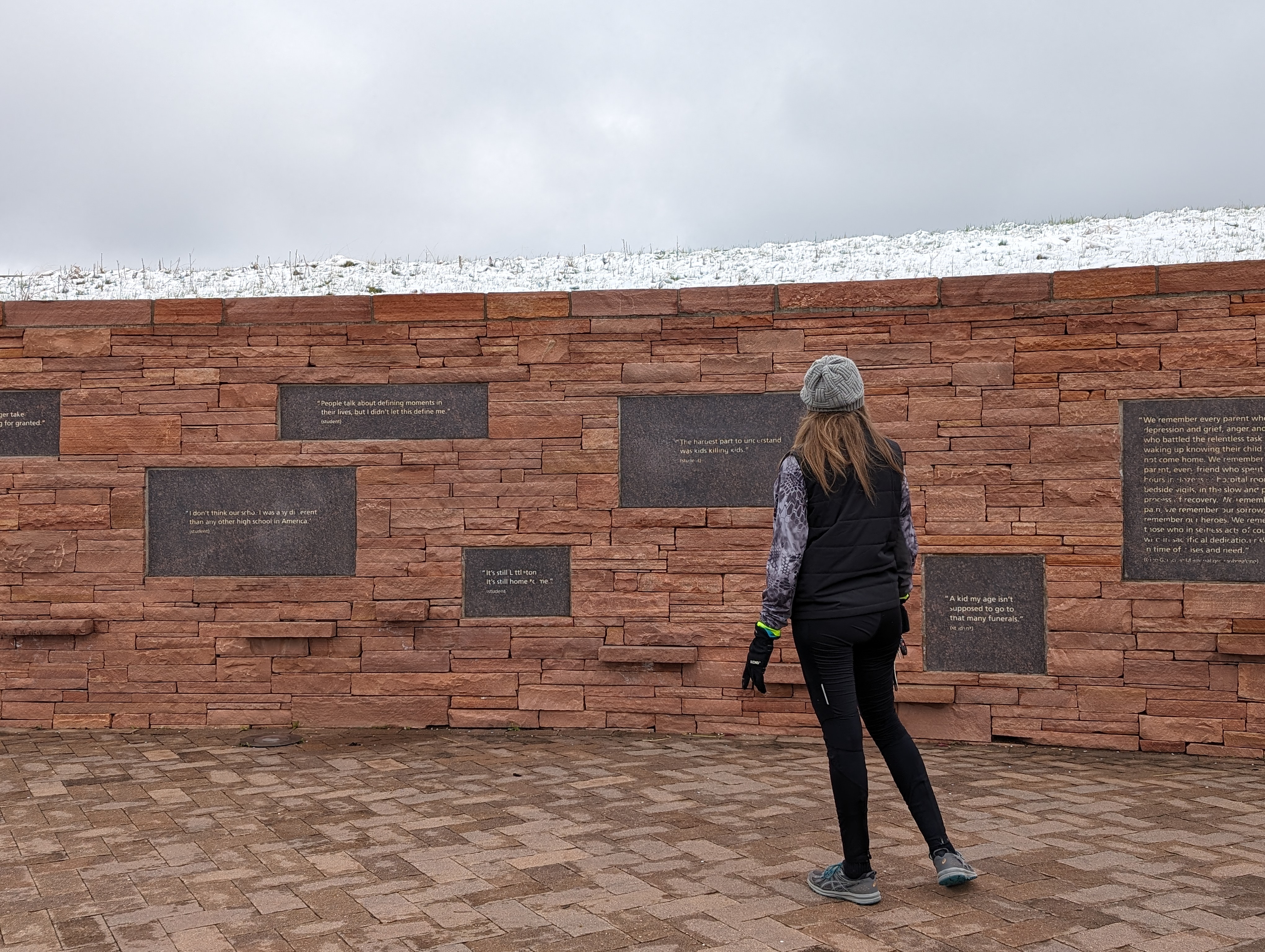
On a frosty morning after a late-April snowstorm, nearly 1,200 Columbine High School students worked on their day off, bringing together a positive light from the darkness of tragedy.
The Jefferson County high school held its eighth-annual Columbine Day of Service on Saturday — the 25th anniversary of the world-altering shooting in which 12 students and one teacher died.
The day of service, which began in the spring of 2017, asks current students to come together and complete charity efforts for the local area and organizations.
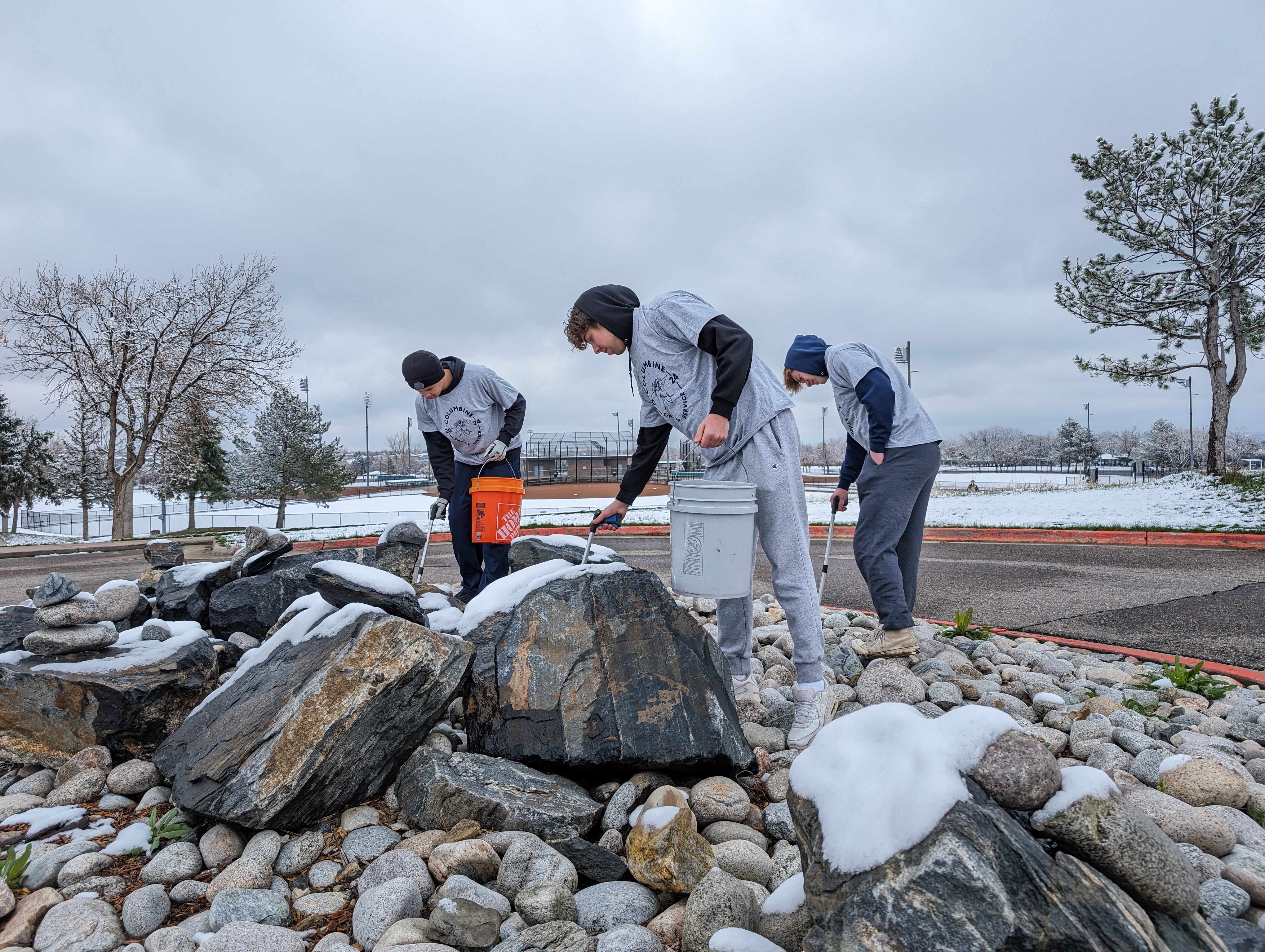
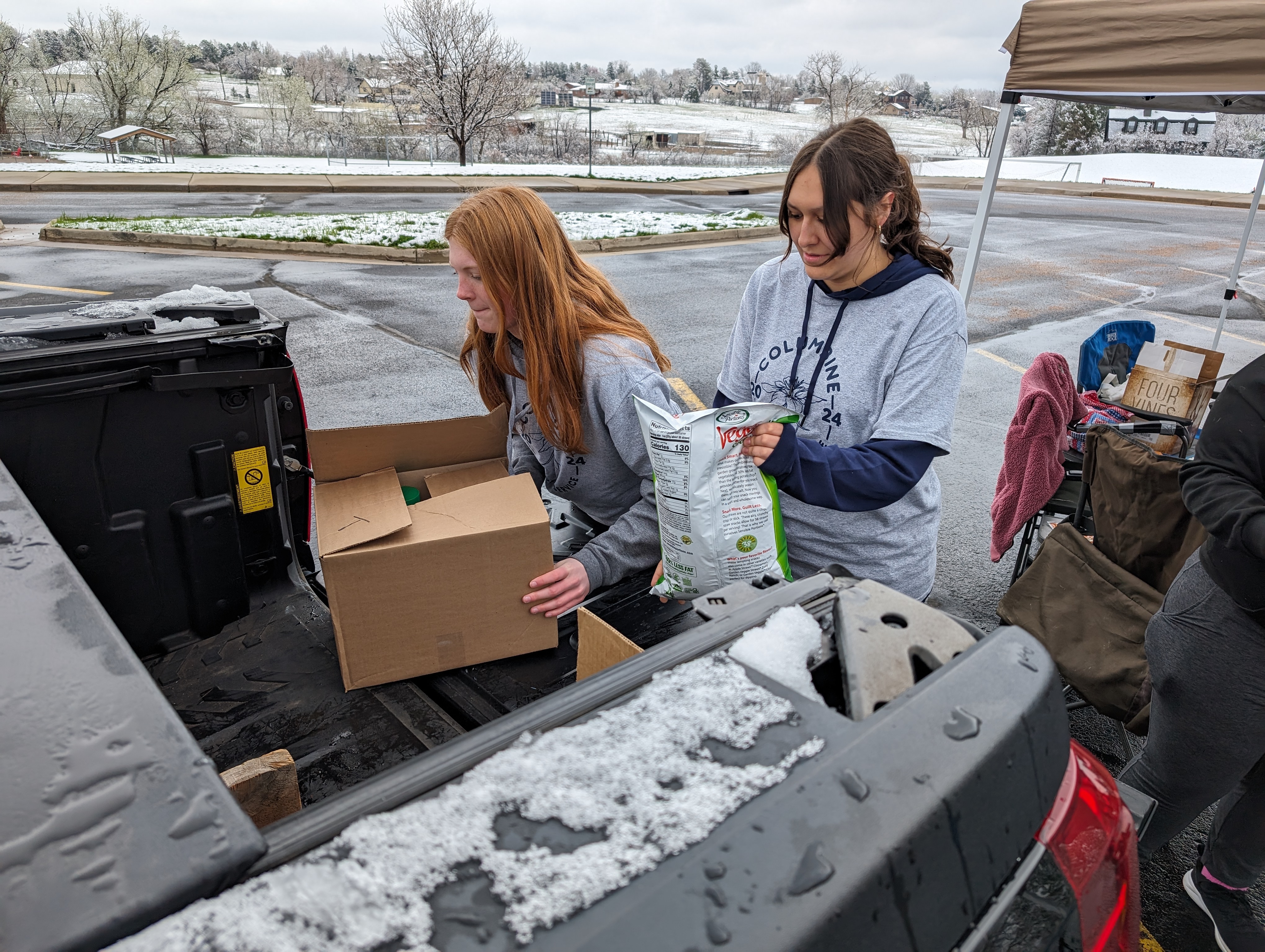
Over 47 different projects were on Saturday’s agenda, including cleaning the school and Clement Park where the memorial sits, making blankets for dialysis patients, collecting items for food drives and making first-aid kits for those in need.
“This has represented a new era of honoring the community. We’re able to honor lives lost,” Sam Bowersox-Daly, teacher at Columbine and organizer of the Day of Service said. “It marks a change in what this day means to the community. The memorial of it has transformed into action.”
The idea is simple: bring positivity in the aftermath of a historic tragedy. But students and teachers aren’t attempting to bury the past.
“Building community means we’re tying ourselves together and bringing ourselves up with positivity rather than bringing ourselves down,” Jasmine McCandless, a senior at Columbine said. “This could easily be a day remembering just a tragedy, but now we’ve turned it into a day where people do things for the good of others.”
“It’s really amazing and incredible. We get a chance to help out people that really need it. Not a lot of schools do that,” Maia Kurtz, a junior at the school, said.
Students weren’t the only people lending their free time to the cause. Bowersox-Daly said around 80 staff members were also dedicating their time to the projects.
“This day means so much to so many different people. There are people in our building who were at the shooting in 1999. There are people who were students. There are staff members who now have kids at Columbine. There are people that don’t have any tangible connections,” he said. “We are able to really reach different types of people through this day of service. It’s able to mean a lot of different things to different groups.”
The teacher added that he’s always surprised at the number of students who come out. The event isn’t mandatory.
“At some point you’re like, ‘OK, is everyone actually going to show up and do stuff today? It’s cold, snowy and a Saturday.,’” Bowersox-Daly said. “I got to the parking lot at 8 a.m. and it was full. The building was buzzing with people who had already started working on things.”
To the students, the turnout isn’t a surprise. In fact, the glowing sense of community is something they stand firmly behind.
“Columbine has something that a lot of schools don’t,” Kurtz said. “We love each other regardless of who you are or where you come from. A lot of other schools say they have school spirit and it’s something they try to build up, but at Columbine it’s familial. Everyone comes together to help someone else if they’re in a time of need without questions asked.”
“I know that after the tragedy at Columbine, we all want to come together to make today a day of light and positivity,” McCandless added.
The past remains
The Columbine Day of Service has brought hope to every continent except Antarctica, Bowersox-Daly said, noting that connections and awareness have led to communities all over the world taking part.
There were 404 school shootings between Columbine and April 2024, according to the Washington Post, which said it pieced together data from news articles, reports from law enforcement, open-source databases and calls to schools and police departments.
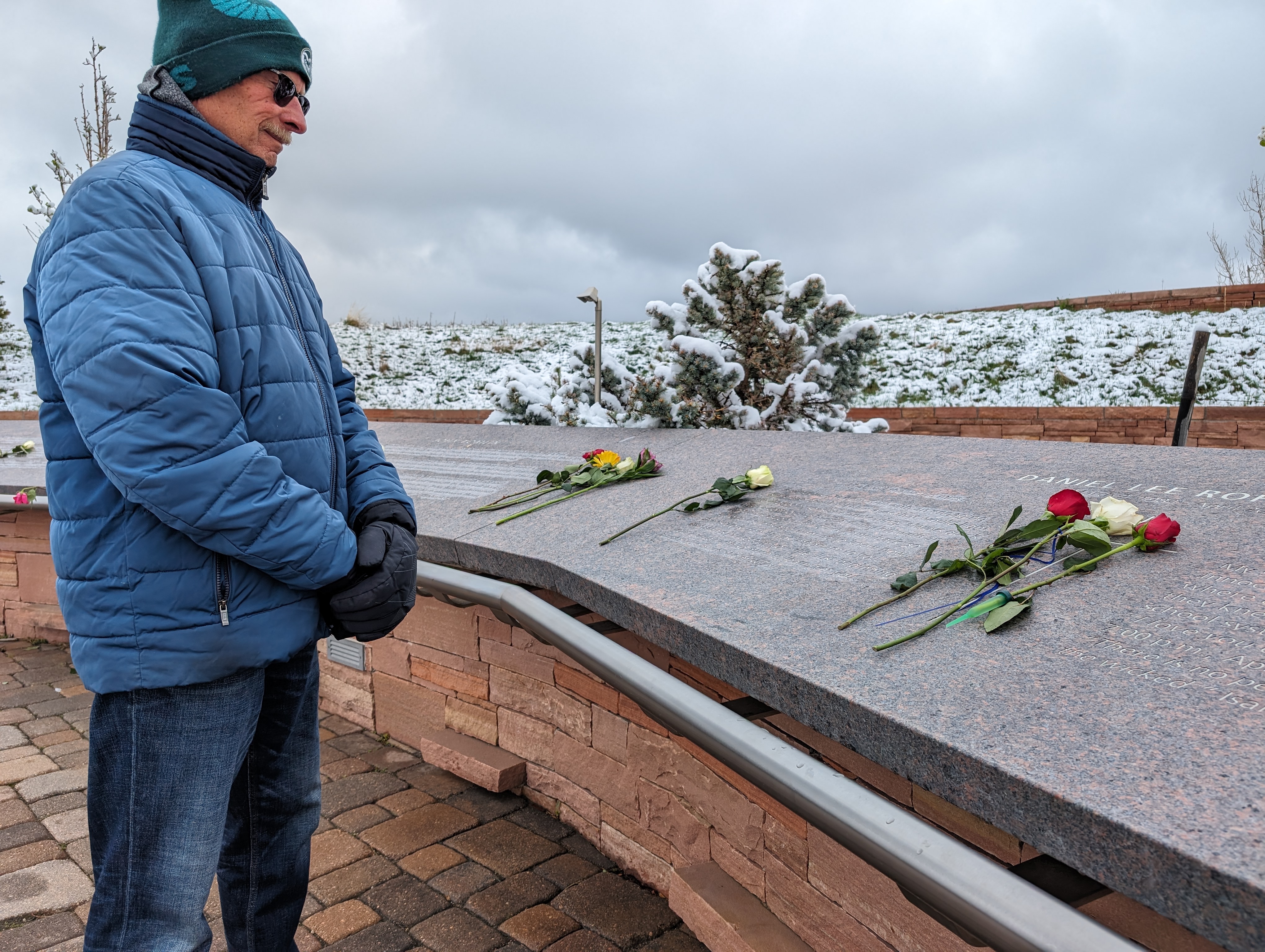
“I’ll never look over it. Every time I think about it, a tear comes to my eye. It was the worst day of our lives,” Tim Borus, a father of a student that survived the Columbine shooting, said at the memorial park on Saturday.
“I don’t think things have changed nearly enough. It’s sad to say, but I don’t really see it changing all that much in the near future. We can only hope that it will.”
Bowersox-Daly noted that he and Jeff Garkow, another Columbine teacher that organizes the Day of Service, have “fielded more of this than we would have liked to.”
“Schools from literally all over the country have talked to us in the last seven years to say, “We want to do this. Our community wants to do a day of service after our tragedy.’”
He said that they have spoken with the schools involved in the Parkland, Florida, shooting and the Oxford, Michigan, shooting, for example, on how to start their own days of service.
“Unfortunately, things like this keep happening,” he said. “But it’s an important beacon for any community that experiences tragedy to come back and come back stronger.”
The objective remains to keep building upon positivity and changing the futures of young minds.
“The students here who weren’t alive in 1999 and don’t have connection with it: Those are the people that we can turn to and say, ‘You don’t have to have experienced tragedy to do cool things for the people around you,’” he concluded.
“A story can impact you and inspire you to take care of your neighbor and perform acts of love and service.”