







Nuggets, Avalanche success at Ball Arena starts with fan support — then altitude
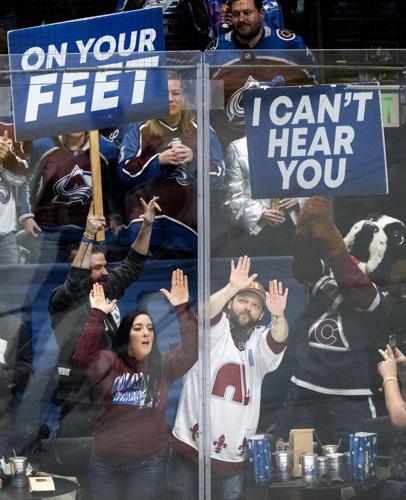
Fans cheer for the Colorado Avalanche during the third period against the Dallas Stars Sunday, April 7, 2024, at Ball Arena in Denver. (The Gazette, Christian Murdock)
Christian Murdock/The Gazette
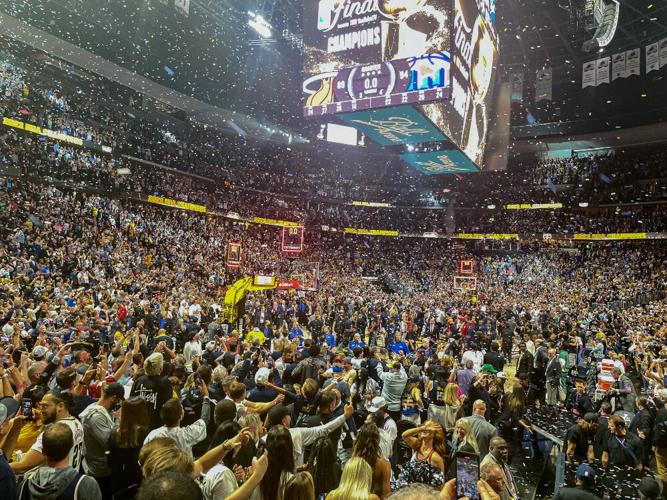
Elevation is the popular explanation when it comes to the Avalanche and Nuggets’ success at Ball Arena, but it’s not what the players are talking about.
Opposing coaches are often asked about the challenges of playing at altitude, but maybe they should be talking about its increasingly passionate fans, as well.
“The building is awesome. The fans are super loud,” Avalanche center Casey Mittelstadt said after being traded from Buffalo where things are a little different. “Even when we’re scoring a goal up by five, they’re going crazy.”
Outside of one playoff appearance between 2011 and 2017, Avalanche fans have largely been spoiled by success, but it’s not like elevation played a massive role in the leaner times. The Avalanche’s home record has reflected the caliber of the team.
In 2011, the Avalanche went 16-21-4 at home. In 2016, coach Jared Bednar’s first season, the Avalanche had a better road record (22-19-0) than they did at home (17-20-4). This season, Colorado’s 31 home wins lead the NHL. Bednar credited that to his team’s attack mentality at Ball Arena.
“We’re more disruptive up the ice for me. We’re challenging teams to make plays around us with our checking up-ice,” Bednar said. “We seem to have a little bit more energy in our home building and special teams have been good here as well.”
A recent study by the NHL Players Association listed Ball Arena as the fourth-toughest place to play. All four of the Avalanche’s hat tricks — three from Hart Trophy candidate Nathan MacKinnon and the other from Norris Trophy candidate Cale Makar — have come on home ice.
“I’m definitely appreciative of it. It’s nice to have all that support from these fans,” MacKinnon said.
While the Avalanche were in the bottom half in NHL attendance in Bednar’s first season and rose to 13th last season, Nuggets coach Michael Malone has seen an even bigger change in the last nine seasons. Denver ranked dead last in attendance, averaging 14,095 fans in Malone’s first season, 2015-16. The Nuggets went 18-23 at the then-Pepsi Center.
“I remember all the businesspeople saying ‘Well, coach, I know you’re not going to want to hear this, but you got to win before they come.’ Most of the people who live in (Denver) aren’t natives, right?” Malone said after ’s final home game of the regular season. “They didn’t grow up Nuggets fans, a lot of them.”
The Nuggets ended the regular season with a 33-8 record, tied for the best mark in the Western Conference and second to the rabid Celtics fan base in Boston. All 41 of the Nuggets’ home games at Ball Arena were sold out this season. Last season’s 34-7 mark was one win shy of matching the NBA’s best home record. Then, the Nuggets went 10-1 at home in the playoffs to win the franchise’s first championship.
“Since I came, I really liked the growth of the fans. When I came here, there was a lot of people, but not a lot, you know. … Every game is a sellout now,” Nikola Jokic said. “They always give us the energy that we need, and I think it’s an amazing place to play.”
The thin air has affected athletes since tectonic plates collided, forming the Front Range tens of millions of years ago. Since the downtown arena’s construction in 1999, altitude alone hasn’t been enough to ensure success in. That’s happened due to a couple of coaches who’ve built young cores into championship squads, a pair of MVP candidates and Colorado natives and newcomers uniting to support the home teams — with the altitude recording an assist.
“Nine years in the making to get to a point where this has become the toughest place to play in the NBA,” Malone said. “Yes, the players have done their job, winning, playing hard, playing the right way. We’re a fun team to watch. We’re a fun team to root for, but that crowd, that tonight was a playoff game, that was a playoff atmosphere. … When you have the Ball Arena crowd showing up like they do, it just gives us an advantage. It gives us life, so a huge thank you to all of our fans.”
***
Aging the NBA and NHL Arenas
New York: Madison Square Garden, 1968
Calgary: Scotiabank Saddledome, 1983
Minneapolis: Target Center, 1990
Salt Lake City: Delta Center, 1991
Phoenix: Footprint Center, 1992
Anaheim: Honda Center, 1993
San Jose: SAP Center, 1993
Chicago: United Center, 1994
Cleveland: Rocket Mortgage FieldHouse, 1994
St. Louis: Enterprise Center, 1994
Boston: TD Garden, 1995
Portland: Moda Center, 1995
Vancouver: Rogers Arena, 1995
Buffalo: KeyBank Center, 1996
Montreal: Bell Centre, 1996
Nashville: Bridgestone Arena, 1996
Ottawa: Canadian Tire Centre, 1996
Philadelphia: Wells Fargo Center, 1996
Tampa: Amalie Arena, 1996
Washington D.C.: Capital One Arena, 1997
Sunrise, Fla.: Amerant Bank Arena, 1998
Atlanta: State Farm Arena, 1999
Denver: Ball Arena, 1999
Indianapolis: Gainbridge Fieldhouse, 1999
Los Angeles: Crypto.com Arena, 1999
Miami: Kaseya Center, 1999
New Orleans: Smoothie King Center, 1999
Raleigh: PNC Arena, 1999
Toronto: Scotiabank Arena, 1999
Columbus: Nationwide Arena, 2000
St. Paul: Xcel Energy Center, 2000
Dallas: American Airlines Center, 2001
Oklahoma City: Paycom Center, 2002
San Antonio: Frost Bank Center, 2002
Houston: Toyota Center, 2003
Memphis: FedEx Forum, 2004
Winnipeg: Canada Life Centre, 2004
Charlotte: Spectrum Center, 2005
Newark: Prudential Center, 2007
Orlando: Kia Center, 2010
Pittsburgh: PPG Paints Arena, 2010
Brooklyn: Barclay’s Center, 2012
Edmonton: Rogers Place, 2016
Paradise, Nev.: T-Mobile Arena, 2016
Sacramento: Golden 1 Center, 2016
Detroit: Little Ceasars Arena, 2017
Milwaukee: Fiserv Forum, 2018
San Francisco: Chase Center, 2019
Elmont, NY: UBS Arena, 2021
Seattle: Climate Pledge Arena, 2021