







Strippers in Central City?

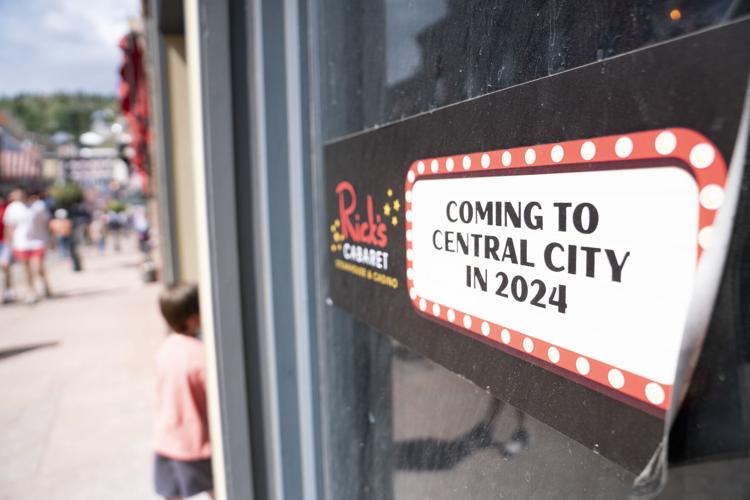
A sign for Rick’s Cabaret on Main Street, Saturday, June 22, 2024, in Central City promises the club will open in 2024. President, CEO and Chairman of RCI Hospitality Holdings Inc. Eric Langan withdrew his request for three gambling licenses and now has plans to bring adult entertainment to historic downtown. Some town residents oppose the plan. (Rebecca Slezak/Special to The Denver Gazette)
Rebecca Slezak/Special to The Denver Gazette

Last weekend during Central City’s annual celebration of its most famous Gold Rush era madam, 40 people paid $10 dollars each to hurl a cream pie at the mayor.
This year’s pie throw, and the extra velocity on those pies, which raised $400 for the Gilpin Arts Association, may have been as much about animus toward Central City Mayor Jeremy Fey as it was charity.

Every year, Central City Mayor Jeremy Fey raisees money for the Gilpin Arts Foundation. This year, 40 people paid 10 dollars each for a chance to throw a pie during the June 22 Madam Lou Bunch Days.
Courtesy photo, Jeremy Fey


Every year, Central City Mayor Jeremy Fey raisees money for the Gilpin Arts Foundation. This year, 40 people paid 10 dollars each for a chance to throw a pie during the June 22 Madam Lou Bunch Days.
Many townsfolk are unhappy with the effort to bring strippers to town.
“I am target No. 1 because I am standing behind my commitment to help revitalize the town through commercial activity,” said Fey. “It just so happens that this commercial operator operates in an unsavory industry that people don’t like.”
Fey is the son of Colorado’s legendary concert promoter Barry Fey, famous for bringing U2, Led Zeppelin, The Beatles and Jimi Hendrix to Denver.
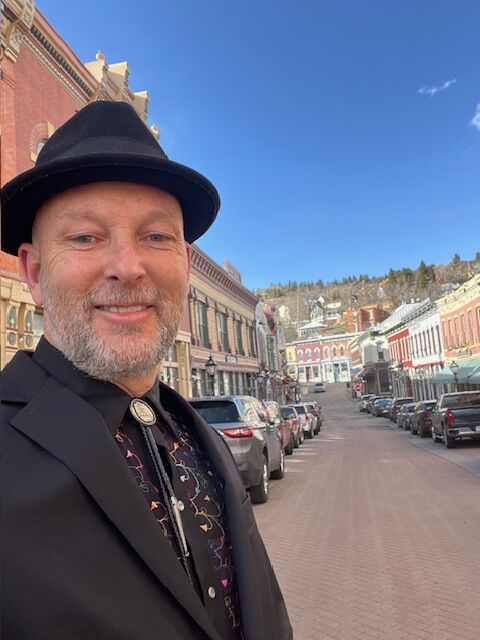
Jeremy Fay, 51, is halfway through his second term as Central City Mayor. In an effort to revitalize the town, he advocates bringing sexually oriented business to Central City as a way to revitalize it. Residents who are against the proposal said they feel they have no say in the matter.
Courtesy photo, Jeremy Fey


Jeremy Fay, 51, is halfway through his second term as Central City Mayor. In an effort to revitalize the town, he advocates bringing sexually oriented business to Central City as a way to revitalize it. Residents who are against the proposal said they feel they have no say in the matter.
The commercial operator he’s referring to is RCI Hospitality Holdings, Inc., which paid more than $2 million for the building at 130 Main Street and plans to open a steakhouse with strippers, much like the Diamond Cabaret in Denver, which the company also owns.
In addition, RCI owns PT’s Showclub, at 1601 W Evans Ave in Denver, which shut down for two weeks this January after reaching a settlement with the city over alleged prostitution and public indecency.
A follow-up investigation by the Denver City attorney’s office and the Denver Police showed that there have been no new instances of prostitution-related legal breaches at the club since July.
Millions dumped into Central City
In all, RCI has paid $15 million for various properties around Central City according to county assessment records. The son of RCI’s owner and CEO, Eric Langan, owns Mountain Annie’s, famous for being the first dispensary in the United States to receive a business license to sell recreational pot.
The younger Fey, meanwhile, has found his own Red Rocks.
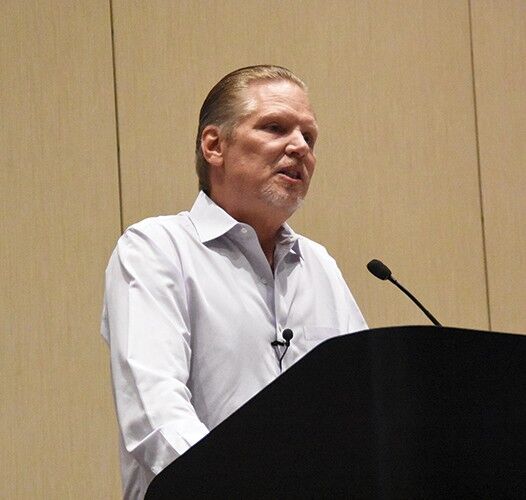
RCI Hospitality Holdings Inc CEO, President and Chairman Eric Langan speaks at a company meeting. Since Dec. 2022, he has bought at least three properties in historic downtown Central City. He said he spent $15 million total on the commercial real estate plus a new home there where he lives part of the year. He has spent millions more dollars in remodeling the properties, some of which have been empty for years, he said.
Courtesy photo, RCI Hospitality Holdings, Inc


RCI Hospitality Holdings Inc CEO, President and Chairman Eric Langan speaks at a company meeting. Since Dec. 2022, he has bought at least three properties in historic downtown Central City. He said he spent $15 million total on the commercial real estate plus a new home there where he lives part of the year. He has spent millions more dollars in remodeling the properties, some of which have been empty for years, he said.
The second-term mayor wants to pump new money into the quaint mountain gambling and opera town, which is so cash-poor it can’t afford its own police department.
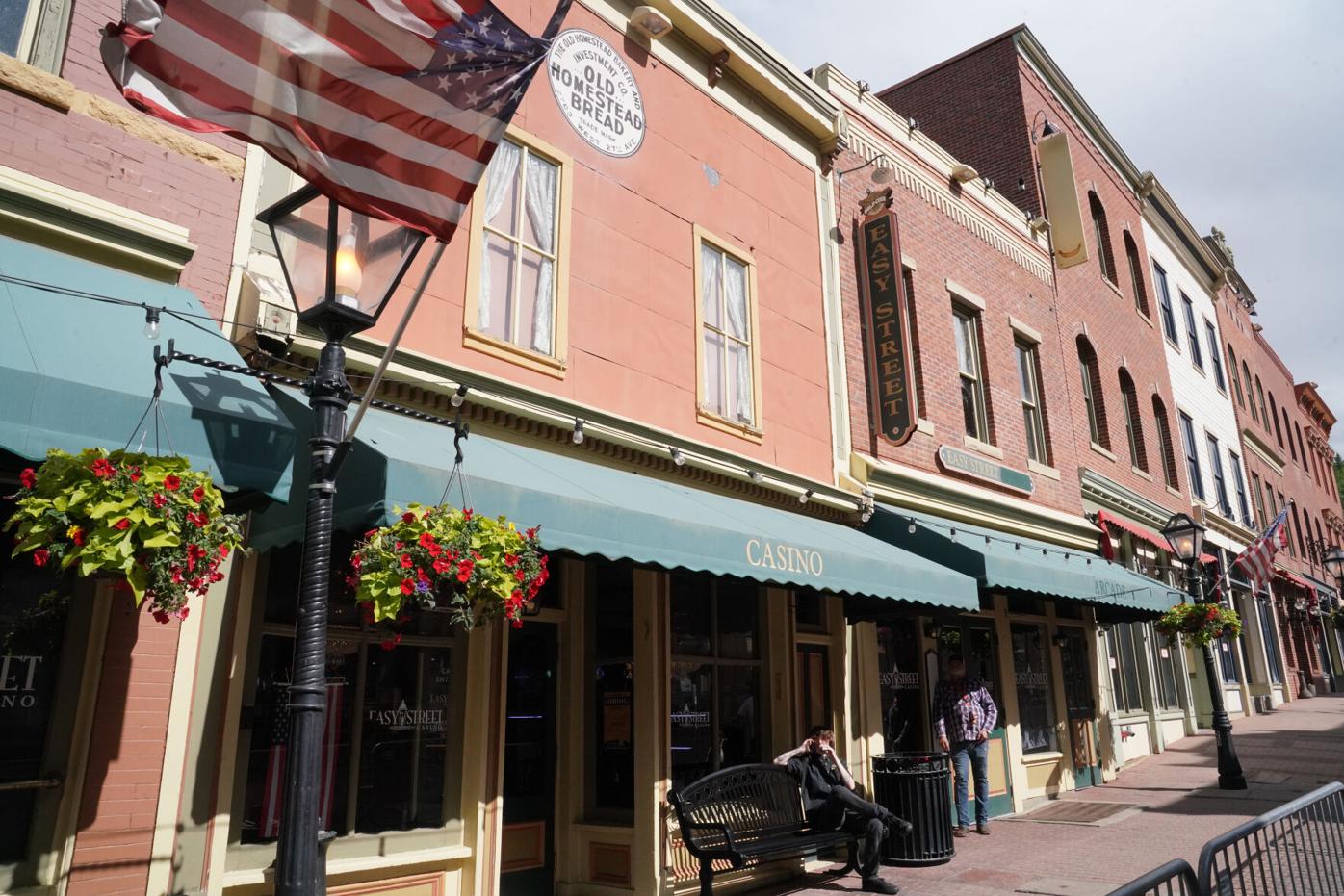
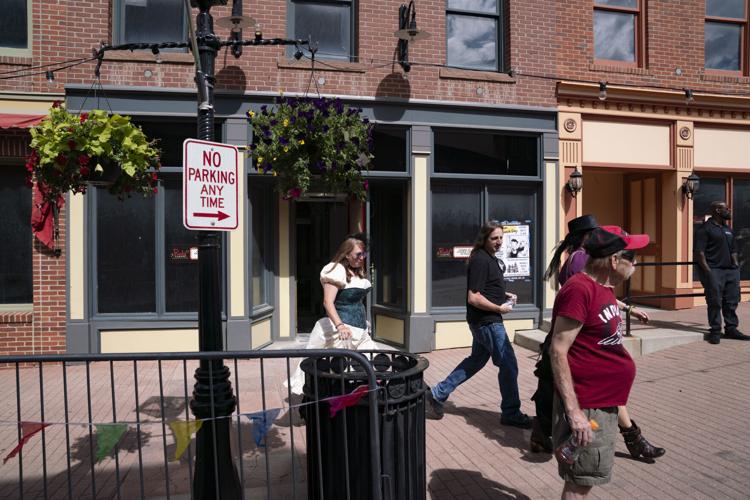
Downtown Central City on Main St. on Saturday, June 22, 2024, in Central City. Soon, the City Council will decide whether to relax city ordinances to allow sexually oriented businesses — SOBs, as they are known. (Rebecca Slezak/Special to The Denver Gazette)
Rebecca Slezak


Downtown Central City on Main St. on Saturday, June 22, 2024, in Central City. Soon, the City Council will decide whether to relax city ordinances to allow sexually oriented businesses — SOBs, as they are known. (Rebecca Slezak/Special to The Denver Gazette)
Thirty-one years since gambling was approved , Central City is at an impasse as to whether it remains a cultural historical destination jazzed up with small casinos or whether it becomes a mini-Vegas with a colorful history imbued with adult entertainment.
Soon, the City Council will decide whether to relax city ordinances to allow sexually oriented businesses — SOBs, as they are known.
On May 21, the City Council meeting room was packed with angry residents, who felt blindsided when Fey suddenly reintroduced a plan to make it easier to bring in adult entertainment.
At the meeting, council discussed reducing the SOB distance buffer, which city code currently requires to be 1,000 feet from gathering places or personal residences, down to 150 feet — a half of a football field. That change would move St. Mary’s Catholic Church, to cite one example, outside the restricted buffer zone.
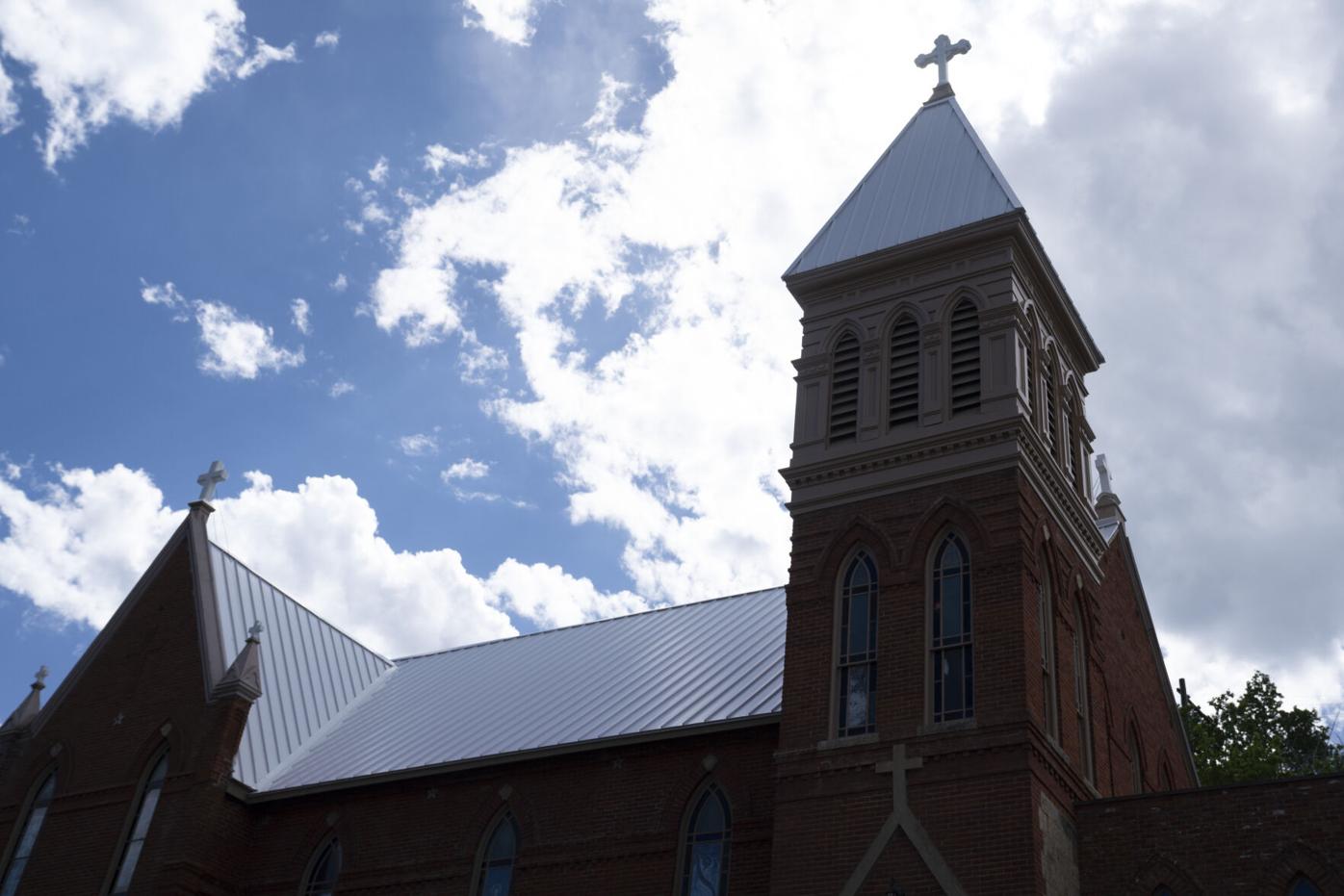
St. Mary’s Catholic Church on June 22, 2024 in Central City. Thirty-one years since gambling was approved, Central City is at an impasse as to whether it remains a cultural historical destination jazzed up with small casinos or whether it becomes a mini-vegas a colorful history imbued with adult entertainment. (Rebecca Slezak/Special to The Denver Gazette)
Rebecca Slezak/Special to The Denver Gazette


St. Mary’s Catholic Church on June 22, 2024 in Central City. Thirty-one years since gambling was approved, Central City is at an impasse as to whether it remains a cultural historical destination jazzed up with small casinos or whether it becomes a mini-vegas a colorful history imbued with adult entertainment. (Rebecca Slezak/Special to The Denver Gazette)

Inside St. Mary’s Catholic Church on Main St., Saturday, June 22, 2024, in Central City. The city code currently requires the sexually oriented business distance buffer to be 1,000 feet from gathering places or personal residences, and a proposal would reduce it 150 feet. That change would move St. Mary’s Catholic Church outside the restricted buffer zone. (Rebecca Slezak/Special to The Denver Gazette)
Rebecca Slezak/Special to The Denver Gazette


Inside St. Mary’s Catholic Church on Main St., Saturday, June 22, 2024, in Central City. The city code currently requires the sexually oriented business distance buffer to be 1,000 feet from gathering places or personal residences, and a proposal would reduce it 150 feet. That change would move St. Mary’s Catholic Church outside the restricted buffer zone. (Rebecca Slezak/Special to The Denver Gazette)
The proposal would also add adult arcade, adult cabaret, adult motel, adult motion picture, adult theater, nude model studio and a sexual encounter center into Central City code as permissible businesses.
“They know we don’t want it,” said Steve Vairmas of Central City, who is clearing his schedule to attend Tuesday’s night’s city council meeting.
The controversial future of Central City is not on the July 2 agenda, but many residents will be able to voice their opposition or support during public comment that day.
People are worried about whether the strip club will lower their property values, the potential for increased crime rates and the possibility that a modern red light district will tarnish the city’s reputation for low-key mountain entertainment.
“Tell them to leave it on Colfax,” Dan Ventner said during the recent celebration of Madam Lou Bunch Day June 22.
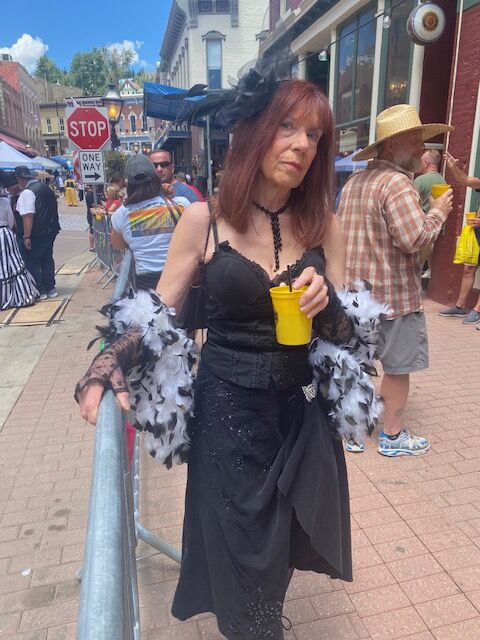
During Central City's Madam Lou Bunch Days, this woman, who identified as B Blunt, dressed in period costume for the event, said that she worries about the "kind of crowd" that strip clubs would bring to town.
Carol McKinley/Denver Gazette


During Central City’s Madam Lou Bunch Days, this woman, who identified as B Blunt, dressed in period costume for the event, said that she worries about the “kind of crowd” that strip clubs would bring to town.
“It will bring in the wrong kind of crowd,” said a woman who identified as B Blunt, who was once a hostess at one of the town’s casinos.“Would you want it in your neighborhood?”
It is out-of-towners who can visit Central City and then go home who appear more in favor of a strip club.
Perhaps surprisingly, a group of 80-something women who traveled by tour bus from the Denver metro area for Madam Lou Bunch Day would support adult entertainment in Central City, specifically male strippers. Nickki Trujillo said she would be in the front row.
“I’m a nurse,” she said. “I’ve seen it all and I’m not a prude.”
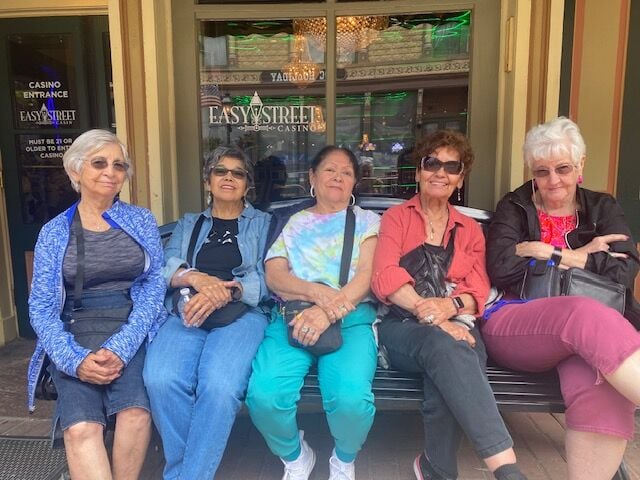
This group of five women made the trip to Central City on a tour bus which originated in the metro Denver area. They all indicated that they would support a strip club on Central City's Main Street "as long as there are male strippers." They also said they would patronize adult entertainment if it featured drag queens.
Carol McKinley/Denver Gazette


This group of five women made the trip to Central City on a tour bus which originated in the metro Denver area. They all indicated that they would support a strip club on Central City’s Main Street “as long as there are male strippers.” They also said they would patronize adult entertainment if it featured drag queens.
‘They can’t stop me from opening’
In December 2022, the original Bullwhackers building — which was donated to the city by its owner — was bought for $2.4 million by RCI. The Houston-based corporation advertises itself as the country’s “leading company in adult nightclubs.”
RCI is the only adult entertainment company which is publicly traded with establishments in New York, Dallas, Phoenix, Chicago, Miami and five locations in Denver, including Diamond Cabaret, two PT’s locations, Rick’s, and Scarlett’s. It’s proposed Central City location will be a Rick’s Cabaret.
The large space — which is equal to about four storefronts — had been vacant since 2013. Today, construction workers can be seen inside getting it ready for business. The original winding staircase remains, but the final touches are yet to be added.
The Denver Gazette talked with a dancer named “Sugar,” whose eyes got big when she peeked into the darkened building. That’s because Tootsie’s in Miami — where she works sometimes — uses a similar staircase as a grand entrance for the strippers.
“We walk down and end up on the stage,” she said, declining to provide her full name for the sake of her family’s safety.

Sugar poses for a portrait during the Madam Lou Bunch Day bed races on Main Street, Saturday, June 22, 2024, in Central City. Madam Lou Bunch Day honors the ladies of the brothel who tended to miners who took ill during the Gold Rush days in Central City. (Rebecca Slezak/Special to The Denver Gazette)
Rebecca Slezak/Special to The Denver Gazette


Sugar poses for a portrait during the Madam Lou Bunch Day bed races on Main Street, Saturday, June 22, 2024, in Central City. Madam Lou Bunch Day honors the ladies of the brothel who tended to miners who took ill during the Gold Rush days in Central City. (Rebecca Slezak/Special to The Denver Gazette)
Sugar likes the idea of performing in Central City because, though she has made the big time in the adult nightclub world, Gilpin County is home.
A statuesque blonde dressed in period costume for Madam Lou Bunch Day, Sugar was unapologetic of several disapproving looks that came her way.
“Some people are intimidated by the industry,” she said. “But this is fun and you only live one time in your life to do it.”
Besides, she added, her arm encircled around her 15-year-old son, “We have mouths to feed.”
She hopes to be dancing for a possible Rick’s Cabaret grand opening, but that date is unknown.
Langan, the RCI’s owner and CEO, had hoped to be up and running for the 2023 Christmas holiday.
Signs in the windows now promise that Rick’s Cabaret is coming in 2024. RCI Holdings’ five other addresses in Central City constitutes about half of downtown.
After an expensive year-and-a-half wait for the Colorado Gaming Commission to approve a license to operate casinos in Central City, RCI Holdings’ Langan told The Denver Gazette in a phone interview that he pulled his request for a gambling permit in May.
He is now determined to bring a strip club to Central City.
“They can’t stop me from opening,” Langan said. “I’m going to open. We’ll just cover up. I don’t care. They can control the level of nudity. But they can’t stop me.”
Langan hopes a bold move like this doesn’t result in a stand off.
“They’d arrest somebody and then I’d sue them,” he said.
The fall-out from SOBs
Last Tuesday, the Gilpin County Commissioners awarded a request for proposals bid to Littleton’s Paradigm Public Affairs LLC to do a $50,000 study on the effect of SOBs in rural communities.
The questions the panel wants answered are whether strip clubs will bring an increase in crime and, if so, how much of an increase would that be and what kind of law enforcement will be needed to cover adult nightclub 24/7 operation.
Do property values decrease? What are the effects on public health and human services?
Until 2016, Central City had the state’s second-oldest police department until it was forced to disband in 2016 to save money. Today, Central City has a contract with the Gilpin County Sheriffs Department which shares two deputies for law enforcement.
The proposed ordinance which allows sexually oriented businesses on Main Street includes strip clubs, hotels which allow for ten-hour stays, peep shows, and other business models.
Some long time residents feel they’ve been treated like rubes and say they won’t stand by and allow RCI to come in and take over their small historic mountain town.
“Langan’s blatant disregard for the well-being of our community is outrageous,” said Peter Droege, who is the president of a commission overseeing the renovation of the 1880’s Belvidere Theater. “We refuse to let his greed and terrible business practices take root here.”
“Relaxing the ordinances is not our decision. We are looking at the monetary aspects of this,” said Gilpin County Manager Ray Rears, who said that the project came together at “rocket speed.”
Langan scoffed at the Gilpin County’s study.
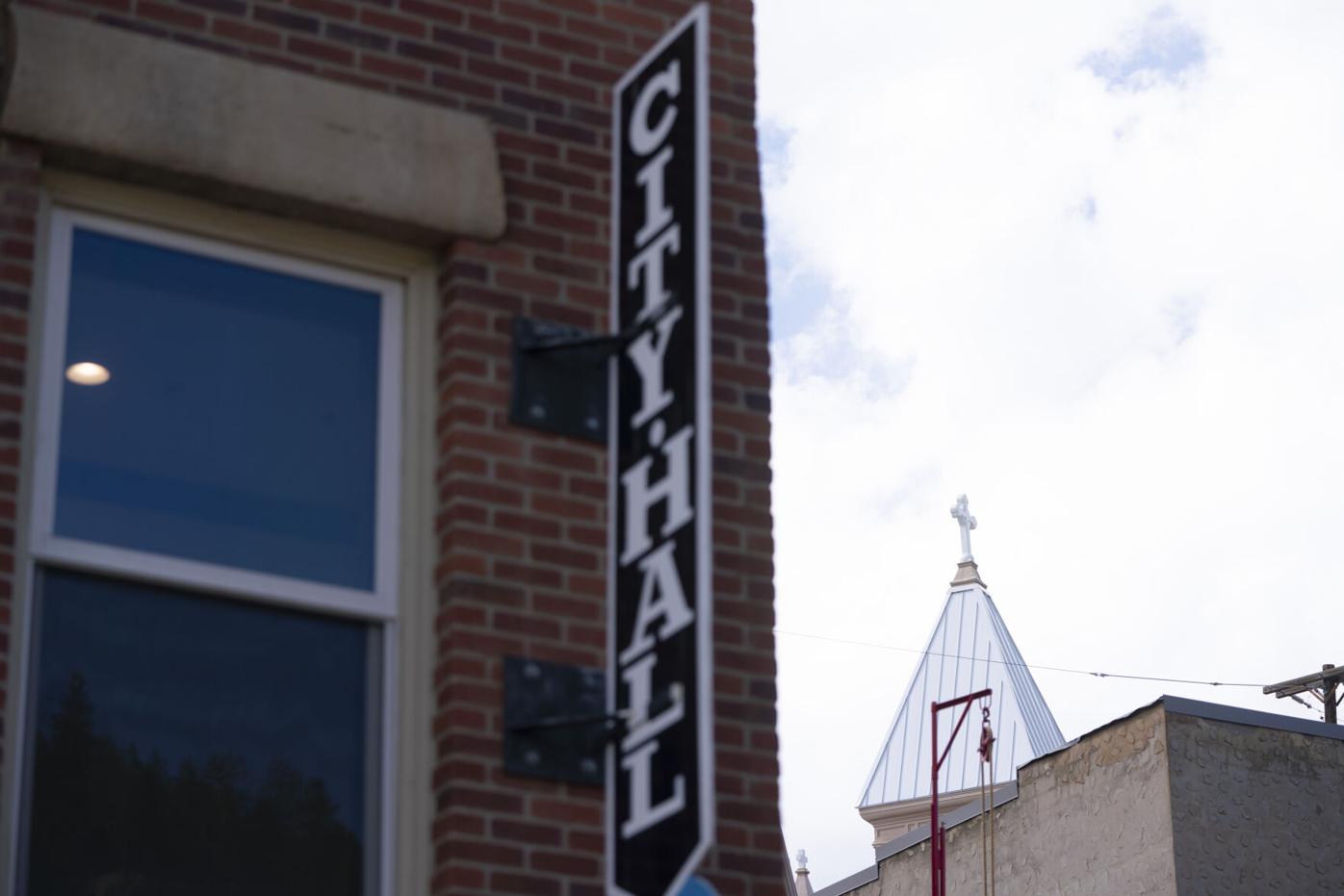
The steeple of St. Mary’s Catholic Church seen from City Hall, Saturday, June 22, 2024, in Central City. The church, established in 1862, sits within the current 1,000 foot buffer zone from Rick's Cabaret where, if stripping happens there, could make Rick's an illegal business according to Central City code. (Rebecca Slezak/Special to The Denver Gazette)
Rebecca Slezak/Special to The Denver Gazette


The steeple of St. Mary’s Catholic Church seen from City Hall, Saturday, June 22, 2024, in Central City. The church, established in 1862, sits within the current 1,000 foot buffer zone from Rick’s Cabaret where, if stripping happens there, could make Rick’s an illegal business according to Central City code. (Rebecca Slezak/Special to The Denver Gazette)
“Their study is going to be worthless,” he said. “They should have spent the money on senior living because that’s much more important for that county.”
Langan said that he is invested in Central City, a town he has grown to love so much he bought a home there and switched his voter registration from Houston.
Still, residents see his friendly relationship with Fey as a problem.
Last fall, Langan said he flew Fey to Houston to watch the Broncos play the Texans. It was on that trip that he “bought the Kool-Aid” from Fey, he said, to invest in Central City. But by that time, he had already bought property and obviously formulated a vision.
Some locals see the Texas experience as a gift Fey should not have accepted, so Central City residents Zane Plsek and Droege have each filed an ethics complaint with the state’s Independent Ethics Commission against him.
Plsek’s complaint, filed on on June 24, cited the Texas trip and alleged that the mayor and his business partners made money on a commercial property that they bought for $410,000 in 2022 and sold to RCI Holdings for half a million dollars in 2023.
Plsek told The Denver Gazette that Fey acknowledged the weekend during one of four unofficial Elk’s Club meetings he called to discuss the SOB situation with residents.
He said the complaint was his only avenue to pursue after he said the city has yet to investigate the issue themselves as he has asked.
“I don’t think the mayor should be involved in any business dealings between the city and RCI,” he said.
Plsek has asked Fey to recuse himself from voting with the City Council on any issue, including the proposed ordinance change.
Langan said that he has heard rumblings of an effort to recall the man he refers to as “the Mayor of Progress.” The Denver Gazette was unable to confirm that information.
“There’s a group of people up there who want Central City to stay exactly the same forever. And here’s their problem. They need to get a grip. They’re going have to increase revenues,” said Langan.
Another kind of Gold Rush
Central City is one of three mountain towns that have profited from legalized limited-stakes gambling since Coloradans narrowly passed Amendment 4 in November 1990.
In October 1991, the first machines and card tables were buzzing with promise of the anti-Vegas. The hope from residents was that the maximum bet of $5 and rules that closed casinos from 2 a.m. until 8 a.m. would keep criminals away and dollars flowing into Central City, Blackhawk and Cripple Creek in Teller County.
Just two years after gambling got the green light, Blackhawk had already accounted for the majority of the business in Gilpin county.
To gain back some of the dollars, in 2004, Central City built a $38 million highway to provide a short-cut for vehicles to drive straight into town from Interstate 70 to keep them from ambling up Highway 6, where Blackhawk is the first stop along the mountain gambling district.
The beautiful drive along Central City Parkway brought in more money to the town for a while, but Blackhawk dominates gambling revenue with roughly 18 casinos to Central City’s six.
By 2009, new legislation was introduced that increased the maximum wagers to $100, craps and roulette were added and casinos could stay open 24/7.
In 2020, voters overwhelmingly approved Amendment 77, which removed the $100 state limit on wagers at casinos and allows the introduction of new games.
“The idea when gambling was approved was to save the historic mountain towns and preserve the historic buildings. I told a friend of mine you’re gonna see Atlantic City one day. And then it got bigger and bigger,” said Councilmember Jeff Aiken, who has been working construction in Central City since 1982.
“If you had shown pictures of what Black Hawk and Central City look like now and said, ‘This is what this town is gonna be in 31 years,’ people would probably never have voted for it,” he said.
Aiken’s term limit for city council is up this year, but he is running for county commissioner.
On Saturday. the Central City Opera was inducted into the Colorado Music Hall of Fame — thanks in part to Fey. The country’s fifth oldest opera company, established in 1932, is a mountain jewel.
In an interview, Fey said that he is “not a strip club guy,” but he wants to revitalize Central City through arts and entertainment. He believes that, if city residents, Langan and the City Council dig in their heels and start fighting each other, Central City will lose.
“I came here with a very overt desire to make it a world-level destination for arts and entertainment,” Fey said. “That’s my goal and I’ve never wavered on that. If a strip club happens to be part of the proposal I’m fine with it.”