




Boulder mass shooting trial begins with jury selection, focus on mental health
Opening statements expected Friday or early next week; Ahmad Alissa faces 55 counts
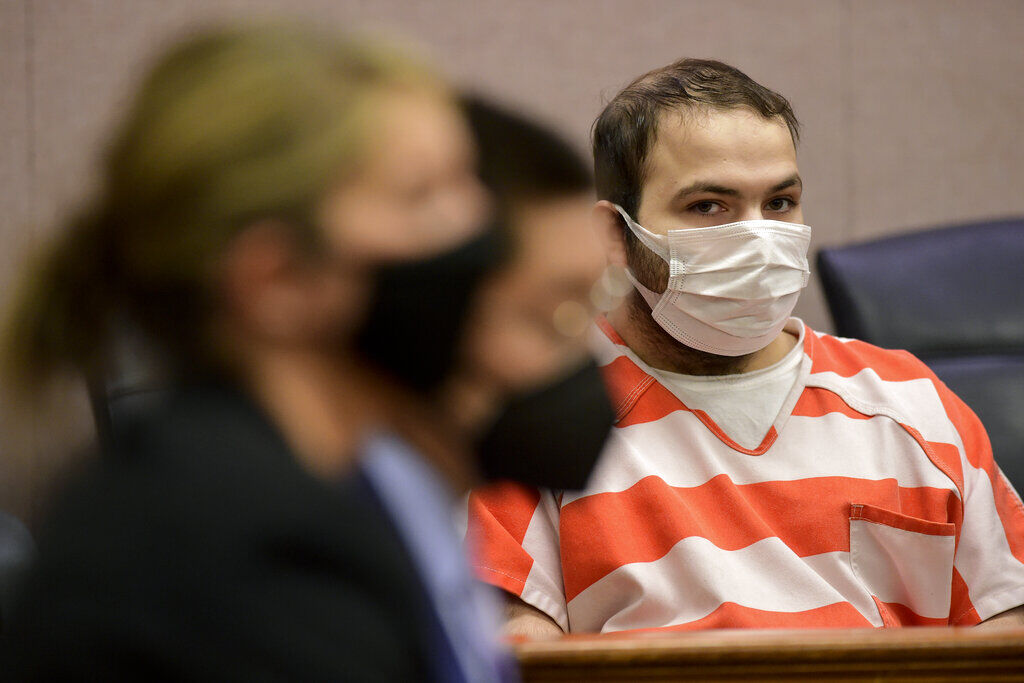
After three years of delays due to the questioned mental state of the alleged Boulder mass shooter, mental health evaluations continue to take center stage during jury selection for the criminal trial.
Twentieth Judicial District Judge Ingrid Bakke, along with prosecution and defense attorneys, continued dwindling down the pool of prospective jurors on Tuesday during voir dire — or the preliminary examining of prospective jurors — prior to the opening statements and presentation of evidence in the murder trial of 25-year-old Ahmad Alissa.
Alissa is charged with 55 counts overall, including 10 counts of first-degree murder, 38 counts of attempted first-degree murder, one count of first-degree assault and six counts of possessing large-capacity magazines during the commission of a felony in connection to the mass shooting that occurred at the King Soopers on Table Mesa Drive in Boulder on March 22, 2021.
While Alissa’s defense attorneys, led by Kathryn Herold and Samuel Dunn, did not assert that Alissa committed the mass shooting, he pleaded not guilty by reason of insanity in November 2023 following a diagnosis of schizophrenia.
That decision of whether Alissa was insane during the shooting, which will fall on prosecutors to disprove during the trial, remained the sole focus of the prosecutor’s questions to potential jurors Tuesday.
Assistant District Attorney Ken Kupfner, for example, started by asking jurors Tuesday to define the terms “crazy,” “mental illness” and “insanity” separately, potentially pegging what evidence jurors would need to see to decide that Alissa was not insane during the incident. Prosecutors must prove he intended, and planned, to kill the 10 victims in order for jurors to convict on the first-degree murder charges.
Most jurors defined crazy as a term to define something, like a shooting, as incomprehensible. Most defined mental illness as an overall spectrum and insanity as the inability to see right from wrong, due to a mental condition, while committing an act.
“The question in this case is not going to be for you to decide whether or not Mr. Alissa has mental illness. Every doctor that you will hear from will tell you he has mental illness,” Kupfner said, noting that the question during the trial will be whether or not Alissa was insane and whether he was capable of determining right from wrong.
Kupfner also asked jurors what it would take to prove to them that someone was insane while committing a crime.
“To me, it would be relevant what the person did ahead of time before the act, particularly what kind of attempts they took to conceal what was about to happen or whether they did not attempt to conceal what was about to happen. To me, that’s an indicator of whether they knew right from wrong,” one potential juror said, adding that attempting to hide plans and actions would prove to them a guilty mindset.
“You don’t just stumble upon a semi-automatic weapon,” another said, pointing toward the idea that pinpointing Alissa’s potential actions before the shooting, and the timeline of them, could prove intent and therefore mental cognition.
The only possible motive revealed so far was by a mental health evaluator who testified during a competency hearing last year. They claimed that Alissa said he bought firearms to carry out a mass shooting and suggested that he wanted police to kill him.
If prosecutors can prove to the jury that Alissa wasn’t mentally insane during the shooting and was aware of his actions, ultimately proving his guilt, he will be sentenced to life in prison without the possibility of parole.
If, on the other hand, he is found not guilty by reason of insanity, he could be committed to a state-run mental institution — where he would be treated until he was deemed no longer a danger to himself or others.
The question of Alissa’s mental health pushed the trial back over three years, with Alissa being deemed not competent to stand trial by a judge in December 2021 based on evaluations from doctors at the Colorado Mental Health Institute at Pueblo.
Alissa was ruled competent to stand trial by Bakke on Oct. 6, 2023, though the defense attempted to order a second evaluation earlier this year. It was denied by Bakke.
The defense argued in a court filing that his relatives said he irrationally believed that the FBI was following him and that he would talk to himself as if he were talking to someone who was not there.
A collection of Alissa’s relatives are expected to act as witnesses during the trial.
Prosecutors argued that Alissa was never previously treated for mental illness and was working around 60 hours a week leading up to the shooting, something they say would not have been possible for someone severely mentally ill.
Initially, 1,500 Boulder County residents were summoned for potential jury duty, filling out questionnaires last week, according to court records. During this week, 12 official jurors and four alternates will be decided upon by the court and attorneys.
The jury is expected to be seated, and opening statements could begin, by Friday or the beginning of next week.
Victims included: Denny Stong, 20; Neven Stanisic, 23; Rikki Olds, 25; Tralona Bartkowiak, 49; Teri Leiker, 51; Boulder Police Ofc. Eric Talley, 51; Suzanne Fountain, 59; Kevin Mahoney, 61; Lynn Murray, 62; and Jody Waters, 65.
The Denver Gazette will cover the trial daily.
The Associated Press contributed to this report.

Get OutThere
Signup today for free and be the first to get notified on new updates.
PREV
PREVIOUS
Why Harris is going to New Hampshire to unveil new tax deduction plan
Vice President Kamala Harris is set to visit the greater Portsmouth, New Hampshire, area Wednesday, where she will unveil new proposals targeting small businesses as she seeks to contrast her economic policies against former President Donald Trump. But the visit will also give her a chance to support Democrats in a purple state that was […]

First Leonardo da Vinci museum in North America might be coming to Pueblo, Colorado
The non-profit group Southern Colorado Science Center is working with the Artisans of Florence to establish the first permanent Leonardo da Vinci Museum in North America in Pueblo, Colorado. According to the Southern Colorado Science Center, Artisans of Florence recreations of Leonardo da Vinci’s most innovative machines have been stored in a pair of “earth-covered […]