Colorado Republicans demand action, answers on Venezuelan gang activity in Aurora
Lawmakers say investigation by a law firm alleged multiple violent incidents: the severe beating of a consultant for a property management company, the stabbing of a resident at another complex for "refusing to pay rent to the gang” and threatening to kill a property manager
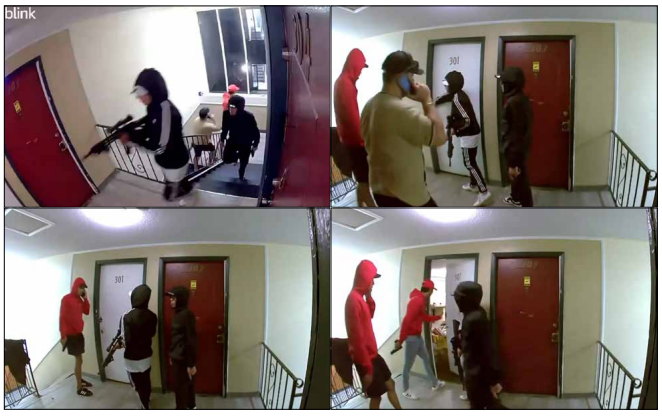
U.S. Rep. Lauren Boebert is among a group of Republican lawmakers from Colorado and Texas demanding answers from Homeland Security officials and the Federal Bureau of Investigation about Venezuelan gang activity in Aurora.
In their letter, the lawmakers cited an investigation conducted by a law firm that alleged multiple violent incidents involving the gang, including the severe beating last year of a consultant for a property management company, the stabbing of a resident at another complex for “refusing to pay rent to the gang” and threatening to kill a property manager.
Boebert sent the Sept. 6 letter to Homeland Security Secretary Alejandro Mayorkas, U.S. Immigration and Customs Enforcement Director Patrick Lechleitner, Department of Homeland Security Executive Associate Director Katrina Berger of the and Colorado Gov. Jared Polis.
The letter was also signed by Reps. Doug Lamborn and Greg Lopez of Colorado and Rep. Chip Roy of Texas.
The letter disclosed that a third-party, “nonpartisan” law firm, Perkins Coie, has investigated and confirmed that there have been “numerous criminal acts committed” by the Venezuelan gang identified as Tren de Aragua. Victims are often killed by gang members, with their deaths publicized as a way to intimidate others from coming forward, according to government officials.
Federal officials believe the Venezuelan prison gang is operating in the metro Denver area, although local politicians insist that the gang’s footprint is small. The prison gang is linked to a diverse portfolio of criminal activities that includes drug trafficking, human trafficking, particularly of immigrant women and girls, extortion and money laundering.
According to the letter, that investigation found that in November 2023, a “consultant for the property management company was so severely beaten and stomped by gang members that he had to go to the hospital.”
TdA gang members also “allegedly stabbed a Whispering Pines resident for refusing to pay rent to the gang,” according to the letter.
The letter also said “internal Aurora police documents obtained from news sources also found TdA gang members threatened to kill a housekeeper and her family if she didn’t give them keys to vacant apartments.”
“An apartment property manager has also testified that TdA gang members now use ‘the formally vacant units to host parties where they serve drugs and child prostitution,’” the letter said.
The letter obtained by The Denver Gazette did not include supporting documents, such as police reports or the investigation report from Perkins Coie, a prominent law firm with multiple offices in the U.S. and abroad. It’s not immediately clear who or which entity hired Perkins Coie to investigate the Venezuelan gang’s activities in Aurora.
In listing the alleged activities by the gang, the Republicans pointed to the failures of the “Biden-Harris administration’s open border policies coupled with the state of Colorado’s sanctuary policies and the city of Denver’s sanctuary city have fueled and exasperated the immigration crisis in Colorado.”
U.S. Rep. Jason Crow, a Democrat, earlier said gang activity in Aurora has been exaggerated.
“Those exaggerating and distorting the Aurora gang issue need to stop. Their misrepresentations are not based on reality,” Crow said on X.
“I’ve met and spoken with federal law enforcement and local leaders: the gang issues are being grossly exaggerated and misrepresented. Current gang activity is consistent with trends across Colorado, and law enforcement is dealing with it. In fact, violent crime is going down in the metro area,” he said.
Crow added that “misrepresentations” about crime only impede law enforcement’s abilities to do their jobs and make it “harder for residents impacted by squalid conditions to find suitable housing.”
In a Facebook post on Sept. 6, Aurora Mayor Mike Coffman said that he has personally walked through the apartment complexes unaccompanied without incident and that he has directed the city manager to provide two police officers for each of the properties for two weeks with an extension if needed — if the owner agrees to “assume responsibility for these two properties and place an onsite property manager in each one.”
In their letter, the Republicans said “non-sanctuary cities” and other communities have suffered as a result of the Biden administration’s “open border policies” and local Democrats’ “sanctuary policies.” Those communities, the letter said, “don’t have the resources or authorities to mitigate the influx of illegal aliens and TDA gang members.”
The letter noted that El Paso, Douglas, and Mesa counties have filed a lawsuit against the state of Colorado over its sanctuary policies. Those policies, the letter said, have prevented local law enforcement from “detaining illegal immigrants and coordinating with ICE to ensure their removal.”
The letter also cited reports from The Denver Gazette that Denver has spent more than $74 million to provide some 42,000 immigrants who arrived in Colorado’s most populous city with shelter and transportation.
The Republicans demanded “action and answers” to the following questions:
What role has DHS or other federal agencies played in placing illegal aliens in Colorado?
How many illegal aliens have DHS or other federal agencies placed in Colorado?
What nonprofits has DHS worked with to place illegal aliens in Colorado?
What information has DHS known about TdA gang members in Aurora and for how long?
When was the first indication that TdA’s presence was growing in Colorado?
How many known TdA gang members have crossed the border in the past year?
What point of entry are these TdA gang members entering the country at and where are they going?
What policies, including state policies, are hindering local communities from coordinating with DHS and ICE to remove illegal aliens and TdA gang members?
Are there additional authorities Congress can provide, and if so, what are they, to assist with removing illegal aliens and TdA gang members?
What actions are the State of Colorado and DHS taking to combat the crimes being committed by TdA gang members and ensure their removal?
Last month, officials shuttered Aspen Grove — evicting roughly 300 people — citing a string of health and safety issues that included rodent infestations, sewage backups and trash pileups, water leaks and a lack of electricity.
Through a Florida PR firm, the company blamed the deteriorating conditions at Aspen Grove on gang activity — an allegation that city officials initially denied and then later walked back.
As early as June, an attorney representing the landlords sent a flurry of letters, obtained and authenticated by The Denver Gazette, to police, state and local officials seeking help with the Venezuelan gang, which the lawyer said had “forcibly taken control” of the property.
The landlord also sought to hire off-duty police officers to provide security for the properties, a request that the Aurora Police Department declined.
Aurora officials have agreed to drop all charges against the owner of the Aspen Grove apartment complex in exchange for selling the property, leasing it — or a “similar disposition” — and assuming the cost to board up and secure the building. Notably, the agreement said that the apartment’s owners may “re-tenant” the building, provided the building is in compliance with the city code.
Venezuelans are among the nearly 43,000 immigrants who have come to Denver after illegally crossing the U.S.-Mexico border over the past 22 months. Officials estimate about half of those stayed. More than seven million Venezuelans have fled since President Nicolás Maduro assumed power in 2013, plunging the country into economic and political chaos.