Boulder shooting trial focuses on suspect’s mental health
The trial of Ahmad Alissa winds down with the final set of witnesses Wednesday
Day 10 of the Boulder mass shooting trial began with a photo of Ahmad Alissa smiling with two friends at Red Rocks Amphitheater in 2017.
The photo, showing a clean-faced Alissa during high school, came a few years before he started showing the changes that his family and the defense team sought to outline to the jury over the last few days.
“Withdrawing, cutting out friends, not talking as much. Those were the first things that came,” Mahmoud Alissa, the younger brother of the suspect, said of Alissa during his senior year of high school.
When he would speak, he would only talk a little, but it got worse as it continued, the brother said, adding it got to the point where he was incapable of making a sentence.
After high school in 2020 and 2021, Alissa would just mumble, his family said.
The jury was then shown a picture of Alissa at one of the family’s restaurants in 2021. Alissa appeared to have gained significant weight. He had unkept hair and an indifferent expression — miles from the smiling photo at Red Rocks, just a few years prior.
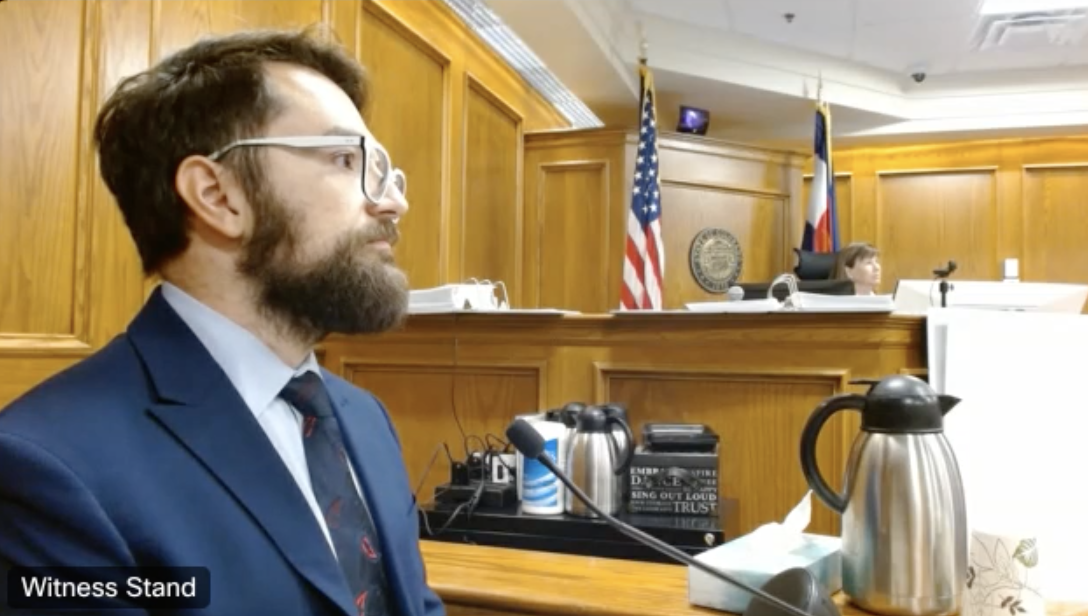
Individuals diagnosed with schizophrenia often begin experiencing psychosis in their late adolescence and early 20s, according to Dr. Joshua Hatfield, a forensic psychologist who evaluated Alissa for the defense team after the shooting occurred in 2021.
To Hatfield — who interviewed Alissa eight times throughout that year — the suspect was “remarkably psychotic, remarkably ill.”
The question is whether Alissa was criminally insane at the time of the shooting, something the prosecution is attempting to disprove after Alissa pleaded not guilty by reason of insanity to the 10 counts of first-degree murder and the dozens of other charges in connection to the mass shooting on March 22, 2021.
The rampage killed 10 people at the King Soopers on Table Mesa Drive.
Various family members took the witness stand over the past week, describing what they believed to be Alissa’s mental state prior to the shooting.
Mahmoud Alissa noted that he saw the suspect the day of the shooting talking and laughing in the bathroom. There was nothing — or no one — in there, he said.
The brother said a quick word to Ahmad Alissa and said he went to his room. He did not tell the family or police about what he had seen — because, he said, Alissa had been showing negative mental health signs for the past few years.
The two wouldn’t see each other again until Wednesday in court, with the older brother sitting at the defense table, potentially facing life in prison or years in the state mental hospital.
Twentieth Judicial District Attorney Michael Dougherty questioned why Mahmoud Alissa didn’t tell FBI investigators about the potentially psychotic incident in the bathroom. In fact, according to a recorded interview, the brother said Alissa was acting normal the day of the shooting.
Dougherty also asked why the brother didn’t tell investigators that Alissa’s performance at work — the family’s restaurant — had declined over the years, or that the family believed they were being watched by the FBI. The prosecutor implied with his questions that the family had changed their story in order to protect Alissa.
“When they’re investigating, they only care about reasons or motives or why,” the brother said. “They’re not caring about whether he was a good cook or not. During those times, I can’t just mention something to them. They asked, they’re investigating. I give them what they need.”
Cultural gap
The cultural difference in the family, who emigrated from Raqqa, Syria more than 20 years ago, may have been the main factor family members seemed to ignore the suspect’s mental health problems, according to an expert presented by the defense.
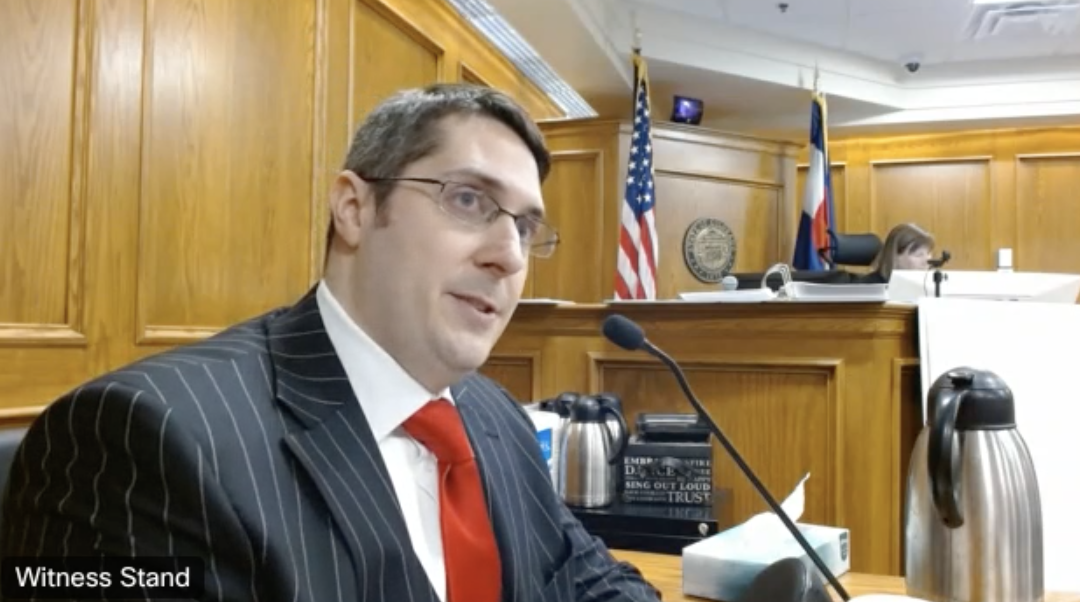
“Oftentimes, individuals will be really scared about being rejected by their community or ostracized by their community,” Dr. Ahmad Adi, an expert forensic psychiatrist who has both worked and lived in the Middle East, said, referring to how the culture regards mental health problems during his testimony Wednesday.
“Middle Eastern cultures tend to be very collective,” he said. “Hence, these fears of the entire family being shunned out.”
Middle Eastern families may often ignore mental health issues, or keep them under wraps, because of a lack of understanding and a dramatic increase in stigma in the culture, according to Adi.
For example, if community members find out a member of a family has a mental illness, they may stop going to a family’s restaurants.
The Alissa family owned multiple restaurants in the metro Denver area.
“Many individuals in the Middle East may attribute their mental health symptoms to not being religious enough or lapsing in their religious duties,” Adi said.
Mustafa Alissa, the suspect’s father, testified Tuesday that he believed that his 25-year-old son was possessed by a spirit called a jinn.
According to Islamic Studies professor Andrea Stanton, a jinn is a “creature mention in the Qur’an who is considered lower than humans and with a “capricious” nature.”
“It’s shameful in our culture if we say our son is crazy,” the father testified.
Dougherty questioned whether the family should have assimilated to American culture and its openness to discussing mental illness over the family’s 20-plus years in the country.
“Just because someone has lived in the county for a long time or assimilated to other aspects of the culture does not necessarily mean that they have come to a good understanding of mental health symptoms,” Adi responded.
On Tuesday, Mustafa Alissa agreed that other members of the family had received mental healthcare in the past, though the suspect had not, despite showing signs of schizophrenia since his teenage years.
Review of evaluations
The question of whether or not Alissa suffers from schizophrenia isn’t in question.
In fact, it has been known since right after the shooting.
Hatfield noticed the symptoms within the first moment of their meeting. Alissa was reportedly darting his eyes around the room, speaking in short responses and taking a moment to process words.
“It’s like trying to pull teeth. That’s how it frequently felt,” Hatfield said of interviewing Alissa, a sentiment all psychologists who worked with Alissa after the shooting have shared.
Hatfield said he believes that Alissa was guarded due to having constant audio hallucinations, something he admitted to and which he claimed had caused him to commit the shooting.
The psychologist described it as a “massive internal world going on.”
Alissa did not believe he was mentally ill, Hatfield said about their meetings in 2021. He wasn’t asking for help or eliciting sympathy from Hatfield, he said.
“I don’t think he understood how sick he was,” he said.
During a screening process on March 23, 2021, Alissa allegedly told doctors that he rarely heard voices and they had never told him to do harm, a significant difference from when he told psychologists later that the screaming voices are what caused him to commit the shooting.
Alissa was actively minimizing his mental illness to Hatfield, something the defense implied a person attempting to hide behind the guise of being not guilty by reason of insanity would not do.
Alissa asked for the death penalty and became upset when he realized it wasn’t a possibility in Colorado, according to Hatfield.
In their rebuttal case, prosecutors called Dr. Ian Lamoureux, a forensic psychiatrist who reviewed the entire case and evaluations for the prosecution, to the witness stand.
Lamoureux argued that Alissa was not experiencing audio hallucinations at the time of the shooting, claiming that he didn’t show any of the signs he does when he is experiencing hallucinations.
“If you were to imagine someone standing beside you and screaming at you, you quickly understand that that would be very distracting,” Lamoureux said. “So, when I reviewed the King Soopers shooting video, it was quite remarkable to me just how focused and fixated he was.”
The shooting and killing of Boulder Police Department Officer Eric Talley may be one of the biggest factors in proving that Alissa was not criminally insane and knew right from wrong at the time of the shooting, according to Lamoureux.
When Talley entered the store and moved toward Alissa, the latter took up a flanking position, indicating that he knew the police were there to enforce the law and his conduct caused the response. He did not try to greet them as if they were there to assist him in a mission, Lamoureux said.
Then, in evaluations during the following years, Alissa said that he was either going to die in a shootout or be arrested, showing that he knew what he was doing was illegal.
Regarding intent, Lamoureux pointed toward a collection of cellphone records prior to the shooting, with Alissa searching the internet for ways to make rifles automatic and how to make explosives.
There was a significant amount of evidence that Alissa went out with the intent to murder multiple people, according to Lamoureux.
The defense questioned the validity of Lamoureux’s conclusions by pointing out that he was paid around $150,000 by the 20th Judicial District Attorney’s Office to evaluate the case.
The defense ended presenting witnesses on Wednesday. Closing statements are set to begin Friday afternoon.