Denver teachers demand cost-of-living increase
Collette Simkins — a theater and visual arts teacher at West High School — works two extra part-time jobs just to live in the Cap Hill neighborhood near the campus she has taught at for three years.
“I think it’s important to live in the community in which my students live,” said Simkins, 29.
She — and the nearly 4,000 educators that the Denver Classroom Teachers Association (DCTA) represents — was counting on a full cost-of-living increase this school year.
“I feel committed to stay in Cap Hill, but it’s getting harder and harder to do that,” Simkins said.
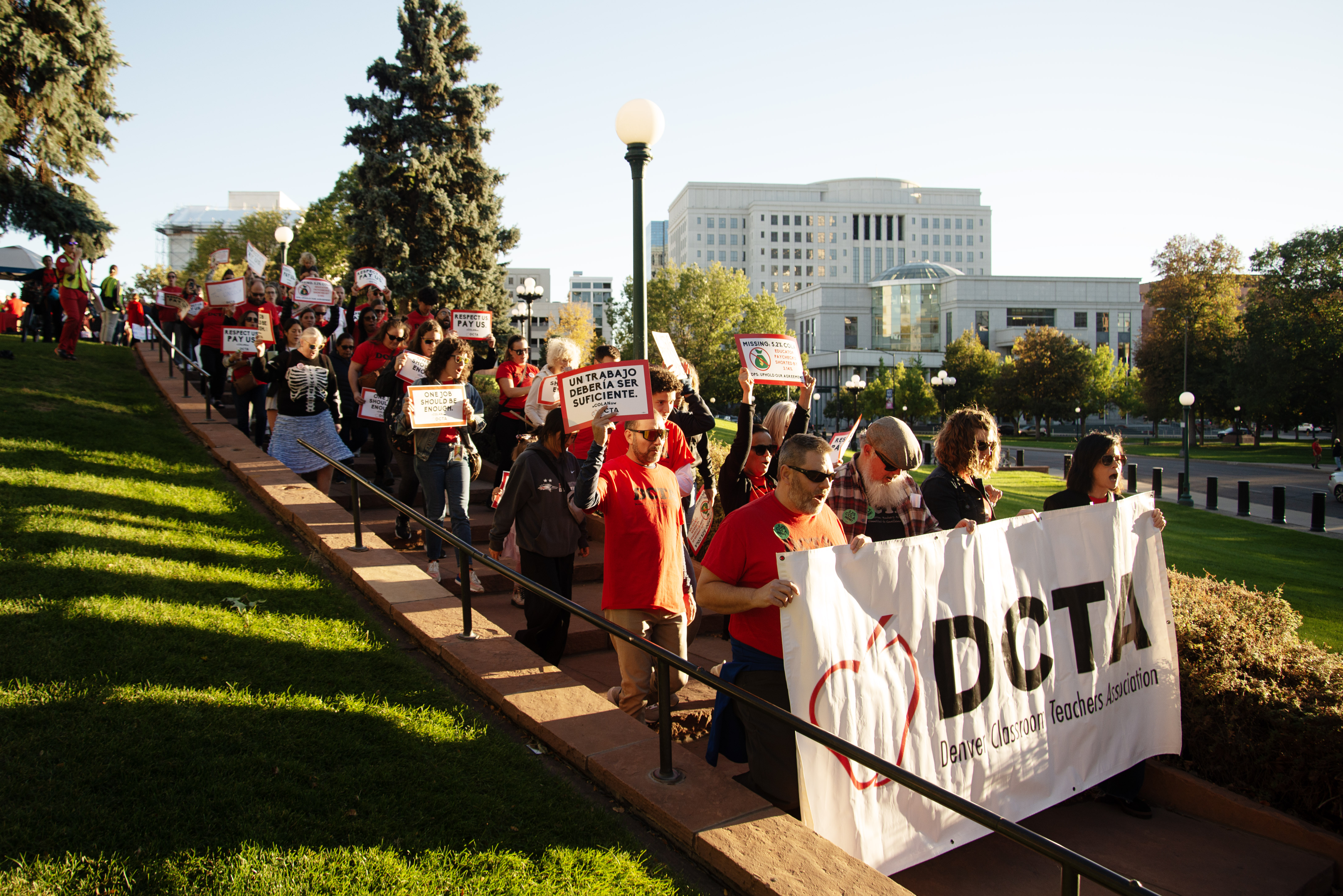
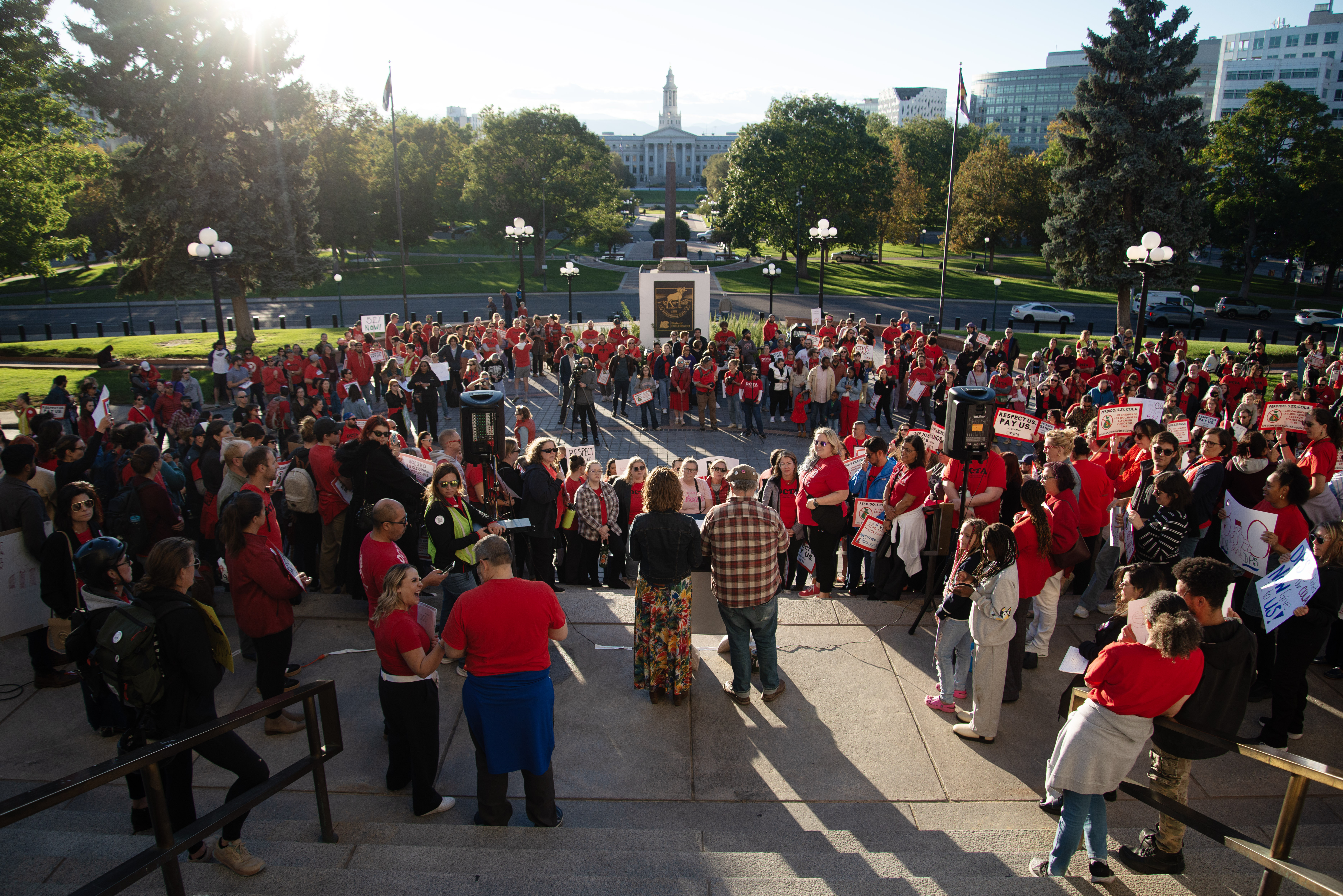
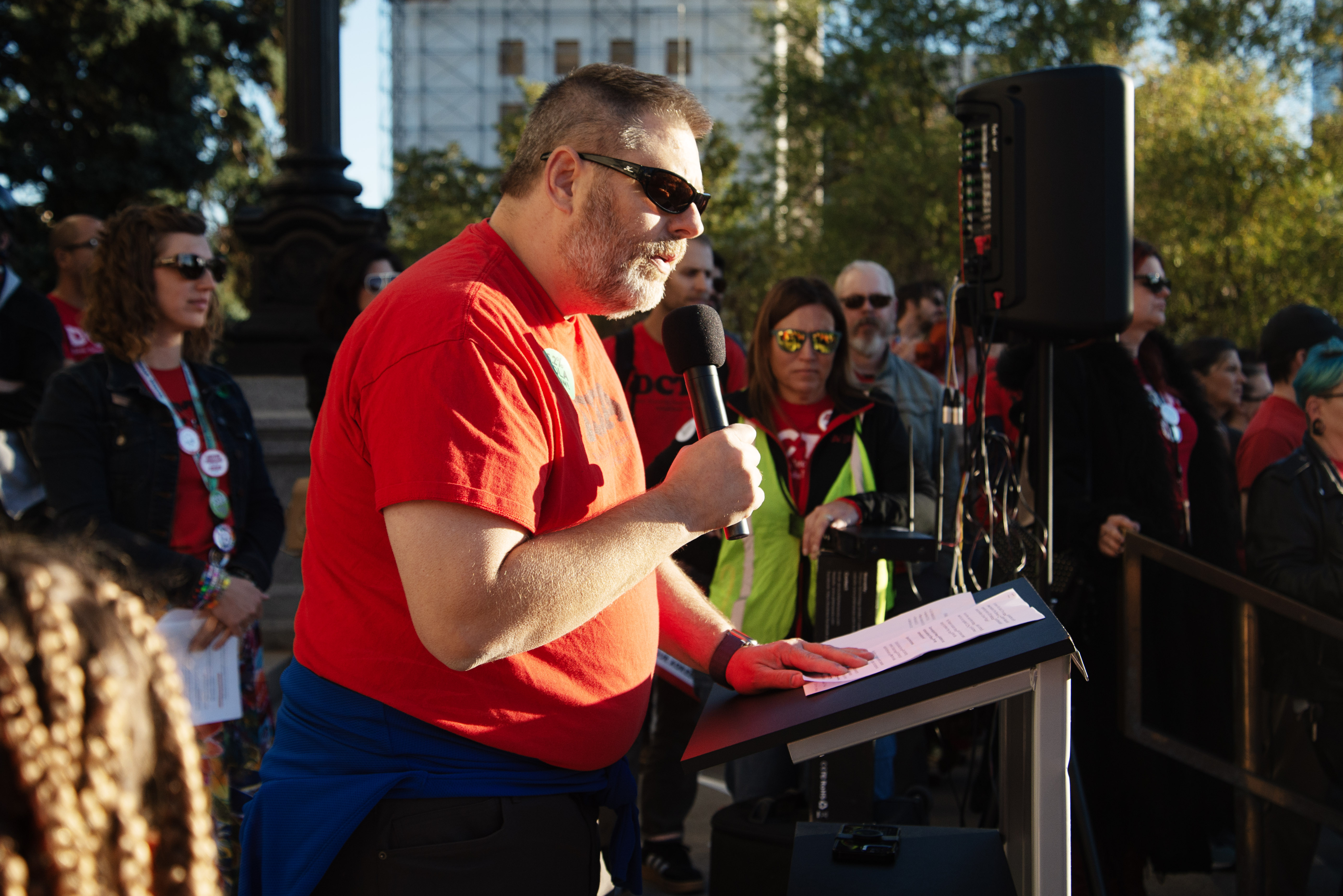
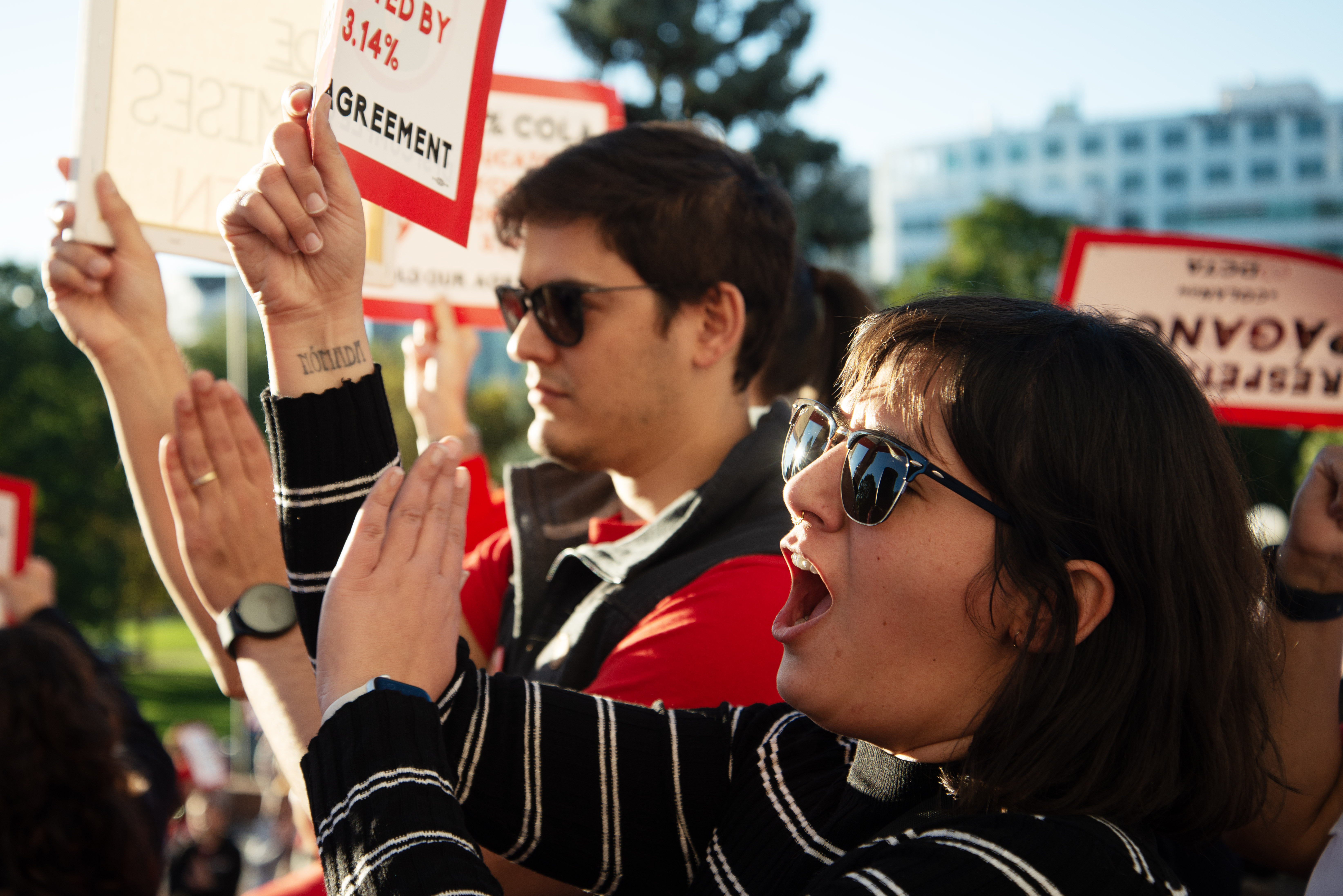
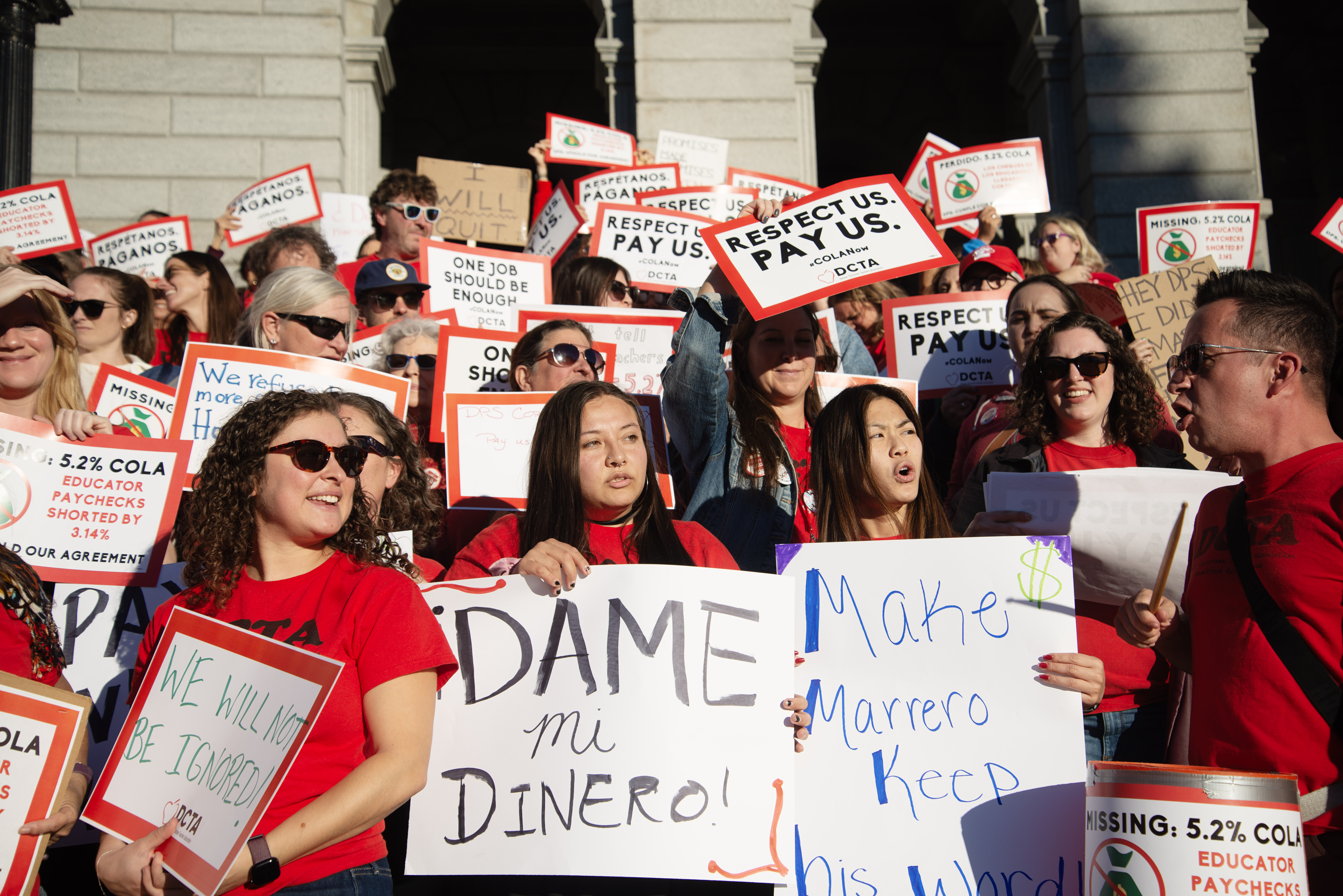
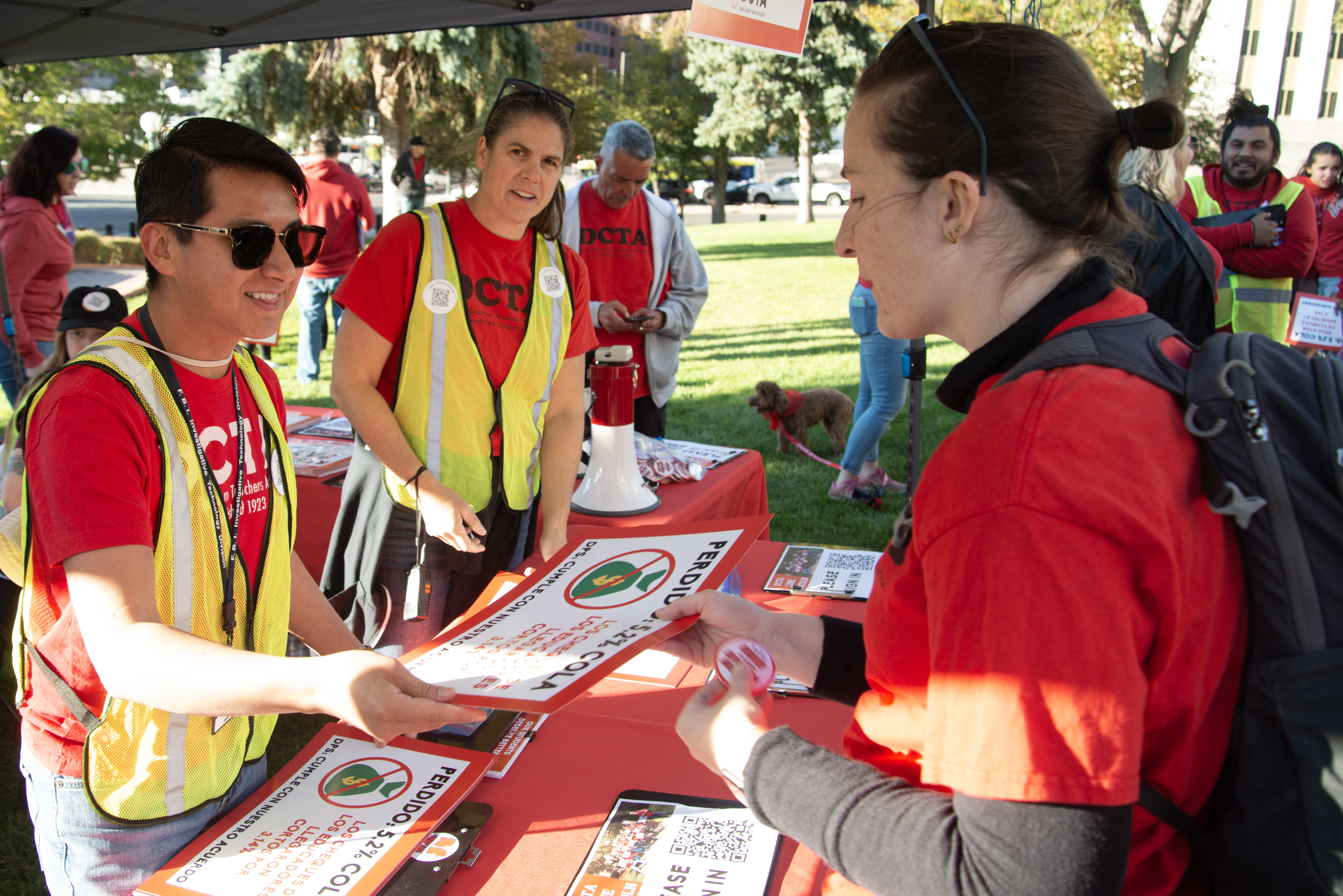
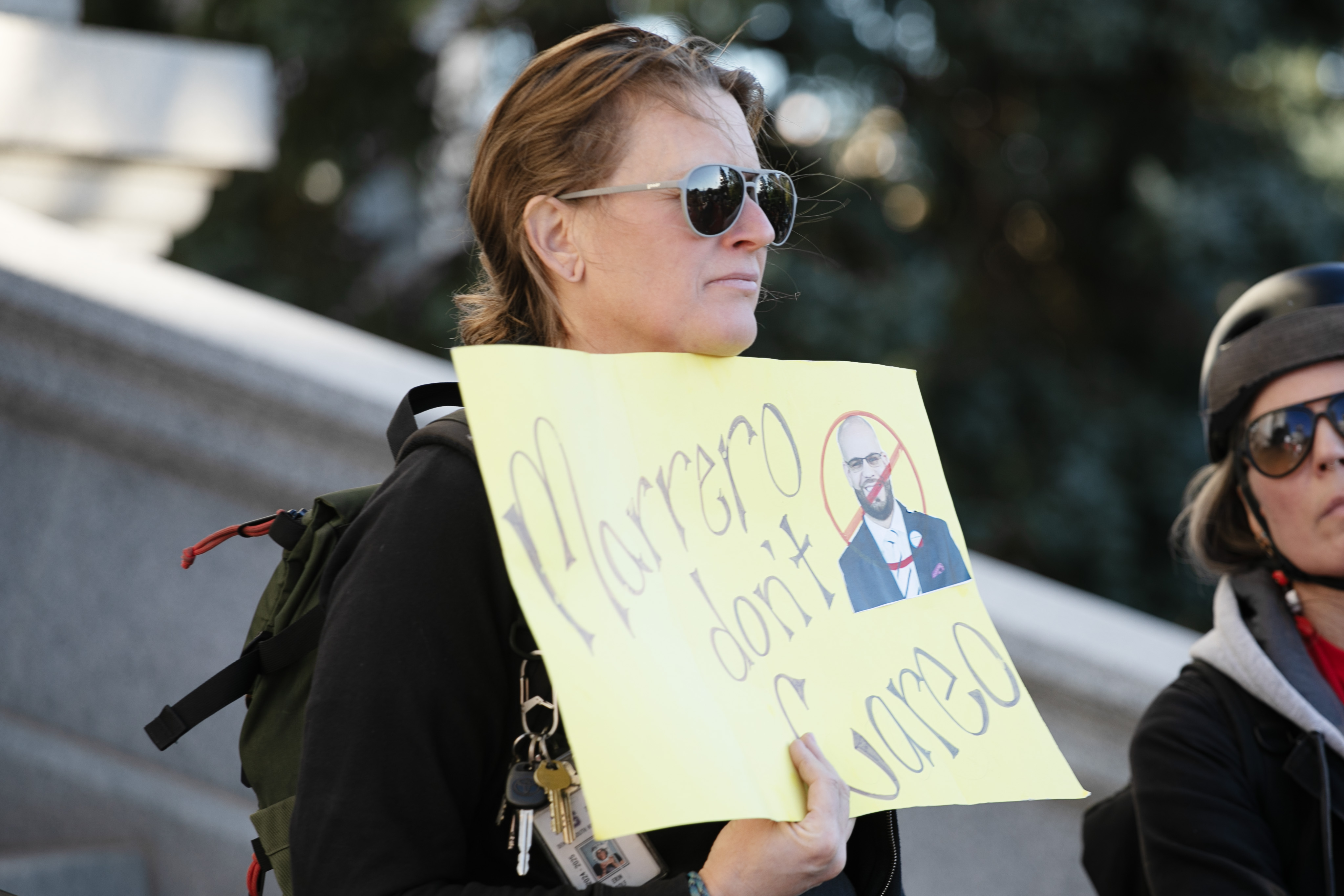
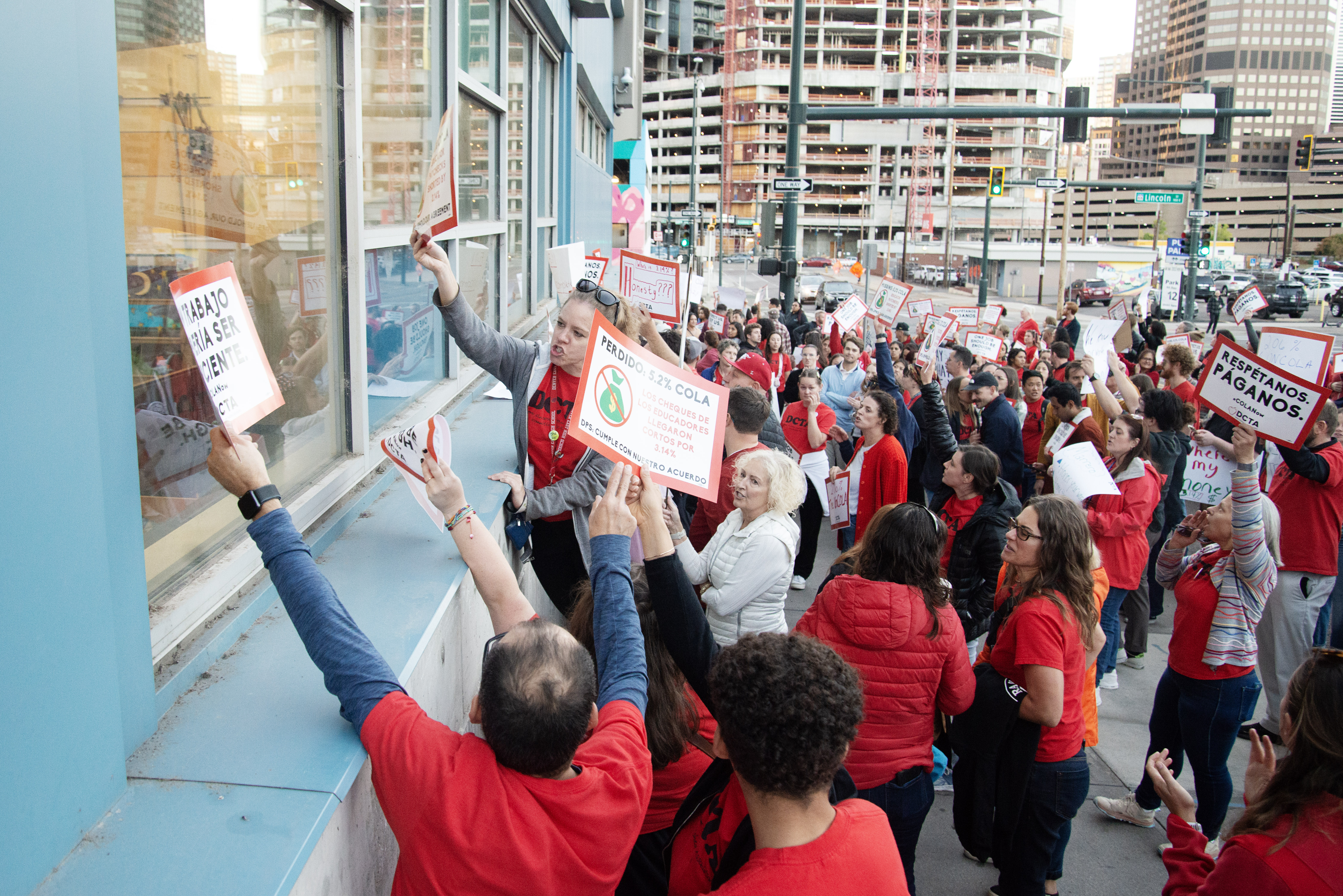
Simkins joined about 300 educators on Monday on the steps of the state Capitol to demand the full Cost of Living Adjustment (COLA) they say Denver Public Schools (DPS) owes them.
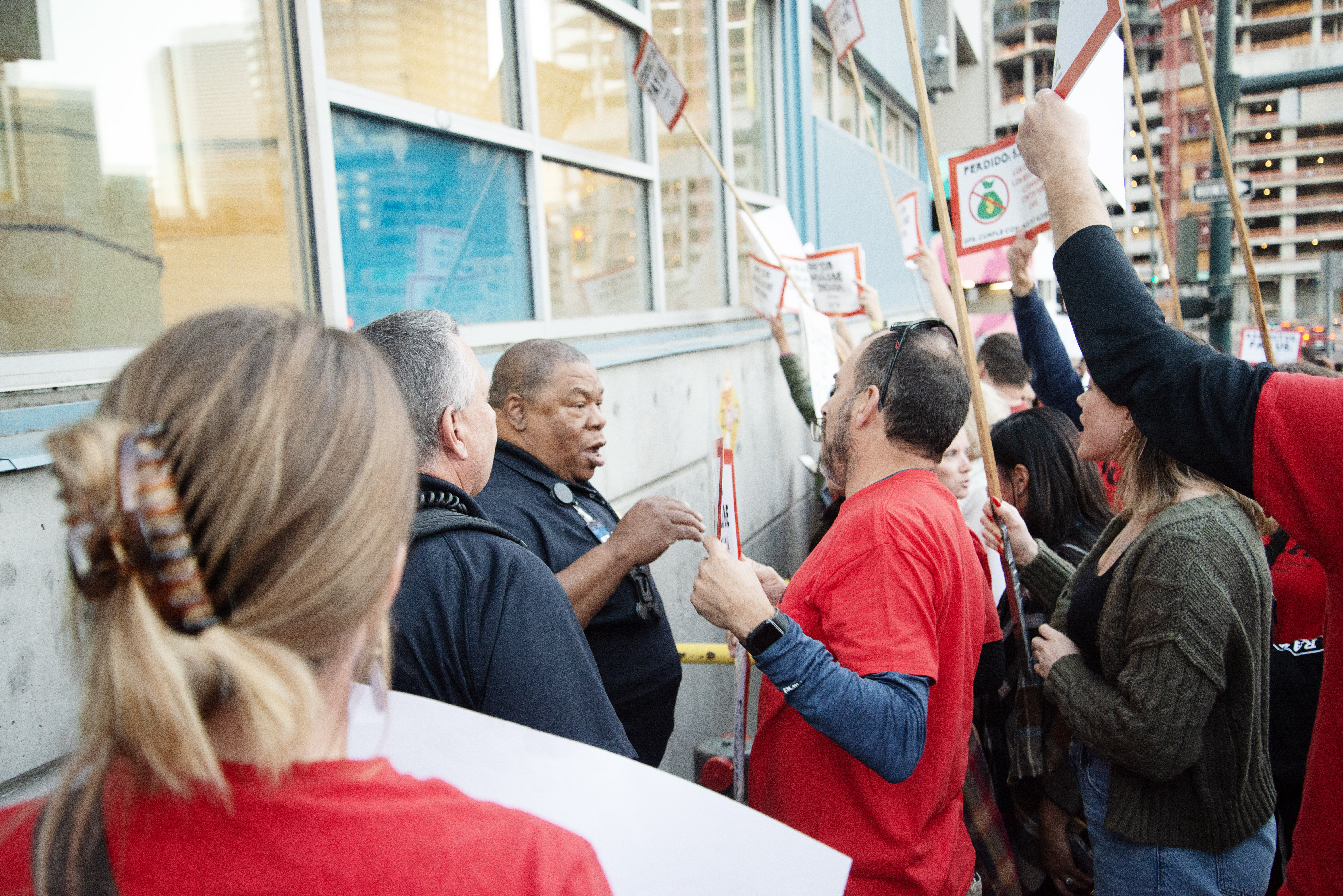
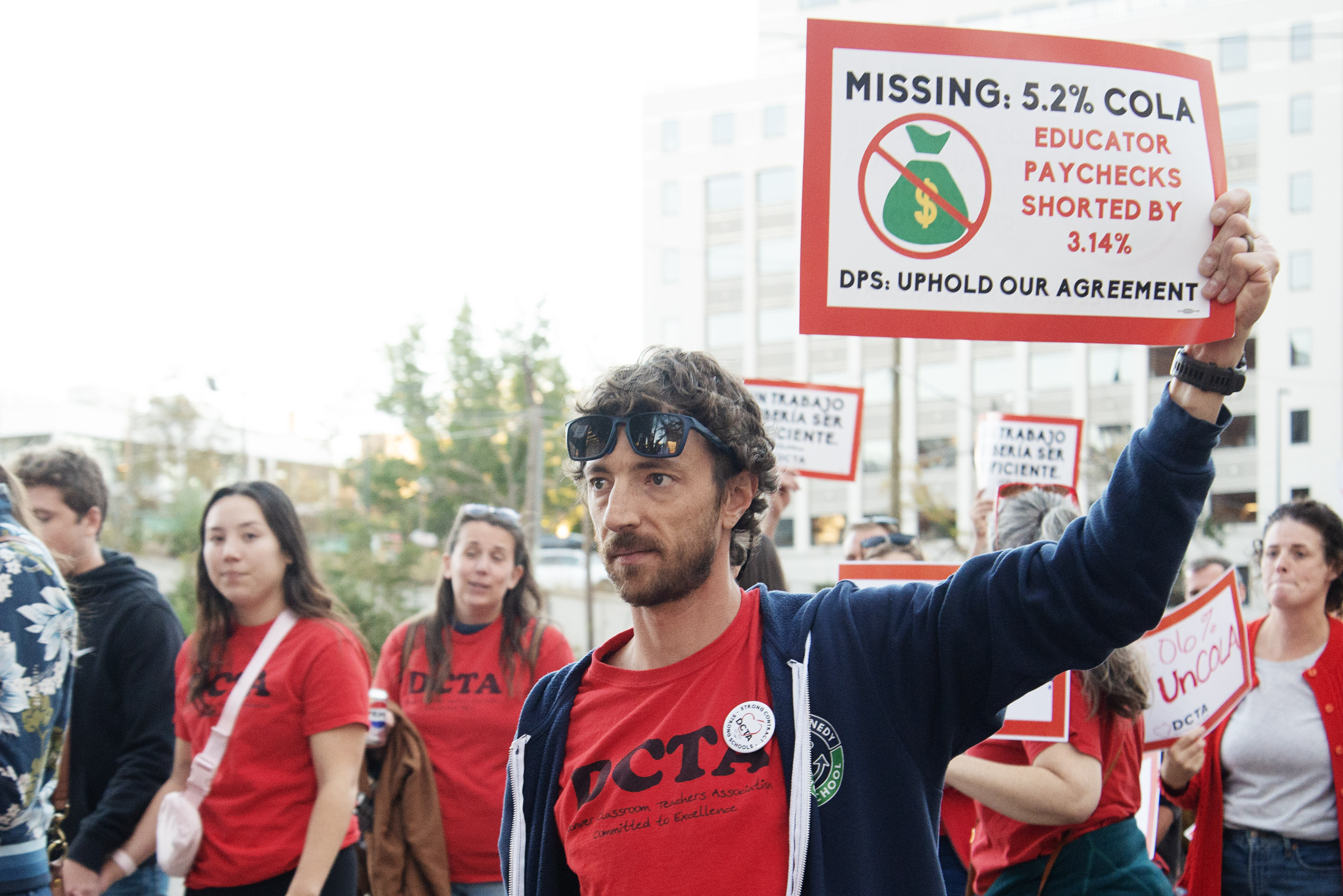
Protesters chanted “The school board is absurd, make (Superintendent Alex) Marrero keep his word” while hoisting up signs that read: “We stopped the BS, you stop the BS,” “Respect us, pay us,” “We are not a discount store,” “DPS are liars,” and “One job should be enough.”
Passing cars honked in approval.
DPS officials, however, argue that not all of the contract triggers were met for the full cost-of-living increase.
“This year, the state funding criteria was not met, so DCTA members received the next pay scale step and lane plus a cost-of-living adjustment (COLA), not to exceed the COLA total, which is 5.2%,” Scott Pribble, a district spokesperson, said in an email.
“The agreement also states that DCTA members will receive a one-time payment of $1,000. In previous years of this agreement, the state funding criteria was met, so there was a different formula to follow for the DCTA raises.”
Union members have received both raises — called “steps and lanes” — and COLA for the first two years of a three-year contract, said Rob Gould, president of the DCTA.
“Steps” refers to years of experience and “lanes” the education level of teachers.
But not this school year.
A COLA adjustment is intended to keep up with the cost of living. Raises — which district officials appear to be conflating in their argument — are separate from a cost-of-living increase.
“They’re finding a loophole so they don’t have to pay their people what they owe them,” Gould told The Denver Gazette.
The School Finance Act outlines the annual cost of living adjustment. This school year was supposed to have been 5.25%.
Educators actually received 2.06%, said Angelina Reed, a union spokesperson.
The difference equates to roughly $11.2 million, said Michelle Horwitz, a bilingual speech-language pathologist at Bryant Webster Dual Language School and co-chair of the DCTA bargaining team.
“This isn’t about educator greed,” Dez Baldonado, a West High School math teacher, said.
Baldonado added: “This is about quality of life. This is about equity.”
District officials have disputed this.
Chuck Carpenter, the district’s chief financial officer, has argued that teachers were only entitled to a cost-of-living adjustment and a step-and-lane raise increase that totals 5.2% and a $1,000 raise.
‘The board is being miserly with us’
Aurielle Mayhew, a fourth grader at Inspire Elementary, said since educators began protesting she worries about her teachers being able to support their families or leave the school district.
“That made me upset knowing that they had to fight for something they had already earned,” Mayhew said.
The sticking point appears to be whether Denver educators are due raises and a cost-of-living adjustment.
The district’s reasoning is that the amount of additional funding the district received from the state in what’s called the “Budget Stabilization Factor” was not “large enough to trigger a compensation increase of COLA” plus annual increases.
Introduced in 2010 during the Great Recession, the Budget Stabilization Factor, or BS Factor, is a tool the legislature used to reduce funding for school districts to balance the state budget, as required by statute.
Lawmakers eliminated the BS Factor earlier this year, returning public education funding to 1989 levels.
While not explicitly stated by district officials, who could not be immediately reached for comment Monday, it appears the district is arguing a full COLA is not due educators because DPS will not receive the additional BS Factor funding this school year.
Over the past two contracts, union members will have seen their salaries increase roughly 47% from $57,283 in the 2018-2019 school year to $84,375 next academic year.
The state average — according to the Colorado Department of Education — is $65,838.
Starting pay for DPS teachers, though, lags behind seven other school districts in the Denver metro area, according to DCTA data. Westminster Public Schools has the highest starting rate at $62,763, compared to $55,257 at DPS.
In an April 24 email to the teacher’s union, Marrero contended union educators received — on average — an 11.5% raise.
“The analysis included a full costing of steps and lanes but did not involve potential turnover savings,” Marrero wrote.
Turnover savings are not insignificant.
The union has estimated the turnover savings — for a single school year — at $10.8 million, enough to make teachers whole.
That alone — Gould argues — is enough to pay educators a full COLA.
“The board is being miserly with us, in spirit and in money,” said Kathleen Frank, a teacher at Lincoln High School, during a protest in May.
Union members also blasted the board of education for justifying a 10% raise for Marrero, making him the highest paid in Colorado, while skimping on teachers.
Some union members have raised the possibility of a teacher strike.
The last strike in Denver was in 2019, when teachers picketed and held rallies over pay. The three-day strike marked the first in Denver in three decades.
To bring attention to the issue, union members have staged rallies and walk-ins at various school across the district. An arbitration hearing is set for mid-December, Reed said.