







Denver’s cold weather homeless shelter protocol; how does it work?
Noah Festenstein noah.festenstein@denvergazette.com
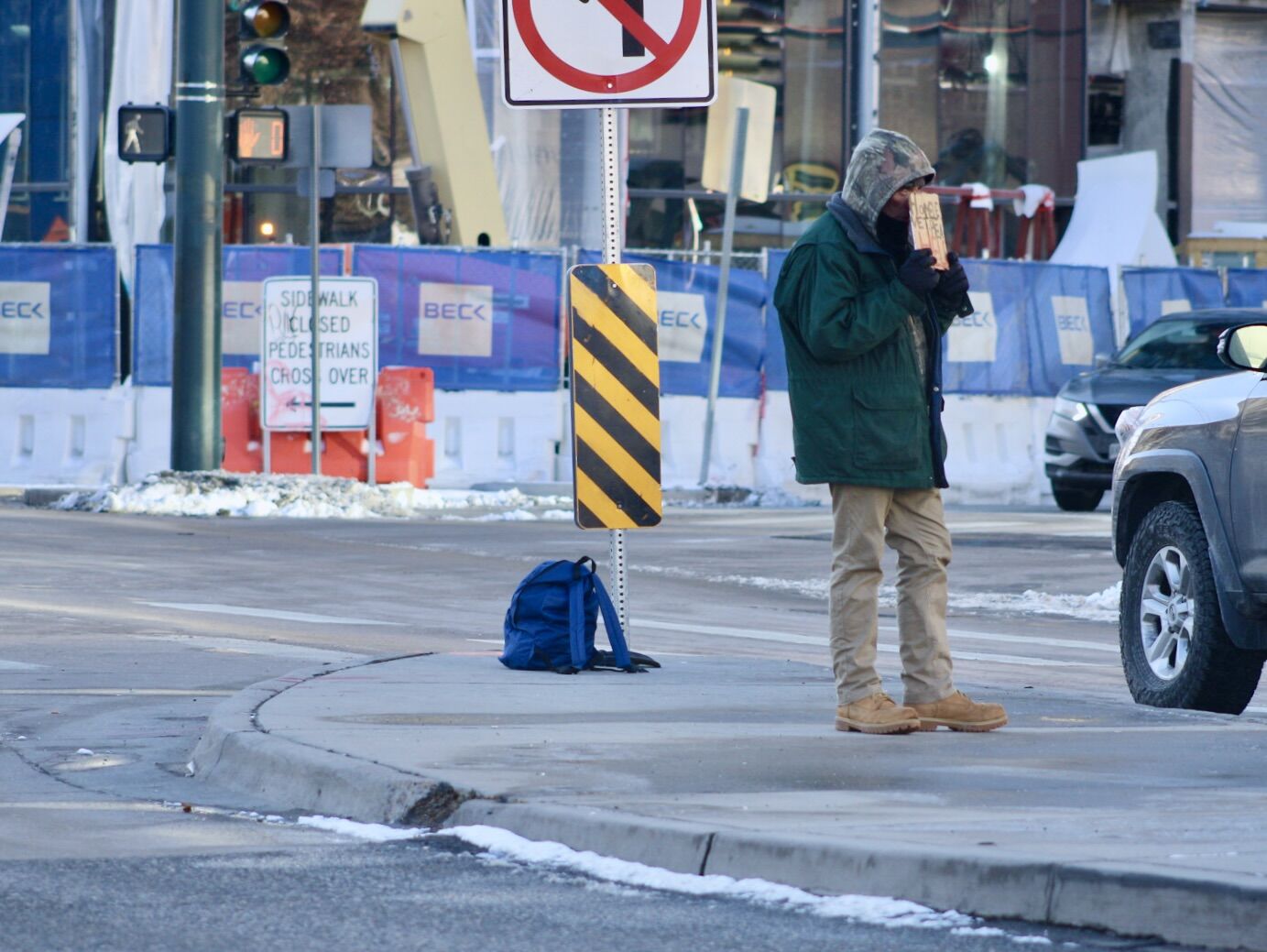
One of Denver’s most common strategies to provide homeless people shelter during extreme weather is its emergency cold weather shelter protocol.
But to provide outreach to those living on the streets in winter weather remains a more complicated challenge.
So far this winter season, Denver’s Department of Housing Stability (HOST) has activated city-operated emergency cold weather shelters three times amid snow and cold weather.
“HOST and our contracted partner outreach teams work to engage with their clients and also head out into the city to reach as many folks living unsheltered as possible,” Katherine Wamsley, a spokesperson at HOST, told The Denver Gazette in an email.
The city’s cold weather plan provides additional shelter for people who are not in city shelters, or third-party homeless units.
“Our teams provide outreach coverage during day and evening hours during cold weather activation and will coordinate with multiple agencies and partners to connect with individuals in need of shelter,” Wamsley said, adding homeless advocates also assist in the effort.
When the cold weather shelter plan is activated, Denver typically offers three shelter options at the former Best Western hotel at 4595 Quebec St., and the city facilities at 2601 W. 7th Ave. and 375 S. Zuni St.
The former Best Western hotel serves as a homeless shelter under Mayor Mike Johnston’s homeless housing initiative.
Most recently, Denver activated its emergency shelters for five days starting Wednesday as cold weather blankets the region Thanksgiving weekend.
That emergency shelter operation stands as the longest so far this year.
“Cold weather poses a serious danger to people who are unsheltered,” city officials have said previously.
Other strategies HOST implements during cold weather shelter outreach is through the use of printed fliers and donations of hats, gloves, hand warmers and other winter gear, according to the department.
Additionally, Denver offers “Front Door” shelter access points for specific homeless demographics. Those sites include:
-
For individual men: Denver Rescue Mission Lawrence Street Community Center, 2222 Lawrence St.
-
For individual women: Samaritan House, 2301 Lawrence St.
-
For youth ages 15-20: Urban Peak, 1630 S. Acoma St.
-
Families in need of shelter should call the Connection Center at (303) 295-3366.
“If a person is unable to make it to a Front Door shelter on their own, outreach can sometimes also assist with transportation,” Wamsley said, adding transportation to the other emergency shelters are offered at the Front Door sites.
Prior to the Thanksgiving shelter activation, Denver last opened emergency shelters on Nov. 18 and during the winter season’s first snowstorm in early November.
If the shelters reach capacity, then HOST will consider opening other locations “to meet the needs of the community,” Wamsley said.
Last year, Denver utilized the Denver Coliseum as a emergency shelter.
“Shelter utilization can vary based on a number of factors. During severe weather we try to utilize as many beds as possible across the shelter system, including existing front door and emergency shelters,” Wamsley said.
Denver’s homeless population remains high.
A Metro Denver Homeless Initiative point-in-time count, conducted on a single day in January, pegged Denver’s total number of homeless people at 6,539 in 2024, compared to 5,818 last year.
And the city saw only 150 fewer “unsheltered” people — individuals who sleep in public places, such as parks and in cars — compared to the previous year’s count.
Between 2022 and 2023, Denver’s “unsheltered” homeless population grew by 110 homeless people. This time around, that number dropped from 1,423 to 1,273 in 2024.

AROUND TOWN: Southern Colorado Women’s Chamber of Commerce starts with fun before a busy new year
Linda Navarro
linda-navarro@denvergazette.com
Updated 4 days ago
Upending national trends and negative business news, last year had been a very good year for the Southern Colorado Women’s Chamber of Commerce and major strategic plans are in place. With that announcement, SCWCC planned its first Holiday Evening Gala...

Linda Navarro
Reporter

Where the Wind Takes You: Inside the Allure of Windstar’s Small-Ship World
Sponsored Feature
sponsored-feature@denvergazette.com
Updated 6 days ago
The first hint that you’re not on a typical cruise comes long before the ship sails away from the pier. It happens the moment you step aboard — no jostling crowds, no echoing announcements, no endless hallways vanishing into anonymity. Instead, you’re greeted by name, handed a cappuccino...

Sponsored Feature
Reporter

In addition to losing QB Bo Nix, injuries to WRs Pat Bryant, Troy Franklin concerning for Broncos
Chris Tomasson
chris.tomasson@gazette.com
Updated 3 hours ago
The Broncos not only have lost quarterback Bo Nix for the season with a broken right ankle, but they suffered two other injuries on offense Saturday that could be concerning. In a 33-30 overtime win over Buffalo in a divisional...

Chris Tomasson
Reporter
Jamal Murray, Tim Hardaway Jr. provide late juice for Denver Nuggets
Vinny Benedetto
vinny-benedetto@denvergazette.com
Updated 5 hours ago
The elation didn’t last long inside Ball Arena. A bunch of fans in orange and blue made the short trek from Empower Field at Mile High after the Broncos win and settled in for a much less anticipated Nuggets game...

Vinny Benedetto
Reporter

Broncos head to AFC Championship Game with OT win over Bills but Bo Nix out for season with broken ankle
Chris Tomasson
chris.tomasson@gazette.com
Updated 3 hours ago
After one of the most exhilarating victories in Broncos history, they got some very bad news. About an hour Saturday after Wil Lutz kicked a 24-yard field goal with 4:44 left in overtime to give the Broncos a 33-30 win...
Chris Tomasson
Reporter

Mark Kiszla: The heist and the heartache. A Broncos playoff classic turns to devastation.
Mark Kiszla mark.kiszla@denvergazette.com
mark.kiszla@denvergazette.com
Updated 6 hours ago
How will we remember the worst best day in Broncos history? For the Heist? Or for the Heartache? Should we raise a toast to J-Mac? Or cry in our beer for Bo? On a Saturday when the emotions of all...


Broncos OL Frank Crum catches TD pass in playoff win over Bills: ‘He’s like a diesel truck’
Kyle Fredrickson
kyle-fredrickson@denvergazette.com
Updated 6 hours ago
Frank Crum never caught a pass or scored a touchdown in his football life. That all changed Saturday in a Broncos divisional round playoff overtime victory, 33-30, over the Bills at Empower Field. Crum — a 6-foot-7 and 315-pound offensive...

Kyle Fredrickson
Reporter

Paul Klee: Sean Payton and a backup QB for a Super Bowl berth? Sounds like a Payton kind of challenge
Paul Klee
paul-klee@denvergazette.com
Updated 5 hours ago
Joy… and pain. After a bittersweet Saturday afternoon at Empower Field when the Broncos moved one win from Super Bowl LX yet lost quarterback Bo Nix for the rest of the NFL playoffs, what is it they always say? Sports...

Paul Klee
Reporter

Sean McDermott, Bills left puzzled by controversial interception in overtime
Tyler King tyler.king@gazette.com
tyler.king@gazette.com
Updated 6 hours ago
Sean McDermott heard the sentence he desperately didn’t want to hear. “New York has confirmed (the call).” After the most pivotal play in the Broncos’ 33-30 overtime win on Saturday — JaQuan McMillian’s heroic interception — McDermott called a timeout....

Tyler King tyler.king@gazette.com
Reporter

Broncos vs. Bills grades: Denver completes another comeback to advance to AFC title game
Chris Schmaedeke
chris.schmaedeke@denvergazette.com
Updated 7 hours ago
The Broncos beat the Buffalo Bills on Saturday in the AFC Divisional playoffs at Empower Field at Mile High. Here are the grades from the 33-30 overtime win: Offense The Broncos did not take advantage of the poor Buffalo run...

Chris Schmaedeke
Reporter