







Denver’s Park Hill residents say Kearney bikeway project on the wrong path
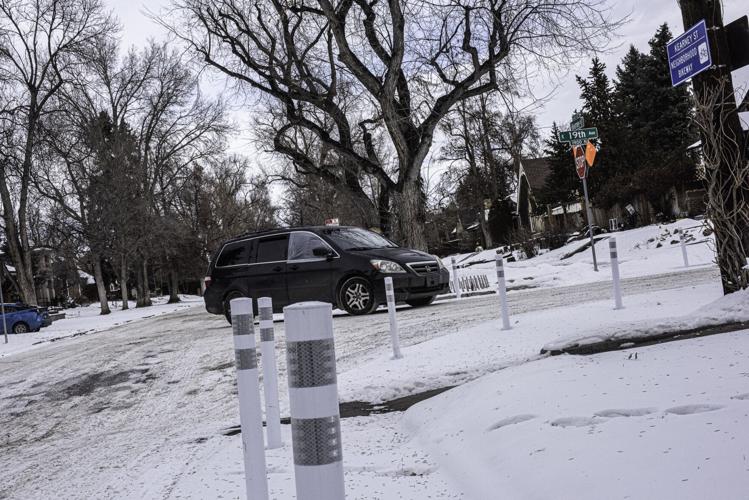
Residents near the intersection of 19th Street and Kearney Street in Denver's Park Hill neighborhood said the excessive number of bollards associated with the city's new bikeway is confusing for both drivers and cyclists.
Deborah Grigsby/Denver Gazette
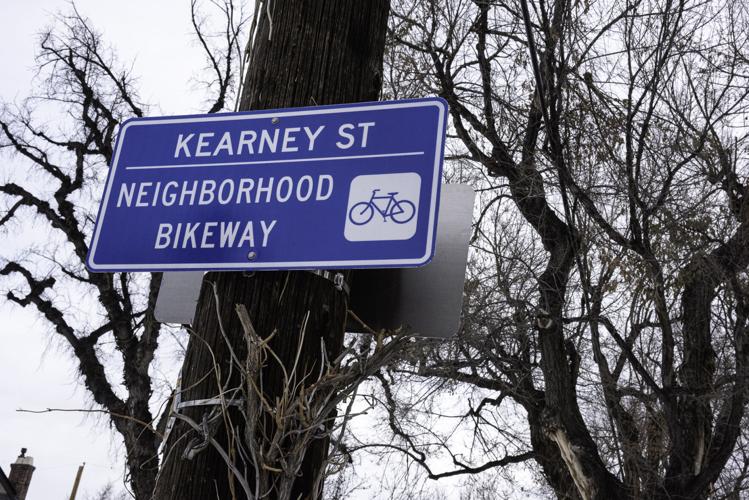
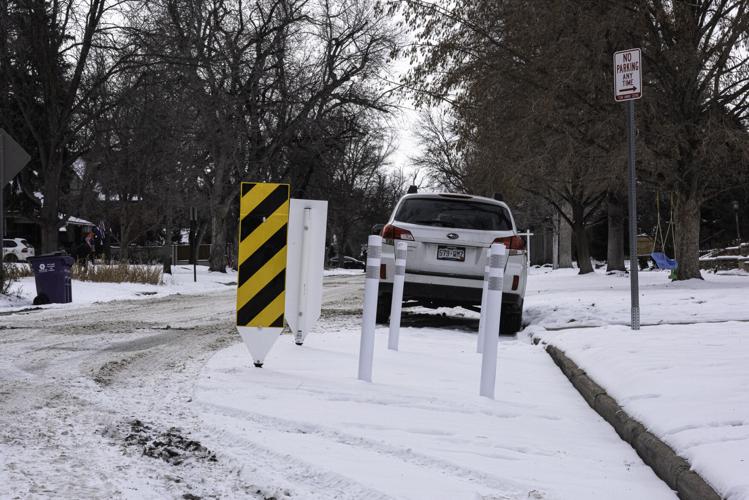
Along a well-manicured street in Denver’s historic Park Hill area, residents are trying to pump the brakes on a neighborhood bikeway project that some say creates more danger for pedestrians and cyclists than it does protection.
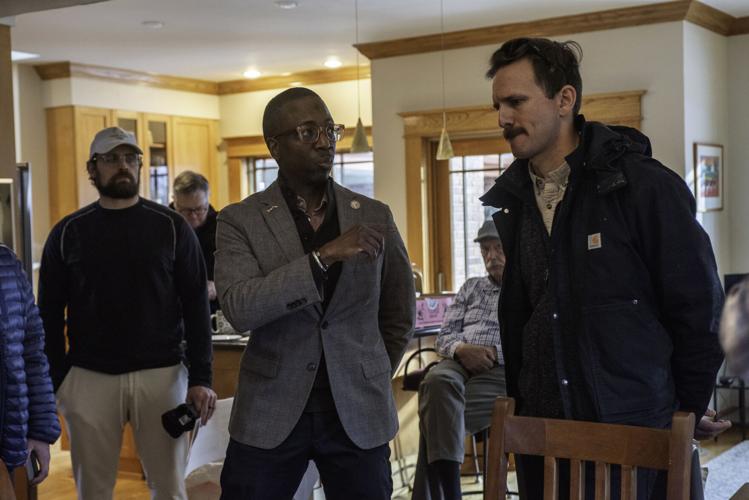
Close to 30 neighbors gathered inside the Kearney Street residence of John Rice on Wednesday to ask District 9 Councilmember Darrell Watson and Department of Transportation and Infrastructure (DOTI) Engineer Supervisor Brett Boncore to explain the city’s reasoning behind the excessive number of highly reflective bollards and ‘pinch points’ that tend to force cyclists off the bikeway and back into traffic.
They also wanted to know why the city did minimal public outreach surrounding the project.
Residents at the meeting said there was some communication from the city in 2020, but they never heard anything else until workers showed up Dec. 9, 2024 and began installing bollards and signage.
“We did not have any forewarning that they were coming,” Yvonne Bokelman said. “I emailed DOTI and have never, ever gotten a response, and I’ve sent multiple emails, including the mayor’s office – when we finally had a meeting with the Greater Park Hill neighborhood, that’s when we were able to get some traction.”
The bollards along Kearney Street — all 78 of them — are unsightly, residents said, and “provide no benefit to cyclists, pedestrians or drivers.”
They also create additional challenges with parking.
One resident, whose husband is “visually impaired,” said with the bollards in place, his ride share vehicle will no longer stop in front of the house.
Highly reflective tape on the bollards can be “blinding” to oncoming traffic as well as irritating to those who live within close proximity.
Although longtime residents said they have rarely seen traffic crashes involving pedestrians, what they are witnessing is a disturbing increase “chicken” games between cars and cyclists as they race each other to get through the pinch point first.
“It’s like if you’re just driving down this street and there’s no oncoming traffic, you just drive through the pinch point don’t slow down,” Rice said. “The only way you slow down is if you and another car meet at the pinch point, and only one person can go through at a time. Kearney is such a low-flow street that that event rarely occurs, right? And so all you’ve done is made a street narrower where a biker and a car might occasionally meet, and then they get to play chicken.”
“What you’ve been talking about is part of a very quick, but major rollout of bikeway infrastructure that’s somewhat new, and that we’re still testing out,” DOTI’s Boncore said. “So none of this is like set in stone, and there is a chance that we can work with you guys to figure out what the right solution for here is.”
One solution bounced around was the removal of the bollards and replacement of stropsigns, along with speed humps and other traffic calming elements.
Residents seemed to be amenable to the proposal.
Watson, who has only been in office for 18 months, said he will be reaching out to DOTI directly to discuss this and any other bike infrastructure being done across District 9.
“So give us two weeks, and we’ll come back with what the next steps are,” Watson said.