







U.S. Figure Skating – remembering the team that perished in 1961 plane crash: From the archives
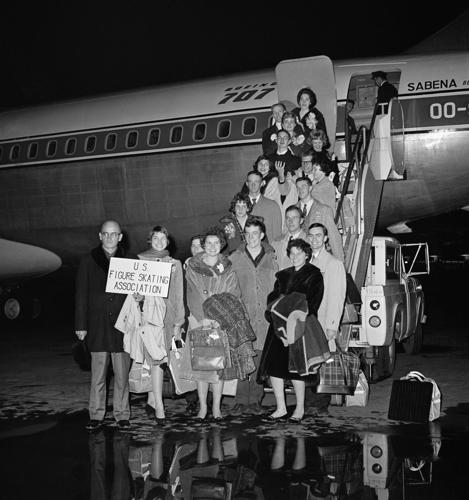
Members of the U. S. Figure Skating Team pose before boarding Belgian Sabena airline plane at Idle Wild airport, Feb. 14, 1961, New York. The plane crashed Feb. 15 near the Brussels, Belgium Airport killing all on board. From left in front row are: Deane McMinn, Lomita, Calif., coach and manager, Laurence Owen, Boston, Steffi Wethersfield; Colorado Springs, Colo, and Phodie Michelson; Long Beach, Calif. From left on the bottom: Douglas Ramsey; Detroit, Gregory Kelley; Colorado Springs, Bradley Lord; Boston, Mirabel Caen; Boston, Dudley Richards; Boston, Bill Hickox; Colorado Springs, Ray Hadley; Seattle; Laurie Hickox, Colorado Springs, Larry Pierce; Indianapolis, Ila Rae Hadley; Colorado Springs, Roger Campbell; Los Angeles, Diane Sherbloom; Los Angeles, Donna Lee Carrier; Los Angeles, and Bob and Pat Dineen; New York. (AP Photo/Matty Zimmerman)
Matty Zimmerman, Associated Press
Tragedy is not new to Colorado Springs-based U.S. Figure Skating, which in 1961 saw all 18 members of the national team and another 16 family members, coaches, judges and skating officials who were part of the team’s traveling contingent perish in a plane crash in Belgium.
Passengers aboard the American Airlines flight that collided Wednesday night with an Army helicopter and crashed into the frigid waters of the Potomac River included figure skaters returning from the U.S. Figure Skating Championships and two of their Russian coaches.
Colorado Springs-based figure skaters befriended airline crash victims at Wichita camp
On Feb. 14, 1961, the U.S. figure skating team that had been selected based on the results from the competition in Colorado Springs boarded a Boeing 707 at New York’s Idlewild Airport — later renamed for John F. Kennedy — en route to the World Championships in Prague.
The crash happened on what was supposed to be a stopover in Brussels.
All 72 occupants (and one person on the ground) were killed.
Here is The Gazette’s look-back coverage from 2021 — 60 years after the crash.
The tone of her father’s voice remains seared in Christy Krall’s memory, even after 60 years.
“’What do you mean there’s been a big fire?’” the then-13-year-old Christy heard her father tersely ask during a 4 a.m. phone call to their Colorado Springs home Feb. 15, 1961. “’What do you mean they’re all gone?’”
“I sat up in bed instantly and knew something terrible had happened.”
Just two weeks earlier, the U.S. Figure Skating Championships had taken place at The Broadmoor. Krall had trained there with some of the nation’s top skaters and was herself an emerging force in the sport at the junior level. But to absorb this collection of talent in her home arena was awe inspiring.
U.S. Figure Skating, based in Colorado Springs, reacts to fatal plane crash
“Oh my gosh, these were our heroes,” Krall said. “These were the people we wanted to be like. These were the most amazing athletes in the United States.”
Then, they were gone.
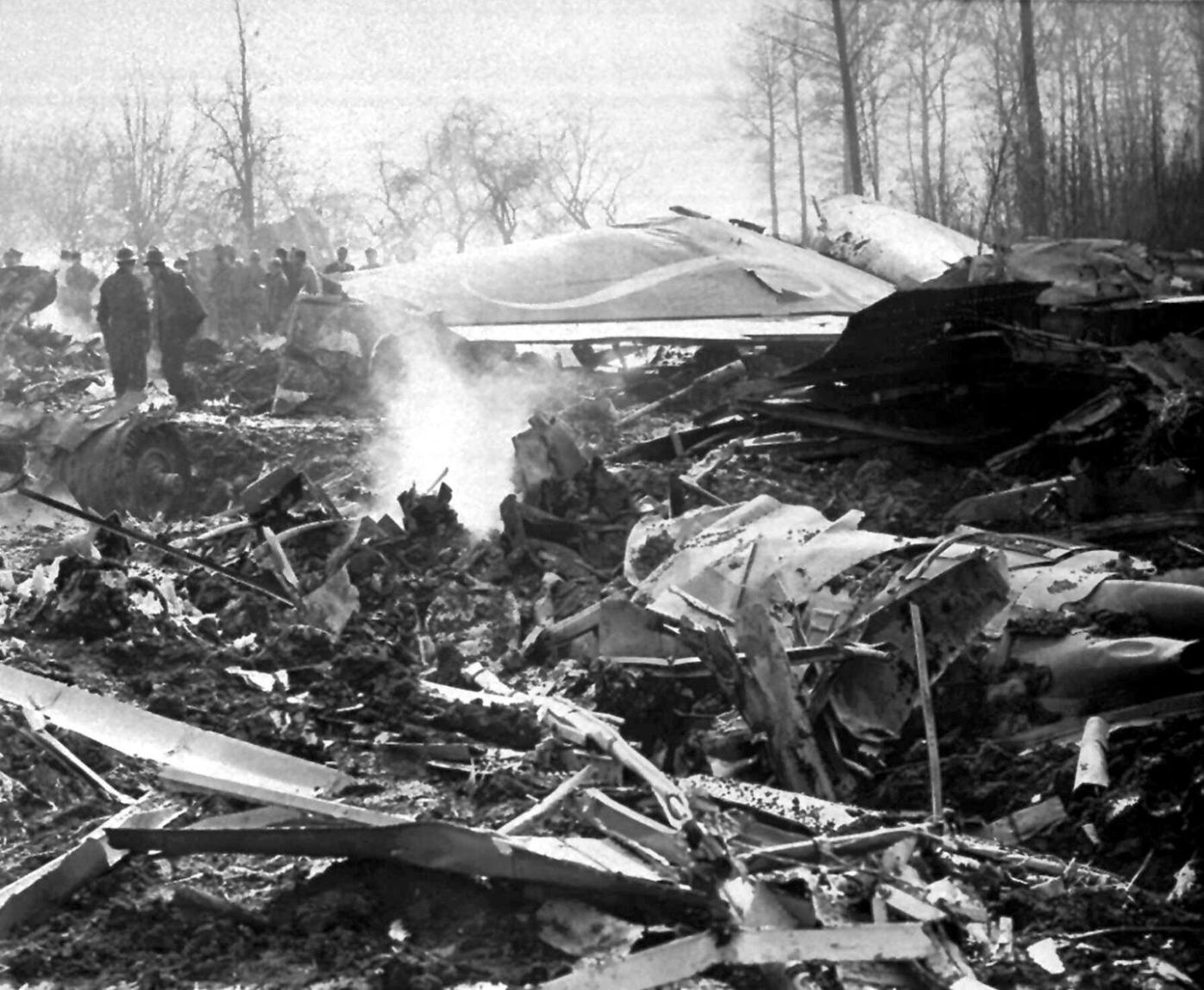
In this Feb. 15, 1961 file photo, smoldering wreckage of a Sabena Boeing jet airliner that crashed near Brussels, Belgium. The 17-member U.S. skating team and their coach were among the 72 persons aboard the plane. All on board were killed. (AP Photo)
AP


In this Feb. 15, 1961 file photo, smoldering wreckage of a Sabena Boeing jet airliner that crashed near Brussels, Belgium. The 17-member U.S. skating team and their coach were among the 72 persons aboard the plane. All on board were killed. (AP Photo)
The tragedy
On Feb. 14, 1961, the U.S. figure skating team that had been selected based on the results from the competition in Colorado Springs boarded a Boeing 707 at New York’s Idlewild Airport — later renamed for John F. Kennedy — en route to the World Championships in Prague.
Sabena Flight 548 descended under clear skies on its approach for a stop in Brussels when it had to cancel its landing because a small plane had not yet cleared the runway. It circled and made another landing attempt that was also aborted. On its third circle, the aircraft lost speed, its nose plunging down, and it spiraled into the ground at 10:05 a.m. about 2 miles from the airport.
The accident was blamed on mechanical failure, though the exact nature of the issue was never conclusively proved.
RELATED:
Jenkins Olympic Corridor will highlight CC’s Ed Robson Arena
All 72 occupants (and one person on the ground) were killed, including all 18 members of the U.S. figure skating team and another 16 family members, coaches, judges and skating officials who were part of the team’s traveling contingent.
The first call to Colorado Springs — home to eight of the skaters who perished — went to Bill Haigler, then the president of The Broadmoor Skating Club and the father of Christy Krall.
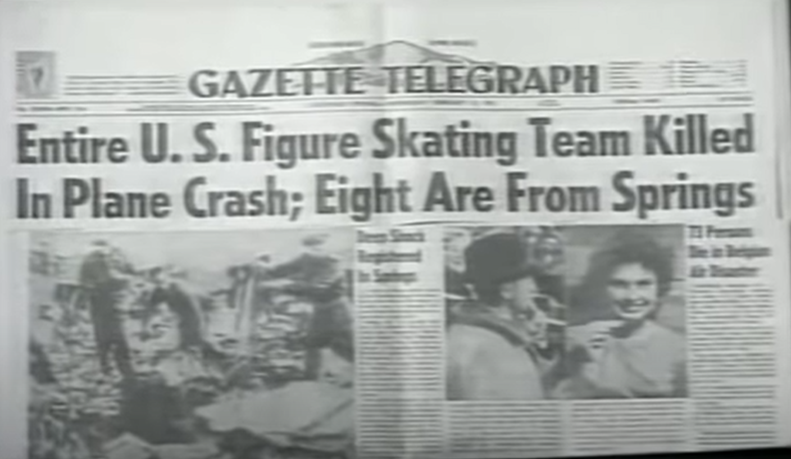


“I don’t know what the word is,” Krall said. “It’s horror. You’re aghast. There’s no way that could have happened. Because it was the entire figure skating team. It wasn’t just one person. It was all of the coaches. All of the officials. All of the skaters. It was everyone.”
In Pasadena, Calif., Doris Fleming heard the news on television and broke it to her 12-year-old daughter, Peggy, as she prepared for school.
Peggy had picked up skating three years earlier after her father, Albert, took his four daughters to an ice skating rink. Peggy had frequently roller skated but didn’t much care for the weight of the skates or the seams in the sidewalk. Gliding on the ice was a welcome change, and she was hooked. Her three sisters eventually stopped going to the rink, but her parents enrolled her in group classes and eventually placed her under the instruction of William “Billy” Kipp.
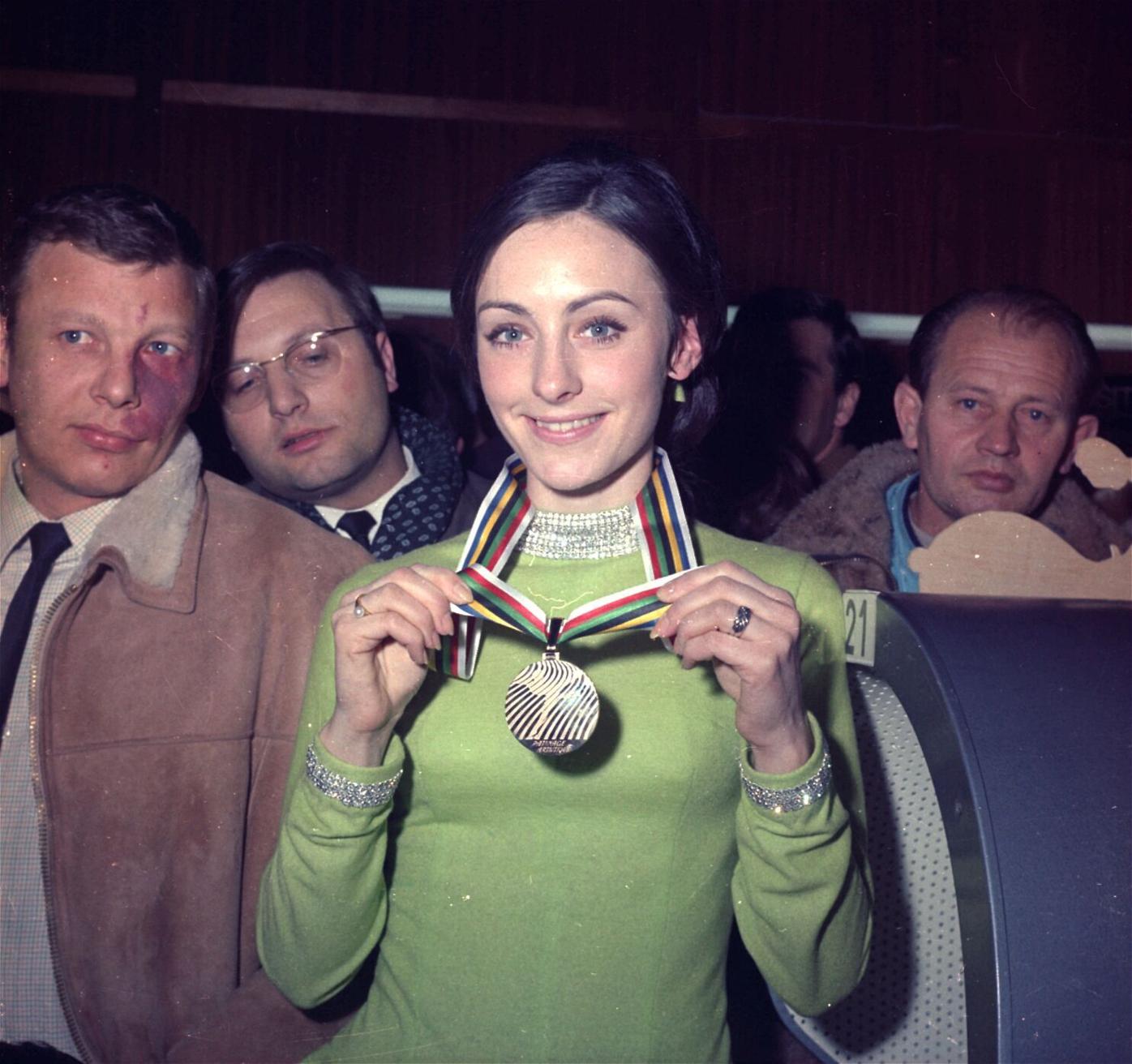
Peggy Fleming, U.S. figure skater, shows off the medal she won in the Winter Olympics in Grenoble, France, in February 1968.
AP


Peggy Fleming, U.S. figure skater, shows off the medal she won in the Winter Olympics in Grenoble, France, in February 1968.
Kipp, 28, was on board the doomed flight.
“It was a lot for a 12-year-old to wrap their head around, the impact of exactly what that really meant,” Peggy Fleming said.
Because her mother did not want her to stay home and dwell on the tragedy all day, Peggy went to school. After all, what could she do?
As time would prove, a lot.
The bounce back
In 1960, David Jenkins and Carol Heiss won gold for the U.S., the only time the country has pulled off the men’s and women’s figure skating double at an Olympic Games. But both retired after the competition, and the 1961 U.S. championships in Colorado Springs saw new winners crowned in the men’s and women’s competition as well as pairs and ice dancing.
Laurence Owen, at 16, stood poised to continue the run of American women after Tenley Albright and Heiss had taken gold at the previous two Olympic Games. The day before the team’s departure for Prague, Sports Illustrated had placed Owen on its cover.
A new generation had arrived; and was just as quickly taken away. A massive void was created.
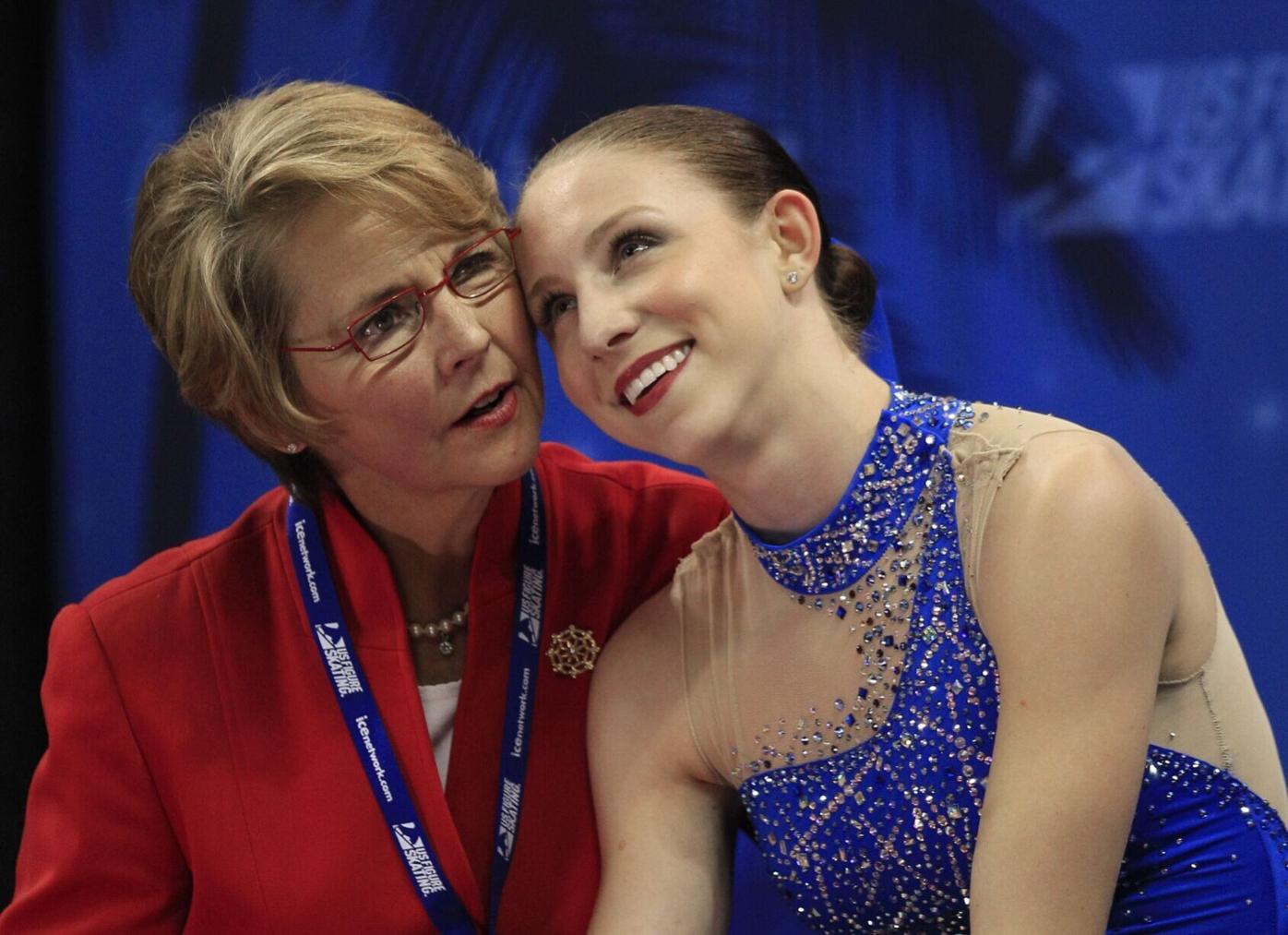
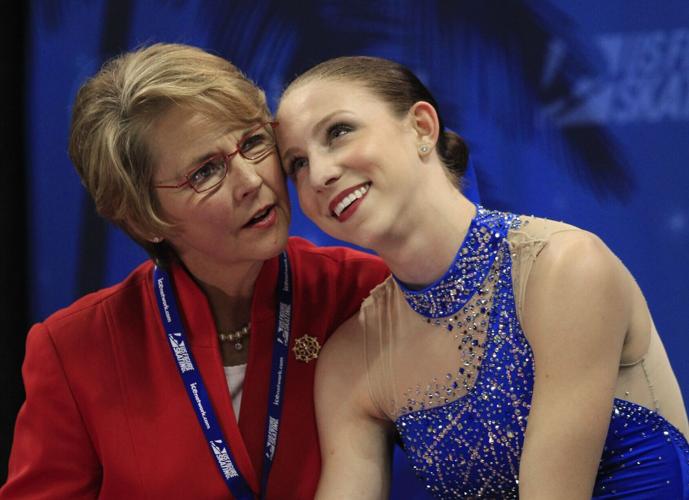
Agnes Zawadzki, right, is comforted by her coach Christy Krall after her third place finish in the ladies free skate event at the U.S. Figure Skating Championships in San Jose, Calif., in January 2012.
Marcio Jose Sanche, AP


Agnes Zawadzki, right, is comforted by her coach Christy Krall after her third place finish in the ladies free skate event at the U.S. Figure Skating Championships in San Jose, Calif., in January 2012.
“You were always thinking, ‘Well, they’re going to come back,’” Krall said. “They’ll just open that door one day and walk right in.”
Young skaters like Fleming and Krall, still in their mid-teens, were thrust to the top of the U.S. women’s ranks. Scott Allen took the bronze medal in the 1964 Games a few days before his 15th birthday.
“We didn’t know what we were doing,” Krall said. “I don’t think we knew how to be nervous. We were just put in the spotlight instantaneously.”
“We had no real role models,” Fleming said. “And skating wasn’t on TV as much as it was later on. You just had to have your own image of what you wanted to be, what style you wanted to be.”
Thayer Tutt, president of the World Arena, recruited Carlo Fassi from Italy to come to The Broadmoor to fill the void created by the death of Edi Scholdan in the crash.
Fleming eventually moved to Colorado Springs to work under Fassi and captured gold in 1968, which many viewed as the full return of figure skating in the U.S.
“The rainbow and the sunlight at the end of all this is by 1968, Peggy Fleming was the Olympic champion,” Krall said. “It moved fast.”
The Memorial Fund
Karen Chen hasn’t yet earned an Olympic medal, but she has already followed in the footsteps of U.S. figure skating royalty like Fleming, Scott Hamilton and Kristi Yamaguchi.
All have been recipients of the Memorial Fund established shortly after the crash of 1961 that has provided more than $20 million for thousands of athletes for skating-related and academic expenses.
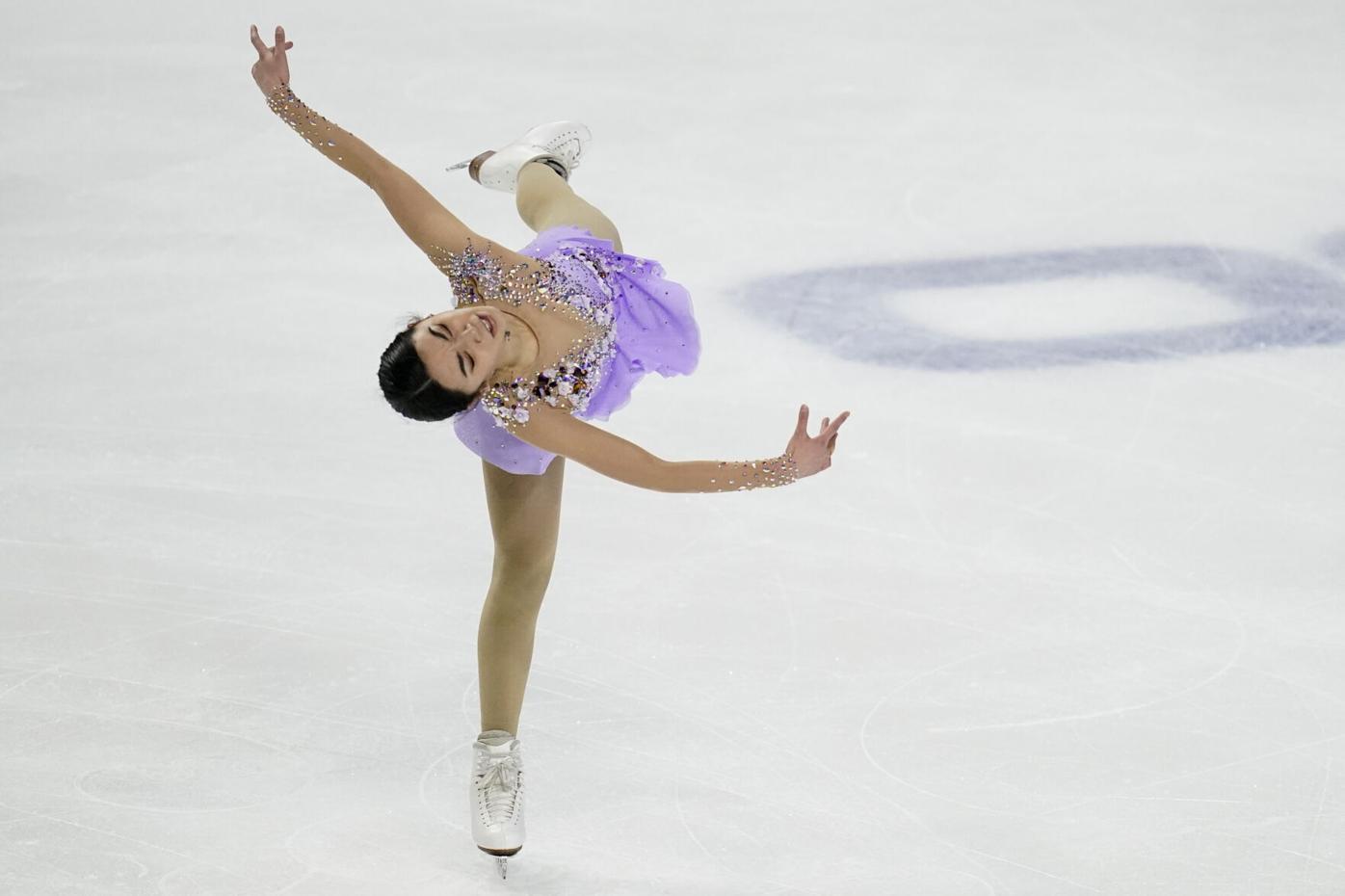
Karen Chen performs during the women’s free skate at the U.S. Figure Skating Championships, Friday, Jan. 15, 2021, in Las Vegas. (AP Photo/John Locher)
John Locher, AP


Karen Chen performs during the women’s free skate at the U.S. Figure Skating Championships, Friday, Jan. 15, 2021, in Las Vegas. (AP Photo/John Locher)
“Whether it’s a couple hundred to a couple thousand, it’s extremely beneficial,” said Chen, a member of the 2018 Olympic team who has qualified for funds under the Memorial Fund for about the past five years.
Chen, who lives in Colorado Springs and trains at The Broadmoor, explained some of the costs of the sport as she prepares for next month’s World Championships in Stockholm.
A boot can cost around $800. Add about $700 for a blade. That brings the total of a skate to $1,500.
There is no hiding from the costs, either. At the lower levels the cost of coaching isn’t generally as high as it is at the top levels, but equipment and ice time keep the price high. At Chen’s level, companies will often send free skates, but the other expenses begin to grow exponentially.
Competition outfits can have price tags of $3,000 to $5,000. A top choreographer can charge $10,000. Then there is a spin coach, technical specialist, stroking expert, sports psychologist, skate technician, nutritionist, strategist, travel to competitions, travel expenses for parents and other members of the support team.
Krall, who competed at the 1964 Winter Games and has remained at The Broadmoor as a coach, estimated that skaters in the top tier could spend around $120,000 a year on the sport.
Those are expenses that could obviously preclude a large number of athletes from continuing their Olympic pursuit.
Hamilton was the son of schoolteachers and said he relied heavily on assistance from the Memorial Fund in his run to a gold medal in 1984.
Fleming said the fund paid for her skates as she was a young skater, the daughter of a newspaper journalist, who had to find creative ways to make ends meet.
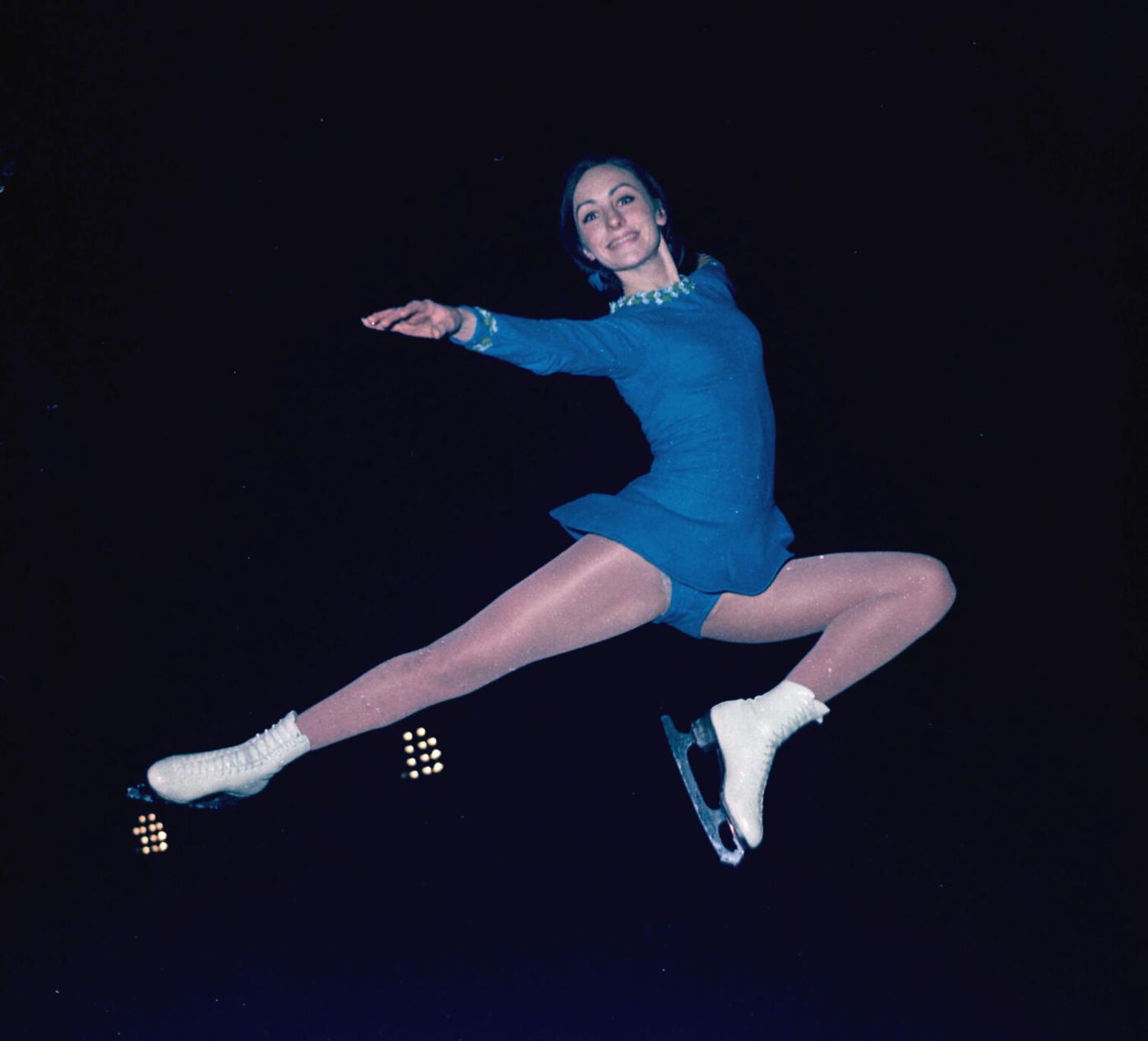
Peggy Fleming is shown in a high leap at the Olympic ice rink in Grenoble in preparation for her bid for a gold medal in the women’s freestyle figure skating, February 9, 1968. (AP Photo)
AP


Peggy Fleming is shown in a high leap at the Olympic ice rink in Grenoble in preparation for her bid for a gold medal in the women’s freestyle figure skating, February 9, 1968. (AP Photo)
“That helped,” said Fleming, who attended Cheyenne Mountain High School for three years while training in Colorado Springs and later attended Colorado College, which named a dormitory in her honor. “My family didn’t have very much money.”
Fleming and her husband Greg Jenkins, also a former skater, continue to be involved with the Memorial Fund as donors and through participation in fundraising events.
“I want our sport to continue to develop and create great skaters so that we can compete at the world level,” Fleming said. “We have. We have achieved that over the years. We have created great skaters. Most of the champions have given back to the sport and helped raise money for the Memorial Fund.
“I think people need to remember the legacy of the ’61 team. The Memorial Fund was created to honor them and promote skating and help young skaters achieve their best.”
The haunting
On Monday, at exactly 10:05 local time, the Belgium village of Berg-Kampenhout will inaugurate a new monument in remembrance of the crash, which remains the worst aviation tragedy in the country’s history.
The village erected a 1.5-meter triangular stone monument at the location on the crash’s 40th anniversary and has yet to reveal the look of the new memorial. A ceremony to inaugurate the new monument will be attended by just four people because of COVID-19 measures. Among those present will be the widow of Marcel Lauwers, a field worker who was hit by debris from the plane and lost part of his leg. Theo de Laet was also working in a field nearby and was killed by a piece of aluminum shrapnel from the plane.
In Colorado Springs, the eight Broadmoor Skating Club members lost in the 1961 crash are memorialized in a marble bench shaped like a skate that sits at what was once the entrance of the World Arena on the edge of the property’s lake.
“It’s beautiful,” said Fleming, who now lives in Denver. “It just brings you back. Every time I go to The Broadmoor, it’s just like, ‘Oh my gosh, so much happened on these grounds right here.’ The bench reminds us of all those skaters that we lost. They were all so young. Some were just 16 years old. It’s just horrifying.”
The myriad memorials, books and documentaries that tell the story of the tragedy keep the memory alive. But Fleming’s word — “horrifying” — cuts through six decades to serve as a reminder of just how raw and haunting the event remains for some.
Fleming recalls her coach as a young, handsome man who was “always happy and full of energy and so positive. He taught me good things at that stage.”
Krall lost two friends, Sharon and Stephanie Westerfield, with whom she’d skated “all her life.” They are buried side by side in Evergreen Cemetery in Colorado Springs. Natalie Kelly had served as Krall’s math tutor. She was on the plane with her younger brother, Gregory Kelley, who had earned silver at the U.S. championships two weeks earlier.
The wince in Krall’s voice was evident, even over the phone, as she recalled processing, at 13, that the crash and resulting fire were so intense that her friends, mentors and coaches could only be identified after collecting dental records.
“Those kinds of things haunt you forever,” Krall said. “It just goes deep, deep, deep, deep … I don’t think anybody ever really recovers from that.
“I didn’t. I haven’t.”