







New Detective Bureau formed at the Regional Transportation District Police Department
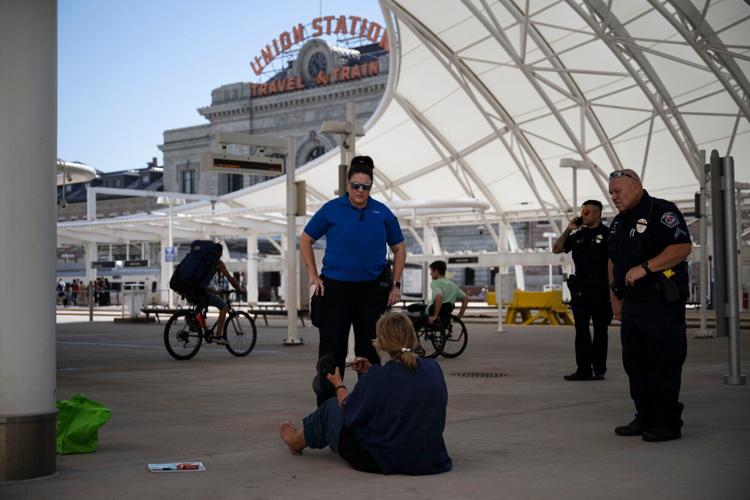
FILE PHOTO: Mental health clinician co-responder Leanne Figueroa, left, and RTD Police Cpl. Conrad Vanegas conduct a welfare check on a woman who was seen lying down on the outdoor commuter rail concourse, resulting in a visit from an EMS crew on Aug. 11, 2022, at Union Station.
Timothy Hurst, The Denver Gazette

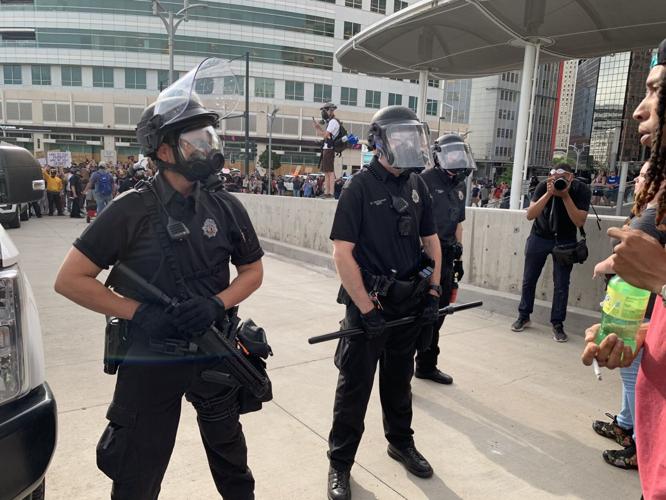
The Regional Transportation District Police Department has launched an internal detective bureau to consolidate investigations of crimes on district property.
The move will help resolve the district’s problem of investigating and prosecuting crimes on its far-flung transit network, according to transit officials.
Currently, the district turns over criminal investigations and prosecutions for thefts, assaults, drug crimes and other offenses to the police departments in the jurisdictions where the crimes occur. This not only burdens the involved jurisdictions but it can allow crimes like the theft of copper wire from different parts of RTD’s system to escape felony charges if the value of the wire in each jurisdiction is below the statutory level for being a felony, the transit authority said in a news release.
RTD suffered more than $100,000 in damages from wire thefts beginning in April 2024.
Even prior to the copper wire thefts in 2024, RTD has been planning to establish a detective bureau that can file criminal cases in jurisdictions throughout its service area.
The thefts “were definitely a catalyst for us to get the bureau established more quickly,” said RTD Police Commander Brian Cousineau, the head of the new bureau.
Cousineau anticipates that the bureau will be fully operational by the end of the second quarter in 2025.
“One of the biggest lifts that we have is to get with all eight counties to file cases to each of their expectations,” Cousineau said. “This will also include establishing secure systems for e-filing and setting up protocols for writing probable cause affidavits.”
With unified jurisdiction and investigation, organized crimes like wire thefts can be packaged together and prosecuted as felonies, the transit authority said.
“If a copper wire theft happens in Aurora on our property and the wire was valued at $900, that’s a misdemeanor crime; we would hand it over to the Aurora Police Department. Let’s say the same $900 copper wire theft then happened a week later in Thornton, and then a week later at Lakewood. The benefit of having our own detective bureau is that we can assign our detectives to all those cases,” Cousineau said. “This changes the crime from being a misdemeanor to a felony-level crime.”
RTD will be able to investigate criminal activity that may occur on its property without having to rely on the resources of other jurisdictions, which the added RTD workload may strain.
“Anything that affects the ability of our customers to ride the system safely,” said Cousineau. “We want people to utilize our services and feel safe doing so.”
He noted that the new bureau will help RTD pursue prosecuting personal crimes involving any threat or use of force, including felony-level narcotics violations across the agency’s system.
As bureau protocols are established for working with the eight counties in the agency’s district, the department will be able to file its own cases and carry out investigations on related cases that occur in different municipalities.
The RTD Police Department internally promoted Transit Police officers Fabian Rodriguez to detective lieutenant and Brian Beary to detective and added Craig Tangeman to the detective bureau. Tangeman joined the force on Jan. 21.
All four detectives in the bureau have 18 to 28 years in law enforcement and extensive experience in investigations.
Two more detectives are budgeted for addition to the bureau later this year. The department is developing an evidence storage facility to ensure the proper chain of custody to hold evidence needed to prosecute cases, officials said.