





Navajo Nation and Colorado uranium mining company agree on ore transport plan
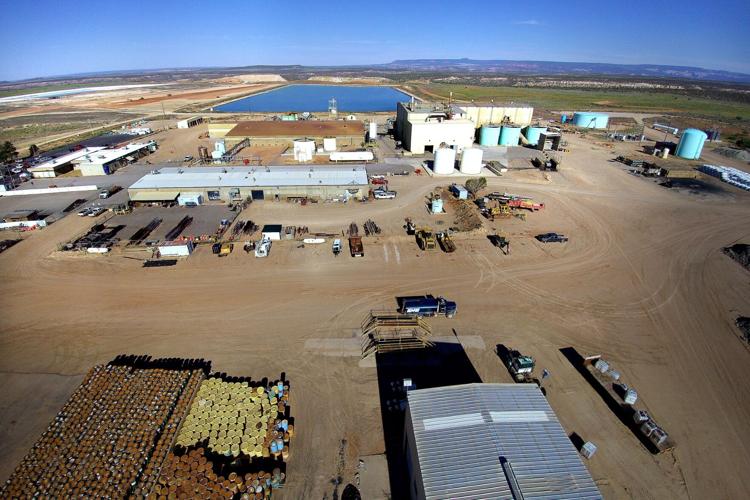
Energy Fuels Inc. White Mesa uranium mill near Blanding, Utah
Courtesy Energy Fuels Inc.


The Navajo Nation has come to terms with the prospect of renewed shipments of uranium ore from the Pinyon Plain mine in northern Arizona through its lands on the way to the last uranium mill in the United States near Blanding, Utah.
Two shipments of ore by Lakewood-based Energy Fuels Inc. from the mine on June 30, 2024, triggered an angry response from Navajo tribal authorities and prompted Navajo Nation President Buu Nygren to issue an executive order banning the transport of nuclear materials through the 25,000-square-mile reservation.
“The company’s failure to seek approval from the Navajo Nation for the transport of radioactive materials across its land disregards the Nation’s governmental authority and sovereignty,” Nygren said in a statement.
But Stephen Etsitty, executive director of the Navajo Nation Environmental Protection Agency, told The Denver Gazette in an October interview that because the highways are state and federal public highways, the executive order would probably be of limited value.
What the controversy did was pique the interest of Arizona Gov. Katie Hobbs, who intervened in the dispute in an attempt to negotiate a solution acceptable to all parties in October.
“Last week, we finalized an agreement with the Navajo Nation. The agreement covers a couple of main areas,” Curtis Moore, senior vice president of marketing and corporate development for Energy Fuels Inc., told The Denver Gazette last month. “The first is that they are consenting to our ore trucks traveling on the federal highways that cross the Navajo Nation. Secondly, we have agreed to assist the Navajo Nation in the cleanup of some of the abandoned uranium mines that are on their land, leftover from old government weapons programs that began in the 1940s. So, we’re extremely proud of that. It was a very productive process, and honestly, very cordial for the most part. I think it’s a real win-win for both Energy Fuels and the Navajo Nation.”
Energy Fuels has been pursuing voluntary cleanup of radioactive mine waste in the Navajo Nation for some years now.
Moore said much of the mine rubble and waste with low levels of uranium can still be profitably processed at the company’s White Mesa Mill.
“We’ve committed to allowing Navajo Nation to perform inspections of the trucks, and we agreed to do some additional decontamination of the trucks — wash the trucks off before they leave the site. Also, wash the trucks off before they leave the white Mesa Mill site,” said Moore. “We agreed to collaborate on testing out some new technologies just to confirm that no harmful levels of dust or other particles are coming off of the loads as they drive down the road.”
Moore also told The Denver Gazette that Energy Fuels has never had a truck accident while hauling uranium ore anywhere in the region, which its been doing from other mines for decades.
“The Navajo Nation has suffered longstanding impacts from uranium mining conducted during the Cold War era, resulting in numerous abandoned mine and mill sites on their lands. This has understandably caused mistrust toward the U.S. government and energy companies,” said Mark Chalmers, president and CEO of Energy Fuels, in a news release. “I am personally honored that the Navajo Nation was willing to work with us in good faith to address their concerns and ensure that uranium ore transportation through the Navajo Nation will be done safely and respectfully.”
Etsitty, the executive director of the Navajo Nation Environmental Protection Agency, said in the release: “We have a settlement agreement that will allow the Navajo Nation to monitor and inspect the haul trucks and that provides financial compensation for the expenses to improve safety and protect the environment. The Navajo Nation appreciates the support from Arizona Governor Katie Hobbs, who facilitated the pause in transport activities, which helped the Navajo Nation and Energy Fuels conduct the negotiations.”
“We appreciate the sincere approach the Energy Fuels’ negotiation team took with the Navajo Nation. They demonstrated a genuine understanding for the Navajo Nation’s and the Navajo People’s trauma regarding uranium and engaged as a partner in good faith to build a trusting relationship,” said Arizona acting Attorney General Heather Clah in a statement. “We look forward to Energy Fuels fulfilling their commitments to the Nation.”
Conditions in the agreement include:
• Limiting transportation to specified routes and hours of the day
• Not transporting ore on days involving celebrations or public events in respect of the Navajo Nation’s culture and traditions
• Clearly spelled out emergency response procedures, notices and reporting requirements
• Additional insurance requirements
• Additional driver qualification and training requirements
• Obtaining Navajo Nation transport licenses
• Use of state-of-the-art cover systems to prevent fugitive dust from transport trucks
• Provisions for escorts and blessings at the discretion of the Nation
• Additional inspection procedures that will enable the Navajo Nation to ensure that all applicable rules and agreements are being satisfied.
The mine, located on federal land south of the Grand Canyon, has been the center of controversy in the region since 2013. Recently, a jump in uranium prices made the reopening of the mine profitable. First approved by Arizona and federal agencies in 1986, the mine had been largely dormant for years until the uranium market price upswing.
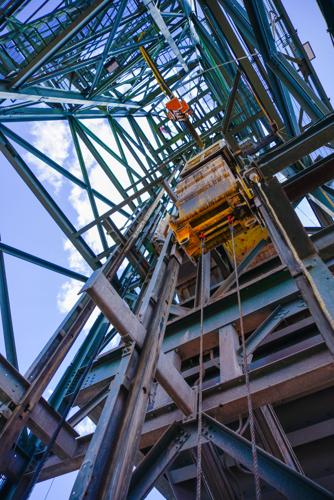
Energy Fuels soon reopened the mine and completed work on the 1,400-foot-deep shaft needed to access the ore body and haul ore out of the mine’s unusual geological formation. The formation is called a “breccia pipe” that is only about 250 feet in diameter with a vertical ore body starting about 800 feet underground.
The company estimates that there are about 3 to 5 million pounds of marketable refined uranium oxide in the lode.
The Navajo Nation did not respond to a request for comment.


National Renewable Energy Laboratory renamed to fit Trump’s energy policy
Bernadette Berdychowski
bernadette.berdychowski@denvergazette.com
Updated 4 hours ago
The National Renewable Energy Laboratory based in Golden has a new name to match the shift in U.S. energy policy under President Donald Trump. The Department of Energy announced it renamed the National Renewable Energy Laboratory to the “National Laboratory...

Bernadette Berdychowski
Reporter
Strip club company CEO steps down after indictments
Carol McKinley
carol-mckinley@denvergazette.com
Updated 7 hours ago
The CEO of a controversial Central City strip club is among five people who were asked to step down after being indicted in September, accused of bribing a New York state tax auditor. Eric Langan, who headed up dozens of...

Carol McKinley
Reporter

Tracy Huggins, head of Denver Urban Renewal Authority for 25 years, to step down
Bernadette Berdychowski
bernadette.berdychowski@denvergazette.com
Updated 7 hours ago
The woman who played a major role in many of Denver’s largest development projects over the last 25 years is stepping down from her role leading the Denver Urban Renewal Authority. The organization announced Tracy Huggins will step down as...
Bernadette Berdychowski
Reporter
Historic Denver YMCA to be transformed into affordable housing
Deborah Grigsby
deborah.smith@denvergazette.com
Updated 7 hours ago
U.S. Vice President Charles W. Fairbanks placed the original cornerstone for the Denver YMCA at the corner of 16th Avenue and Lincoln Street in late 1906 in an “elaborate and formal ceremony.” And as this year comes to an end,...

Deborah Grigsby
Reporter
Record shoppers, online sales surge signal strong holiday season momentum
Reuters
reuters@denvergazette.com
Updated 10 hours ago
U.S. shoppers spent $14.25 billion on Cyber Monday, pushing total online sales over the Thanksgiving weekend to $44.2 billion, according to an Adobe Analytics report, as consumers lapped up offers on everything from gadgets to household essentials. Spending rose 7.7%...

Reuters
Reporter

Prada finalizes purchase of fashion rival Versace for $1.4 billion
The Associated Press
the-associated-press@denvergazette.com
Updated 10 hours ago
MILAN — The Prada Group has closed the purchase of Milan fashion rival Versace in a $1.375 billion cash deal that puts the fashion house known for its sexy silhouettes under the same roof as Prada’s “ugly chic” aesthetic and...

The Associated Press
Reporter

Amazon to use Nvidia tech in AI chips, roll out new servers
Reuters
reuters@denvergazette.com
Updated 10 hours ago
LAS VEGAS – Amazon.com’s AWS cloud computing unit on Tuesday said it will adopt key Nvidia technology in future generations of its artificial intelligence computing chips as the firm ramps up efforts to get major AI customers using its services....
Reuters
Reporter

Despite U.S. trade war, OECD expects global economy will grow 3.2% this year
The Associated Press
the-associated-press@denvergazette.com
Updated 10 hours ago
WASHINGTON — The world economy has proven surprisingly durable in the face of President Donald Trump’s trade wars, the Organization for Economic Cooperation and Development said Tuesday, upgrading its outlook for global and U.S. economic growth this year. The 38-country...
The Associated Press
Reporter
U.S. to announce ‘bridge payment’ for farmers next week, Rollins says
Reuters
reuters@denvergazette.com
Updated 10 hours ago
WASHINGTON – Agriculture Secretary Brooke Rollins said Tuesday that the Trump administration will announce a “bridge payment” for farmers next week that is designed to provide short-term relief while longer trade and aid packages are finalized. Farm groups and Republican...
Reuters
Reporter

Boeing on track to generate billions in cash next year
Bloomberg
bloomberg@gazette.com
Updated 10 hours ago
Boeing Co. expects to generate cash again in 2026, a significant reversal in the plane-maker’s finances as it prepares to boost monthly production rates of its passenger aircraft. The U.S. company expects positive free cash flow to reach the “low-single...

Bloomberg
Reporter
PREV
PREVIOUS

Metro moves: Openings at Larimer Square and Union Station
Welcome to the Denver Gazette’s Metro Moves. You’ll get the latest metro Denver openings, closings, hiring and promotion news here. To submit your company’s news, drop an email to bernadette.berdychowski@denvergazette.com. New openings at Larimer Square Apollo Hall, a new event venue, opened in Larimer Square last week. The venue is inside the historic Congdon Building on […]

King Soopers seeks restraining order against striking workers
King Soopers is seeking to stop workers from picketing outside its stores. The Colorado grocer operated by Kroger announced Tuesday it was asking the courts for a temporary restraining order against striking, stating it was doing so because it created “unsafe conditions.” The strike against King Soopers began in the Denver metro area and in […]