Johnston’s restaurant service charge proposal criticized
Chamber official: 'It’s government policy that is causing the problem in the first place.'
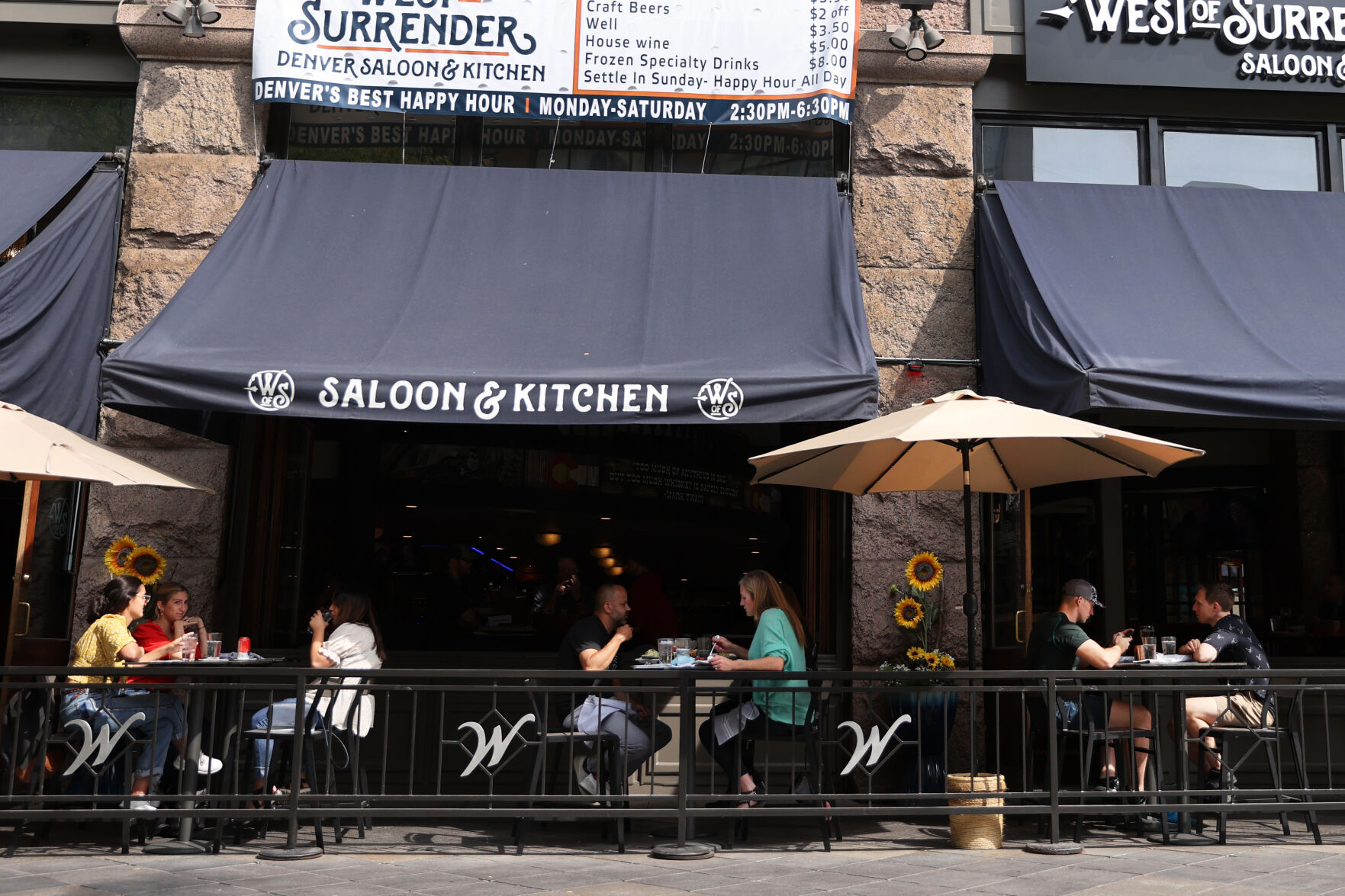
The Colorado Restaurant Association expressed skepticism of Denver Mayor Mike Johnston’s proposal to tack a service charge onto local restaurant bills, while the Denver Chamber of Commerce argued that adding the fee — and thereby raising prices — would discourage sales.
On Monday, Johnston told City Cast Denver, a popular podcast, that a 20% service charge added to restaurant bills — and then taxing the total amount — could help local restaurants offset the city’s higher minimum wage and promote what he called pay equity among tipped and non-tipped employees.
The idea, he said, is to share that new tax revenue back with the restaurants.
“Basic economics tells you that when you want to encourage sales, you lower prices — not add 20% more plus tax to everyone’s costs,” said J.J. Ament, the president and CEO of the Denver Metro Chamber of Commerce. “This won’t fill restaurants any more than raising rents would fill empty office buildings.”
He added: “It’s government policy that is causing the problem in the first place.”
Johnston suggested that collecting a 20% service charge would generate a pool of revenue that could be spread equally across all employees to level out what he described as inequitable wages between tipped servers and non-tipped back-of-the-house employees.
“You could share it with all the staff,” Johnston said on the podcast. “Interestingly for us, if you had a service charge that comes above the line in the bill, which means it’s also taxed — if you had a $100 tab and now you put a 20% service charge, you pay $120, and we tax $120.”
Johnston said the city could then share revenue from the “marginal new tax” back with the restaurants.
“We’ll take some small additional revenue, but we could support the restaurant’s institution,” he said. “At the same time, you’re supporting dollars back to the individuals.”
Denver residents are balking at the proposal.
“I think the tax on the service charge is a bit of a clever maneuver on the part of the city,” said Denver Reddit user SpeciousPerspicacity. “They’re pretty desperate for new cash flows, and this would be a sneaky way to obtain one.”
The reddit user added: “What he’s proposing would effectively be 20% more city revenue per sit-down restaurant bill, amounting to an additional ~1% of the gross sales of these types of businesses. In Denver, this is probably on the order of magnitude of tens of millions of dollars.”
Other users said restaurant prices are already too high and they would consider any new surcharge as a replacement for the standard tip.
Some are curious if the surcharge would also apply to restaurant tabs at Denver International Airport, Coors Field, city-sponsored festivals, or to food trucks catering on behalf of restaurants.
“We have said for years that we want restaurants to have options and flexibility in how they run their businesses; options to use traditional tipping or move to service charges as operators see fit,” Sonia Riggs, President and CEO of the Colorado Restaurant Association, said in a statement to The Denver Gazette. “That’s why the Restaurant Relief Act (HB1208) is so important because it protects the traditional tipping model for local restaurants and lets operators do what’s right by their teams and their communities.”
Earlier this month, Denver restaurant owners expressed their frustration to the mayor in a letter that cited worries about safety, infrastructure, rising costs and parking. They said the conditions downtown are driving diners from LoDo to Cherry Creek North and as far away as Golden.
“Consider inflation on food, supplies, restaurant equipment, longer and more costly permits, all on top of higher wages, zero flexibility, and increasing inequity,” Ament, the chamber official, said in response to Johnston’s proposal. “All this gets translated to skyrocketing costs and makes it harder for diners and restaurants alike. Increasing costs even more is exactly the opposite way to go right now.”
“We know it’s a challenge,” Johnston had told City Cast Denver, noting that restaurant labor costs have increased by 200% over the past decade. “We’ve had 400 restaurants close in Denver over the last three or four years and we know that a big part of that is the increase in the minimum wage, and we want folks to make more money.”
“But I think the thing for us to wrestle with, as people who are progressives, is if we do nothing, you should not be surprised to keep seeing restaurant closures around the city going forward,” Johnston said.
Meanwhile, state efforts are afoot to institute a “tip offset” in jurisdictions that have adopted a minimum wage that is higher than the state’s threshold.
HB 25-1208 — the measure Riggs referred to — would allow local governments to adjust their tip offsets. However, they could not reduce them by less than $3.02 or more than 50 cents per year or increase them by an amount that would result in an employee earning less than minimum wage, minus $3.02.
In Denver, the bill would lower restaurant workers’ minimum wage by $4 an hour.
“The executive and legislative branches in Denver are not in agreement on our position on HB25-1208 as it is currently drafted,” said District 10 Councilmember Chris Hinds. “The Mayor’s office and Councilmembers both testified when it was in committee, and the testimony was not aligned.”
Hinds said he reached out to Johnston’s office for more context on the surcharge but declined to further comment.
“My position regarding restaurant concerns in Denver is this: we have an affordability crisis in Denver,” Hinds said. “I believe the best approach is to work on something that addresses affordability both for restaurants and employees.”
Meanwhile, Denver Restaurant Week kicks off on March 7. The annual 10-day event is a significant economic driver for the city. Last year, the event resulted in 144,650 meals served and generated $10.5 million in sales for local restaurants, according to Visit Denver.
A spokesperson for the mayor’s office told The Denver Gazette that Johnston will continue to partner with businesses, restaurants and residents to ensure downtown is a safe and thriving part of the community.