







Elk migration eased by South Park conservation effort
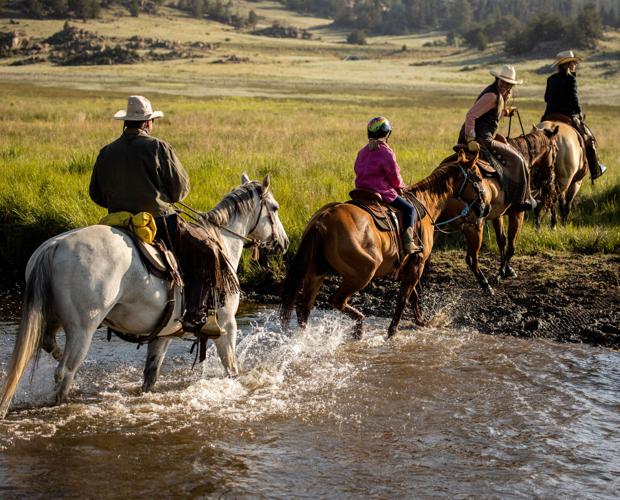
Left to Right: Dave Gottenborg, Harper Michalski, her mother Erin Michalski and an unidentified ranch worker cross the Tarryall River on horseback on Gottenborg's 4,000-acre Eagle Rock Ranch. Harper
Courtesy of Happy Trails Co. & Eagle Rock Ranch
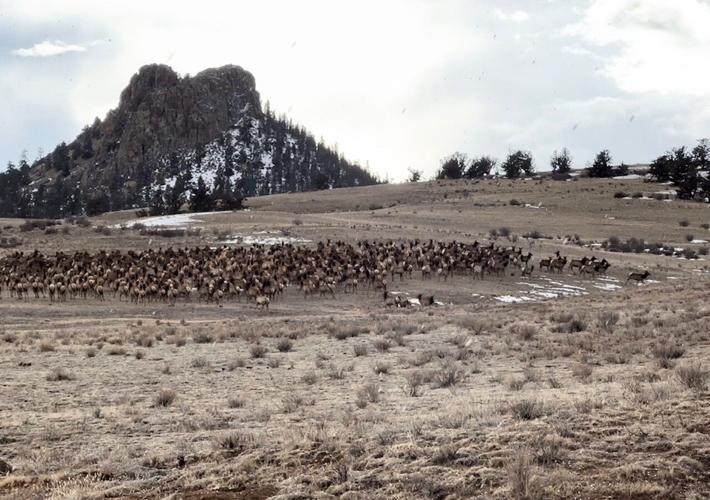
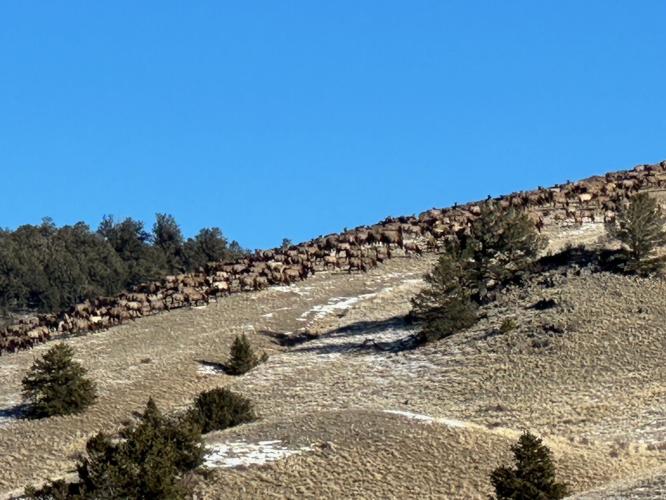
From the peaks of the Lost Creek Wilderness, more than 2,000 elk migrate annually down to South Park near the towns of Fairplay and Jefferson for the winter.
These herds have been traveling these routes since time immemorial.
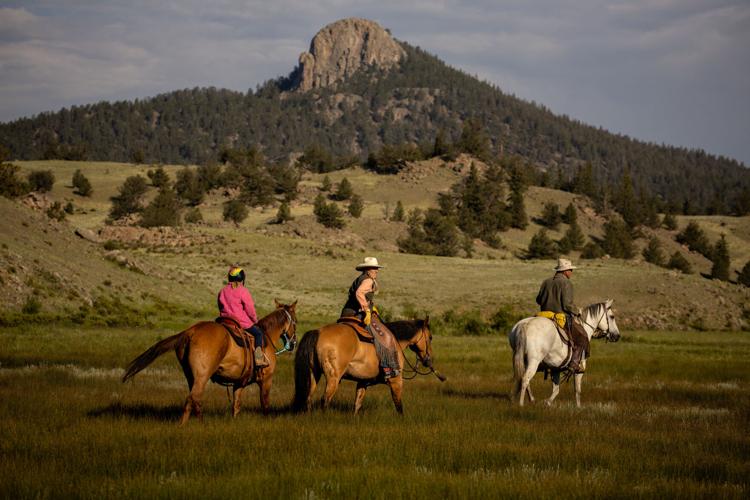
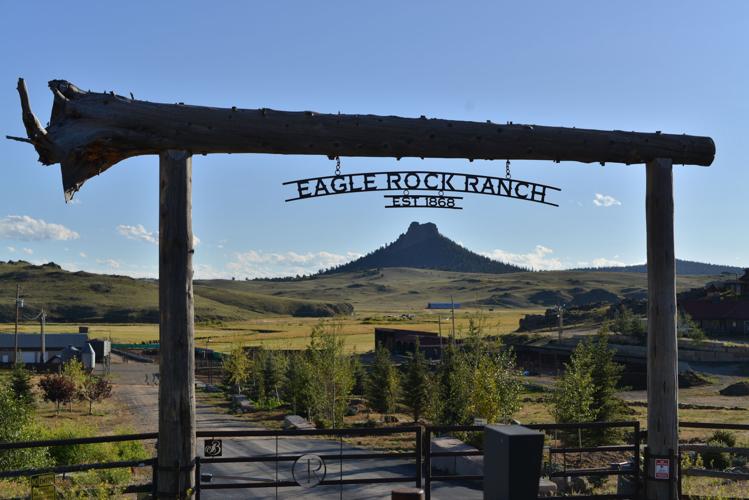
And one of those primary migration routes passes through Dave Gottenborg’s 4,000-acre Eagle Rock Ranch.
Gottenborg recently signed a five-year agreement with the Property and Environment Research Center (PERC), which is based in Bozeman, Mont., to facilitate elk migration and to provide them with rotating winter forage on half his property.
The 150-year-old cattle ranch, established in 1868, traditionally ran about 250 cow-calf pairs year-round. Gottenborg has been reducing his cattle herd for the last 10 years or so to about a third that size and he no longer winters livestock on the ranch.
The core of the agreement is that Gottenborg will allow elk to easily and safely migrate through half of the property come winter. Gottenborg will switch halves each year, while growing forage for his cattle for summer grazing on the other half.
The agreement gives Gottenborg somewhat less than he might make running cattle on the whole property, paid for by PERC. This, said Gottenborg, is good for the ranch and good for the elk.
“It’s been an elk migration route for probably 16,000 years,” Gottenborg said. “Elk come through here in the winter. They come off the Lost Creek Wilderness that’s right to the east of us, and they kind of hang out in this valley because it’s a little bit warmer, a little bit less snow than up high. And then they kind of stick around here in the spring — to a large extent when they calve in May — and then they head back up.”
“We’ve been here now 13 years or so and don’t have any plans to go anywhere,” Gottenborg told The Denver Gazette.
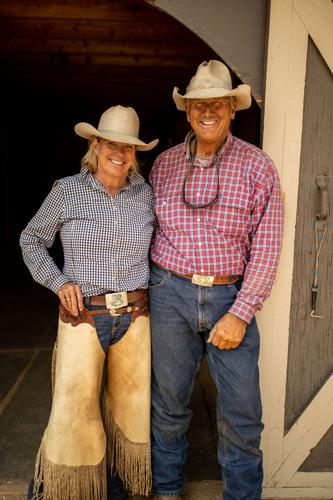
Nearing 70, Gottenborg and his wife Jeannie bought the ranch in 2012. Their two grown children — son Drew and daughter, Erin, both married with kids of their own — live in Breckenridge and Denver.
“For the first 10 years that we were here, I was out breaking ice and feeding supplement hay and everything every day,” he said. “And that’s a big, big, big job. If I had a big family here, it wouldn’t be as big. My son or son-in-law could go out there and get it done. But it’s just my wife and I.”
He started reducing his herd gradually over the last decade or so and now runs about a third of the ranch’s historic cattle herd.
“The elk are going to move through whether there’s fences here or not,” Gottenborg said. “So, they tear the fences up. It’s been a perennial problem forever, and it’s that way all up and down the valley. It’s that way all through the high country. This ranch is not unique in that sense.”
“Sometimes, they get caught in the fences, and that’s no fun to see,” Gottenborg added. “I’ve cut a few of them out.”
Gottenborg was put in contact with PERC by the Colorado Cattleman’s Agricultural Land Trust (CCALT), whose primary business is buying permanent conservation easements. The land trust is responsible for making sure Gottenborg is complying with the agreement.
“That’s what keeps ’em going. That’s their business,” he said. “So, this is a little bit of a step out of their comfort zone. That’s why it took a couple years to get this through. But we don’t call it an easement. We call it an agreement. It does burden the property. I like to refer to it as a starter easement.”
He said it’s a way for ranchers and organizations to get to know each other and see how each operates. Because it’s a five-year contract, if things don’t work out, Gottenborg can exit the agreement. He can also extend the agreement and perhaps sell the ranch to the land trust if that’s what he and his wife wish.
“So, they monitor my compliance, and they do it through a variety of means,” Gottenborg said. “They use satellite images, they might use some drones, they might use some trail cameras, that sort of thing, to make sure I do what I say I’m going to do, and that’s fine.”
PERC is a 45-year-old research organization that has been researching, studying and promoting the ideas of incentives and how they can make a difference for land, water, and wildlife conservation. It’s funded by private donations and takes no government money.
“Historically, we work more of a peer research organization — a think-tank style or group. In the past couple of years, we’ve kind of expanded beyond that model,” said Travis Brammer, director of conservation at PERC. “We have several elk migration or elk occupancy agreements very similar to the Eagle Rock Ranch project in the Paradise Valley of Montana.”
This is the center’s first project in Colorado. They recently finished a disease compensation program in Wyoming at the end of 2024 to help ranchers with brucellosis infections passed to domestic livestock by elk and bison in the Yellowstone region.
The vision of PERC is to help the ranch address the costs of living with elk.
“When we first started talking to Dave, one of the things that concerned him is every year the elk would migrate through his ranch,” Brammer said. “They would eat the forage — the hay that he had intended to leave behind for cattle — and they would damage fences. All of these costs just kind of added up to his bottom line. And our concern is if too many of these ranchers face costs of a similar nature, they might have to sell, which would lead that ranch to be subdivided, which would be pretty detrimental for the elk habitat and for wildlife conservation generally.”
PERC is also incentivizing the family in other ways to address other concerns, such as damage to fences and injuries to elk.
Helping the ranch to deploy wildlife-friendly fencing instead of traditional fencing is a priority for the organization. This can include installing lay-down fencing, where the posts are pulled out of the ground and the wire is laid flat to prevent elk crossing the fence from getting caught, which also reduces damage to the fences themselves.
“Certainly, we want to encourage the maintenance and improvement of elk habitat,” Brammer said. “Obviously, as a conservation organization, that’s one of our primary focuses — to make sure that elk habitat is in good shape, and we think that by allowing Dave to continue a viable agricultural operation, that’s a pretty good step in that direction.”