




Drivers spotted avalanche that killed powsurfer from highway, enabling quick response
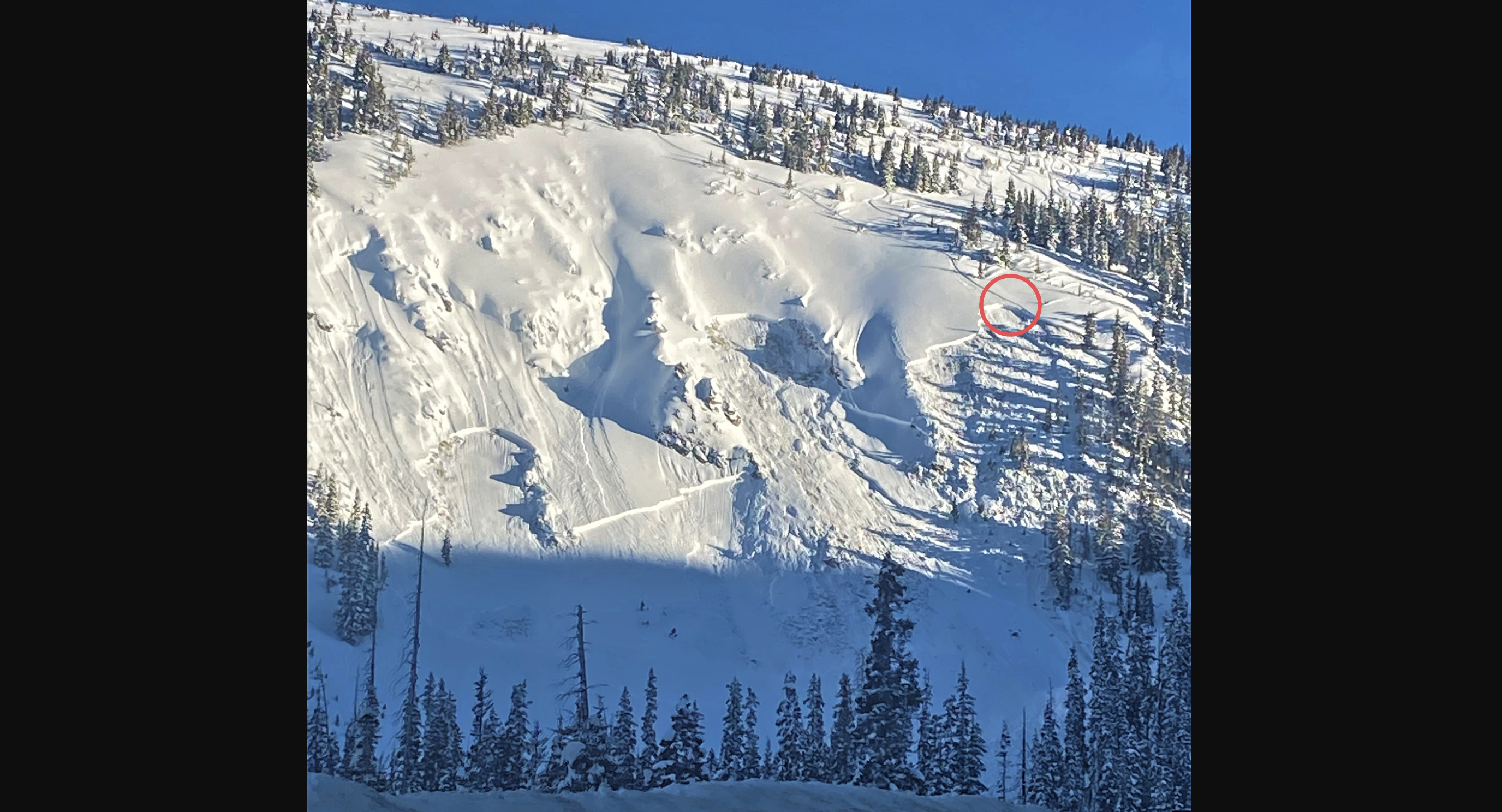
On February 22, a tragic situation unfolded alongside Colorado’s Berthoud Pass as a large avalanche rolled down the mountainside, spotted from the road by passersby.
The full Colorado Avalanche Information Center report on the situation details what took place on the day of the fatal slide, with the avalanche ultimately running about 525 vertical feet down the mountain, stretching about 550 feet wide.
According to their report, the avalanche was triggered by a ‘powsurfer’ who had entered the backcountry solo for laps in the area of the High Trail Cliffs.
Note from the author: Powsurfing is similar to snowboarding, but without the bindings that strap someone to the board. Generally, a leash is used to prevent a board from escaping during a fall. Read more about that here.
The High Trail Cliffs area is described as easy to access from parking area at the top of Berthoud Pass, consisting of four steep northwest-facing avalanche paths. According to the CAIC report, the person who was killed by the slide had arrived at the aforementioned parking lot around noon, starting with a few runs in less steep terrain before heading toward the top of Mines Peak around 4:30 p.m. to tackle steeper terrain.
Descending from the top of the peak, rider entered a steep and cliffy area, with the slide breaking off above a clump of trees near the southern end of the cliffs at about 4:45 p.m. The avalanche broke north of the powsurfer but spread into steeper terrain, eventually spanning all four avalanche paths in the area. The slide struck the man and pulled him through sparse trees and over rocks.
Multiple motorists who were traveling along Berthoud Pass at the time saw that the avalanche hit the rider and called 911. One family that was traveling along the road continued heading toward Winter Park along the pass, spotting backcountry skiers and alerting them to what happened. These skiers started making their way to the scene of the accident, also contacting another skier in their party who was in the parking area. The third skier who was in the parking started heading to the scene of the slide with another person who was in the parking area, as well.
Within about 15 minutes, the first pair of skiers had arrived at the scene of the accident to start a rescue effort. The two skiers from the parking lot arrived about 20 minutes later.
The four skiers were eventually joined by two others in the rescue effort, but were struggling to get a solid transceiver signal while also picking up numerous ‘phantom signals.’ Meanwhile, broken trees in the debris made the search effort more difficult.
Eventually, a probe yielded a strike and the missing rider was found, buried in about five feet of debris described as dense. The rescuers were able to dig the rider out after locating his feet first. By the time his head was uncovered, it was about an hour after the avalanche and there were no signs of life.
The powsurfer’s body was extricated and then transported back to the parking area by Grand County Search and Rescue crews.
In their summary of the fatal avalanche, the CAIC provided a few comments related to what factors contributed to the powsurfer’s death. The agency noted that while traveling alone in the backcountry “in avalanche terrain is not wrong,” that it is a decision not to take lightly, meaning little room for error and the potential for serious consequences. The difficultly faced in attempting to locate a beacon signal was also addressed, and while the report wasn’t definitive on why this occurred, it was noted that older gear can sometimes poses issues and that backcountry travelers should ensure their gear is up-to-date and fully functional.
It was also stated that this situation goes to show that even when an avalanche incident is spotted early and a response is relatively quick, the outcome can still be tragic. This slide also highlights that big risks can still exist in backcountry terrain despite a heavily-trafficked road being nearby.
Condolences go out to those impacted by this powsurfer’s death.
A full report that goes more in-depth on the type of snow that was present and how that may have contributed to the slide can be found here.
Those interested in learning about how to help support the Colorado Avalanche Information Center, as well as those looking for details about current risk should visit the CAIC website here.
Get OutThere
Signup today for free and be the first to get notified on new updates.
PREV
PREVIOUS

Best pizza in Denver? Now's your chance to cast a vote in 32-restaurant bracket
Have a favorite pizza place in Denver? Now is your chance to show that spot some support by voting in the Denver Gazette’s ‘best Denver pizza’ bracket. To compliment NCAA basketball’s March Madness season, Denver Gazette has put together a 32-team bracket of popular pizza places in the Mile High City. It’s currently in its […]

State-by-state report dubs 'best Mexican restaurant' in Colorado
It’s no secret that Americans love their Mexican restaurants, known for offering everything from freshly made guacamole to slow-cooked barbacoa and handmade tortillas. With that appreciation for this style of food in mind, travel publication 5 Reasons To Visit recently published its list of the best Mexican restaurants in each U.S. state. The publication’s pick for Colorado ended up […]