




Where bison roam and human history was rewritten: Colorado’s Soapstone Prairie

The people overseeing a sprawling place of intrigue near Colorado’s northern border have a saying about it.
“We like to say Soapstone will blow you away,” Zoë Shark says. “That has a couple different meanings to it.”
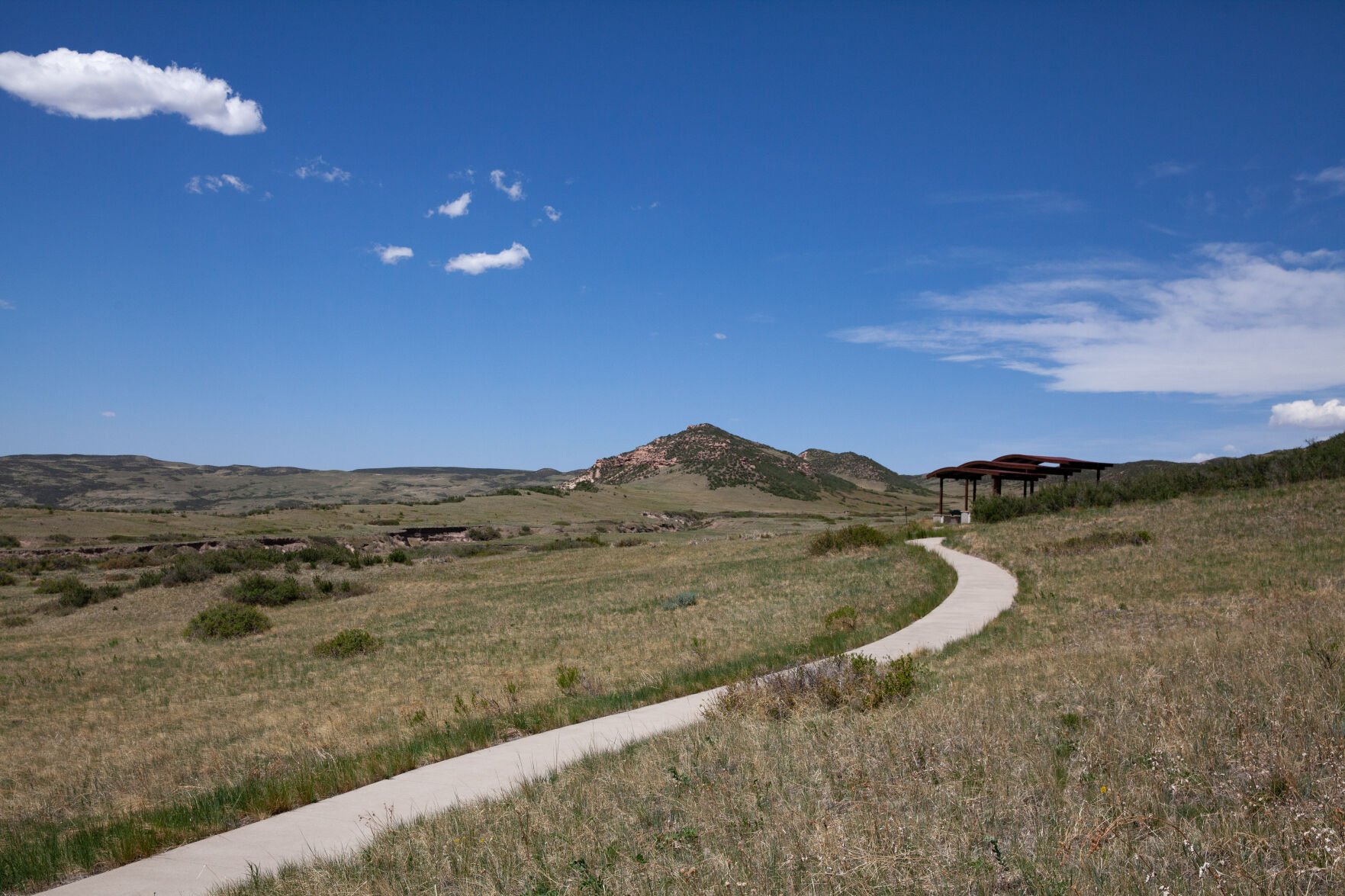
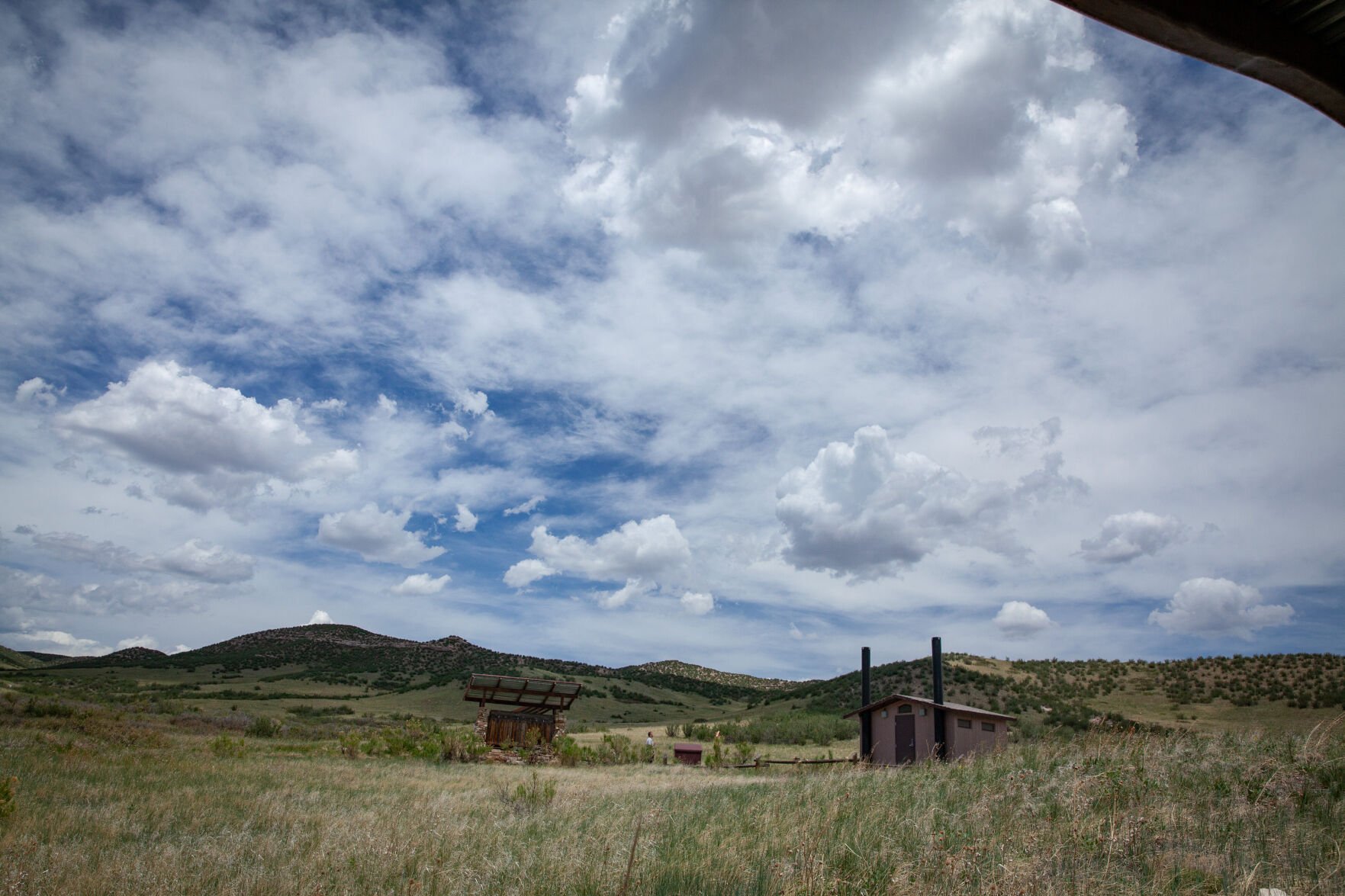
The views are one thing at Soapstone Prairie Natural Area: The Mummy Range looms in one direction, rolling foothills and canyons in another, and all around the sky seems to mingle with the wavy canvas decorated by the area’s white, namesake rock.
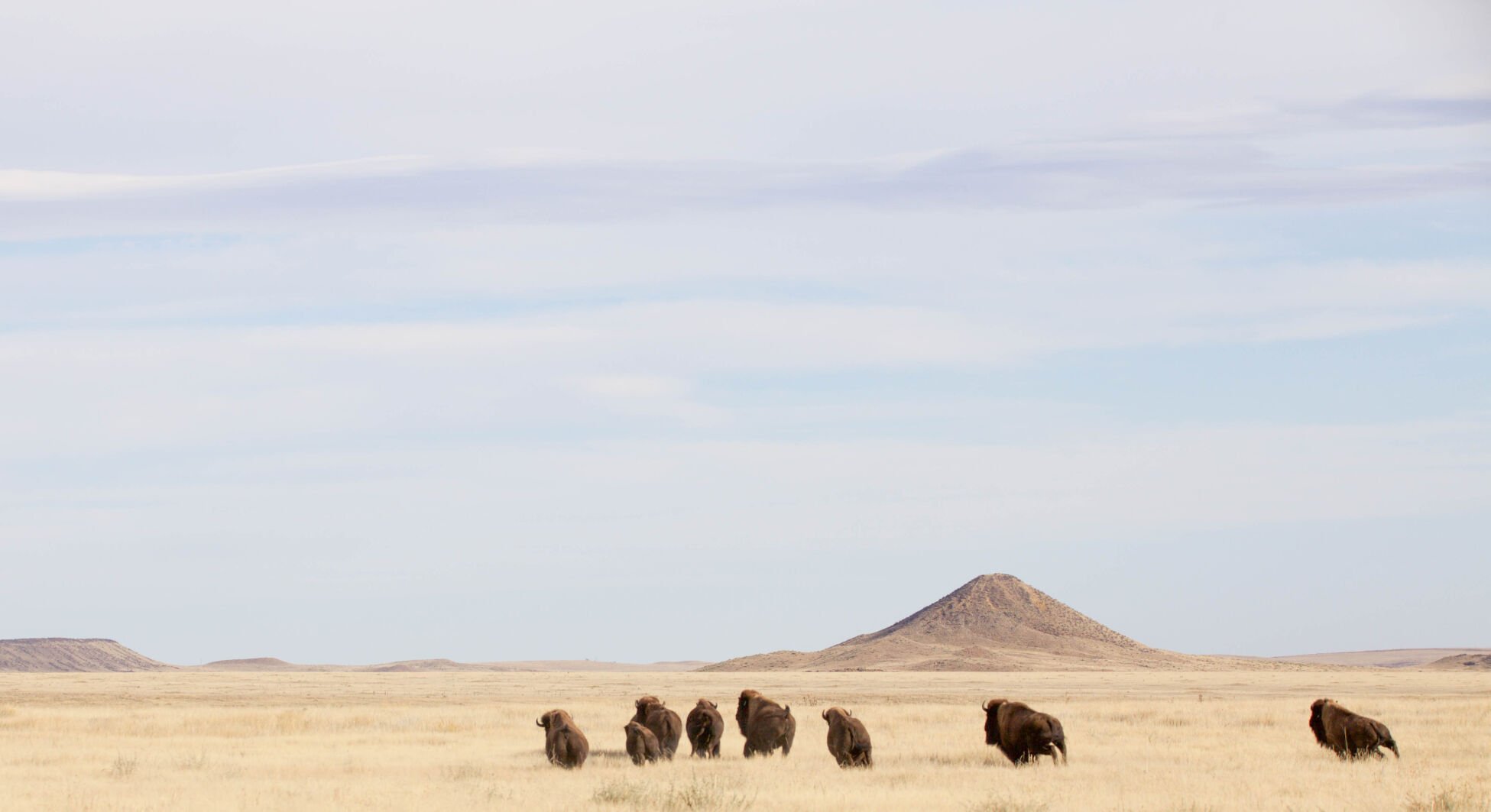
And then there’s the bison. And then there’s the chance of another rare sight: the endangered black-footed ferret.
Even rarer: an archaeological site said to be one of the most significant in the Western hemisphere, an arroyo that helped rewrite the history of humankind.
It’ll all blow you away, says Shark, the community connection and protection manager for Fort Collins’ Natural Areas Department.
Also: “It tends to be windy up there,” she says.
About 20 years after the Natural Areas Department acquired its largest property — encompassing more than 28 square miles — Soapstone Prairie Natural Area has opened for another season.
The trails are open from March through November. It’s a network roaming 40-plus miles around the wildlife habitat that is closed half the year — and around that archaeological site, only a short walk away from the parking lot.
A platform overlooks the Lindenmeier site, which was excavated in the 1930s. This was not long after the discovery of Folsom points in New Mexico — projectiles indicating that humans had been present in the Americas thousands of years earlier than suspected. Discoveries at the Lindenmeier site confirmed occupation in the late Ice Age. Never had such a cluster of artifacts been found, including a projectile lodged in the vertebrae of a massive, extinct bison.
From the viewing platform, the arroyo might not appear all that dramatic, grants a history by the Fort Collins Museum of Discovery:
“Don’t be disappointed if there seems to be little to see. Rather, listen to the silence, the bird song, the sound of the wind. Soak up the openness, the huge vault of the sky. Maybe, just maybe, you’ll hear the whispers of all the people who have come to this same place and realize that you are now part of a continuous story of human presence reaching back more than 12,000 years through time.”
And maybe, just maybe, you’ll see the bison.
“It’s not a guarantee,” Shark says. After all, it’s a vast pasture beyond the trails, including also adjacent Red Mountain Open Space. And the herd is fairly small (in the 30s, Shark says).
But like the Lindenmeier site, the bison inspire a certain, emotional response. This was the finding of Colorado State University researchers, who in a 2019 paper aimed to capture the “ecological and social consequences” of the bison brought to Soapstone.
On the social side, “We found that visitors cited the importance of protecting open spaces more frequently after the bison reintroduction,” researchers wrote, “suggesting that the presence of bison, as a highly recognizable flagship species, forged a stronger sense of connection between visitors and landscape conservation.”
The bison were reintroduced 10 years ago. They were meant to resume their ecological role on the landscape more than a century after their near-extermination from westward expansion. And they were meant to spread the genetics of the bison that survived, known to occupy less than 1% of their historic range.
The flagship herd has been largely confined to Yellowstone amid fears of spreading disease. “Brucellosis had really prevented getting animals out of the park in large numbers for conservation purposes,” Jennifer Barfield, a conservation biologist at Colorado State, previously told The Gazette.
She developed a process of artificial insemination and cleaning of genetic material, guarding against disease. She needed land to spread Yellowstone’s genetic lineage. And Soapstone needed grazers, Fort Collins’ Natural Areas Department determined.
“It was really kind of serendipitous,” Shark says.
Serendipitous, too, for the black-footed ferret.
Restoring that species’ historic numbers has similarly been plagued by disease and also by a lack of prey; prairie dogs have long suffered from habitat loss. But the habitat was deemed suitable at Soapstone. And it seems black-footed ferrets have responded. Where hope for reproduction has been lost elsewhere, three kits were counted here last year and the year prior, Shark says.
It all contributes to the simple billing by the Natural Areas Department: “Soapstone Prairie Natural Area is extraordinary.”
For the extraordinary wind, yes. It seems people for millennia have contended with it — certainly since the homesteading days.
“The wind, the wind, never ceasing,” wrote one early-1900s resident.
This is included in Suzy Riding’s extensive book, “Pioneer History of Soapstone Prairie.” Riding chronicles more than just the brutal wind that was known to blow down fences and whole structures. (Foundations can be seen along the trails today.)
There were also “punishing hail storms” that “ravaged crops and left hundreds of lifeless rabbits in its wake,” Riding wrote. Crops were ravaged, too, by grasshoppers. Lightning struck man, cattle and sheep. There was death by drought and by flood. There were “paralyzing blizzards.”
So went the life of immigrants and laborers who came following the 1862 Homestead Act, seeking land to call their own. “Opportunity brought them here,” Riding wrote. “Courage kept them here.”
Ranching continued into the current century. Around the turn of it, Fort Collins conservationists saw a sweeping swath of prairie become available for purchase far north — including the Lindenmeier site that drew worldwide attention back in the 1930s.
The site was preserved like much of the surrounding shortgrass prairie, Shark recalls. She’s been with Fort Collins Natural Areas since 2001.
“It was really a unique opportunity that does not come around very often,” she says.
Combined with neighboring Red Mountain Open Space — starkly different, more vertical — local land managers came to see “some of the last remaining intact, high-quality shortgrass prairie and foothills shrublands along the Front Range.” Great Outdoors Colorado aligned with the vision, awarding its first grant for “once-in-a-generation” projects. Soapstone was acquired in 2004.
Over 20 years since, Coloradans have steadily discovered the remote mosaic that runs closer to Wyoming’s border than Fort Collins. But Soapstone is easily missed, “sometimes overlooked,” Shark says.
Maybe that’s due to the remoteness, she thinks. There’s also, she thinks, a preference for mountains over prairie.
“It just takes a different lens to appreciate it,” she says.



Get OutThere
Signup today for free and be the first to get notified on new updates.
PREV
PREVIOUS
Denver weather: Mostly cloudy Monday ahead of soggy week around the city
Winter storm warnings in effect for eastern Plains and Front Range mountains
Hakeem Jeffries struggles to be the ‘man of the moment’ for leaderless Democrats
House Minority Leader Hakeem Jeffries (D-NY) has avoided the same calls for mutiny plaguing his Senate counterpart, but the New York Democrat has yet to seize control of the Democratic Party and lead it out of its doldrums. Democrats are in a rut with haphazard messaging campaigns, virtually no political power in Congress, and the […]