







The ‘Golden Dome’ missile defense project could bring investment to Colorado
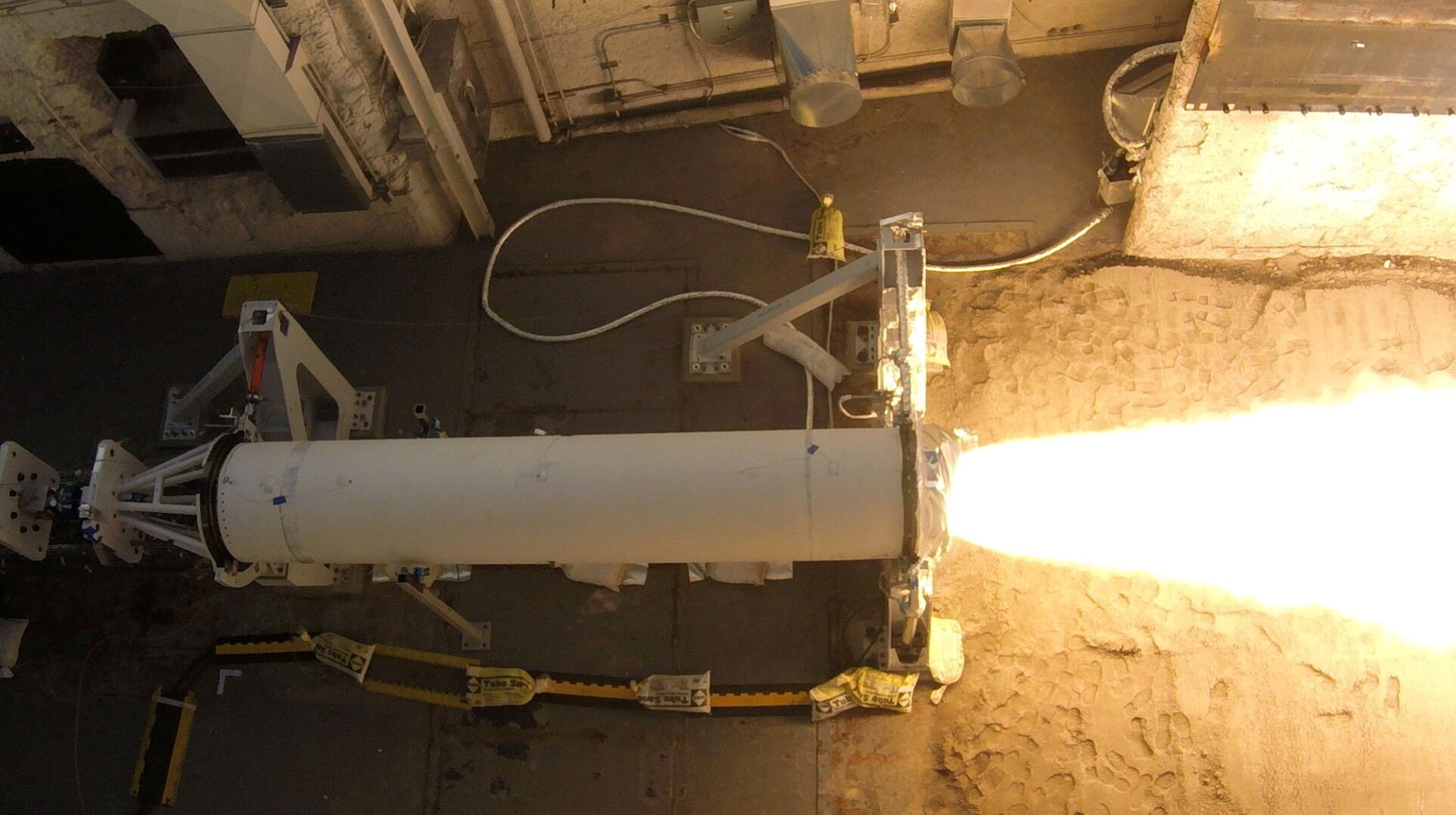
President Donald Trump’s vision for a Golden Dome to protect the nation from missile attacks could bring significant investment in Colorado aerospace companies.
“I think Colorado is just beautifully positioned to get a lot of the work,” said Robert Beletic, aerospace and defense industry manager for the Office of Economic Development and International Trade.
Colorado’s full-spectrum aerospace ecosystem will be on full display this week at the 40th Space Symposium at The Broadmoor, where Golden Dome is likely to spur conversation.
Colorado companies build many different types of satellites, command and control systems and quantum sensing and quantum communication, Beletic said, among many other technologies that could be used in the new missile defense architecture. Quantum sensing collects data at the atomic level and quantum communication is far more secure than traditional methods.
Trump issued an executive order for the next generation missile defense on Jan. 27 and required plans for it to be ready in 60 days, a deadline that has passed.
It’s a big undertaking even for the sprawling Department of Defense, with Steven J. Morani, performing the duties of undersecretary of defense for acquisition and sustainment describing it as “formidable,” in a news release.
“This is like the monster systems engineering problem. This is the monster integration problem,” he said. “This is going to be layers of architecture working together at all group level elevations … to protect the United States … so we’re going to need all the services and agencies that do this kind of work to step up.”
The U.S. missile defense relies in part on 44 ground-based missile interceptors in Alaska and California. The interceptors can bring down a ballistic missile in flight, similar to a bullet hitting a bullet, said Trey Obering, a senior executive at Booz Allen Hamilton during a recent media event.
While ballistic missiles still present a threat, hypersonic missiles developed in recent years present a new challenge.
A traditional ballistic missile travels like a cannonball with a fixed trajectory making it easy to guess where it’s going to land, said Iain Boyd, director of the Center for National Security Initiatives at the University of Colorado Boulder.
While a modern hypersonic missile travels five times faster, glides from side to side and travels lower in the atmosphere, outside the traditional altitudes where the U.S. monitors for threats.
“You’ll lose it, if you don’t track it all the time,” Boyd said.
China has developed more advanced hypersonic weapons and while they may never fire on the U.S. because of the threat of retaliation, it’s still important to update our defenses, Boyd said.
“China may sell those systems to other countries who have less to lose,” he said.
The leader of Northern Command and the North American Aerospace Defense Command, Gen. Greg Guillot, highlighted the risk during a House Armed Services Committee hearing last week noting that hypersonic missiles can look like ballistic missiles when they are first launched. The amount of time available to detect, track and predict a hypersonic missile can also be as low as four to five minutes, he said.
He highlighted the importance of investing in airborne moving target indicator satellites, over the horizon radars, Boeing’s E-7 Wedgetail and integrated undersea surveillance as the foundation for Golden Dome. The Air Force is already under contract to buy E-7A Wedgetails that will offer advanced radar capabilities among other improvements.
The Space Development Agency is also under contract to buy satellites to help track hypersonic missiles from space, from companies with a Colorado presence such as Lockheed Martin.
“We’re not starting from scratch here, it’s really following through on activities that have been underway for awhile,” Boyd said.
But the additional investment in missile tracking, warning and defense could be significant.
Sen. Dan Sullivan, R-Alaska, and Sen. Kevin Cramer, R-N.D., introduced a bill in February with some possible investment numbers.
The bill anticipated $12 billion to expand missile interceptor fields in Alaska, $1.4 billion for the Terminal High Altitude Area Defense System, $900 million to research and develop space-based missile defense and $500 million to research and develop directed energy or missile interception capabilities, among other high-dollar investments.
Booz Allen Hamilton pitched a satellite constellation system last week to add to missile defense that would track incoming missiles and then send one of their number down to smash into the missile. The refrigerator-sized satellite would vaporize about half the missile, and about 40% of it would burn up in the atmosphere, leaving about 10% that might make it to the surface where it would likely hit the ocean, said Chris Bogdan, an executive vice president for the company in an email to The Gazette.
The idea called Brilliant Swarm is a rebooted version of Brilliant Pebbles from the Reagan administration era and it would largely be focused on ballistic missiles.
“Although adversaries have been developing new capabilities like maneuvering missiles and hypersonics, a large portion of their threat inventories is composed of ballistic missiles. Additionally, Brilliant Swarms will have the ability to intercept boost — glide hypersonic missiles in their boost/ascent phase just like ballistic missiles,” said Bogdan, who is head of Booz Allen’s space business. The company has a strong presence in Colorado.
As the Defense Department plans the Golden Dome, no one system will provide complete defense, he said.
“A holistic solution would be a combination of both space-based and ground-based systems,” Bogdan said.