







Electric transmission industry group highlights weaknesses in America’s power grid
Aging power lines and increasing loads push investment in new transmission infrastructure
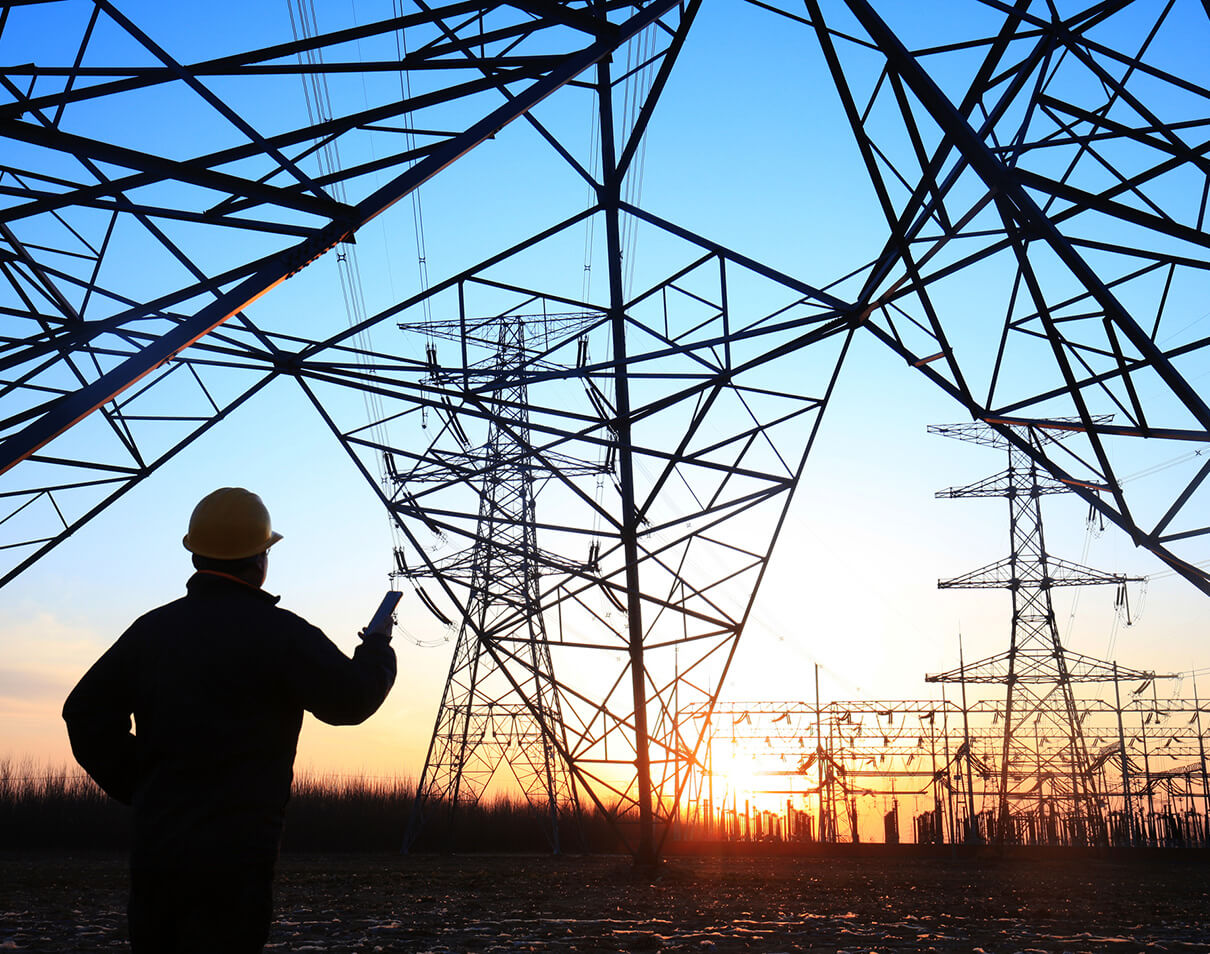
America’s aging arteries for electricity are stressed and face potential failure thanks in part to increasing load demands from the burgeoning large data center industry, said industry representatives and government regulators gathered in Colorado.
More than 75 electric transmission industry representatives last week attended the spring meeting of WIRES, the transmission grid trade association, to discuss the challenges of meeting new grid demands at its spring meeting at The Broadmoor Hotel in Colorado Springs.
“Our transmission network is fundamental to powering our country and connecting communities across the country. We need to make sure our system is ready to meet our future energy needs,” said Sen. John Hickenlooper, D-Colorado, in a video address kicking off the meeting. “That means modernizing our grid. Expanding infrastructure and streamlining development investments now are going to create an energy future that’s cleaner, more reliable and more affordable.”
The keynote speaker was Lanny Nickell, president and CEO of the Southwest Power Pool — one of seven regional transmission organizations that manage much of the nation’s power grid. The SPP covers Iowa, Kansas, Louisiana, Minnesota, Missouri, Montana, Nebraska, New Mexico, North Dakota, Oklahoma, Texas and Wyoming.
Colorado is not part of any regional transmission organization, but the state Legislature mandated that all transmission utilities join an organized wholesale market by January 1, 2030. Most wholesale markets for electricity exist as part of the seven regional transmission organizations.
The 2021 Princeton Net Zero America report shows Colorado’s energy needs nearly double by 2050, from 11,099 MW in 2020 to 21,963 MW in 2050.
“Reaching the goal of net-zero greenhouse gas emissions by 2050 will require substantial investment in the U.S. transmission grid to accommodate growing electricity demand from EVs, heat pumps, hydrogen producers and tap into the nation’s abundant renewable resource potential,” said Jesse Jenkins, an energy systems engineer at Princeton and one of the Princeton report’s principal authors in a 2020 email. “One scenario included in the Princeton Net-Zero America study identified a need for about 60% more transmission capacity by 2030 and tripling current capacity by 2050.”
The report notes that meeting those needs nationally would require adding about 884,000 miles of transmission lines to the existing 183,346 miles. Those 884,000 miles of new lines would potentially cost about 4% to 6% of the nation’s Gross Domestic Product through 2050, or $1 trillion to $1.6 trillion.
In Colorado, Xcel Energy is building a $1.7 billion Power Pathway transmission line project in eastern Colorado. More high-voltage transmission lines, including a branch into the San Luis Valley, are being considered by Xcel and the Colorado Electric Transmission Authority, which lawmakers created in 2021 to enable the development of electric transmission facilities.
Nickell told the group that the SPP earlier had predicted that there could be a 25% increase in demand by 2030.
“I’ve got bad news. Our latest forecast show is going to be worse than that,” said Nickell during his speech. “Our most recent forecast, which we just got about two weeks ago, shows that…our load could be 75% higher by 2035. Now that’s 10 years, but still, that’s three times what it was projected to be in five years.”
Nickell emphasized a focus on improving interstate power transfer capacity by building new high-voltage transmission lines.
The lack of capacity to transfer power into Texas during Winter Storm Uri in February 2021 was part of the cause of more than 246 deaths during the storm, as reported by the Texas Department of State Health Services.
Moreover, aging transmission infrastructure not only hobbles power delivery but can take lives, as it did in the California Camp Fire in 2018 that destroyed the town of Paradise and killed 85 people.
According to a CAL FIRE investigation, the Camp Fire was caused by the failure of a corroded 95-year-old hanger hook holding up an insulator and power line that resulted in sparks igniting vegetation below. Line owner Pacific Gas & Electric has paid out more than $25 billion in damages, settlements and fines.
“One of the most strategic things that we can work on is to be able to maximize that value that I just talked about by building east-to-west transfer capability,” Nickell said. “We’ve got some today. We think that’s going to provide value, but there’s so much more value that could be obtained by drastically increasing that east-to-west transfer capability.”
For every dollar invested in improved transmission capacity, Nickell said, there’s an $8 to $9 benefit to society — but it’s still going to be expensive to build new transmission lines, as the Princeton Net Zero America report notes.
“That’s a good deal. It’s a really good deal, and that’s what we ought to be talking about when we’re talking to consumers who might not want to see a transmission line in their backyard,” said Nickell. “We have to work together on making sure everybody understands we’re going to have to have more transmission and more generation, and that does mean more cost.”
“We have to be creative in order to do this in a way that’s affordable, and I think we can do it. We have to keep the lights on, but we also have to focus on affordability while we’re doing that.” Nickell added.

