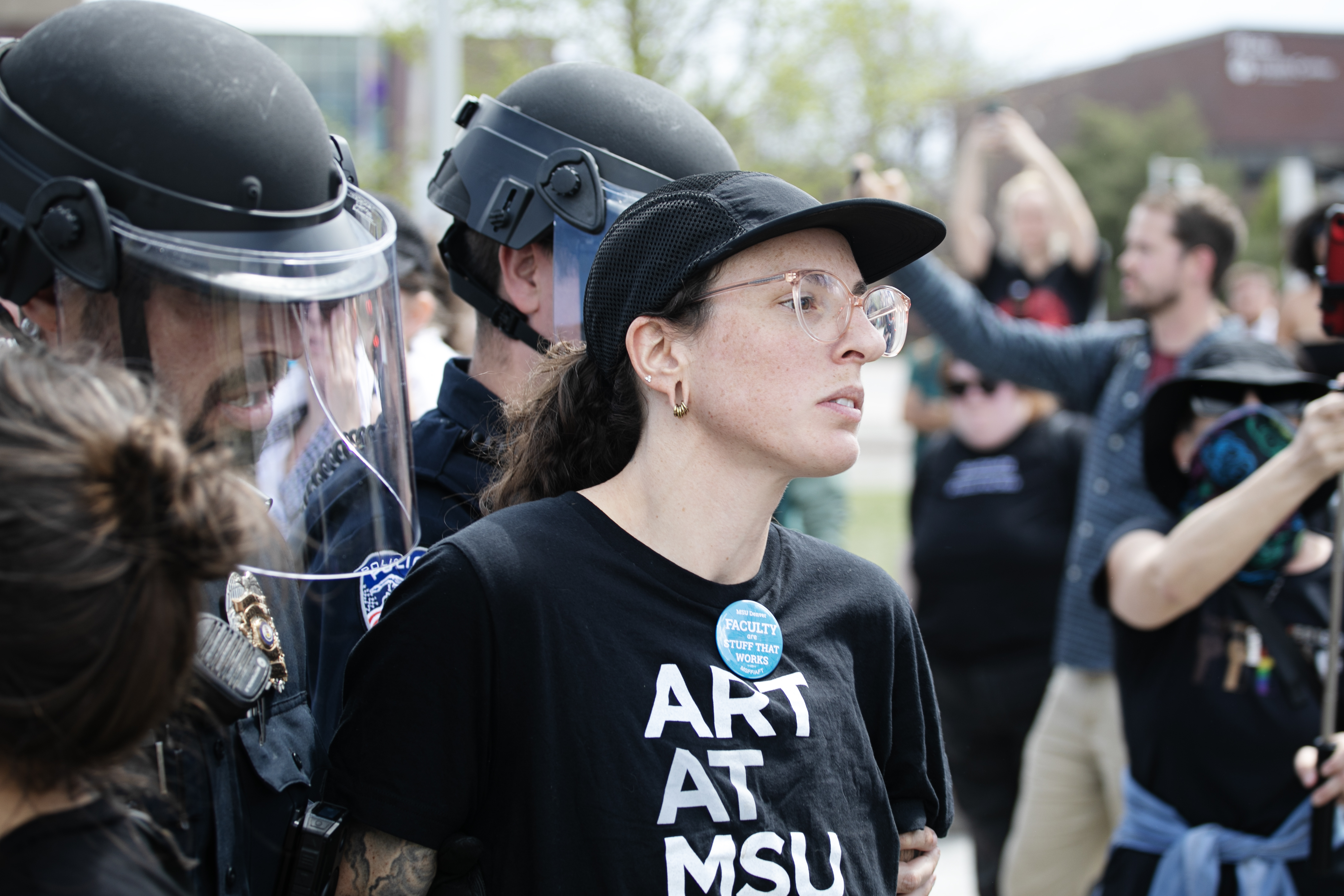
Civil rights lawsuit filed against Auraria Campus police over pro-Palestinian protests
Protestors allege their free-speech rights were violated
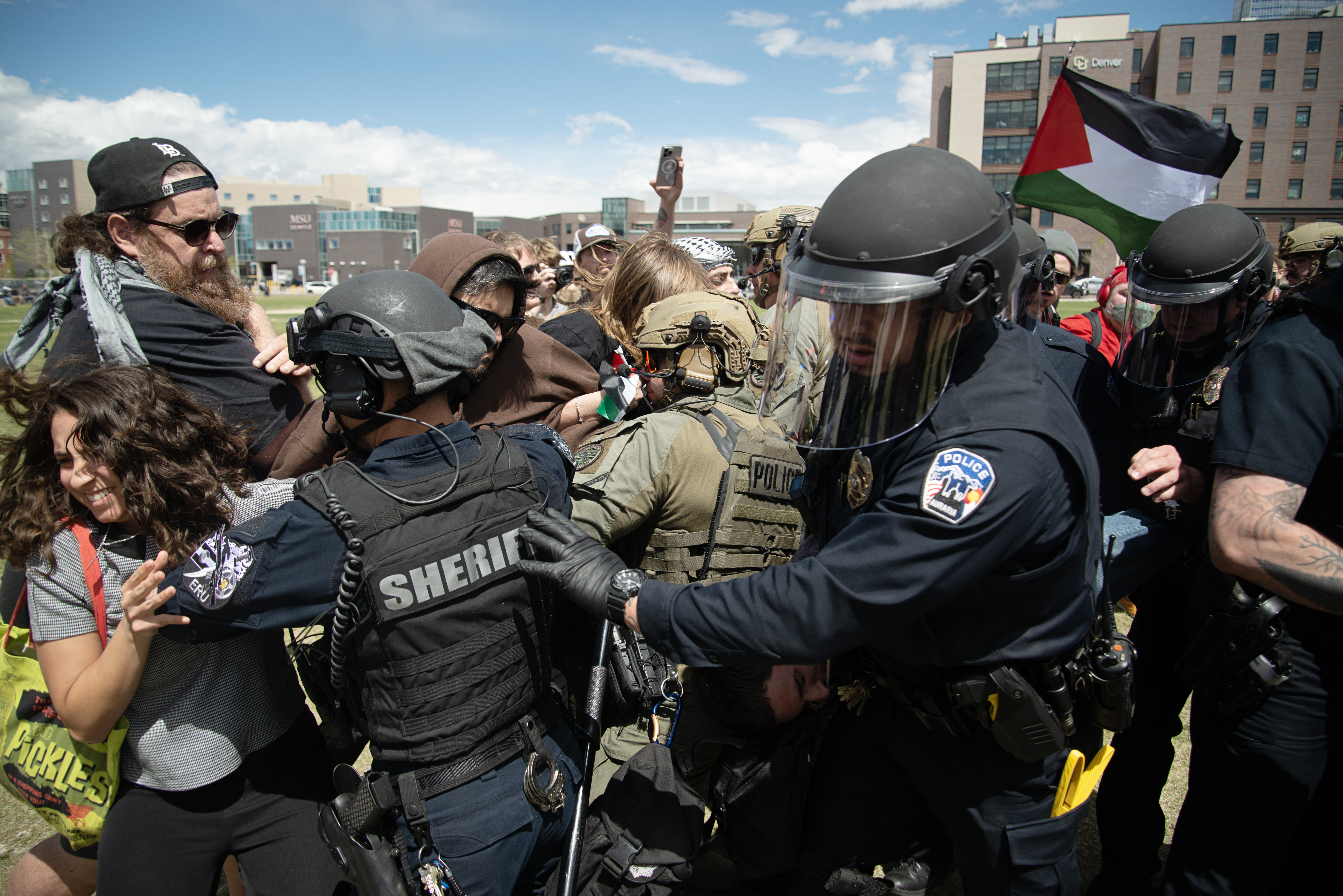
A Denver civil rights law firm filed a lawsuit on Wednesday on behalf of Auraria Campus students and faculty members, alleging their constitutional rights were violated when they were arrested by campus police during a protest on April 26, 2024.
The lawsuit named Auraria Campus Police Chief Jason Mollendor and six other officers, and was filed by Rathod Mohamedbhai LLC on behalf of Alex Boodrookas, Kyle Montanio, Sarah Napier, Alexandria Nickens, Elowyn Fahnestock, Spencer Pajk, Joie Ha and Harriet Falconette.
A spokesperson for the Auraria Campus said on Wednesday morning that officials were not aware of the lawsuit being filed and had not been served notice of any legal action.
The plaintiffs are seeking “compensatory damages” for “the violations of their constitutional rights, pain and suffering and other injuries,” according to the lawsuit.
“During the criminal process, law enforcement claimed that they were here simply to enforce a campus policy against camping,” said attorney Azra Taslimi at a news conference Wednesday morning. “Their actions tell a very different story.”
Last April, more than 200 protesters descended on the Auraria Campus, chanting anti-Israel and pro-Palestinian slogans. Some of the demonstrators had set up a tent encampment on the quad, a violation of campus policy. Officials estimated that roughly half of the protesters were students.
As campus police ordered the individuals to remove their tents, a group of students and faculty gathered at the site, standing in front of the encampment with their arms linked together, according to the lawsuit. After ignoring an order to leave the area, police arrested members of the group and took down the the tents.
“Protesters who peacefully linked arms in solidarity were trapped and encircled by riot police, physically prevented from leaving before officers began making arrests,” the lawsuit said.
Police dismantled the encampment and arrested a total of 44 people, who were issued citations, alleging offenses from trespassing to failure to obey a lawful order.
The protests cost the campus more than $650,000, officials told The Denver Gazette last August.
Campus officials said the damages involved destroying the sod, graffiti tagging and vandalism as well as picking up trash in the quad — including a hazmat team that handled a spill from an illegal toilet.
Officials also reported roughly $123,000 in losses from about 40 canceled events, as well as about $40,000 in lost revenue from parking, Starbucks and the King Center, a performing arts complex on campus.
Campus officials said they supported the students’ free speech rights but that camping posed health and safety issues.
“We fully support the right of students to assemble peacefully,” Auraria campus officials said in a statement on April 26, 2024. “Still, it’s essential to note that Auraria Campus policy prohibits camping on the premises because of health, safety, and security considerations.”
The lawsuit alleged that some of the students arrested didn’t erect the tents.
“The arrest of the plaintiffs had nothing to do with the tents,” Taslimi said at the conference. “This was about silencing dissent and this was about using police power to punish political speech, and that is a direct violation of the first amendment.”
A week after that first protest, Denver Police Chief Ron Thomas that the department had no plans to complete another sweep of the campus, which had seen tents return to the quad in the days after the arrests.
“They just came and re-erected the tents and we were back at square one,” Thomas at the time said. “At which point in time they asked us to come back and engage in the operation again, and that’s when I shut it down, said I’m not doing that again.”
Thomas added that there was no legal way for the school to remove the group from the area unless the protesters had plans to engaging in an unlawful assembly.
The lawsuit mentioned Thomas’ comments.
The protest continued for months. The protesters made several demands of university officials, including that they divest from corporations that operate in Israel.
After the protests, the Denver City Attorney’s Office quietly dropped many of the cases following a violation for failing to provide hours of body camera footage in the discovery process, where both sides pf a criminal proceeding share evidence before trial.
Located in downtown Denver, the Auraria Campus is shared by the Community College of Denver, the Metropolitan State University of Denver and the University of Colorado Denver.