




Moose boom: Is the rising population of the iconic animal threatening critical Colorado ecosystems?

Once I was jogging along an urban trail in Manitou Springs when I stopped dead in my tracks.
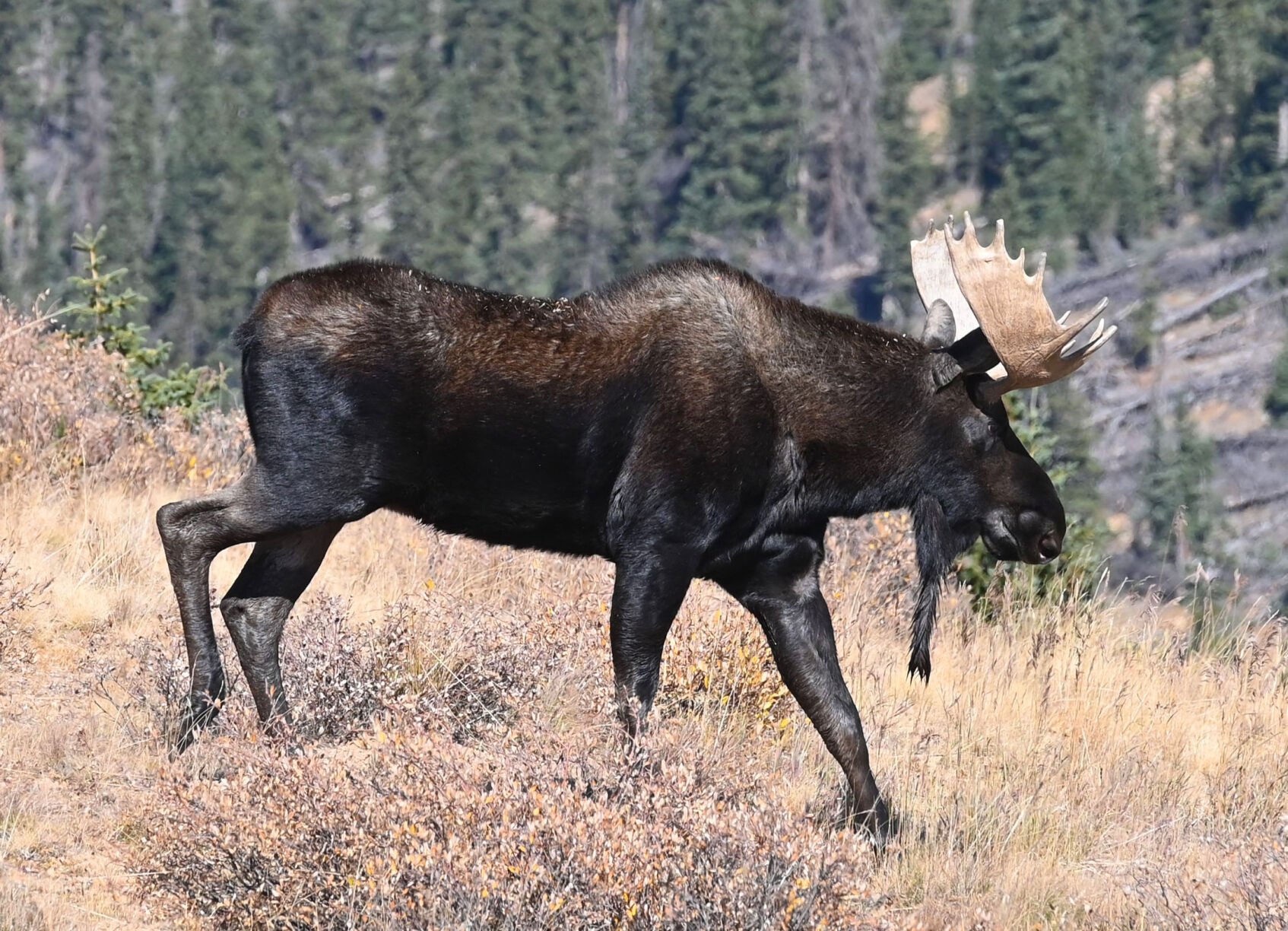
It was something ahead by the city pool. Not a deer, not an elk. Longer legs. Longer snout. Much bigger.
It was a moose, right here close to home, just up the highway from Colorado’s second biggest city.
Days before in Colorado Springs, on Fort Carson, another moose had been relocated to the mountains where they might be more expected — or still unexpected by those who know the animal’s native home is nowhere in Colorado but rather far north.
Yet moose are now increasingly seen all around this state, including around the southern San Juan Mountains. Last fall, Elaine Leslie was hiking near her Durango home when she came by a young bull.
“That’s very, very unusual,” she said. “They definitely have spread far and wide now.”
And among her and other biologists, this is of increasing concern.
Leslie is a retired biologist whose career took her to the National Park Service’s highest ranks in Washington. She remains an outspoken advocate for the parks. And as of late, her attention has turned to Rocky Mountain National Park, where moose have spurred research and serious talks about the park’s ecological future.
Colorado Parks and Wildlife, the agency that brought the continent’s largest cervid to North Park in 1978, insists it is able to manage a rising population statewide. But the conversation around Colorado’s most famous natural treasure has sounded different.
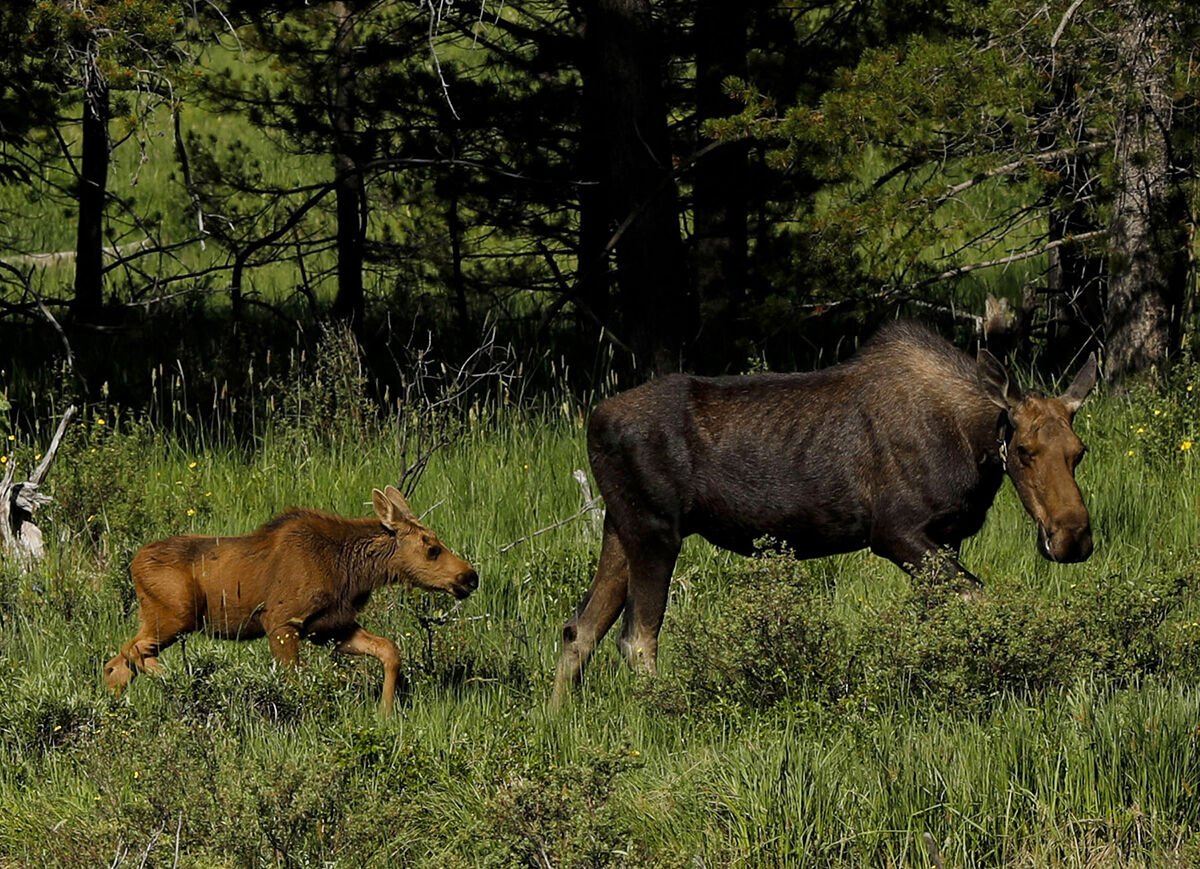
“I think any time you have something that is non-native, introduced and expanding and having conflicts or impacting native wildlife, yeah, it’s a problem,” Leslie said.
Measuring impacts
Rocky Mountain National Park’s large mammal ecologist is not calling it a problem yet.
“We are still in an information-gathering phase,” Will Deacy said.
What’s known, according to the park’s written synopsis of research: Where moose “were rarely seen” outside the Kawuneeche Valley and the park’s west side about 10 years ago, they are now commonly seen everywhere. With hunting banned in the park and predators like wolves and grizzly bears banished from Colorado long ago, “populations in the park have grown rapidly,” the synopsis reads.
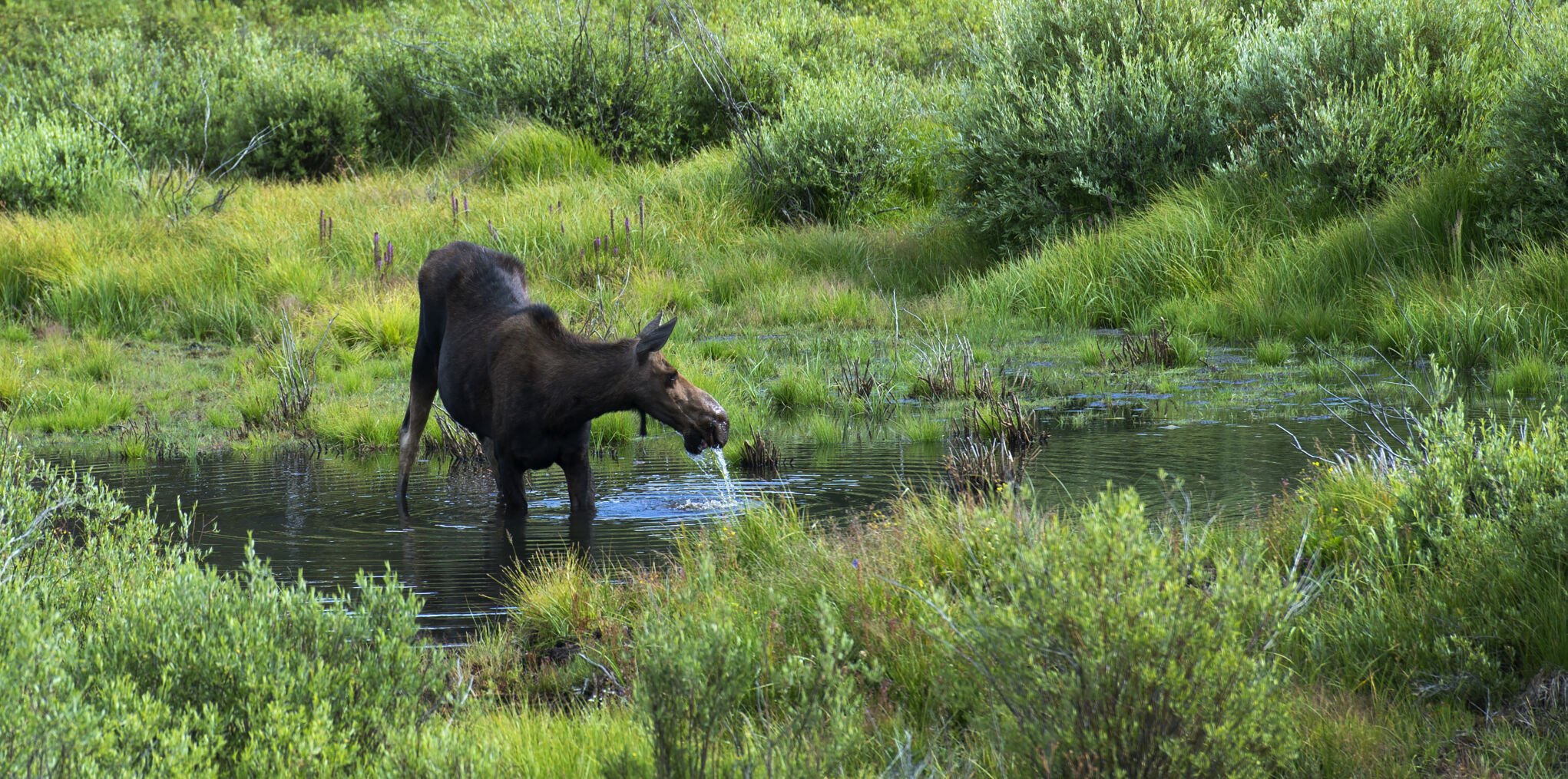
Statewide, Colorado Parks and Wildlife estimates the population around 3,500. From an aerial survey covering about 65% of its land, Rocky Mountain National Park’s estimate is about 145 in the park.
“We know that’s an underestimate, not only because we didn’t cover the entire park,” Deacy said. “We think there’s a lot of moose out there.”
Also known: Willow accounts for the vast majority of a moose’s diet, with one capable of feasting up to 60 pounds of vegetation a day. Combined with munching from an abundant elk population, drought and a previous history of ditching and ranching, this has caused “a fundamental alteration of the structure and function of (Kawuneeche Valley) riparian ecosystems.”
That’s according to a report prepared for the national park’s research conference last year.
Where “beaver-willow” has been the natural state, the Kawuneeche Valley “has now transitioned into a new state (‘elk-moose grassland’) with a (greater than) 90% loss of tall willows and open water habitat,” read the report by university researchers and park specialists. “Beaver have all but disappeared.”
Deacy said tall willow loss is thought to be around 50% on the park’s east side, closer to Estes Park, where beavers have similarly vanished.
Beavers are considered “critical” like the willow they eat and use for building dams, explains park literature on the moose situation. Dams serve multiple purposes, from maintaining wetlands that are “biodiversity hotspots,” to “improving water quality, buffering droughts and floods, and reducing spread of wildfire.”
The beaver effect: How nature’s engineers restore wetlands, control floods, and protect rivers
How much are moose to blame for that loss? Still uncertain, Deacy said.
But “we also know that moose are even more specialists of willow” than elk, he said. “Based on our calculations of their diet and size, each moose is the equivalent of about 15 elk.”
That’s relevant, considering elk browsing prompted the park’s 2008 Elk and Vegetation Management Plan. The 20-year strategy outlined ways to fence off elk and, in controversial cases, get rid of them.
That should be the job of nature, wildlife groups have contended.
Said Michael Saul, with Defenders of Wildlife: “Colorado does not have a ‘moose’ problem. To the extent that Rocky Mountain National Park has issues with herbivores overbrowsing willows, young aspens, etc., that’s a ‘lack of native predators’ problem. And that problem has an obvious and natural solution — allow Colorado’s gray wolf population to recover.”
Colorado coalition of hunters, anglers opposes 2026 wolf reintroduction repeal efforts
While that effort has been slow and mired in controversy, researchers and park officials have described preserving wetlands as “urgent.”
“I think we’ve found lightbulb moments for the public when it comes to fire breaks. When you have healthy riparian areas, they also can serve as important fire breaks,” said park spokesperson Kyle Patterson, remembering the fast, devastating spread of the 2020 East Troublesome fire. “Healthy riparian areas really, really matter.”
The human element
An unchecked moose population poses cascading, large-scale effects. That was determined by Joel Berger from previous research.
The highly published, well-traveled wildlife biologist out of Colorado State University analyzed ecosystems around hunted and lesser-hunted moose in the greater Yellowstone area. Where there were predators, “the willow vegetation was much more abundant,” Berger said.
Also: “Several species never occurred in these communities where moose were at high density.”
Where Berger expected to see certain birds, for example, he did not. He has reason to think the losses at Rocky Mountain National Park reach beyond wetlands, as he has shared in those conference talks.
They are talks happening four decades after moose were airlifted to Colorado to establish a population. In the 1970s, they had only been sporadically spotted — suspected transients from Wyoming.
Also in the 1970s, the National Environmental Policy Act was young, with its regulations still rising to popular consideration.
“The word ‘biodiversity’ wasn’t even really around when moose were first introduced,” Berger said. “I don’t think people were thinking about that. They were thinking about game animals.”
Moose would be highly sought by hunters — as they still are today, Colorado Parks and Wildlife reports.
CPW sold 668 moose licenses last year, according to data shared by Andy Holland, the agency’s big game manager. Those were awarded out of about 60,000 applications, he said.
“We could sell as many moose licenses as we want,” Holland said. “That’s the point.”
That’s the point he emphasized in managing moose.
CPW manages 13 herds designated by regions. Holland said five were “above population objectives,” seven within objectives and one below.
Hunters have been relied upon to narrow gaps. Holland said the number of licenses sold over the past 15 years has gone up five-fold, with success for cows trending around 70%.
The question of Leslie, the longtime National Park Service biologist in Durango: “Do they have 10 years of data that should suggest increased permits are effective?”
Over the past 15 years, the state’s moose population has more than doubled, according to CPW’s estimates.
“That’s been increasing,” Holland acknowledged, “but more slowly increasing lately.”
Slower growth is the aim of a cow-hunting season added this year, he noted.
But “moose and other ungulates browse year-round,” said Lindsay Larris, the Denver-based conservation director for WildEarth Guardians. “Hunting moose may impact the population, but wolves and other native carnivores can influence year-round grazing and browsing patterns in a positive way.”
Berger, the Colorado State University biologist, studied this around Yellowstone. A gray wolf was detected around Rocky Mountain National Park last year, and Berger would not be surprised by more sightings in the months and years ahead as the state’s reintroduction continues.
But he might be surprised if wolves stuck around.
“Rocky Mountain National Park is probably too small to even sustain the movement of one wolf pack,” he said.
And if they did stick around, “wolves prefer easier prey like elk rather than big, aggressive moose,” Berger said. “And so wolves, for a lot of different reasons, are not gonna be the panacea that some people might be waiting for.”
‘Magnificent, beautiful animals’
Like the national park, “we are concerned about willow and aspen overbrowsing,” said Holland, who recognized that browsing coinciding with a statewide elk population that is said to be the world’s largest.
“But inside the park there’s no hunting,” he continued, “and outside the park we have the tools we need to manage moose populations where we want them.”
At least there’s no traditional hunting inside the park.
Sharpshooters were called in following the 2008 Elk and Vegetation Management Plan, that 20-year plan outlining strategies to scale back impacts from willow-eating elk. Culling was one strategy, along with fencing and revegetating.
It was far from the first plan to address problematic wildlife in a national park — far from the first that was met by a lawsuit.
Controversy has similarly swirled around non-native mountain goats killed in the Olympic Mountains and at Grand Teton National Park in recent years. Other controversies have regarded wild horses, boars, bison and pythons, said Frank Buono, a law and policy expert who spent decades as a National Park Service manager and contractor.
The law and policy is clear to him: “To manage the park not as a zoo, but to the greatest extent possible as a functioning, natural ecosystem.”
But people love a zoo, Leslie said. “They want to go to Rocky Mountain National Park and see everything.”
They go to Estes Park and Grand Lake and buy moose-themed shirts and mugs. They eat and drink in moose-themed restaurants and bars, stay in moose-themed lodges.
Moose might be the most iconic, celebrated species around. And so the difficulty of replicating anything like the Elk and Vegetation Management Plan is two-fold, Buono said.
“There’s a lot of emotional affection for moose. They are magnificent, beautiful animals,” he said. “And they’re big, and they’re difficult to catch.”
The National Park Service has preferred nonlethal roundups in cases of other animals, he said. But moose are indeed big — bulls can weigh up to 1,000 pounds — and they are also elusive, fast and generally not roaming in large groups like elk.
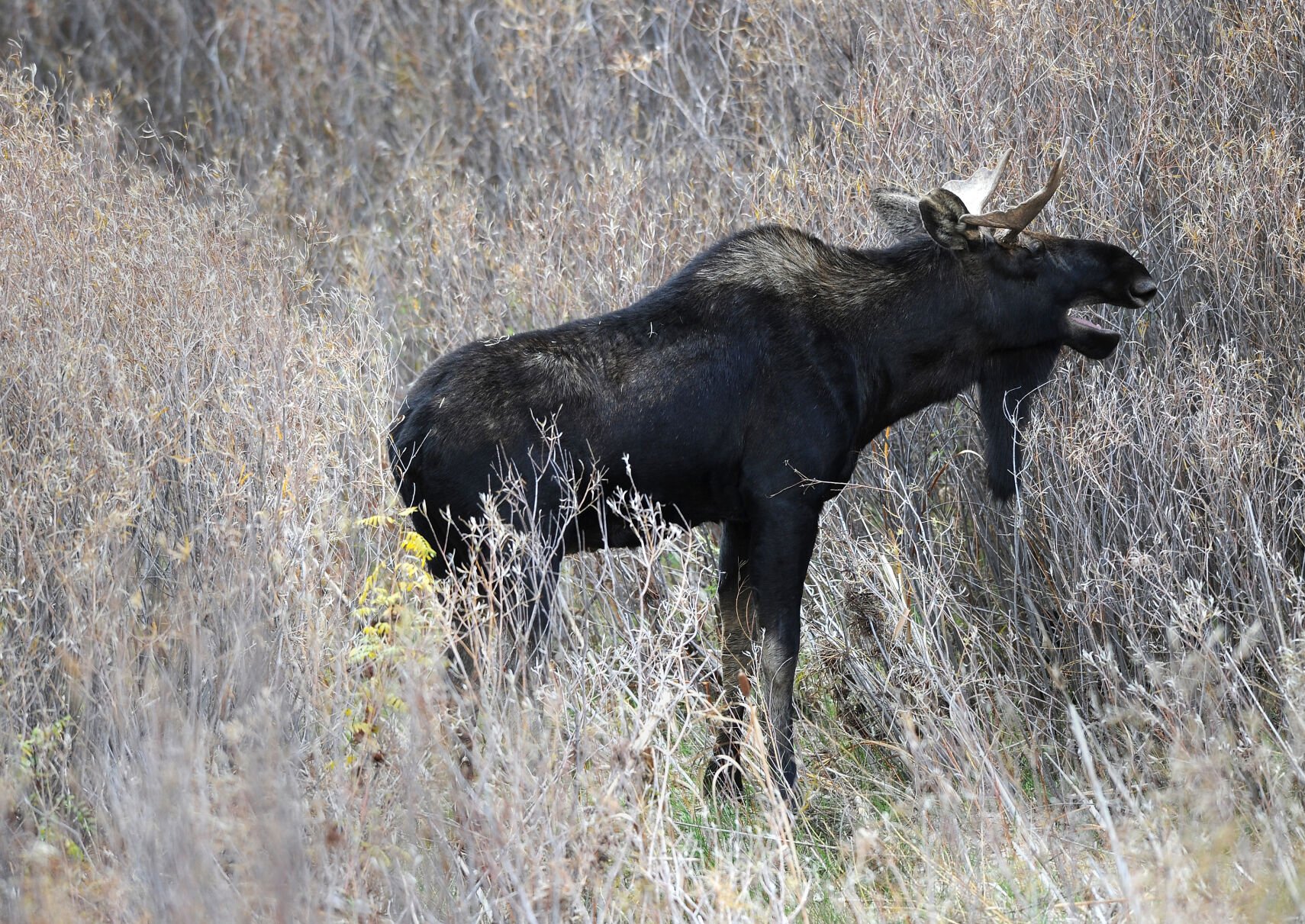
Court rulings over the years show killing non-natives as a legally acceptable option, Buono said. That does not make it ethically acceptable. “And so the Park Service is generally pretty risk-averse,” he said.
But talk of replicating anything like the Elk and Vegetation Management Plan is premature, said Deacy, the park’s large mammal ecologist.
Wolves posed but one question, he said. “We’re really gathering all the information before we take any next step.”
On the lookout
The park is waiting, researching, before any specific moose planning. That’s while wetland degradation continues to be tracked.
Read a report from the park’s research conference last year: “Climate models suggest the hydrologic system may continue to collapse, making restoration urgent.” Restoration, the report added, “will require significant long-term reductions in large ungulate herbivory.”
Non-native ungulates are not in Leslie’s perfect picture for a national park. But perfect is subjective, she knows.
“There would be outcry if there were zero moose in Rocky Mountain National Park,” she said. “People love them. That’s why you see them expanding.”
Why you see them at ski resort bases. Or at least you’ve seen those regular, viral videos showing one trot between lift lines.
“Those make me really nervous,” said Holland with CPW.
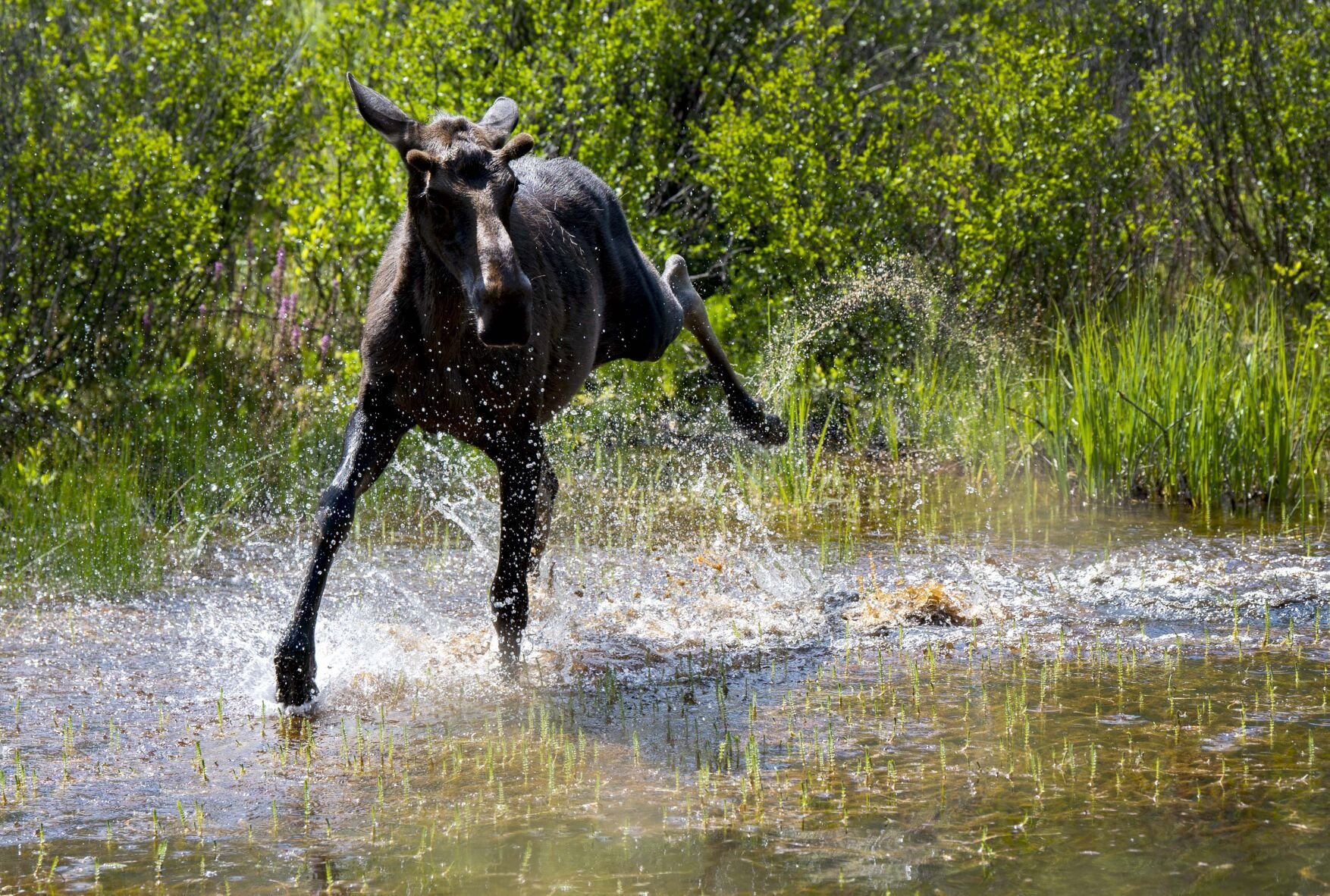
He’s nervous about attacks, like two reported two days apart last year around Winter Park. In one, a runner was stomped and transported to the hospital. Amid calving season, when cows are protecting their young, two other incidents were reported elsewhere — approaching the record six incidents logged in 2022.
Also that year, Colorado Department of Transportation reported vehicles hitting and killing 59 moose. A decade prior, the department counted four. Increased conflicts are “definitely a concern,” Holland said.
Moose tramples hiker in Teller County, prompting safety reminders from officials
Such might be the inevitabilities of a rising moose population. The inevitabilities since 1978, when a helicopter delivered moose to North Park.
This area around Walden is now proudly called “the Moose Viewing Capital of Colorado.” I was there once, listening to locals’ stories. One recalled being chased down the street by a moose; another recalled a moose totaling his Ford F-150. I ate at the Moose Creek Cafe.
Welcome to Walden, the tight-knit town known as the Moose Viewing Capital of Colorado
I was in Rocky Mountain National Park another time. I was hiking the trail up from Lake Helene. That’s when I stopped.
Another hiker had stopped. He motioned ahead.
“Moose,” he said.
We shared the moment, that moment and mix of emotions many of us long for — excited, nervous, amazed.

Get OutThere
Signup today for free and be the first to get notified on new updates.
PREV
PREVIOUS
Stephen A. Smith says Democrats need to address the ‘bigger picture’ over Trump
Sports journalist Stephen A. Smith argued the Democratic Party currently has “no muscle whatsoever” in opposing President Donald Trump and his administration, adding that this is partially contributing to speculation he could launch a presidential run. Smith assessed that voters already decided Trump was “closer to normal” compared to those within the Democratic Party last […]
Bird Call: Enemy has been defeated
I finally have defeated my sworn enemy. And just in time for spring migration. Pack it up and move along, squirrels. No longer will you little freeloaders feast upon my bird feeders, relieving me of thousands of dollars of bird food meant for the sweet chickadees, chirpy nuthatches, flashy but mean Western tanagers, finches and […]