Front Range counties celebrate air quality wins on Earth Day
The reduction is a downward trend for the county

Several Denver metro counties celebrated Earth Day with air quality wins, with Boulder and Adams counties adopting new air quality rules and Jefferson County reducing greenhouse gas emissions.
Meanwhile, Gov. Jared Polis signed an executive order Tuesday that advances state sustainability goals and greening government practices.
The order outlines several priorities, including reducing greenhouse gas emissions by at least half in state operations, reducing energy use per square foot in state facilities by at least 20%, and reducing potable water consumption across agencies by at least 20%, all by 2034.
Polis said the order raises the bar for state government to “lead by example,” adding that the directives to state agencies will not only help create a more sustainable future but also save taxpayers money.
“This builds on our plans by setting goals for our state government to cut emissions by half, use energy and water more efficiently, increase the number of electric vehicles in the state fleet, and save taxpayer money by reducing energy costs to our state,” Polis said in a news release. “Efficient government practices save taxpayers money and are one piece of the puzzle in protecting our state for future generations while cutting costs.”
Also in time for Earth Day, Jefferson County reduced its greenhouse gas emissions in 2023, continuing a downward trend for the county over the past nine years.
The Jefferson County Sustainability Program released the county’s greenhouse gas (GHG) inventory data earlier this month. It has been collecting data for the entire county in 2023 through annual reports from Xcel Energy and the Denver Regional Council of Governments as well as The Colorado Department of Public Health’s (CDPHE) EnviroScreen Score.
In 2023, the county saw a production of 6,096,805 metric tons of carbon dioxide equivalent (CO2e), according to the county’s updated dashboard.
That number was 6,221,268 in 2022 and 6,335,095 in 2021, showing a steady downward trend every year since 2015 — the year the county started compiling the data as part of its Climate Action Plan.
The Climate Action Plan — created by the Jefferson County Sustainability Commission and Jefferson County Public Health in 2022 — looks to reduce greenhouse gas emissions by 73% from the 2015 numbers by 2035. In 2015, the county produced 7,108,670 metric tons of CO2e, according to the dashboard.
“The climate crisis can no longer be ignored,” the county wrote in its action plan. “Already, Jefferson County is experiencing the results of increasing global temperatures, including hotter days, increased wildfires, and poor air quality.”
For example, all 20 of the county’s largest wildfires have occurred since 2001, according to the Colorado Division of Fire Prevention and Control.
Furthermore, Colorado temperatures have risen about 2.5 degrees since the beginning of 1900, according to the North Carolina Institute for Climate Studies.
In 2023, the county saw a 14% reduction from the 2015 baseline used for its overall action plan, according to the county. The county also scored an EnviroScreen Score of 40.81 out of 100 by the CDPHE.
The biggest component of greenhouse gas emissions in the county was transportation, making up over 2 million of the over 6 million metric tons produced.
Electricity, on the other hand, only took up around 1.8 million, despite being the largest cause of emissions in 2015. The electricity numbers have dropped every year since being outweighed by transportation since 2017.
“While electricity remains a major source, its portion has declined steadily over the last decade due to decarbonization of the electricity grid in Colorado,” a spokesperson for the county told The Denver Gazette. “Over time, carbon-free energy sources like wind and solar have replaced a portion of the fossil fuel sources — namely coal — in generating the electricity we use. Meanwhile, emissions from transportation and heating and cooking have increased over the same period.”
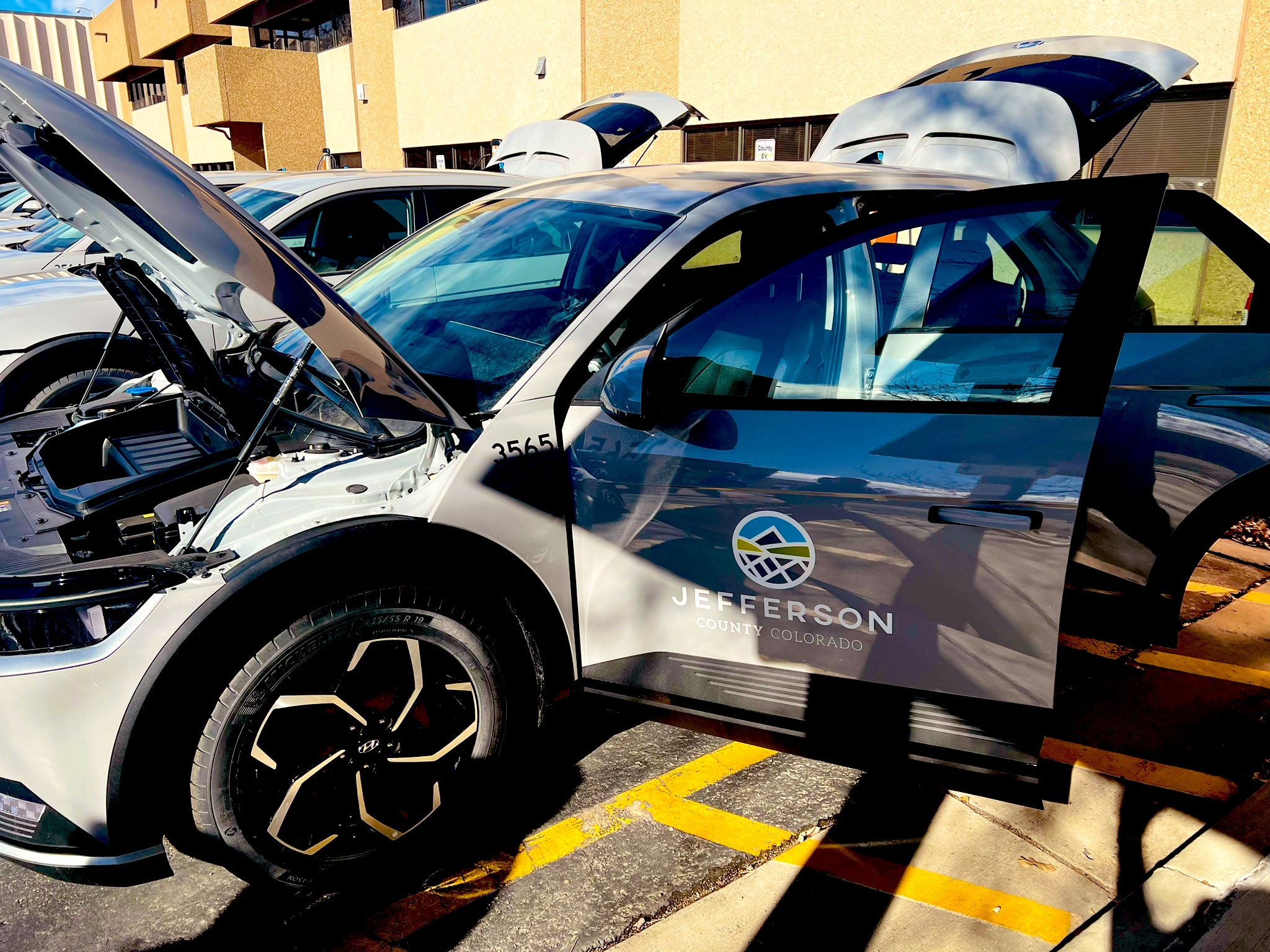
To reduce the leading transportation emissions, the county launched a program in January 2024 to introduce six electric vehicles to the county’s fleet.
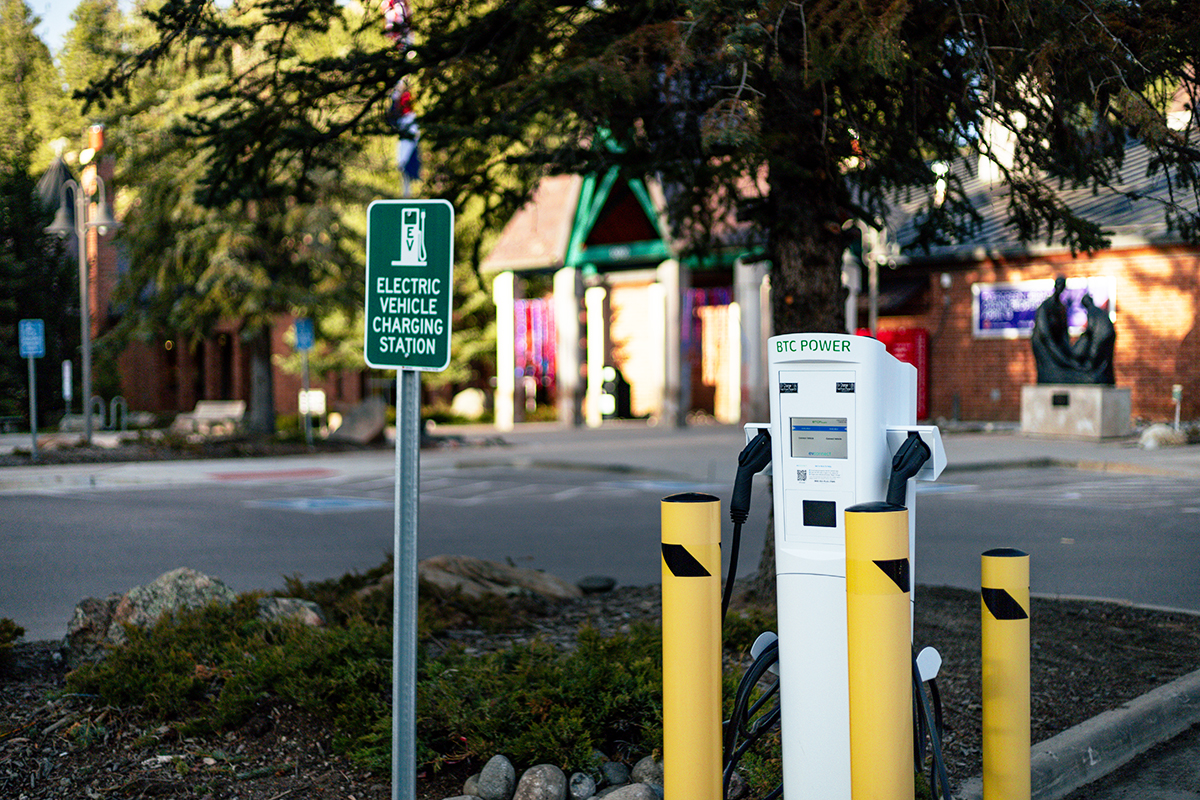
The county was granted funds from the Colorado Energy Office in 2023 to install five electric vehicle charging stations in the county. Two libraries also installed free charging stations in 2024.
On top of Jefferson County’s plan, the Colorado Energy Office launched its plan in 2021 to reduce greenhouse gas pollution by 100% by 2050 based on 2005 levels.
That roadmap is also supposed to reduce the numbers by 26% in 2025, though complete statistics will take over a year to see.
As for why Jefferson County is just now releasing its numbers from nearly two years ago, the county spokesperson said the lag time is due to statistical availability.
“We rely on a variety of public data sources to get the numbers necessary to conduct the inventory, such as annual reports from Xcel Energy and DRCOG, which typically aren’t published until seven-plus months after the end of a calendar year. Then, it takes county staff time to parse through this data, crunch the numbers, confirm accuracy, and publish the results,” they said.
The county concluded that it is expecting to see a continued downturn in 2024 once the numbers are released around next year.
Both Adams and Boulder counties also celebrated Earth Day, adopting new protection rules passed by the Colorado Air Quality Control Commission.
The two counties joined together to form the Local Government Coalition, which advocated for stricter air quality rules in a proposal to the CAQCC.
On Friday, the commission passed new rules unanimously. The rules identify 344 pollutants as Toxic Air Contaminants, according to an Adams County news release. Boulder and Adams counties suggested two — ultrafine particles and black carbon — that were added to the list.
Both particles are known to cause adverse health effects and the pollution from them contributes to negative climate consequences, the news release said.
Additionally, the new rules increase fees charged to polluters and require industrial sources to report their emissions of pollutants, according to the news release.
Boulder County Commissioner Claire Levy said the new rules will help protect vulnerable populations from the health impacts of air pollution.
“On behalf of our residents, we are thrilled that the Air Quality Control Commission adopted our very reasonable proposal to add two additional air toxics and voted to increase fees for the sources responsible for a lot of air pollution,” Levy said in the news release.
Adams County Commissioner Lynn Baca added that there is still much to be done, and said the Local Government Coalition is “committed” to working with the state to continue these efforts.
“Our board is excited that the hard work and dedication of so many staff in both Adams and Boulder counties has contributed to Colorado becoming the first state in the nation to identify black carbon and ultrafine particles as toxic air contaminants,” Baca said. “There is still a lot of work to be done, and we are committed to working with the state of Colorado and the research community to better understand emissions of these pollutants and their impacts on public health and our communities.”