







Decarbonization report: Zero-carbon power goal achievable — for a price
Trying to eliminate the last few percent of carbon emissions costs billions

The Colorado Energy Office commissioned an April 2025 report by Ascend Analytics titled “Pathways to Deep Decarbonization in Colorado’s Electric Sector by 2040.” The report analyzed seven different scenarios to provide the energy office with estimated costs of using various technologies to meet the state’s goal of achieving carbon-free power generation by 2040.
Ascend began with a baseline scenario costing $43.1 billion, utilizing existing state and utility plans, as well as the importation of carbon-free power from outside the state. This approach achieves a 97.7% reduction in emissions, while reaching near-zero emissions for nitrogen oxides and sulfur compounds.
Even if Colorado is unable to import carbon-free electricity from sources outside the state, the existing plans would still achieve a 94% reduction in overall carbon emissions, according to the report.
It is eliminating the last 4% to 5% of emissions above the required 2005 baseline metric that drive the significantly higher costs of all the other six scenarios.
“The results demonstrated the high cost of decarbonizing the last bit of emissions, indicating that Colorado may have more cost-effective opportunities for GHG reductions outside the power sector,” the report said.
“The Economic Deployment scenario, which uses existing regulations, has the lowest cost because it continues to use gas through 2040.
“All other scenarios have higher costs due to the full replacement of gas resources with higher-cost emerging technologies,” said the report.
The six scenarios that reach zero emissions cost 20-42% more than the least costly scenario.
“Based on resource plans submitted by electric utilities, utilities in Colorado are on track to achieve a reduction in greenhouse gas emissions of between 84% and 87% by 2030, with the last coal plant in the state set to retire by the end of 2030,” said the report.
The Options
The Optimized 100 (OT100) scenario costs $51.6 billion, or $8.3 billion more than the $43.1 billion baseline, and aims to eliminate the last 2.3% of carbon emissions. The OT100 scenario allows for selection from all types of generation and represents the least-cost path to achieving a 100% reduction in emissions, according to the report. The model projects the addition of 11,176 MW of wind, 8,890 MW of solar, 6,061 MW of hydrogen, 7,361 MW of battery storage, and 800 MW of geothermal energy by 2040 to meet demand.
Hydrogen Limited (H2lim), pegged at $54.1 billion, or $11 billion more than the cheapest option, is similar to the OT100, except that it limits the model’s use of hydrogen to evaluate which resources could potentially replace hydrogen if it were unavailable at the levels shown in the Optimized 100 scenario.
Accelerated Geothermal Adoption (Geo) would add an additional $11.6 billion to the use of geothermal energy by the late 2030s, aiming to provide at least 2% of demand in 2034, 4% in 2036, 6% in 2038, and 10% in 2040. Other resources would be used to meet zero emissions targets.
The Distribution-System Level Focus (DSF) scenario costing $56.1 billion, or $13 billion more than the baseline option, focuses on adding customer-sited grid-interconnected distributed energy resources such as vehicle-to-grid participation by EV owners, demand response, beneficial electrification, and energy efficiency requirements.
The Small Modular Reactor (SMR) scenario, at $60.8 billion, or $17.7 billion above the baseline, anticipates nuclear power reactors coming online in the late 2030s, with two 320 MW reactors being built each year from 2035 to 2040.
Relying solely on wind, solar, and battery storage is the most expensive path to decarbonization. Without firm dispatchable generation, wind, solar and storage capacity must be overbuilt to maintain reliability, which drives the cost up substantially,” said the report.



More than 20 Colorado counties receive grants to improve land record-keeping systems
Maren Prince
maren.prince@denvergazette.com
Updated 6 hours ago
More than 20 Colorado counties received $2.5 million to improve their land record-keeping systems, according to a Monday news release. The State’s Electronic Recording Technology Board awarded 22 counties with grants ranging from $5,000 to $350,000, according to the release....

Maren Prince
Reporter

Two upcoming exhibits corral some of Colorado’s best artists
Colleen Smith
colleen-smith@gazette.com
Updated 7 hours ago
MADDEN GALLERY AND SAKS GALLERY PREPARE FOR WESTERN ART SHOWS Denver increasingly is recognized as a visual arts town, and two Mile High City gallery exhibitions will spotlight some of Colorado’s standout talents. The Museum of Outdoor Arts rounded up...

Colleen Smith
Reporter

Metro Moves: Visit Estes Park names new executive
Bernadette Berdychowski
bernadette.berdychowski@denvergazette.com
Updated 8 hours ago
Welcome to the Denver Gazette’s Metro Moves. You’ll get the latest metro Denver openings, closings, hiring and promotion news here. To submit your company’s news, drop an email to bernadette.berdychowski@denvergazette.com. The tourism agency representing the gateway city into Rocky Mountain National...

Bernadette Berdychowski
Reporter

Report says Denver’s restaurant industry in need of intervention
Bernadette Berdychowski
bernadette.berdychowski@denvergazette.com
Updated 17 hours ago
Denver’s restaurant industry is struggling and facing “sustained structural pressure,” according to a report by local industry leaders. Last year, the city’s economic development department and Visit Denver created a six-month liaison program to research issues affecting the restaurant sector...
Bernadette Berdychowski
Reporter

RTD Transit Police begin patrols from new substations in Englewood, Boulder
Scott Weiser
scott-weiser@denvergazette.com
Updated 1 day ago
Regional Transportation District Transit Police started operating from two new substations on Friday to increase their visibility on the system and shorten response times across the eight-county service area. One substation is based at the Elati light rail facility in...

Scott Weiser
Reporter
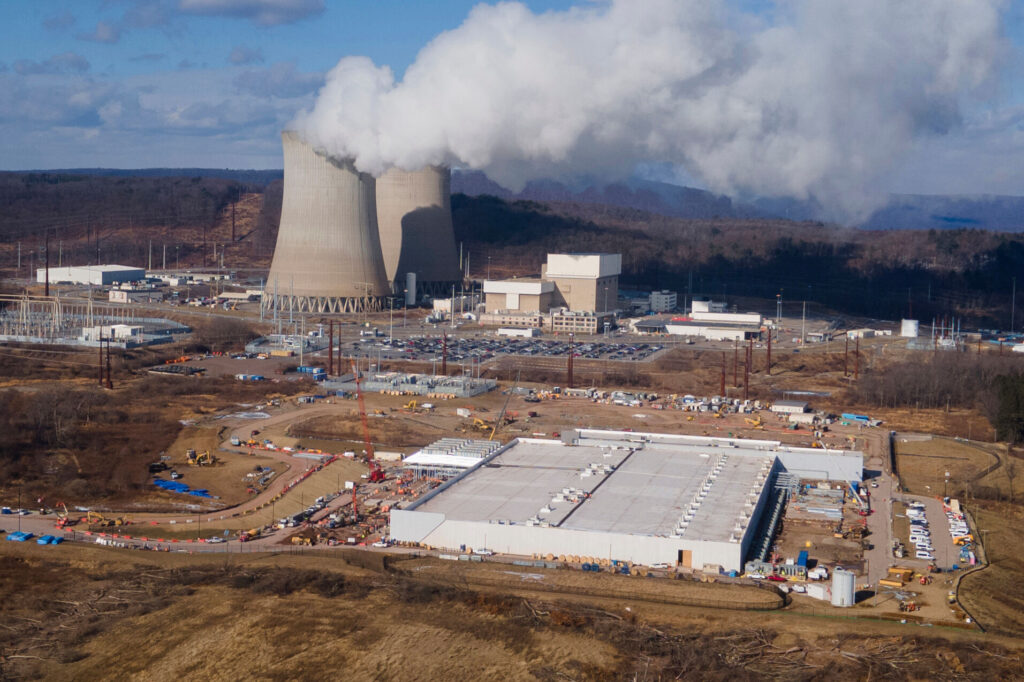
Weld County wades into data center issue
Maren Prince
maren.prince@denvergazette.com
Updated 1 day ago
A county in Colorado seeks to define data centers and clarify where they can be built. Notably, Weld County wants to keep data centers within an industrial or agricultural zones, according to a news release from commissioners. Any new data...
Maren Prince
Reporter

34th annual Wine Festival of Colorado Springs blends flavor with fundraising
April Borjon
april.borjon@gazette.com
Updated 4 days ago
Sweet, bold or a little bitter, however you take your wine, Colorado Springs will be pouring it by the glassful next week. The 34th annual Wine Festival of Colorado Springs returns Wednesday and runs through March 7, bringing four days...

April Borjon
Reporter

Denver launches public process to update energy code, extending standards to single-family homes
Scott Weiser
scott-weiser@denvergazette.com
Updated 4 days ago
Denver launched a public process on Feb. 26 to update its energy code for new and renovated small buildings, including single-family homes and duplexes, that would extend efficiency and electrification-readiness standards that began with energy compliance goals for large commercial...
Scott Weiser
Reporter

Family housing coming to site of former Denver motel shelter
Bernadette Berdychowski
bernadette.berdychowski@denvergazette.com
Updated 4 days ago
More than two years after a motel-turned-homeless shelter in West Denver closed, plans to turn the site into permanent housing are starting to come to life. The Denver Housing Authority and the Colorado Coalition for the Homeless announced it teamed...
Bernadette Berdychowski
Reporter

IDC: Smartphone market set for biggest-ever decline in 2026 on memory price surge
Reuters
reuters@denvergazette.com
Updated 4 days ago
The global smartphone market is poised to suffer its biggest decline ever in 2026, sinking to a more than decade low in shipments, as surging memory chip prices drive up device costs, the International Data Corporation said on Thursday. Smartphone...

Reuters
Reporter
PREV
PREVIOUS

Popular swim area closed at Colorado reservoir due to unsafe level of bacteria
Facebook Twitter WhatsApp SMS Email Print Copy article link Save Facebook Twitter WhatsApp SMS Email Print Copy article link Save The swim area at Aurora Reservoir has been temporarily closed due to elevated levels of bacteria in the water. A reason that this issue exists is due to high water levels in the reservoir at […]
Did Denver's tourism boom end? Report says growth plateaued in 2024
As Denver bounced back from the pandemic, the city saw a boom in tourists that led to a record year in 2023. But last year, the number of tourists stagnated. Denver saw about 37 million domestic visitors in 2024 and generated $10.3 billion in tourism revenue, according to a new report released Wednesday by marketing […]