







Colorado GOP: Governor can’t ‘cry foul’ about federal funding cuts after ignoring warnings
Marianne Goodland marianne.goodland@coloradopolitics.com
Colorado’s House Republican leaders are criticizing Democratic Gov. Jared Polis for not heeding their advice against enacting legislation that could lead to the state losing federal funding.
Earlier this week, Polis announced that the state created a dashboard to track funds that are either being cut or are at risk from the Trump administration, as well as the state’s efforts to protect those funds through legal action. As of June 19, about $76 million in federal funding has been cut, and another $56 million are at risk, while more than $282 million has been reinstated across state agencies, the dashboard showed.
The dashboard also showed federal funding tied to nine of the state’s 20 agencies. It does not yet include the largest source of federal funds: the Department of Health Care Policy and Financing, which receives more than half of the federal funds sent to Colorado, primarily for Medicaid.
Polis said Tuesday the Trump administration is trying to “rip away local and state funding that supports cybersecurity and public safety, helps Coloradans access or charge low-cost electric vehicles, helps people access food and more.”
“This is federal funding that has already been allocated to states by Congress, and now the administration is working to take it away. We are doing everything in our power to protect this funding for Coloradans and local governments, including pursuing legal action when necessary. This dashboard will help increase transparency and accountability,” he said.
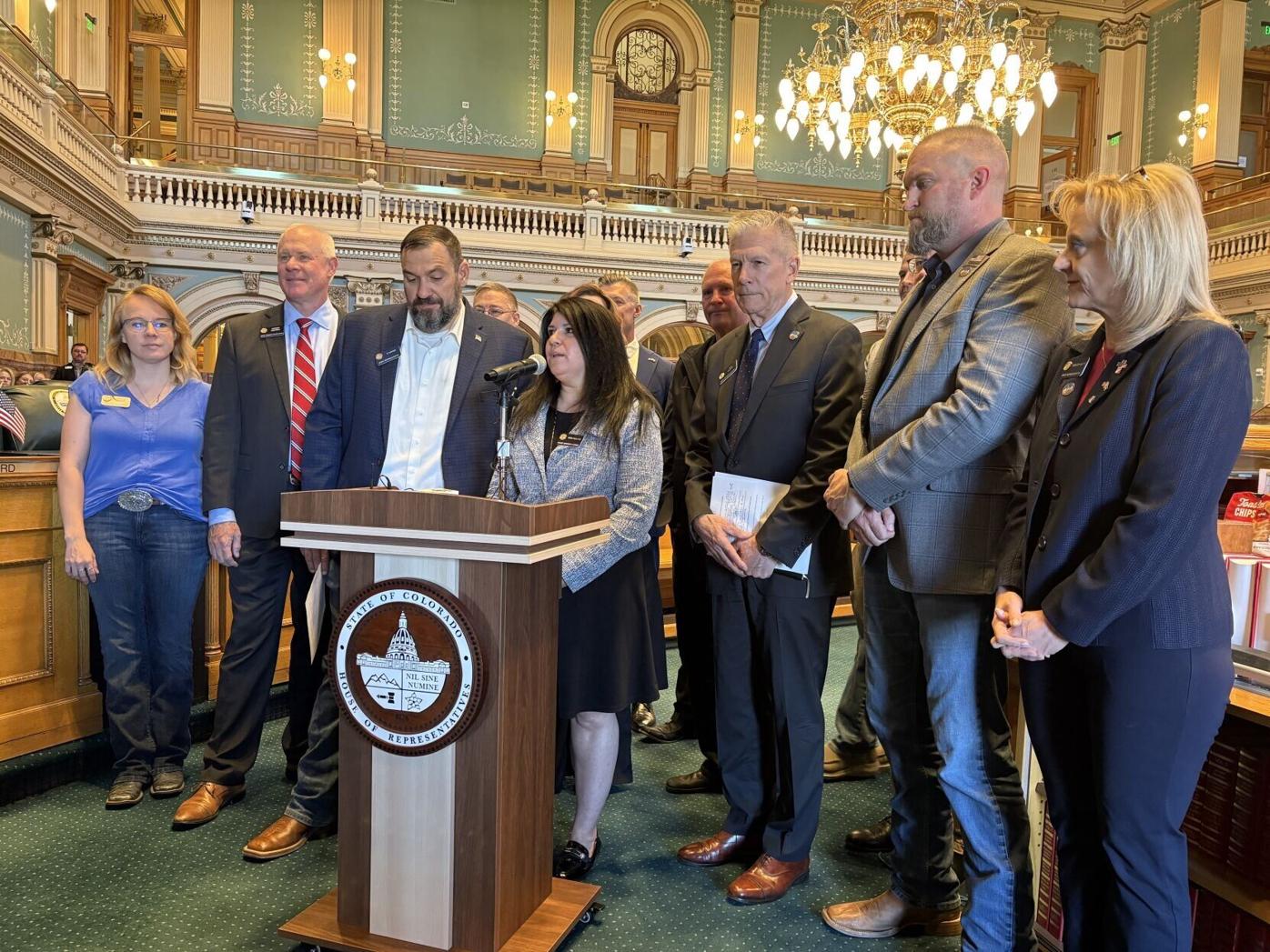
House Minority Leader Rose Pugliese of Colorado Springs and Assistant Minority Leader Ty Winter of Trinidad said they saw all of this coming and tried to warn Polis about it — but that he didn’t listen.
“House Republican leadership identified numerous bills that risked violating federal law and jeopardizing critical funding,” Pugliese and Winter said in a joint news release. “Despite these warnings, the Governor moved forward with signing the legislation, knowing the risks to Colorado’s fiscal health.”
Among those bills is Senate Bill 276, which limits federal immigration authorities’ access to certain buildings, such as schools and churches, and prohibits law enforcement from disclosing information about inmates’ immigration status to federal authorities. Polis signed the bill into law last month.
Supporters of the measure argued that it would help ensure the civil rights of all Coloradans are protected, regardless of their immigration status.
Republican lawmakers warned it would lead to funding cuts from the federal government, as Trump has issued an executive order threatening to withhold funding from “sanctuary cities.” While the governor has maintained that Colorado is not a “sanctuary state,” the Department of Homeland Security has designated several cities, including Denver, Aurora, Boulder, and Durango, as “sanctuary” jurisdictions.
“We’re gonna lose money on this because it is the federal government’s role to enforce federal immigration law and what we are trying to do is we are trying to roadblock that for them,” Rep. Jarvis Caldwell, R-Colorado Springs, said during a House debate on the bill in May.
In March, Pugliese and Winter, sent Polis a letter that identified several bills they believe could risk federal funding cuts if passed. They said they offered amendments that would have repealed the measures if they risked federal funding, but those proposed changes failed to pass.
“Governor Polis cannot now cry foul,” said Winter. “Our letter, the rejected amendments, and repeated floor debate made it absolutely clear that the majority’s legislative agenda would trigger federal consequences. The Governor had the chance to veto these bills — and he did not.”

Colorado lawmakers tackle legislation on sexual assault
Jenny Deam
jenny.deam@gazette.com
Updated 2 hours ago
A panel of Colorado lawmakers on Monday unanimously approved a bill that supporters say will offer protections and support to victims of domestic violence, stalking, sex trafficking and sexual assault, including mandatory training for law enforcement on trauma. The measure,...

Jenny Deam
Reporter

Denver adopts face mask ban for law enforcement
Deborah Grigsby
deborah.smith@denvergazette.com
Updated 3 hours ago
Members of the Denver City Council unanimously approved an ordinance Monday that prohibits law enforcement officers, including federal immigration agents, from wearing a mask or face covering while interrogating, detaining, or arresting an individual within Denver, including in city-owned buildings....

Deborah Grigsby
Reporter

More than 20 Colorado counties receive grants to improve land record-keeping systems
Maren Prince
maren.prince@denvergazette.com
Updated 16 hours ago
More than 20 Colorado counties received $2.5 million to improve their land record-keeping systems, according to a Monday news release. The State’s Electronic Recording Technology Board awarded 22 counties with grants ranging from $5,000 to $350,000, according to the release....

Maren Prince
Reporter

Denver among top 5 finalist cities for 2028 DNC
Deborah Grigsby
deborah.smith@denvergazette.com
Updated 3 hours ago
Denver is among the five cities that could host the 2028 Democratic National Convention, the Democratic National Committee announced Monday. Along with Denver, Philadelphia, Atlanta, Boston and Chicago have advanced in the application process to host the next DNC, which...
Deborah Grigsby
Reporter
Colorado Senate swears in Adrienne Benavidez after SD 21 vacancy win
Marianne Goodland
marianne.goodland@coloradopolitics.com
Updated 19 hours ago
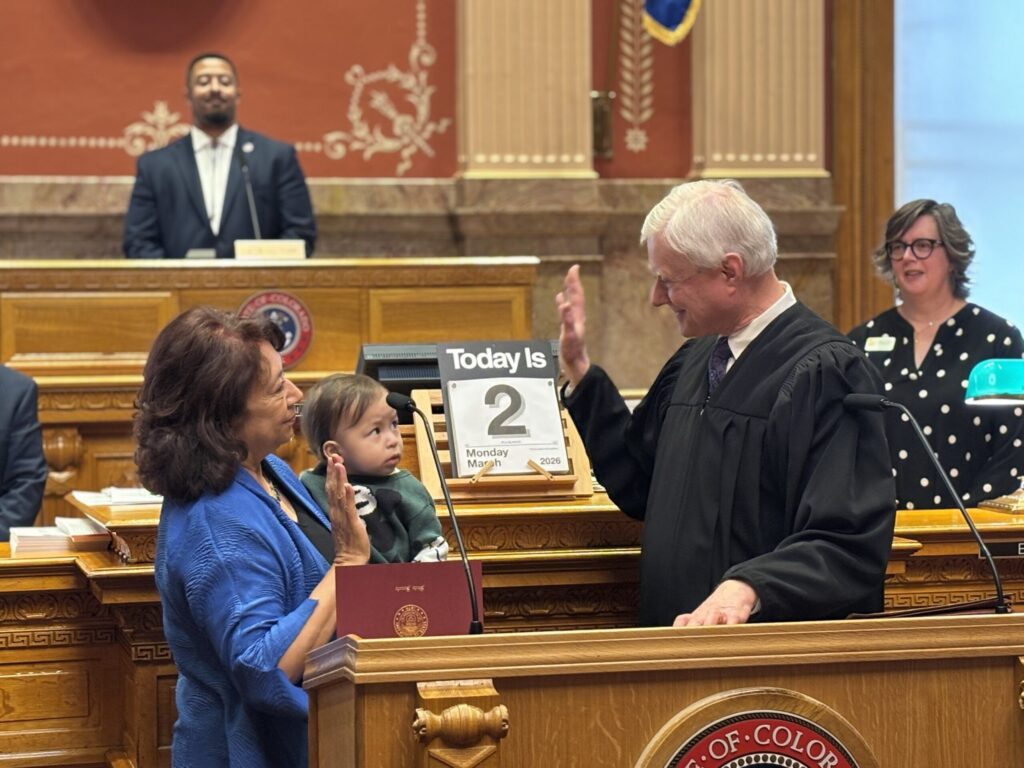
Sen. Adrienne Benavidez, D-Adams County, was sworn in Monday to the Colorado Senate, just four days after winning a vacancy election in District 21. She was sworn in by Colorado Court of Appeals Justice Lino S. Lipinsky de Orlov. Usually,...

Marianne Goodland
Reporter
Colorado Senate swears in Adrienne Benavidez after district vacancy win
Marianne Goodland
marianne.goodland@coloradopolitics.com
Updated 18 hours ago
Sen. Adrienne Benavidez, a Democrat from Adams County, was sworn in Monday to the Colorado Senate, just four days after winning a vacancy election in District 21. She was sworn in by Colorado Court of Appeals Justice Lino S. Lipinsky...
Marianne Goodland
Reporter

Aurora, Holmes reach settlement in First Amendment lawsuit
Kyla Pearce
kyla-pearce@denvergazette.com
Updated 3 hours ago
Aurora officials and activist MiDian Holmes (Shofner) announced a settlement Monday in a First Amendment lawsuit filed by Holmes almost a year ago. The lawsuit claimed the decision by Aurora City Council members to end public comment pending a decision...

Kyla Pearce
Reporter

Denver mayor says his commute time tripled following ‘road diet’ change
Mark Samuelson
mark-samuelson@denvergazette.com
Updated 3 hours ago
Mayor Mike Johnston is pushing back sharply against the claim by Denver councilmembers and bike activists that the city succumbed to lobbying pressure in revising a “road diet” plan for East Alameda Avenue, while noting that his own commute time...

Mark Samuelson
Reporter

Rural legislators, Colorado farmers defeat pollinator bill backed by Gov. Polis
Marianne Goodland
marianne.goodland@coloradopolitics.com
Updated 19 hours ago
A proposal to limit the use of neonicotinoid-coated crop seeds collapsed in the Senate Agriculture and Natural Resources Committee last week, as rural lawmakers, including two Democrats, joined Republicans to reject what they called an expensive, impractical mandate on farmers....
Marianne Goodland
Reporter

Competing overtime bills for agriculture workers split Colorado Democrats
Marianne Goodland
marianne-goodland@denvergazette.com
Updated 23 hours ago
Competing bills setting the overtime threshold for farmworkers have split legislators at the Colorado state Capitol, with one group saying a law passed in 2021 has harmed, rather than helped, farming operations and workers alike, while the other side insists...

Marianne Goodland
Reporter