







Colorado proposal seeks to double income tax rate for taxpayers who earn at least $1 million

Voters last approved Amendment H which created a new process for investigating and disciplining judges. In this file photo, people cast their votes at the McNichols building in Denver on Tuesday, Nov. 5, 2024. (Stephen Swofford, Denver Gazette)
Stephen Swofford Denver Gazette
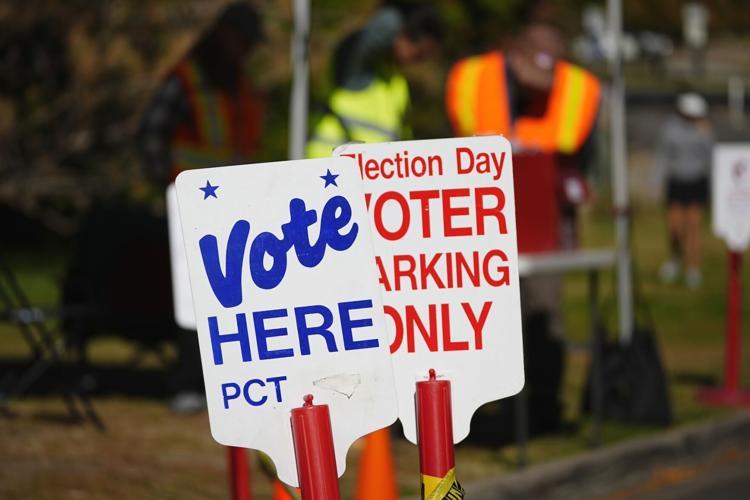
Voters could see a proposal to more than double the income tax of Colorado residents who earn at least $1 million, which would raise more than $1 billion each year from this category of taxpayers.
The proposal also seeks to decrease the tax obligation of people who earn $100,000 or less, while maintaining the rate for residents whose income falls in between those two prongs.
Colorado has a flat income tax rate. Assuming the proposal made it to the ballot and voters approved it, Colorado’s top marginal rate would rival the highest-taxed states in the western region, rivaling Oregon and approximating California. Several of Colorado’s neighbors — its direct economic competitors in the region, notably Nevada and Texas — don’t levy income taxes.
The proposal would also allow the state to retain and spend all of the revenue generated by the tax hike.
Michael Fields of the group Advance Colorado said a survey outlined the proposal.
The survey asked voters if the state should increase the income tax rate from 4.4% to 9.5% for individuals who make over $1 million a year, decrease the rate to 4.2% for those who make $100,000 or less, and maintain the tax at 4.4% for people whose income falls between $100,000 and $1 million annually.
The proposal, it appears, is meant to generate support among the widest swath of voters by opting to increase the tax only for Coloradans making at least $1 million, while reducing obligations for people who earn a tenth of that amount.
The measure could appear on the 2026 ballot, as the deadline for measures to show up in this year’s election already passed. Since the proposal would change the state constitution, it would require a 55% majority vote.
The group Fair Tax Colorado attempted to place a similar measure on the 2020 ballot, but it failed to get the required number of signatures.
Fields — whose group is planning several initiatives for the 2026 ballot, such as a proposal to require the state to obtain voter approval to create any enterprise with a projected revenue from fees and surcharges of over $100 million in its first years — said the teachers’ union is also considering increasing the income tax rate for individuals who make over $300,000 instead.
“From what I am hearing, they are very serious about bringing this to voters next year,” he told Colorado Politics.
It is not immediately clear which union exactly is leading the effort, but Fields said he believes it’s the Colorado Education Association, the state’s largest teachers’ group. The union represents nearly 40,000 K-12 educators.
The Colorado Education Association did not respond to requests for comment.
While Colorado eliminated what’s called the “budget stabilization factor” last year, many legislators and advocates insisted the state remains short of fully funding K-12 education. Some have explored a variety of ways to pump more money into K-12 education, including increasing taxes on higher-income earners.
State funding is among the main sources of revenue for public schools in Colorado. Schools also receive a significant amount from local property taxes.
Business entities, which have already complained about fee increases and the number of regulations in Colorado, are likely to oppose any proposal to increase in the income tax, while progressive groups, who have argued that Colorado’s fiscal system limits what the state can spend for programs, are likely to back it.
Colorado voters have voted to reduce the income tax rate over the years. They lowered it anew — to the current rate of 4.4% — in 2022.
According to an analysis by the Bell Policy Center, a graduated income tax rate of 4.2% for individuals earning under $100,000, 8.5% for individuals earning between $750,000 and $1 million, and 9.5% for individuals making over $1 million would increase taxes by about $21,000 for individuals who earn between $1 million and $2 million.
Those who report incomes between $2 and $5 million would see their taxes hike by about $103,000, according to the analysis.
While federal income tax rates are dependent on earnings, Colorado and about a dozen other states adopted flat income tax rates, meaning everyone pays the same percentage, regardless of income. Colorado had a graduated income tax rate until 1987, and in 1992, the Taxpayer’s Bill of Rights enshrined the flat tax requirement into the state’s constitution.
Reports earlier said Democrats were mulling a graduated tax during this year’s legislative session, although no bill was introduced to achieve that aim.
Assuming organizers succeeded in getting it on the ballot, the income tax proposal outlined in the survey won’t be the only tax issue before voters.
Colorado residents earning $300,000 or more would see their tax obligations go up by several hundred dollars a year under another ballot measure aimed at raising more money for a school lunch program offered to all K-12 students for free.
A separate ballot measure would allow the state government to keep all revenue collected for the free lunch, instead of refunding them to residents.
The revenue from both pots would go toward the “Healthy Meals For All program,” an initiative that voters passed in 2022 that’s been running on a deficit. Initial cost estimates fell well short of the funding needed to pay for free school lunches to all students.