







Realness Project teaches exiting inmates ‘the art of being human’ | Vince Bzdek

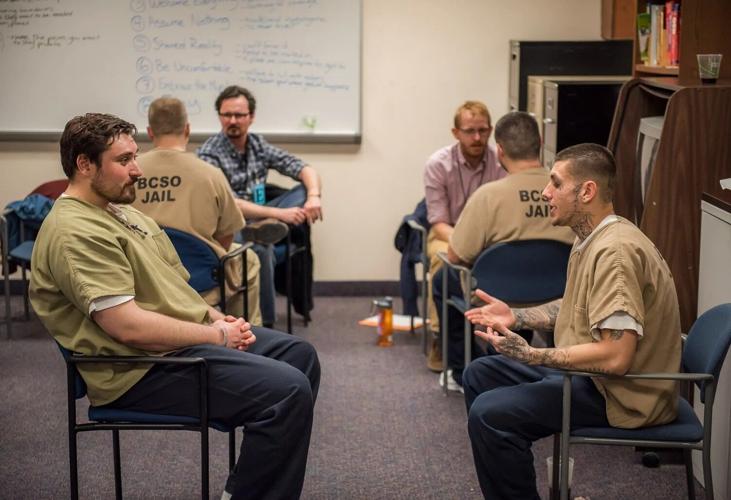
Realness Project workshops focus on changing how inmates relate to others and manage conflicts.
Photo courtesy of The Realness Project

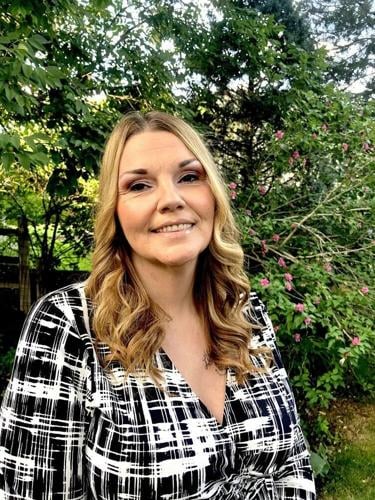
When Shawna Pierson was incarcerated at La Vista Correctional Facility, she thought she knew everything. “I was at a place where I was kind of indignant. Nobody could really teach me anything. I had it all figured out,” she told me in an interview.
She said she was “hurting people, breaking them down and destroying them and thinking the world revolved around me. That’s how I walked myself into prison.”
Once in prison, she immediately found herself in conflict with another woman inside. Her problems followed her in.
And then, rather randomly, she noticed a flier on the prison’s bulletin board for something called the Realness Project.
“It was talking about better relationships, being able to connect with other people. And I felt like, ‘You know what, I don’t know if I do have that. I’m not sure if I’m good at that.’ And so there was just this small little inkling of ‘OK, fine, fine, I’ll try.’”
Turns out, when she went to the class, she was paired up with the woman she had a conflict with.
“And through the exercise that we had to participate in, I was able to get past what I couldn’t get past with her, and it changed everything,” Pierson said. “It changed the way I interacted with this woman that I had so much disdain for. And then it changed something inside me because I was like, if I could change this much, just this one time with this one interaction with this one person, what could I do with all my other relationships?”
Programs for prisoners run the gamut, from helping them learn new job skills, participate in group therapy, train to apply for jobs or expand their education.
But the Realness Project focuses on changing how inmates relate to other people, how they manage conflict and how to be a human being.
Does it work?
Colorado’s overall recidivism rate is one of the highest in the country at about 45 percent, which means nearly half the prisoners who get out of Colorado’s prisons end up going back in.
For graduates of the Realness Project like Shawna, that rate is 6 percent. Let me repeat that — 6 percent. Colorado releases about 16 inmates from its overcrowded prisons every day. About eight of those people are going to end up back in jail. If those 16 had all taken the Realness Project’s courses or workshops, only one would have ended up back in jail.
Turns out private companies like the Realness Project, Breakthrough and Second Chance Center are doing a better job preventing ex-offenders from relapsing than the government is.
While the Realness Project focuses on interpersonal skills, the Breakthrough program focuses more on getting inmates work, teaching them how to start a business, build a resume and interview for a job. Second Chance focuses on employment, education and housing resources. The nonprofits often partner with each other to provide wraparound support.
Yet the state gives no money to the Realness Project or other nonprofits that are finding hard-earned success in reintegrating offenders back into society.
“You know, one thing that’s confusing and upsetting about our state prison system is it’s our (taxpayer) funds that are going into it,” said Laurie Lazar, executive director of the Realness Project. “But I feel it’s not a very transparent system that we have. It’s very opaque and hard to know what’s really happening and get answers on that.”
Why not, for instance, help fund programs that are working? Of course, it could be argued that these programs are working because the government isn’t involved.
Grants and donations keep these organizations going (the Realness Project has a big fundraiser coming up Nov. 15). But given how overcrowded our prisons are, it’s a crime the state doesn’t support them better.
Just last Saturday, state corrections leaders notified outside officials that Colorado’s prisons are so full they must speed up the release of prisoners and reduce the prison population. They are required to do so by a new law that has been triggered for the first time because the prison system’s vacancy rate has remained below 3% for 30 consecutive days. So a bunch of prisoners are about to be released before they really should be.
Wouldn’t you think that a grossly understaffed prison system bursting at its seams would do everything it could to reduce its population by keeping prisoners from reoffending?
In an exhaustive study on Colorado’s recidivism rate, The Common Sense Institute found that “each year in Colorado, an estimated 6,000 individuals return to communities after being incarcerated, equivalent to 20% of Colorado’s annual average labor force growth of 30,000 over the last three years. The vast majority of those returning hope to work, but are unable to find adequate employment. This outcome can lead to increased reliance on public benefits and higher recidivism rates, both of which increase the cost burden to Colorado.”
The report found that “organizations working to ensure formerly incarcerated individuals succeed post-release have shown that, with the proper support and investment, former prisoners can meaningfully contribute to society and help the state reduce costs.”
As of a few weeks ago, the Realness Project had delivered workshops to nearly 1,200 men and women in the Colorado Department of Corrections. There are now waiting lists to get into Realness courses. Clearly, something is working.
“There’s been all these studies done, these criminogenic studies about criminogenic factors and why people recidivate,” Lazar said. Studies that look at why offenders reoffend, in other words.
The studies came up with eight factors. “And more than half of them point to … relationships and communication being the most important thing, whether it’s at home or at work,” Lazar said.
“Prison has its own culture,” Lazar observes. When people are released, “they get into a new environment where it’s different, the rules are different now, and they have to adjust to all that. And it’s all about relationships and communication. And conflict management from the minute they get out.”
And if the released offender is lucky enough to land a job, the workplace has a whole new set of rules. “And they have a boss, the same as having a CO, or the staff in prisons. Should they treat them the same way?” Lazar asks.
Most freshly released offenders can’t handle all those new pressures. “And then they just go back to drugs and alcohol because they lost their job and they don’t know what to do or something goes wrong at home with their partner or their kids,” said Lazar.
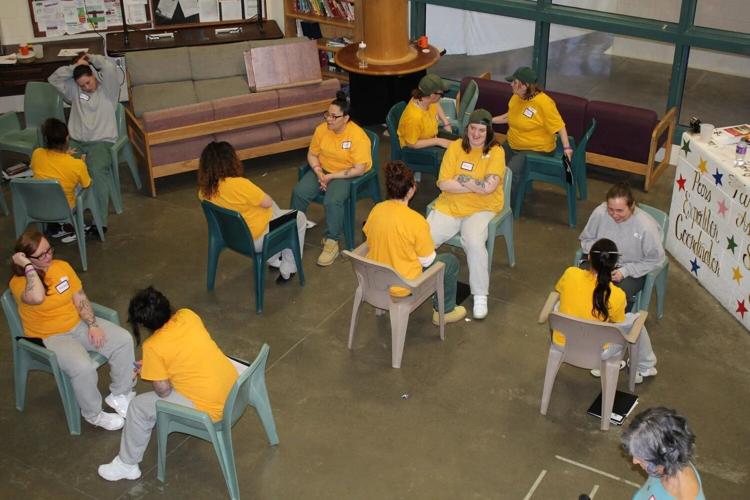
The key to the Realness Project courses is that they are experiential. Inmates have to practice talking to each other effectively, resolving conflicts with each other and being part of a community.
“In these courses, people actually are learning to trust other people and have authentic relationships that are not based on transactions,” Lazar said.
Pierson can attest to the effectiveness of the approach. The Realness Project has “different activities where they actually practice … and they get to see it in real time. And doing it is way different than hearing about it.”
As a facilitator in training and peer support specialist for the Realness Project now, Pierson acts as a liaison between those who are currently incarcerated and those who serve on the Realness leadership team.
She is also a mother and grandmother again.
“I was able to come out, use these things to change my life, get my kids back. Get a job in the real world, get my life back together and build relationships,” she told me. She managed a salon in Highlands Ranch after she was released, but her goal is to work for The Realness Project full-time. She wants to use her own lived experience to save other lives.
Why did getting Real save Shawna’s life?”
“Um. Well, because it’s the art of being human,” she answers bluntly, “and it’s allowed me to understand that. That I could take off my mask … It felt scary, but it also felt good, because it was like, wait a minute, you mean that I really just get to be real? I really just get to be authentic, and that’s OK, and you’re creating a space to give me permission for that? That felt right, you know? That’s who I wanted to be.”

Chevron faces $1.75 million proposed penalty for Galeton Well blowout
Scott Weiser
scott-weiser@denvergazette.com
Updated 15 seconds ago
The Colorado Energy and Carbon Management Commission proposed a $1.75 million penalty against Chevron for a well blowout last year at the Bishop A07-01 pad near Galeton. The cleanup could take four more years. The 2025 blowout sent contaminated fluids...

Scott Weiser
Reporter

Live Well: Fall back in love with your ticker this month
Jennifer Mulson
jennifer-mulson@denvergazette.com
Updated 11 hours ago
Well, well, well, you thought you were going to get away without me mentioning your heart health this month, didn’t you? I don’t mean to be a downer, but the stats are sobering. According to the Centers for Disease Control...

Jennifer Mulson
Reporter

Colorado Medicaid probe uncovers millions of dollars in alleged transport fraud ring
Nicole C. Brambila nico.brambila@denvergazette.com
nico.brambila@denvergazette.com
Updated 11 hours ago
Colorado Medicaid officials detected $25 million in abnormal billing over just four months two years ago — a surge that prompted a new state law and the suspension of dozens of providers in what authorities now describe as an organized...

Audit finds Caring for Denver Foundation misused taxpayer funds
Michael Braithwaite
michael.braithwaite@gazette.com
Updated 5 days ago
An audit of a nonprofit contracted by Denver to manage a fund intended for social services found the organization misused taxpayer dollars. The Caring for Denver Foundation, under a contract by the Denver Department of Public Health and Environment (DDPHE),...

Michael Braithwaite
Reporter

Colorado Medicaid spending doubled over the past decade, study finds
Nicole C. Brambila nico.brambila@denvergazette.com
nico.brambila@denvergazette.com
Updated 4 days ago
Spending by Colorado’s Department of Health Care Policy and Financing reached $16 billion in 2025 — a 101% increase from 2015 — while Medicaid enrollment has returned to nearly its 2015 level, according to an analysis by a think tank....

Doctors increasingly see AI scribes in a positive light, but hiccups persist
Michelle Andrews
michelle-andrews@gazette.com
Updated 6 days ago
Michelle AndrewsKFF Health News When Jeannine Urban went in for a checkup in November, she had her doctor’s full attention. Instead of typing on her computer keyboard during the exam, Urban’s primary care physician at Penn Internal Medicine practice in...

Michelle Andrews
Reporter

Colorado lawmakers target ‘ghost networks’ to expand access to mental health care
Marissa Ventrelli
marissa-ventrelli@denvergazette.com
Updated 2 weeks ago
A few years ago, the U.S. Senate Committee on Finance conducted a “secret shopper” survey on health insurance plans across six states, including Colorado. Of the 120 providers called, one-third were either inaccurately listed in the carrier database, out of...

Marissa Ventrelli
Reporter
Trump administration plans to hold back grant money from Colorado, 3 other states
Thelma Grimes
thelma.grimes@coloradopolitics.com
Updated 2 weeks ago
The Trump’s administration is planning to withhold some public health and transportation money from a group of Democratic-led states, including Colorado. The other states are California, Illinois and Minnesota. Full details have not been released, including whether the states could...

Thelma Grimes
Reporter
Denver Gazette reporter injured in scooter crash examines Denver’s e-scooter safety
Nicole C. Brambila nico.brambila@denvergazette.com
nico.brambila@denvergazette.com
Updated 2 weeks ago
My last scooter ride was my last. It ended the way far too many electric scooter rides in Denver do — in the hospital. On New Year’s Eve — while much of the city was toasting with champagne or watching...

Colorado budget writers put Medicaid caregiver pay cuts on hold
Marissa Ventrelli
marissa-ventrelli@denvergazette.com
Updated 2 weeks ago
The Colorado General Assembly’s budget decision-makers have put proposed pay cuts on hold for people who care for a family member with a disability who receives Medicaid. The Joint Budget Committee made the decision after hours of testimony from family...
Marissa Ventrelli
Reporter
PREV
PREVIOUS

COVID-19 cases rise as students return to school in Denver
The COVID-19 virus is starting to rise just as students in the metro Denver area head back to school. Denver Public Schools (DPS) is one of the last school districts to start with Monday the first day of classes for most campuses. “We are seeing increases in emergency department visits and the percent positivity, as […]

Colorado lifts prescription requirement for COVID-19 vaccine ahead of respiratory season
Facebook Twitter WhatsApp SMS Email Print Copy article link Save Colorado’s Chief Medical Officer on Wednesday issued an order allowing pharmacies to provide the COVID-19 vaccine without a prescription ahead of the respiratory disease season. The state is one of 14 states with strict guidelines that require a prescription for vaccination when the Centers for […]