







Progress on new trail up Colorado 14er
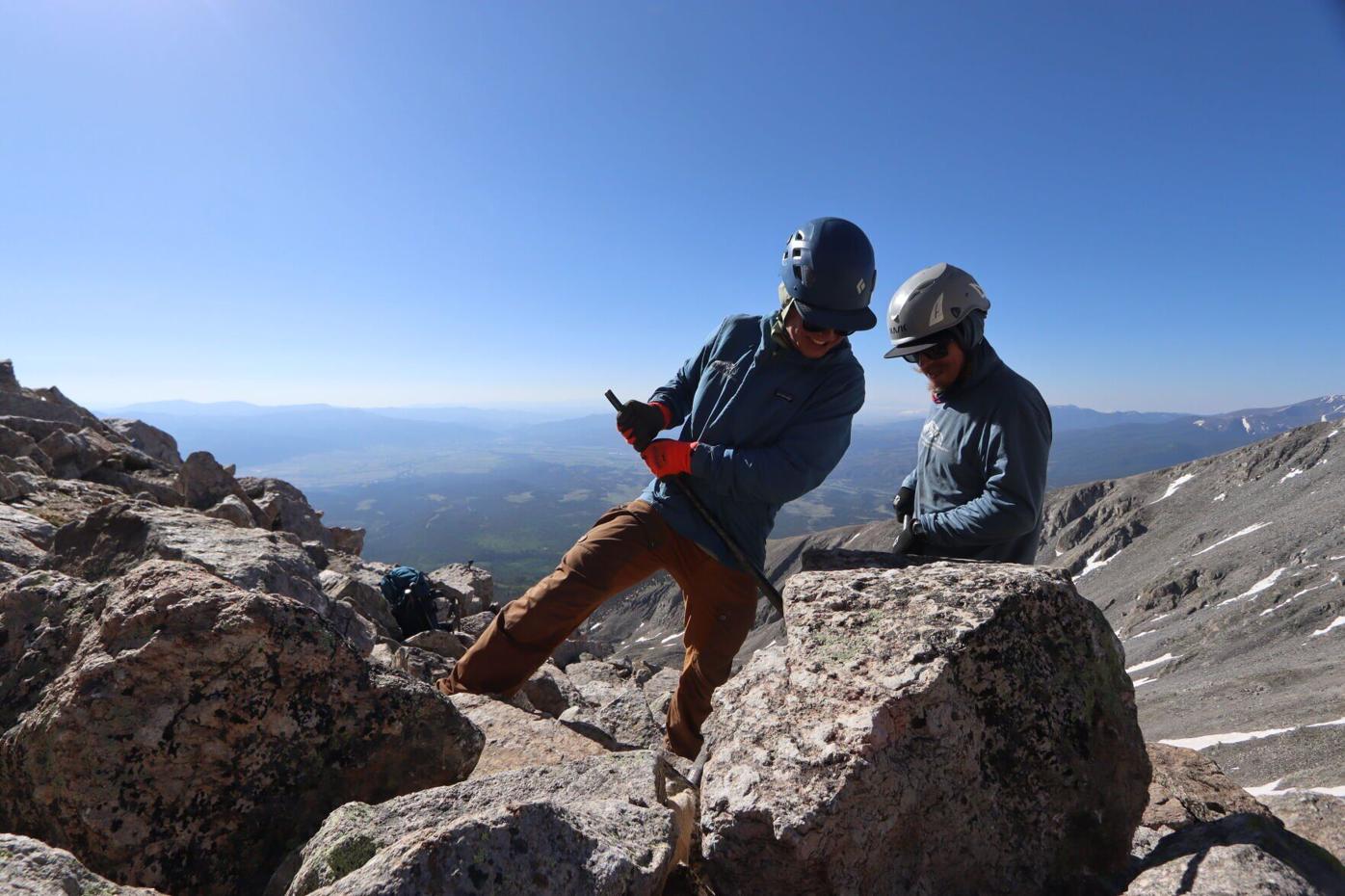
Photo courtesy Colorado Fourteeners Initiative
A new trail continues to take shape on a 14,000-foot mountain in Colorado.
Near the end of a fourth season of work, Colorado Fourteeners Initiative (CFI) has announced opening another rerouted section of the path up Mount Shavano. The nonprofit is counting more than 1 1/2 miles of new trail finished across the mountain’s lower and upper flanks.
CFI is marking construction complete in the lower woods, where the new segment ties into the preexisting route. The middle section is meeting the reroute above timberline, where work will continue next summer.
CFI Executive Director Lloyd Athearn has called it “the biggest, gnarliest project that CFI has ever undertaken.”
Heading into this summer, he described “complex rock engineering” required on the upper reroute. From their camp, workers would be hiking more than 3,000 feet up to the site, Athearn added.
“So for people who think it’s a big accomplishment to climb a fourteener, every day our upper crew will be essentially climbing a fourteener and then picking up tools and moving rocks,” he said.
The work has been eyed since 2012, when CFI compiled a “report card” assessing trail conditions on the state’s 54 fourteeners. Shavano received the worst grade due to “significant problems regarding overly steep grades, proximity to a creek that floods annually in the early season, extensive erosion and a proliferation of trail braids on the ill-defined approach to the summit.”
The idea was to build a trail away from erosion-prone grades, with timber and stone structures aimed at handling water and thousands of trampling feet every year. Privately held mining claims kept that work from happening — until CFI racked up funds to buy the properties in what was an unprecedented move for the organization dating back to 1994.
New construction on Shavano launched in 2022, with an estimated timeline of six years. Plans have called for new “bypass” trails totaling 3 miles, another 1 1/2 miles of “heavy reconstruction in three sections of the existing route” and the closure and restoration of 2 1/2 miles of the current route being bypassed.