







Debate over spearfishing in Colorado continues as petition is rejected
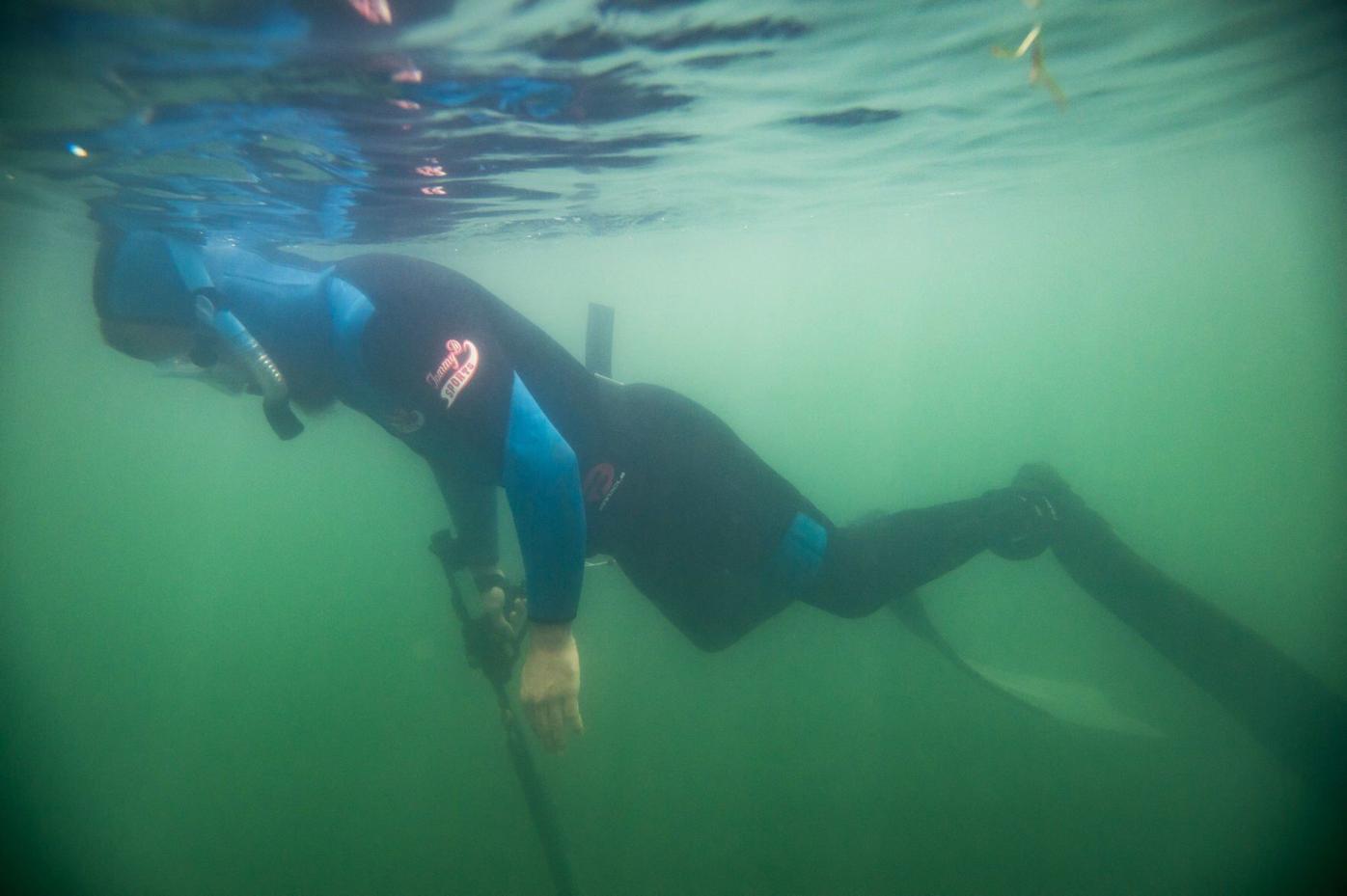
the Gazette file photos
Divers with spearguns won’t be swimming and fishing in more Colorado waters anytime soon.
That’s after the Colorado Parks and Wildlife Commission’s recent, nearly unanimous decision to deny a petition to expand spearfishing around the state.
CPW officials supported the petition that would have launched a three-year pilot allowing spearfishers more opportunities at 16 popular fisheries, including Lake Pueblo, Horsetooth Reservoir, Lake Granby and Twin Lakes. But CPW’s rules-setting body declined to move the pilot forward, siding with opposition that has long stood against the spearfishing effort.
The effort goes back about a decade, said Austin Rickard, who has led the push the past few years. He manages a Grand Junction dive shop and leads the Colorado Spearfishing Club. The club is small, much like the form of underwater fishing itself.
According to an analytical paper included with the petition, CPW annually issues about 900,000 fishing licenses, and “only about 100 individuals — or potentially fewer — actively participate in freshwater spearfishing.” Due to bans on swimming and/or diving across fisheries, “the opportunities for divers are highly constrained,” the paper reads.
Where diving is allowed, the state has granted spearfishing invasive northern pike and carp. To an extent, Lake Pueblo has allowed catfish and wipers.
“So we’re only allowed two game species and two invasive species,” Rickard told The Gazette.
He petitioned for one fish per species per day across more lakes and reservoirs. This was detailed in the proposal that cited data from other states suggesting no harm to habitat. Nebraska, New Mexico and Utah have reported small fractions of spearfishers compared with rod and wheel anglers.
“What we’re trying to show CPW as well as the general angling community is that we’re not an impactful sport at all,” Rickard told CPW commissioners.
They were unconvinced.
Along with one fish per species, the proposal outlined size limits. How could divers properly identify type and size? commissioners asked.
Conventional anglers could release a wrongly caught fish, while the spear kills, Commissioner Jessica Beaulieu noted. While spearfishing proponents have trumpeted a role in conservation — a way to control invasives — other anglers see the spear as a direct violation of catch-and-release ethics.
Beaulieu also questioned enforcement and safety. “How this might interfere with swimmers, anglers and boaters,” she said. “We’re talking about highly populated waters here.”
In terms of enforcement, CPW’s Matt Nicholl said: “My staff felt like, given the small numbers and what they had seen from other states, that we could handle that, at least for this three-year (pilot) period.” Nicholl, assistant director of the agency’s aquatic wildlife branch, added that biologists expected “negligible” impacts from spearfishing.
Maybe so, said Commissioner Dallas May. “But what I see … you have the ability to seek out fish that may be seeking a refuge, and that refuge is greatly disturbed. That doesn’t happen with rod and wheel.”
While others fished by boat or shore, spearfishers could reach bigger fish lurking in depths, other commissioners pointed out. This echoed points Rickard said he has repeatedly heard over the past decade of advocacy: “Across the board it’s, ‘Spearfishing is not a sport, it’s cheating, you’re gonna kill all of our large fish,'” he told The Gazette.
The debate is poised to continue.
The latest proposal was the second Rickard had worked on, following a mentor years before him. Rickard sounded ready to try again.
“Hopefully this time next year we’ll have something in the works,” he said.