







Space Force guardians key in bombing Iran, future training calls for aggressor satellites
Space Force guardians played a critical role in ensuring B-2 Spirit stealth bombers hit three Iranian nuclear sites with bunker-buster bombs in June by providing navigation and ensuring the planes could come and go safely.
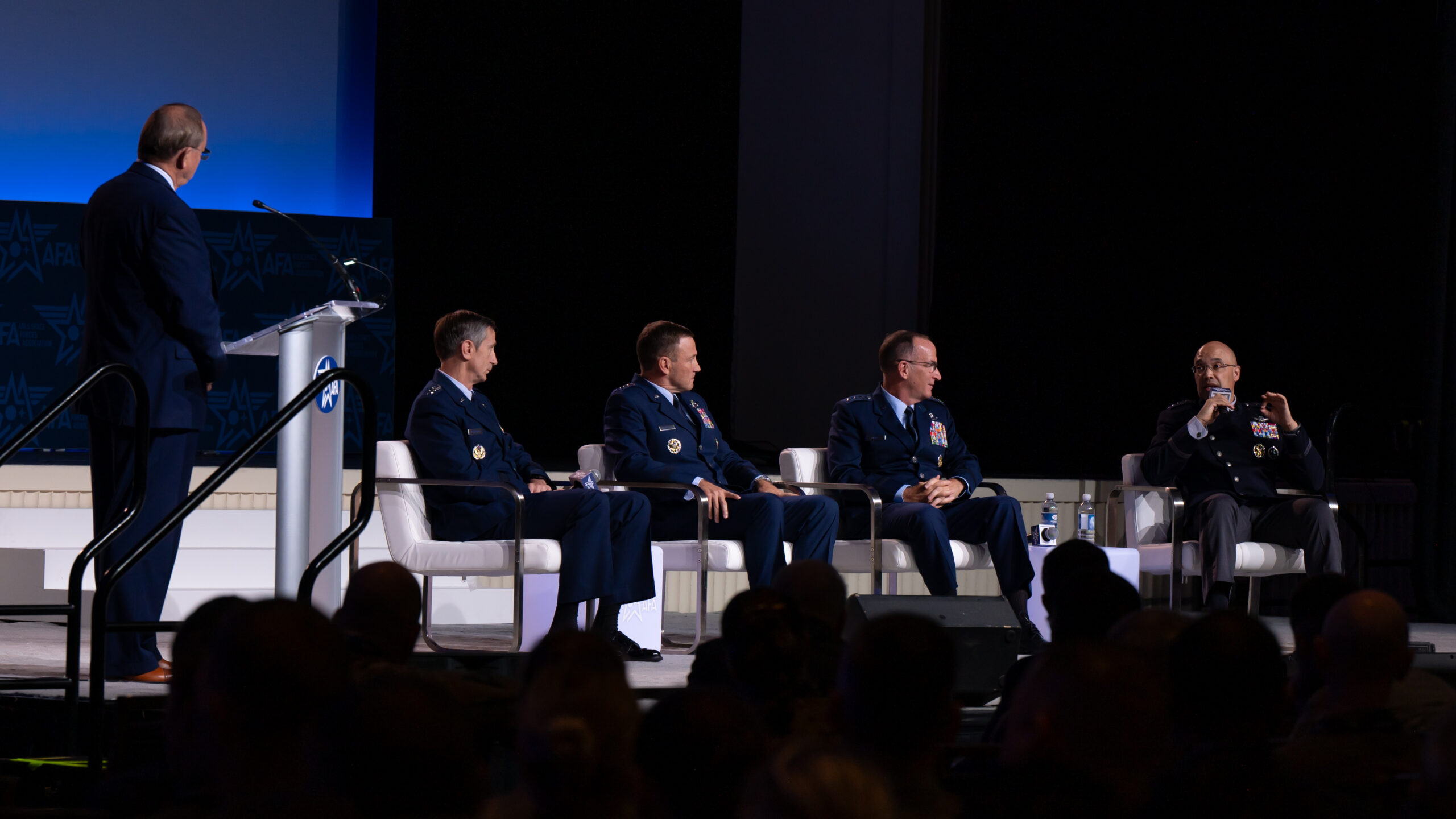
The leader of Space Operations Command, Lt. Gen. David N. Miller, Jr., highlighted their contribution during the Air Space and Cyber Conference in Maryland as part of a panel that also covered improvements to training.
“There was a lot that happened from the space warfighting infrastructure in order to facilitate (Midnight Hammer). So much so that last month, the 509th Operations Group Commander came out to Peterson (Space Force Base) to talk to the teams, whether that was the (navigation war) team that was supporting them, ensuring GPS-enabled weapons can arrive on target, or the Electromagnetic Warfare Team that’s providing covering fires in order to support the ingress and egress of B-2s,” Miller said.
“It is the first time we’re able to say, there were electromagnetic warfare forces employed in association with that mission, task organized, trained and equipped, specifically focused on ensuring those B-2s got in and got out,” he said.
Miller did not elaborate on how electromagnetic warfare was used during the mission. It can be used to interfere with radar that would pick up planes and to jam GPS location signals.
Electromagnetic warfare has taken center stage because of the war in Ukraine, Gen. Chance Saltzman, chief of space operations, said during the conference, underscoring the importance of space.
“Recent events in Ukraine highlight what conflict – and daily life – looks like if we lose our edge in space. Leaders will struggle to command formations without space-enabled communications. Prolific GPS jamming will cripple civilian infrastructure, forcing society back into its analog past,” he said.
Air Force Secretary Troy Meink said that while the U.S. likely stood on the sidelines for too long as other nations weaponized space, the country is now pushing hard to modernize.
“Every single mission area that the Air Force and the Space Force have to do are in the progress, or in the midst of being modernized,” he said.
Amidst that effort, the Space Force is changing how it trains guardians to be prepared.
Over the next year, the force expects to increase the content and frequency of its training, Miller said.
Across the Space Force’s “68 different bespoke weapon systems,” there are some really high-fidelity training systems that are lacking, Miller said.
The Space Force is building new ranges, both physical and digital, to help support training, said Maj. Gen. Jim Smith, who leads Space Training and Readiness Command, which is headquartered in Florida. The command was provisionally headquartered in Colorado Springs and moved over the summer.
Saltzman also told reporters during the conference last month that he wants to put aggressor satellites in space that would allow guardians to train, Defense One reported.

Additional digital training options also have value, Smith said.
“There’s a lot of tests that we need to do that maybe we don’t want to do in an environment where it can be openly observed, or we just don’t have the capability to execute in an open and real-world environment,” Smith said.
The new System Delta 81, headquartered at Peterson Space Force Base, stood up in early September and will support Space Training and Readiness Command in developing new training tools through operational testing, combat training and tactics validation, a news release said.
The new unit will work with field commands, the intelligence community, laboratories and others on tools for the Space Force.