







Appeals court declines to overturn defendant’s ‘3 strikes’ sentence
Colorado’s second-highest court concluded on Thursday that a defendant was sentenced under the state’s “three strikes” law in a manner that did not comply with the U.S. Constitution, but the mistake did not require reversal.
Known as the Habitual Criminal Act, Colorado’s law requires judges to impose three or four times the maximum sentence if a defendant is convicted of a felony and has multiple prior felonies. However, those prior convictions must arise “out of separate and distinct criminal episodes.” Before 1995, juries made that determination, but that year lawmakers changed the law to entrust judges with the task.
A Denver jury convicted Troy L. Fields for kidnapping and sexual assault in 2019. Based on his priors, his sentence for kidnapping quadrupled to 96 years in prison.
Then, in 2024, the U.S. Supreme Court ruled in Erlinger v. United States that the U.S. Constitution requires juries to decide beyond a reasonable doubt whether a defendant committed prior felonies on separate occasions under the parallel federal law. Colorado’s legislature subsequently amended the state’s law this year to reflect that interpretation.
Fields, whose case was on appeal to the Supreme Court when it issued Erlinger, argued his sentence was unconstitutional. The court returned the case to Colorado’s Court of Appeals in January to reevaluate Fields’ arguments in light of Erlinger.
Case: People v. Fields
Decided: October 23, 2025
Jurisdiction: Denver
Ruling: 3-0
Judges: Neeti V. Pawar (author)
Rebecca R. Freyre
Karl L. Schock
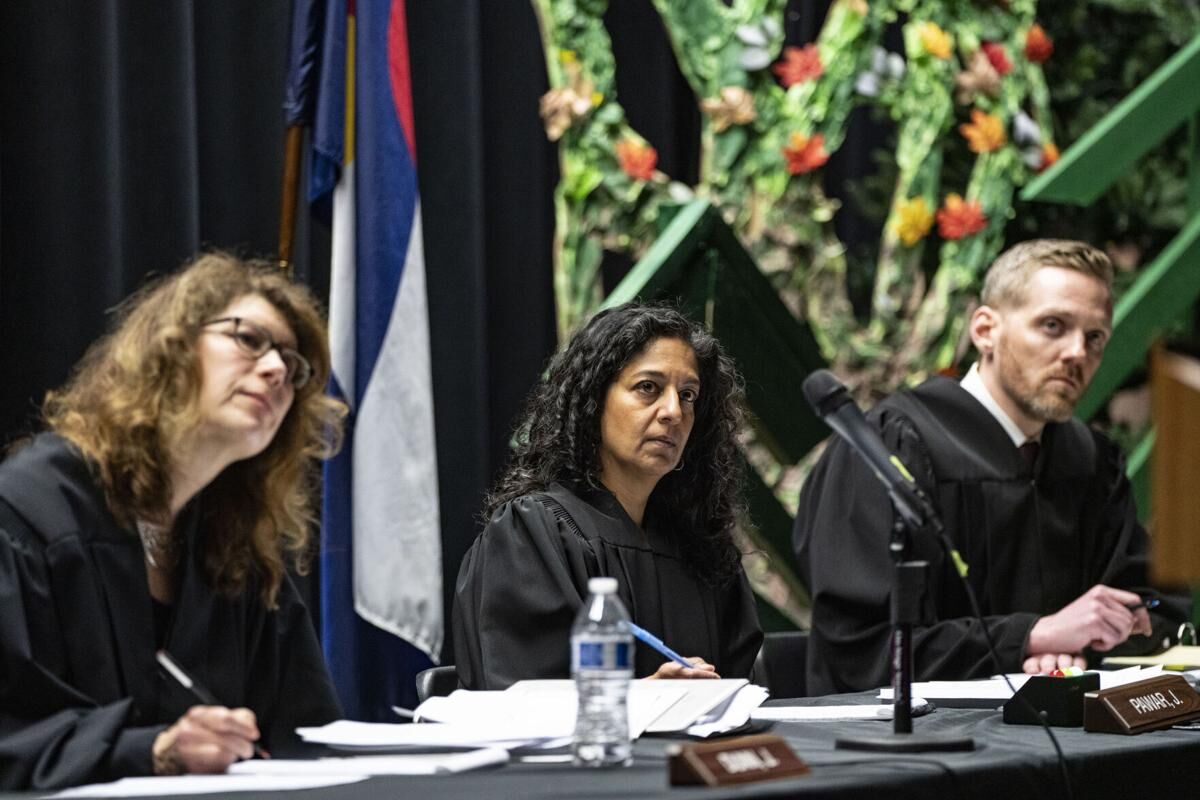
After taking a second look, the same three-judge appellate panel that originally upheld Fields’ convictions conceded that a jury needed to decide whether Fields had prior, separate criminal convictions before he was sentenced under the three strikes law.
“But we conclude that the error does not warrant reversal of Fields’ convictions,” wrote Judge Neeti V. Pawar in the Oct. 23 opinion.
She elaborated that the error was not “structural” in nature, meaning it did not affect the framework of the trial to the degree that automatic reversal was the only option. Instead, the panel believed it could evaluate whether the lack of jury consideration was to Fields’ detriment.
During the trial, the prosecution presented evidence that Fields had three prior convictions out of Kansas for various offenses he committed in 1987.
“The record contains charging documents for each of these offenses; they show different dates (separated by a span of months), different locations, different victims, and different case numbers,” Pawar wrote. Based on “this overwhelming evidence, we conclude that any rational jury would have found, beyond a reasonable doubt, that Fields’ convictions were separately
brought and tried and arose out of distinct criminal episodes.”
The panel upheld the convictions and sentence.
The case is People v. Fields.