








EDITORIAL: Colorado’s teachers turn away from unions

When a school district’s union speaks, it’s often billed as the voice of the teachers.
Not so fast.
Out of Colorado’s 179 school districts, fewer than 40 are formally “unionized” through collective-bargaining, or “master” agreements, in which unions negotiate pay, benefits and other matters on behalf of all teachers. Some districts agree to memorandums of understanding similar to collective bargaining.
The majority of districts aren’t unionized at all. Sure, many districts have union affiliates, but they function more like clubs. And many teachers join because they’re led to believe they need the liability policies unions provide. It’s worth noting that comparable policies offered by the Professional Association of Colorado Educators, the Association of American Educators and the Teacher Freedom Alliance are $20 a month or even free. It’s a lot less than the $70 per month for membership dues in unionized Denver, where dues are automatically deducted from teacher pay.
What’s really noteworthy is that even in some of Colorado’s largest school districts, union membership appears to be in decline. In some cases, it’s surprisingly low.
As The Gazette’s Jimmy Sengenberger pointed out in his column last week, barely 30% of teachers in Jeffco Schools — Colorado’s second-largest district — are members. That’s even as the union claims to speak for all.
In a May 30 letter, associate Jeffco Schools HR chief Scott Barnes underscored that point to Jeffco’s school board as it negotiated its latest collective bargaining agreement, which was finalized in August.
“The district bargains with a minority voice of the employee population. The majority (65–70%) of our employees have consciously opted out,” Barnes wrote.
Then he said the quiet part out loud:
“Why do we act as if they represent a majority voice, when clearly, they do not?”
Great question. Hard union membership data is rarely made public. The fact that it has surfaced about the state’s No. 2 district is telling — especially since Jeffco is unionized.
Up and down the Front Range, union ranks are thinning. In Colorado Springs District 11 — which recently terminated collective bargaining — only an estimated 33% of teachers are union members. In neighboring Academy District 20, it’s believed a mere 7% are members.
Denver Public Schools, the state’s largest school district, maintains nearly 70% membership, but Douglas County’s rapidly growing suburban district sits at about 20% since ending collective bargaining in 2012.
Public support is so weak that DougCo’s union backs — and heavily funds — board candidates who aren’t openly campaigning for unionization.
Before a reform-minded majority took over Woodland Park’s school board in 2021, the small Teller County district used a “meet-and-confer” practice under an informal Conditions of Employment document — collective bargaining in all but name — despite only 30% union membership and no formal contract.
After the change of guard on its school board, the Woodland Park district ended automatic dues deductions, offered teachers alternative liability coverage and ended de facto union negotiations.
In response, the Colorado Education Association — the umbrella over most of the state’s local teacher-union chapters — declared a “crisis.” But most Woodland Park teachers evidently weren’t alarmed; the district’s union membership has dropped to at most 15%.
When unions lose their grip on a district — when their influence and control slip — teachers wise up, revealing just how much unions rely on gimmicks and misinformation to convince teachers, parents and voters that their voice matters most.
As voters weigh school board races, dwindling membership makes one thing clear: unions don’t speak for all or even most teachers. In light of this latest peek at union membership, it seems unions speak for fewer Colorado teachers than ever.


EDITORIAL: Need a job? Ask our state government
The Gazette Editorial Board
thegazette-editorial-board@gazette.com
Updated 1 day ago
Colorado can’t shake a troubling employment trend. The latest jobs report reveals the state increasingly relies on government hiring to prop up overall employment numbers — offsetting private-sector job losses. The Common Sense Institute first flagged the problem in an...
The Gazette Editorial Board
Reporter
EDITORIAL: Denver grows its homelessness-industrial complex
The Gazette Editorial Board
thegazette-editorial-board@gazette.com
Updated 3 days ago
Mayor Mike Johnston’s latest pending pratfall on homelessness — having ex-cons staff Denver’s most troubled, city-run homeless hotel — is starting to look even worse. It turns out the San Francisco nonprofit that will employ offenders to run the city’s...
The Gazette Editorial Board
Reporter
EDITORIAL: Restore Colorado water project ASAP
The Gazette Editorial Board
thegazette-editorial-board@gazette.com
Updated 3 days ago
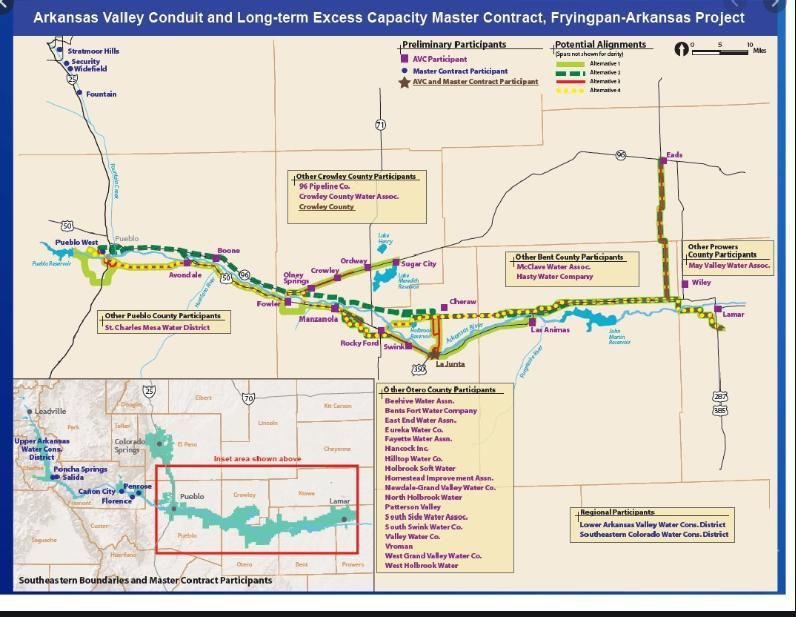
Without getting into the political intrigue that typically underlies any face-off between the White House and other elected officials in either party — let’s just say President Trump was wrong on Tuesday to jettison legislation for a pivotal water project...
The Gazette Editorial Board
Reporter

EDITORIAL: Polis plays games with utility rates
The Gazette Editorial Board
thegazette-editorial-board@gazette.com
Updated 5 days ago
It was only a couple weeks ago when tens of thousands of Coloradans lost power — many for days — because of deliberate, preemptive blackouts ordered by Xcel Energy. It took Gov. Jared Polis about a week, it seems, to...
The Gazette Editorial Board
Reporter

EDITORIAL: Let Colorado law officers hand criminals to ICE
The Gazette Editorial Board
thegazette-editorial-board@gazette.com
Updated 6 days ago
Even a progressive Democrat like Gov. Jared Polis has acknowledged the need to help federal authorities rein in the criminal element among our state’s substantial population of illegal immigrants. After all, Polis realizes the public is fed up. Yet, his...
The Gazette Editorial Board
Reporter
EDITORIAL: A welcome assist for school choice in Colorado
The Gazette Editorial Board
thegazette-editorial-board@gazette.com
Updated 1 week ago
Jared Polis ranks high among our state’s “education governors,” a list that over the years has included Democrat Roy Romer and Republican Bill Owens. Polis shares with Romer and Owens not only a firm command of the top issues facing...
The Gazette Editorial Board
Reporter
PERSPECTIVE: A foot in the door of affordable housing
Tyrone Adams
tyroneadams@Gazette.com
Updated 6 days ago
By Tyrone Adams Housing affordability cannot be addressed overnight. It will take dedicated conversations at local and state levels, targeted regulatory reforms, and close collaboration and feedback between government leaders, builders, and would-be homeowners. Fortunately, these kinds of conversations are...

Tyrone Adams
Reporter
PERSPECTIVE: The Democratic Party’s outdated playbook
Joe Concha
joe-concha@gazette.com
Updated 6 days ago
“Those who cannot remember the past are doomed to repeat it.” That’s the famous quote from George Santayana in his 1905 book, The Life of Reason: Reason in Common Sense. And what rang true 120 years ago rings true today,...

Joe Concha
Reporter

EDITORIAL: Another reprieve for Colorado taxpayers
The Gazette Editorial Board
thegazette-editorial-board@gazette.com
Updated 1 week ago
The fast-moving effort to place a $4.1 billion-a-year income-tax hike on next year’s statewide ballot has been stopped in its tracks by the same state body that originally let it move forward. Proponents want voters to replace the state’s 4.4%...
The Gazette Editorial Board
Reporter
EDITORIAL: Polis’ impaired judgment on pot
The Gazette Editorial Board
thegazette-editorial-board@gazette.com
Updated 1 week ago
We’ve tried reasoning with Gov. Jared Polis about his almost-giddy infatuation with retail marijuana and its purported benefits to our state. So far, our efforts have been futile. Oblivious to the demonstrable harm high-potency THC products have done to Colorado...
The Gazette Editorial Board
Reporter
PREV
PREVIOUS

PERSPECTIVE: Spending more on fewer students
Many Colorado voters will vote on school board candidates this fall. As voters look for resources to understand better the health and wellness of their school district, new data on spending, enrollment and proficiency trends could be a helpful resource. For years, the Common Sense Institute has conducted a comprehensive analysis of district-level spending, revenue, pay and […]

EDITORIAL: Colorado crime soars when criminals go free
It was encouraging to see a news report in The Gazette this week about a recent rise in car chases by police in Colorado’s third-largest city. A needed shift in policy by the Aurora City Council last March gave the city’s police more latitude in pursuing suspected car thieves and other lawbreakers. It’s part of […]