







What to know about the hepatitis B shot — and why Trump officials are targeting it

NEW YORK (AP) — A federal vaccine advisory committee this week is expected to discuss whether newborns should still get the hepatitis B vaccine — the first shot found to prevent cancer.
Federal health recommendations now suggest that all babies be vaccinated against the liver infection in their first day of life, but U.S. Health Secretary Robert F. Kennedy Jr.’s committee on Thursday is expected to change that — contradicting previous public health advice.
It’s not clear exactly what the committee is considering, but the American Academy of Pediatrics will still urge a birth dose, said the organization’s Dr. Sean O’Leary.
“We are going to continue to recommend it because it saves lives,” he said.
Here’s a look at the disease, the vaccine and the debate over changing the recommendations.
Liver disease can cause lifelong health issues
Hepatitis B is a serious liver infection that for most people lasts less than six months. But for some — especially infants and children — it can become a long-lasting problem that can lead to liver failure, liver cancer and scarring called cirrhosis.
In adults, the virus is spread through sex or through sharing needles during injection-drug use.
But it can also be passed from an infected mother to a baby. As many as 90% of infants who contract hepatitis B go on to have chronic infections, meaning their immune systems don’t completely clear the virus.
As many as 2.4 million people in the U.S. are estimated to have hepatitis B, and as many as half are unaware they are infected, according to information from the Centers for Disease Control and Prevention.
Dr. Baruch Blumberg, a federal scientist, identified the virus behind the infection in 1965. He won the Nobel Prize for the discovery, which led to tests and vaccines. The first hepatitis B vaccine was licensed in the U.S. in 1981.
Shots for newborns have been recommended for years
For decades, the nation’s vaccine guidance has been influenced by a government-appointed panel of experts, the Advisory Committee on Immunization Practices. Its recommendations have usually been adopted as national guidance that is widely heeded by doctors.
In 1991, the committee recommended an initial dose of hepatitis B vaccine at birth. The guidance was modified a little over the years and currently suggests a dose within 24 hours of birth for all medically stable infants who weigh at least 4.4 pounds (2 kilograms), plus follow-up shots to be given at about 1 month and 6 months.
Why a dose right at birth? Health officials used to rely on screening expectant mothers to find babies that might have been exposed to the virus. But many cases were missed, experts say, because some women weren’t tested or test results were incorrect. Also, the virus can live on surfaces for more than seven days at room temperature, so unvaccinated children living with a person with a chronic infection can catch it.
Newborn hepatitis B vaccinations are widely considered to be a public health success story. Over about 30 years, cases among children fell from about 18,000 per year to about 2,200.
A collaboration of public health researchers, the Vaccine Integrity Project, this week released its analysis of more than 400 studies and reports spanning 40 years. The group concluded the birth dose is safe, and is an important reason U.S. pediatric hepatitis B infections have fallen.
Committee revisits the newborn recommendation
Kennedy, a leading anti-vaccine activist before becoming the nation’s top health official, fired all 17 members of ACIP earlier this year and replaced them with a group that includes several anti-vaccine voices.
The panel has raised concerns about giving a vaccine to a baby so early in life.
“Are we asking our babies to solve an adult problem?” committee member Dr. Evelyn Griffin asked at a September meeting.
Peppered with questions about why a change was necessary, committee member Dr. Robert Malone said: “The signal that is prompting this is not one of safety. It’s one of trust. … It’s one of parents uncomfortable with this medical procedure being performed at birth in a rather unilateral fashion without significant informed consent.”
The committee tabled a vote at the September meeting, but it’s slated to be acted on during Thursday’s meeting, according to the agenda. Federal officials have not answered questions about exactly how much of a delay is being proposed, or disclosed what research is being used as a basis for such a decision.
What would happen if the shots are delayed?
Not knowing what the committee is contemplating makes it difficult to guess the potential impact. But some have tried.
This week, public health researchers collaborating with hepatitis-focused advocacy organizations released a report estimating that delaying the birth dose to 2 months could result in at least 1,400 hepatitis B infections in children and 480 deaths. The report — which has yet to be peer reviewed or published in a medical journal — estimated the toll would be higher if the first dose was given even later.
But an ACIP change to the recommendation may have limited impact, O’Leary said.
The committee’s most direct power comes over what’s covered by the government Vaccines for Children program, which pays for shots for uninsured children from low-income families. Hepatitis B shots often have been bundled into the final hospital bill for childbirth. So a new ACIP recommendation likely would not be an economic obstacle for the current practice continuing at many hospitals, he said.
But any change stands to confuse and frighten parents, he added.
“If it scares, it shares” on social media, O’Leary said.

Tina Peters involved in prison altercation caught on video
Daniel Boniface
dan.boniface@denvergazette.com
Updated 1 hour ago
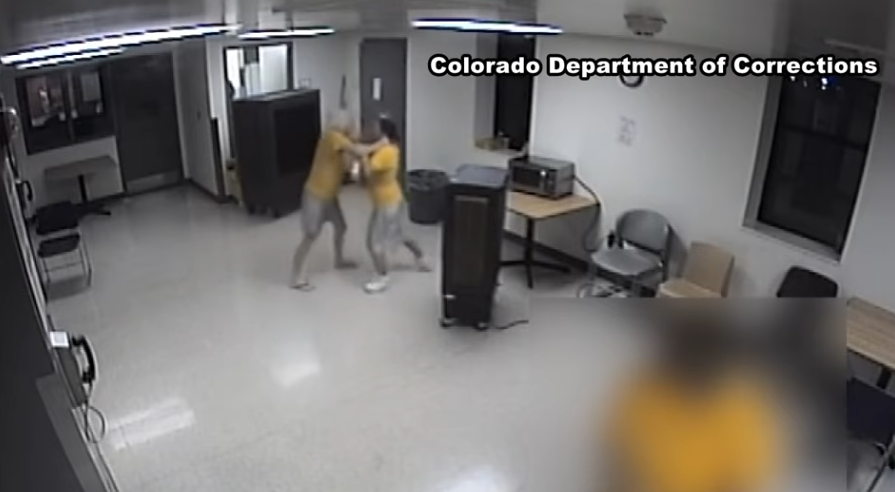
Tina Peters appears to have been involved in a prison altercation on Sunday with another inmate and the incident was caught on video. The incident happened at the La Vista Correctional Facility where Peters is serving a roughly nine-year prison...

Daniel Boniface
Reporter

Court rules against Colorado Rep. Jason Crow, other Democrats in ICE visitation policy challenge
Michael Kunzelman
michael.kunzelman@associatedpress.com
Updated 47 minutes ago
WASHINGTON (AP) — A federal judge refused Monday to temporarily block the Trump administration from enforcing a new policy requiring a week’s notice before members of Congress can visit immigration detention facilities. U.S. District Judge Jia Cobb in Washington, D.C., concluded that the...

Michael Kunzelman
Reporter

PHOTOS: Broncos Defeat Bills in Divisional Playoff
Jerilee Bennett
jerilee-bennett@denvergazette.com
Updated 4 hours ago

Jerilee Bennett
Reporter

Broncos hosting conference championship rally ahead of AFC title game
9News
9news@denvergazette.com
Updated 2 hours ago
The Denver Broncos will hold a fan rally on Saturday, a day before the team plays for the chance to head to Super Bowl LX. The Broncos’ Conference Championship Fan Rally will be held at Larimer Square in downtown Denver...

9News
Reporter

PHOTOS: Fans pregame before Broncos take on the Bills in playoffs
Stephen Swofford
stephen-swofford@denvergazette.com
Updated 5 hours ago

Stephen Swofford
Reporter

Denver weather: Sunny and mild on Tuesday
Daniel Boniface
dan.boniface@denvergazette.com
Updated 7 hours ago
Sunny skies and mild temperatures are on tap Tuesday in Denver, weather forecasters said. The National Weather Service in Boulder said to expect a high near 52 degrees Tuesday in the Mile High City. That’s about 8 degrees warmer than...
Daniel Boniface
Reporter

Black cowboy culture celebrated at National Western Stock Show on MLK Jr. Day
Kyla Pearce
kyla-pearce@denvergazette.com
Updated 7 hours ago
Danell Tipton with Black Rodeo USA competes in bull riding and is one of only eight Black men who have qualified for the national finals in the sport. His organization produced Monday night’s MLK Jr. African American Heritage Rodeo, celebrating...

Kyla Pearce
Reporter

Metro Moves: BMC Investments hires new partner and CIO
Bernadette Berdychowski
bernadette.berdychowski@denvergazette.com
Updated 7 hours ago
Welcome to the Denver Gazette’s Metro Moves. You’ll get the latest metro Denver openings, closings, hiring and promotion news here. To submit your company’s news, drop an email to bernadette.berdychowski@denvergazette.com. BMC INVESTMENTS NAMES A NEW PARTNER After a national search, Denver-based...

Bernadette Berdychowski
Reporter

Woman stabbed at Union Station bus terminal
Dennis Huspeni
dennis.huspeni@gazette.com
Updated 5 minutes ago
A woman was hospitalized, and another is in custody on charges of stabbing her repeatedly, after what appeared to be a random attack at Denver’s Union Station’s Regonal Transportation District bus terminal Sunday night. Denver Police Department officers confirmed the...

Dennis Huspeni
Reporter

Former Jeffco security guard found guilty of sex assault on a child
Sage Kelley
sage.kelley@denvergazette.com
Updated 20 hours ago
A Jefferson County jury found a former school security guard and pastor guilty of sexual assault on a child by a person in a position of trust. The jury deliberated on Friday after a four-day trial, eventually finding that 68-year-old Rubel...

Sage Kelley
Reporter
PREV
PREVIOUS
D-Day veteran Charles Shay, who saved lives on Omaha Beach, dies at 101 in France
PARIS — Charles Shay, a decorated Native American veteran who was a 19-year-old U.S. Army medic when he landed on Omaha Beach on D-Day and helped save lives, died on Wednesday. He was 101. Shay died at his home in Bretteville-L’Orgueilleuse in France’s Normandy region, his longtime friend and carer Marie-Pascale Legrand said. Shay, of […]

How to drive in snow and ice in Colorado
Buckle up. The winter driving season is upon us. So, if you’re new to Colorado or it’s just been a while since you’ve driven in winter conditions, it’s always a good idea get a quick refresher on how to drive in snow and ice in Colorado. Before you drive in snow and ice You should […]