





Federal judge recommends sanctions on plaintiffs for faulty case citations
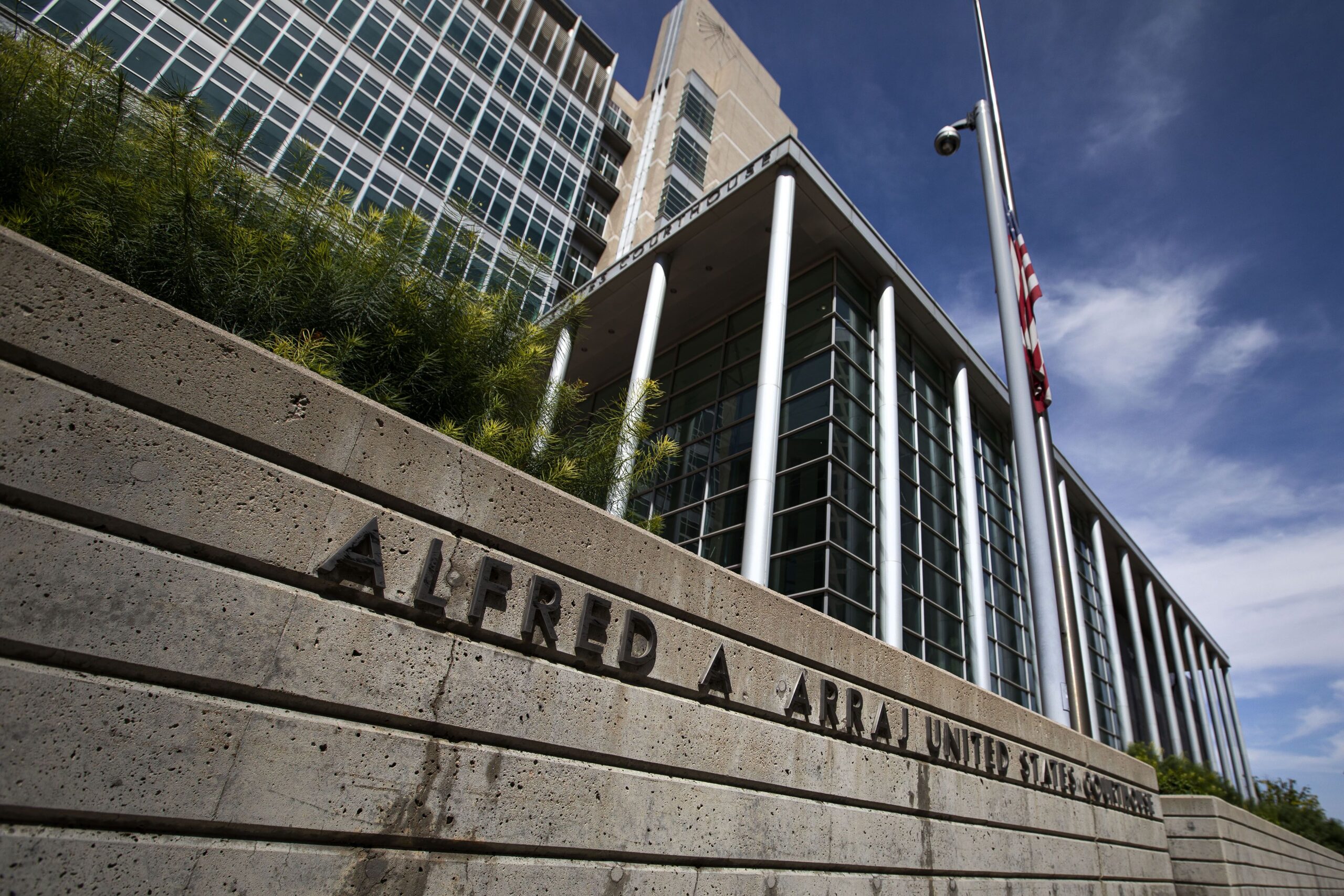
A federal judge recommended that a pair of self-represented plaintiffs be subject to a range of sanctions for including flawed and non-existent case citations in their filings, potentially by using artificial intelligence.
“A federal court is not a workshop for fictional writing. It is a forum that exists to uphold the law, administer justice, and resolve disputes based on the application of the facts to existing precedent,” U.S. Magistrate Judge Kathryn A. Starnella wrote in a Nov. 28 order. “Courts demand honesty, and injections of nonexistent and improperly attributed authority into court filings vandalizes the very machinery of truth upon which this Court — and all courts — rely.”
Judges in Colorado have previously encountered case filings with faulty citations.
Last month, U.S. District Court Judge Nina Y. Wang fined an attorney $3,000 for flawed references to cases. In 2023, disciplinary authorities sanctioned a lawyer for using ChatGPT to generate fake citations, then lying about it. And last year, Colorado’s Court of Appeals warned litigants they could face consequences for failing to verify the output of AI-powered legal tools.
In the case before Starnella, Robert Anthony Hanson Jr. and Stephanie Baldyga Self are suing to establish title to their Denver residence. Proceeding without a lawyer, they attested on at least one occasion that their filing was “not constructed with the assistance of AI.” Still, defense counsel later warned that it could not find certain cases cited.
“These hallucinated citations suggest the potential use of generative AI in preparing the Complaint,” wrote lawyers for Mortgage Electronic Registration Systems, Inc.
On Oct. 17, Starnella issued an order pointing to problems within several of the plaintiffs’ submissions.
“Upon review, the Court is deeply troubled by Plaintiffs’ filings because there are defective citations,” she wrote. “These defects include (1) misattributed or inaccurately quoted language from cases, (2) misrepresentations of legal concepts associated with the cited cases, including discussions of legal principles that are entirely absent from such decisions, and, most concerningly, (3) citations to cases that do not exist.”
She observed that the plaintiffs “appear to have used generative artificial intelligence,” even though they previously claimed they had not.
“While powerful and convenient, at this juncture, generative AI is incapable of distinguishing between legitimate precedent and fabricated legal fiction,” Starnella wrote.
She directed the plaintiffs to explain why they had not violated the rule requiring lawyers and self-represented parties to certify that their claims are grounded in the law. Starnella also asked for a description of how the plaintiffs found the cases they cited and what verification they performed.
On Nov. 4, Baldyga responded on behalf of herself and Hanson to say they “did not act in bad faith, did not intend to mislead the Court, and did not knowingly cite false or fabricated legal authority.” The response acknowledged “certain citations in prior filings were inaccurate” and the plaintiffs “have undertaken corrective action.”
Starnella was unsatisfied with that answer.
“Ultimately, their position is that this conduct was an ‘honest mistake’ and that, at all relevant times, they acted in good faith. However, good faith is insufficient,” she wrote in her latest order.
Starnella elaborated that the plaintiffs undertook “very little effort” to address the issues she raised. For example, they did not explain how they verified the accuracy of the cases they cited.
“This silence speaks for itself,” she wrote.
Moreover, Starnella determined the response itself continued to incorrectly cite case law.
“Plaintiffs’ pleading conduct has wasted too much of this Court’s time. It required the Court to spend valuable time verifying each citation, attempting to locate the cited authority on every conceivable legal research platform, and determining whether that authority is genuine or fabricated,” she wrote. “This, in turn, has diverted the Court’s resources from resolving the issues in this case and the many other cases the Court has on its docket.”
Starnella evaluated the options available for sanctions, which included fines, dismissal of the case or “more creative” measures, such as requiring an AI training. Instead, she believed it best to strike all of the filings that “taint the docket” with false citations.
Her order came in the form of a recommendation to the district judge presiding over the case, Gordon P. Gallagher. She noted it is unclear whether magistrate judges could impose sanctions outright, so the recommendation stemmed from “an abundance of caution.” Starnella also recommended that Gallagher require the plaintiffs to separately document their case citations and identify where those came from going forward.
She gave the plaintiffs 14 days to object to her conclusions.
The case is Hanson v. Nest Home Lending, LLC et al.


Judge denies motion from Gov. Jared Polis to dismiss ICE lawsuit from former state employee
Marianne Goodland
marianne-goodland@denvergazette.com
Updated 10 minutes ago
A Denver District Court judge has denied a request by Gov. Jared Polis to dismiss a lawsuit filed by a former state employee over disclosure of information to federal immigration authorities. The lawsuit filed against the governor by Scott Moss,...

Marianne Goodland
Reporter

Trump calls Jared Polis a ‘sleazebag’ for keeping ‘elderly woman’ Tina Peters in jail, governor responds
Wire Services
wire-services@denvergazette.com
Updated 13 minutes ago
Washington Examiner President Donald Trump took to Truth Social on Wednesday to scold Gov. Jared Polis (D-CO) regarding the case of former Mesa County Clerk Tina Peters, who was sentenced to nine years in prison in 2024 for charges of...

Wire Services
Reporter

Father and son face 10 charges in deadly Lakewood street racing crash
Michael Braithwaite
michael.braithwaite@gazette.com
Updated 3 hours ago
Judicial officials filed a combined 10 felony charges against a father and son Wednesday in connection with a fatal November crash that allegedly involved street racing. Gregory Giles, 65, and Bruce Giles, 26, each face five charges, including vehicular homicide,...

Michael Braithwaite
Reporter

Man convicted of first-degree murder in Federal Heights death
Kyla Pearce
kyla-pearce@denvergazette.com
Updated 1 day ago
An Adams County man was convicted of first-degree murder last week in the fatal stabbing of a 20-year-old woman in Federal Heights in December 2023. 17th Judicial District Attorney Brian Mason announced the conviction of 37-year-old Adrian Carracedo-Vega following a...

Kyla Pearce
Reporter

Castle Rock man sentenced to 30 years in prison for hitting elderly man on head with board
Michael Braithwaite
michael.braithwaite@gazette.com
Updated 2 days ago
A Castle Rock man was sentenced to 30 years in prison Monday for hitting an 80-year-old on the head with a wooden two-by-four board during a 2024 argument. Daniel Fougner, 65, was found guilty of felony assault on an at-risk...
Michael Braithwaite
Reporter

Suspect in 5-person fatal crash near Franktown faced dozen previous criminal charges, including assault
Sage Kelley
sage-kelley@denvergazette.com
Updated 3 days ago
The man accused of carjacking a vehicle from a Regional Transportation District station, then crashing into a family of five and causing five deaths — including his own — has been identified. The Denver Gazette confirmed with multiple sources that...

Sage Kelley
Reporter

Charges against legal observer detained at Denver immigration court dropped
Nico Brambila
nico-brambila@denvergazette.com
Updated 4 days ago
The charges against the legal observer detained at Denver Immigration Court have been dropped, the ACLU of Colorado announced. “We are pleased to see that these baseless and ludicrous charges have been dismissed,” Tim Macdonald, legal director for the ACLU...

Nico Brambila
Reporter
Colorado Supreme Court to examine whether corporations can be liable for ‘felonious killing’
Michael Karlik
michael-karlik@denvergazette.com
Updated 1 day ago
The Colorado Supreme Court recently announced that it will determine whether corporations can be liable for a “felonious killing,” meaning there is no limit to the damages they might pay for pain and suffering after causing a wrongful death. At...
Michael Karlik
Reporter

Pueblo man sentenced to 15 years for threatening Denver judge
Cleo Westin
cleo-westin@denvergazette.com
Updated 6 days ago
A Pueblo man who threatened to kill a Denver judge was sentenced to 15 years in prison, according to a news release by the 18th Judicial District Attorney’s Office on Wednesday. A jury found Thomas Wornick, a 43-year-old combat veteran,...

Cleo Westin
Reporter
Panel member ejected from one judge’s discipline case, as second judge challenges protocols in his proceeding
Michael Karlik
michael-karlik@denvergazette.com
Updated 6 days ago
One member of a panel adjudicating the misconduct allegations against a county court judge has been replaced due to her alleged non-responsiveness, at the same time a different county court judge is objecting to the intended protocols in his own...
Michael Karlik
Reporter
PREV
PREVIOUS

Another lender takes possession of downtown Denver office building
An office tower in downtown Denver, once home to Xcel Energy’s headquarters, was taken over by a lender. Blackstone Mortgage Trust possessed the building at 1800 Larimer St. from Beacon Capital Partners, according to property records filed Tuesday. Beacon Capital Partners bought the property in 2022 for $291 million. Despite the pandemic’s hit on office […]

Colorado Poets Laureate release anthology to support future poets
A collection of poetry, including unpublished work from late Poet Laureate Andrea Gibson, will be released in a Friday evening celebration with Colorado Gov. Jared Polis and Colorado writers. The anthology, called “Begin Where You Are,” commemorates the state’s poets laureate, with all of the proceeds from book sales going toward the first endowment for […]