





Hiker faces deadly scenario after getting caught in quicksand at national park
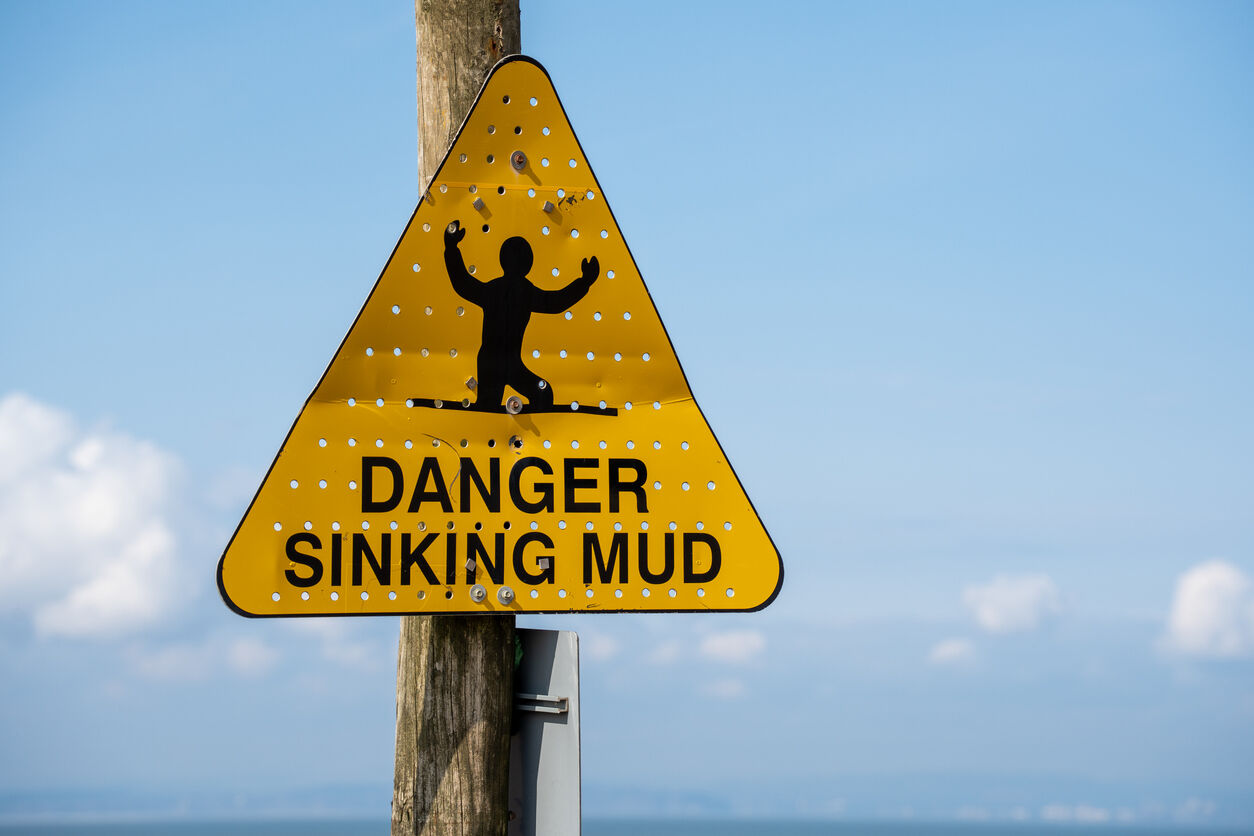
As many adventurous children who have grown up to hit trails around the world have discovered, quicksand isn’t exactly the imminent threat that it was made out to be in cartoons from the 80s and 90s. That said, encountering quicksand in America is a very real possibility and it can pose a risk, as was exemplified in a recent rescue mission that took place at Utah’s Arches National Park.
According to local news source FOX13, experienced desert hiker Austin Dirks found himself trapped in knee-deep quicksand during a solo hike in the Courthouse Wash area of the park. His left leg broke through what appeared to be solid ground at first, and when he pulled that leg out, his right leg sunk into the quicksand up to his knee.
While Dirks admittedly went into the day believing that quicksand was somewhat of a legend, he compared the experience to something like stepping into concrete for the ground to harden around his leg. It immobilized him completely.
While Dirks didn’t sink farther down into the quicksand – a scene often exaggerated in entertainment media – he couldn’t free himself. Thankfully, a certain piece of equipment turned what could have been a lengthy and potentially deadly ordeal considering risks of cold weather exposure and lack of water into a scary situation that lasted about two hours.
Dirks used his GPS satellite messenger to call for help and relay his exact position, to soon be rescued as a result.
He called the experience the closest he’d ever been to dying.
Coloradans aren’t at much of a risk for an encounter with this terrain hazard, as quicksand tends to be found in places where loose sand, silt, or clay mixes with water. In the U.S., this risk tends to be most present in the southeastern states and the southwest, including states of Utah, New Mexico and Arizona thanks to underground springs. That said, quicksand can form in places with rivers, particularly those with sandy riverbeds.
While Centennial State hikers probably don’t need to live in fear of this risk, it’s something to be aware of and another reason why it’s important to always make sure a means of communication is present during a hike headed into a place where cell phone coverage might not be great. It’s also a good reminder to always make sure you’ve got enough water and warm layers to wait it out for a rescue, too.
Find a full report about this incident and a few quotes from Dirks on the local FOX13 website here.
STAY INFORMED: Get free Colorado news with our daily newsletter (Click here)
Get OutThere
Signup today for free and be the first to get notified on new updates.

PREV
PREVIOUS

Report claims this is the 'best diner' in Colorado – do you agree?
A recent report from food publication ChowHound sought to track down the ‘best diner’ in every American state. “There’s something timeless and comforting about a great diner, whether it’s a neon-lit classic serving bottomless coffee or a modern twist on the greasy spoon,” wrote the publication. “Across the United States, diners capture the spirit of […]
How long does it take to acclimate to Colorado's high elevation?
With an average elevation of about 6,800 feet above sea level, Colorado has the highest mean elevation in the country. As locals know too well, that elevation can have an impact on daily life, especially apparent when out-of-staters come to town for a visit. A key reason why this elevation tends to impact tourists to […]