







Denver office conversion being considered for downtown authority’s largest loan yet
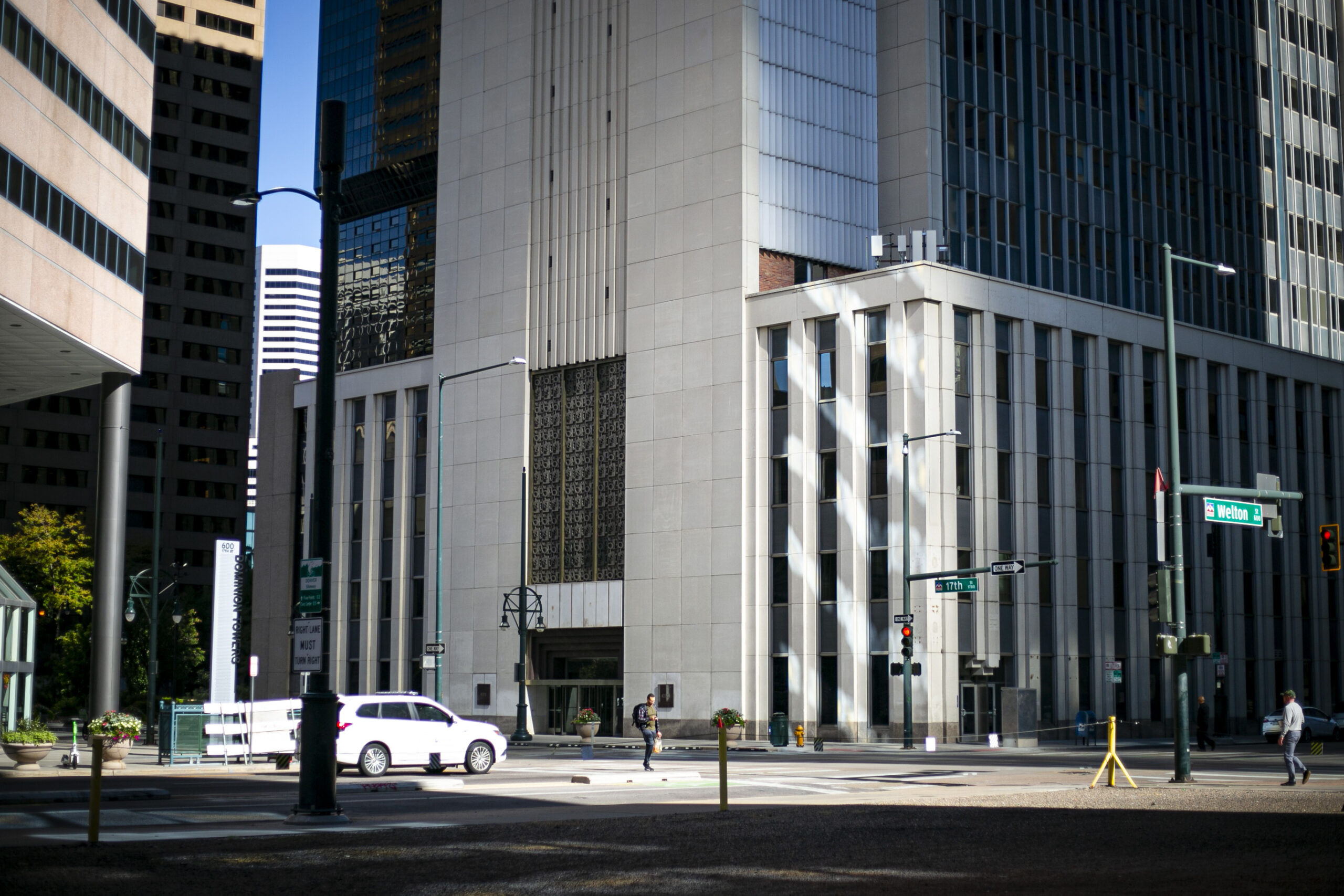
The plan to convert two office towers on 17th Street in downtown Denver is under consideration to get nearly $63 million from the Denver Downtown Development Authority, which could be the largest loan since the quasi-government organization expanded in 2025.
The Luzzatto Co. bought the office towers at 621 and 633 17th St. at a steep discount earlier this year and aims to transform them into 700 apartments with 50 hotel rooms in a project dubbed High Fidelity.
It’s one of the most ambitious plans to revive downtown’s struggling skyscrapers, the kind of development the DDDA has outlined as a way to infuse energy into downtown.
Yet, the city has raised a few concerns about giving a lot of money to the project, according to presentation slides that were intended only for a confidential executive meeting but were available to view during the public live stream of the DDDA’s board meeting on Wednesday.
Some risks mentioned the massive size of the project, a lease dispute at one of the buildings and the developer’s first attempt to build in Denver.
The presentation gave a glimpse into how the city and the DDDA consider what projects to fund in downtown Denver, which are typically discussed in executive sessions to protect the confidentiality of developer projects.
The DDDA has not yet taken steps to vote on the funding, but, rather, city staff gave a project update on proposals under review in the executive meeting to take questions board members may have before being considered for funding.
“This allows board members time to digest the project and ask questions and for the staff to get clarity on any board questions,” said Laura Swartz, a spokesperson for the city’s finance department, in an email.
Applicants will later be notified once their application goes to the board for a decision.
“The DDDA is still in discussions with the High Fidelity applicant on what/if a funding package proposal will be presented to the DDDA board for funding consideration,” Swartz said.

AN ‘AMBITIOUS’ PROJECT
The Luzzatto Co.’s project could get more than the entire cost to buy the Denver Pavilions, which the board approved for $45 million.
The DDDA released a new set of guidelines last month for office-to-residential conversion projects to sort out how much developments should get from the board based on a percentage of project costs, though it can still be tailored to individual project needs or challenges.
The city is reviewing giving up to 20% of the project’s costs.
The construction of High Fidelity is expected to cost more than $300 million, which is how the $63 million funding request total was determined.
The developer bought the two towers on 17th Street for $3.2 million earlier this year with plans to make them a 24/7 destination.
In addition to residences and hotel rooms, the developer plans to add several public amenities, such as childcare, a children’s museum, independent movie theater, grocery store and an art gallery. It’s also considering transforming the buildings’ old bank vaults into food and beverage businesses.
The city listed several benefits of the High Fidelity project: More housing, more foot traffic, new hotel rooms and “robust supplemental uses.”
It also noted the skyscrapers are on Denver’s list of priority office buildings to convert and it will be a major investment in Upper Downtown, where there’s a high concentration of empty office buildings and a target focus area for the DDDA.
The city said it anticipates the project can fully pay off its loan with interest and the money could later be reinvested in other downtown projects in the future. It also “conservatively” projected up to 93% occupancy.
Yet, the city raised several risks to investing that much money in this project.
The fact that the conversion would be the DDDA’s largest loan to date is listed as a challenge.
The DDDA was created to fund the revitalization of Denver Union Station and voters in its boundaries approved Mayor Mike Johnston’s plan to expand the boundaries in 2025 to include most of downtown and infuse $570 million within the decade.
It funds projects using tax-increment financing, giving out loans using money from rising property and sales taxes to boost projects intended to spur more tax revenues in the future.
The organization approved up to $166 million in its pilot year.
So far, the board green-lit several projects, including the purchase of Denver Pavilions, two Pavilions parking lots, the conversion of the Petroleum Building, Civic Center Park’s upgrades and plans to revitalize the McNichols Civic Center Building, which is set to become the future home of a Denver history museum.
Asher Luzzatto — the president of the company and a former L.A. mayoral candidate who lives in Taos, N.M. — told The Denver Gazette he believes his project would be the “best return” on public investment on a per unit basis.
Other residential conversions the DDDA approved have been in the range of 100 and 178 new units, getting loans between $14 million and $17 million.
The city’s analysis shows the approved loan for the Symes Building conversion is worth $178 per square foot and High Fidelity’s could be as low as $57 per square foot.
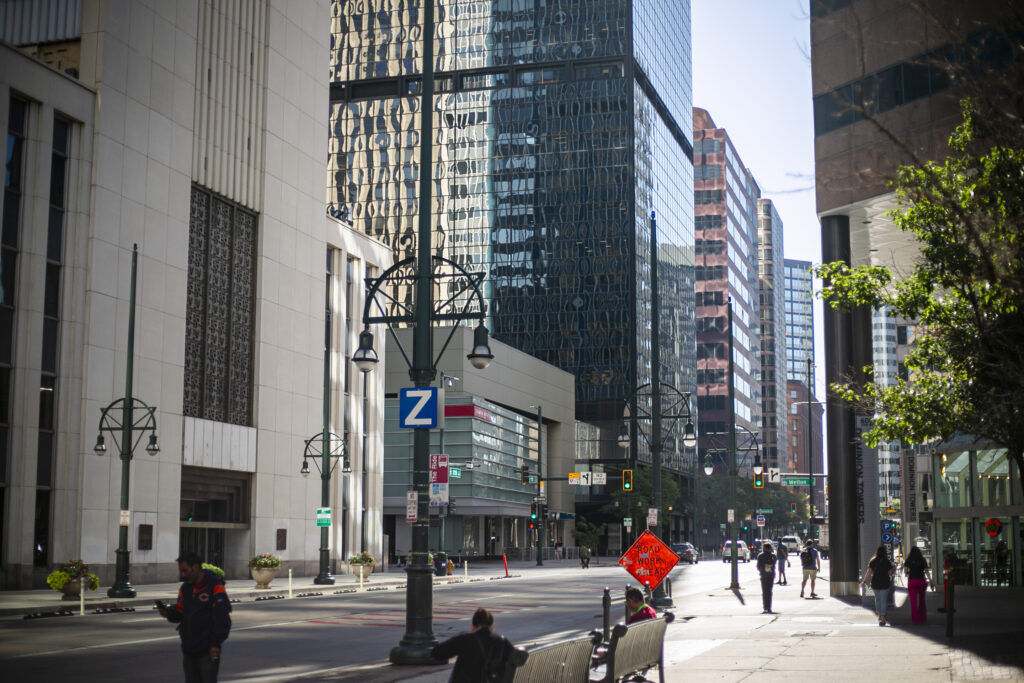
It’s an “ambitious” project in both size and scope, the city presentation said. The city added that Luzzatto is an out-of-state developer and this is the company’s first project in Denver. It also needs to clear up a lease dispute that could affect the project’s size.
The loan could require all land leases to have at least an 80-year term and will only be available once the project secures construction loan financing, the city presentation said.
Luzzatto previously said the ground lease at 633 17th St. owned by Lakeside Park Co., the owners of the Lakeside Amusement Park, is holding back the project and is trying to secure a lease extension or find another solution to solve a rent debt dispute that was carried over from the building’s previous owners.
When asked about it Friday, Luzzatto said there’s been “positive” conversations with Lakeside Park and they are making “steady progress” toward a negotiation.
“We’re in a place where we both understand the mutual benefit of getting something done,” Luzzatto said. “But these things don’t happen overnight.”
Regarding the other concerns, Luzzatto said his company made sure to open an office in Denver and it hired architects, designers and consultants with the requirement that they have a presence in Denver or set up one.
“I might not live in Denver but we have a team there and we’ll continue to grow our team in Denver,” he said.
Luzzatto also said the board should consider bigger projects if it wants to be successful in its mission to revive downtown.
“I don’t think that the DDDA is going to have a material impact on downtown unless it begins to fund some larger scale projects,” Luzzatto said. “This is basically a vertical village with its own ecosystem.”
SECOND PROJECT ABOUT TO GO THROUGH PIPELINE SOON
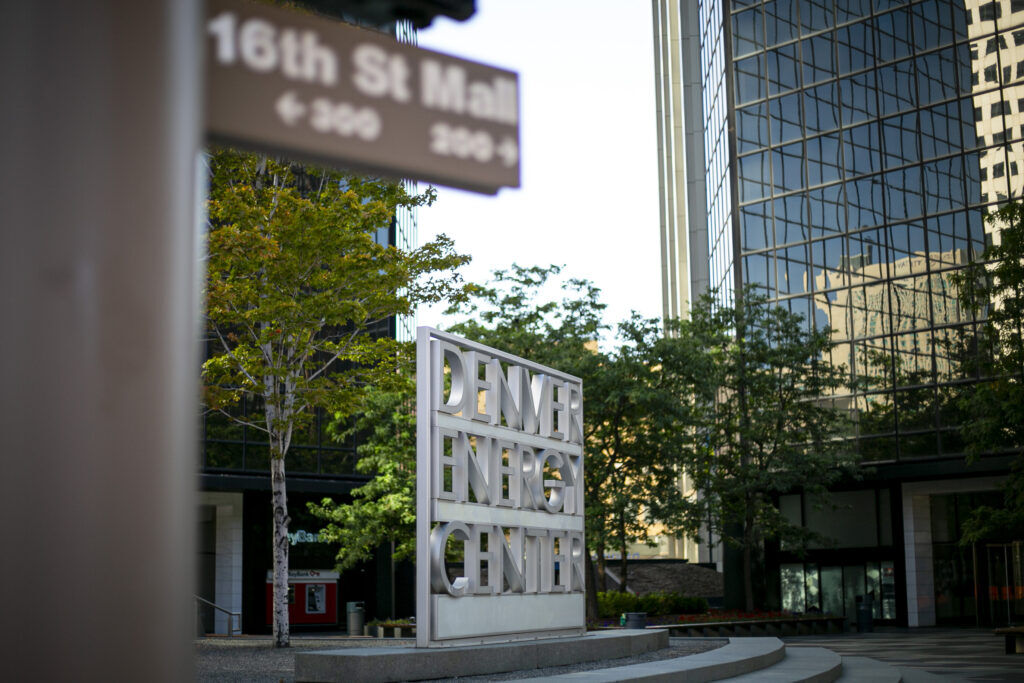
The Luzzatto Co. also plans to apply again to convert one of the buildings in the Denver Energy Center.
The developer just closed on the Denver Energy Center at 1625 and 1675 Broadway on Tuesday, buying the two office towers at an auction from a lender that took possession of the foreclosed buildings for $5.25 million.
It’s about a 97% discount from when last sold for $176 million in 2013.
The sale closing was delayed several months but Luzzatto said design work has already begun. They’re looking into including a grocery store, restaurant and family-friendly activities and art at the plaza connecting to 16th Street.
The Denver Energy Center is listed as an “expected” project that is estimated to be considered for about $40 million in the future, the city presentation showed.
The DDDA has not received an application for Denver Energy Center yet so it’s not under consideration for funding as of now, Bill Mosher, the city’s chief projects officer, told The Denver Gazette.
He added the DDDA’s strategy is to prioritize funding projects aiming to revitalize 16th Street and underutilized buildings, as well as bring more ground floor activations — a reason why the development is on the authority’s radar, even though it’s not seeking funding yet.
Luzzatto said he’s working on his second application and plans to apply next year, though that project will be less complex as only one building is set for conversion.
LIMITED AMOUNT OF FUNDING AVAILABLE
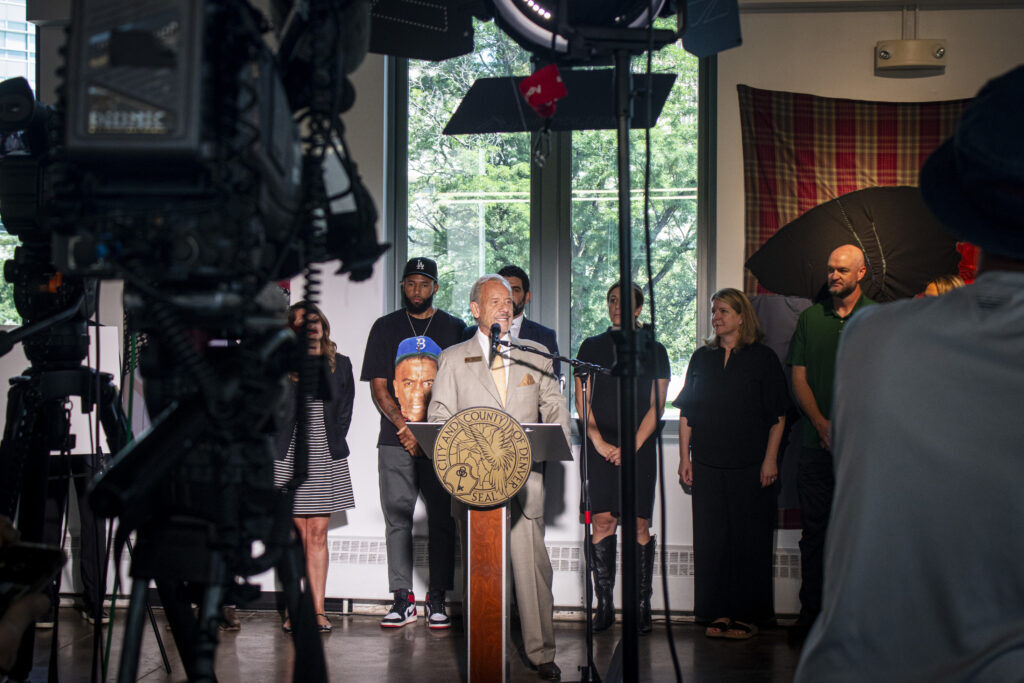
The DDDA is reviewing more than $175 million of potential funding for private development projects in downtown, according to the presentation.
They include several residential conversion projects, such as Lincoln Crossing, Barth Hotel, 475 17th Street and Capital Center, ranging from $6 million to $30 million loans each. A mixed-use project at Sakura Square and bringing the Museum of Ice Cream to Denver is also up for consideration. The Museum of Ice Cream is under review for a $7 million loan.
The Museum of Ice Cream’s proposal has not yet been submitted to the DDDA board of directors and there are no recommendations on funding levels yet, Swartz said.
“Any future recommendations would be based on the five review criteria listed in the Tax Increment Investment Policy available on the DDDA website,” she said.
All of these applications are under review and may not get all or any of the funding, Mosher said, adding other projects might also come up in the future that could have a higher priority.
“It’s not first come, first serve,” he added.
The DDDA will give out less money next year than in 2025 of up to $134 million, said Dawnna Wilder, capital planning project manager for the city’s Finance Department, during a budget review at the meeting.
While the DDDA has up to $570 million in debt capacity, it also has to use some of that money to pay its expenses.
“So, the remaining award capacity is approximately $234 million to $274 million that will be spread over time again,” Wilder said.
The money is then split between several categories, including private developments, business incentives, arts and public improvements. The DDDA plans to allocate about 65% toward private developments in 2025 and 2026.
For Luzzatto, the funding is the “missing piece” to get started on High Fidelity at 17th Street.
Board approval would help secure construction financing and the developers can start submitting for permits for construction once it gets the green light, he said.
The organization has kept him posted throughout the process and hasn’t overpromised what it can commit to yet, Luzzatto said. But he originally hoped High Fidelity would have gotten approval for the DDDA funding this year.
“We’re probably a couple months behind at this point because the DDDA process has taken a lot longer than we thought,” Luzzatto said.
This source of funding would make it possible to have bigger plans to add extra amenities Upper Downtown needs and wants, he added, especially for things the private markets are less willing to invest in.
“The DDDA funding is a brilliant mechanism for bridging the gap between office to residential projects that aren’t economically viable and ones that are,” he said. “It’s a necessary supplement so that these can happen.”

Marriott doubles down on Belleview Station, with boutique hotel opening next week
Mark Samuelson
mark-samuelson@denvergazette.com
Updated 6 hours ago
Belleview Station, the northwest corner of the Denver Tech Center wrapping the light rail stop, has already exploded with apartments, offices, dining including Ruth’s Chris Steak House, and a hotel that opened in 2024. Now Marriott International is doubling down...

Mark Samuelson
Reporter
Novel medical-grade CBD pharmacy opens in Colorado, first of its kind in U.S.
Breeanna Jent
breeanna-jent@denvergazette.com
Updated 1 day ago
Inside an unassuming yet sprawling industrial building nestled within the high plains of Watkins, about a 30-minute drive southeast of Denver International Airport, step into Kazmira Therapeutics’ “hemp bay,” as it’s affectionately called. Stacked and lined on pallets and metal...

Breeanna Jent
Reporter
Angi Inc. lays off 350 workers, though only a small portion of Denver HQ hit
Bernadette Berdychowski
bernadette.berdychowski@denvergazette.com
Updated 2 days ago
A major company based in Denver laid off about 350 workers last month, according to a filing with the U.S. Securities and Exchange Commission. Angi Inc. announced it cut its global staff to save on operating costs and optimize its...
Bernadette Berdychowski
Reporter

PUC approves scaled-back Xcel renewable push amid ratepayer cost worries
Scott Weiser
scott-weiser@denvergazette.com
Updated 2 days ago
The Colorado agency that regulates public utilities approved wind, solar and battery storage projects for the state’s largest energy provider under an expedited near-term procurement process at a recent meeting. The decision by the Public Utilities Commission allows Xcel Energy...

Scott Weiser
Reporter
Denver Realtors hunt for good news in an early market report for 2026
Mark Samuelson
mark-samuelson@denvergazette.com
Updated 2 days ago
Denver Realtors have gathered their earliest data on a new market year, and it’s much the same story as in 2025 — lackluster sales, and prohibitive pricing that edged downward only marginally over the month. But agents are famously optimistic,...
Mark Samuelson
Reporter
Job openings drop to lowest point since 2020
The Associated Press
the-associated-press@denvergazette.com
Updated 3 days ago
WASHINGTON — U.S. job openings fell to the lowest level in more than five years, another sign that the American labor market remains sluggish. The Labor Department reported Thursday that vacancies fell to 6.5 million in December — from 6.9...

The Associated Press
Reporter

Cherry Creek mall will be modernized, Simon says
Bernadette Berdychowski
bernadette.berdychowski@denvergazette.com
Updated 2 days ago
There’s some new upgrades coming to the Cherry Creek Shopping Center, one of Denver’s largest retail destinations. Real estate company Simon, the owner of the mall, announced a major investment into three of its shopping centers in the U.S. totaling...
Bernadette Berdychowski
Reporter
Macaroni Grill closes after failing to pay taxes, leaving employees without jobs
9News
9news@denvergazette.com
Updated 2 days ago
WESTMINSTER — A Macaroni Grill restaurant in Westminster shut down last week after failing to pay sales taxes, leaving employees without warning and scrambling for their final paychecks, according to city officials and former workers. The city of Westminster closed...

9News
Reporter
Buc-ee’s withdraws Palmer Lake application
Savannah Eller
savannah-eller@denvergazette.com
Updated 3 days ago
DECK: Spokesman says company still wants to build a travel center in region The long battle in Palmer Lake over supersized travel center Buc-ee’s may be over. The town confirmed Wednesday that the contentious annexation application by Buc-ee’s developers has...

Savannah Eller
Reporter
Buc-ee’s withdraws Palmer Lake application
Savannah Eller
savannah-eller@denvergazette.com
Updated 3 days ago
DECK: Spokesman says company still wants to build a travel center in region The long battle in Palmer Lake over supersized travel center Buc-ee’s may be over. The town confirmed Wednesday that the contentious annexation application by Buc-ee’s developers has...
Savannah Eller
Reporter
PREV
PREVIOUS

Investigation finds Colorado Sen. Faith Winter was at fault in fatal crash
Legislator’s alcohol level was more than twice the legal limit County authorities have concluded their investigation into the I-25 crash that killed Colorado Sen. Faith Winter, determining the Colorado legislator was at fault in the two-vehicle collision. An autopsy found that Winter had alcohol in her system, according to 9News. The autopsy listed her blood […]

Tocqueville would have been a Broncos fan | Vince Bzdek
We hear much wailing and lamenting that America has lost its common ground, that social media and its algorithms are pushing us apart from each other, that we don’t gather together across race and class in bowling leagues and sewing circles like we used to. But last Sunday, I got to re-experience what feels a […]