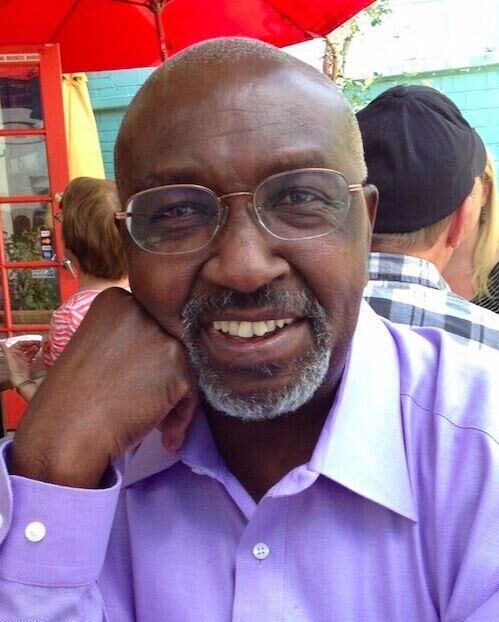
COLUMN: Now is not the time to stop giving | Pius Kamau
I recall the 1983 to 1985 Ethiopian famine that affected 8 million people and killed between half a million to a million people. It was such a dramatic and tragic loss of life, it propelled Bob Geldof and Midge Ure to organize a very successful benefits concert, Live Aid. The two-venue benefit concert and music based fundraising initiative was held 40 years ago, with the successful release of the charity single: “Do They Know it’s Christmas” in December 1984. Live Aid was held simultaneously at Wembley Stadium in London and John F. Kennedy Stadium in Philadelphia. Simultaneous concerts were also held in: the Soviet Union, Canada, Australia, and elsewhere. An estimated 2 billion people in 150 nations watched the Live Aid broadcast.
Looking back at the 1980s Ethiopian famine caused by local conflict, today’s world is much worse; it is beset by many more hungry people, in many more places around the globe where conflicts rage. I wish for a greater sense of caring and sharing of our nation’s bounty with our own hungry, as well as many poor of the world. Hunger, like the indifference that takes root in many human hearts, is a constant shadow for many around the world. As I fight crowded traffic lanes on our roads, many of them headed to our malls, I think of the giving potential of each one of us.
Talk of hunger at Christmas is a bit of a killjoy. It’s a time to give to loved ones; a time to show our love for them, we think. Sadly though, our post Black Friday buying spree often means an addition to much that we already have. How many pairs of socks, shoes, gloves does one need, I wonder. We often hoard stuff we no longer need or have no use for.
As the Live Aid concert of 40 years ago shows, there exists an alternative to our almost compulsive buying. We can charitably donate a great deal with what we use to buy gifts at this time of the year. Doing so gives us the satisfaction that what we gave was actually needed, and that it made other families’ lives more bearable.
Much of what we buy in our malls and from Amazon is plastic, wrapped in layers and layers of the same stuff. It is hard to calculate the weight of plastic delivered to our landfills, or when incinerated, the tonnage of carbon dioxide added to our air pollution. An alternative to plastic gifts might be to send a few dollars to: Heifer International, UNICEF or UTSS — Under the Same Sun, to protect kids with albinism — organizations our charitable, selfless neighbors support. Or support our homeless citizens where we live — with shelter, food, clothing and therapy for mental illness.

The habit of giving is a curious thing. Like the habit of logical thinking, the habit of exercising among others, can be grown. The more we give or donate the easier it gets. And don’t believe that those who consider giving to needy people have a character flaw.
Our leaders have guided the nation to ways of charitable giving; many have been shining examples of such leadership throughout our nation’s history. We must of course deal with the moment we find ourselves living in; as hard as I try not to think of the current administration’s regression into uncharitable behavior, I can’t help but consider the harm done by Trump’s refusal to send food American farmers had earmarked for countless hungry mouths across the world.
2025’s Ebeneezer Scrooge would be played by Donald Trump. It is a sad comparison; one that betrays this great nation’s history of benevolence and charitable giving. And why did the administration forbid sharing medicines and foods in USAID’s warehouses around the world? Hard to read misers’ hearts and minds.
As I lament the extravagance of some who have more than they will ever need, I also celebrate those who open their wallets, homes and hearts to a world that is so full of “want.” I am also reminded of, and I highly recommend, Tolstoy’s story: “How Much Land does a Man Need?” The answer would surprise you. You only need enough land to be buried in.
Alas, even our billionaires only need six feet of land, if that. If they are to be remembered as good people, they should remember to share with others while still among the living.
Pius Kamau, M.D., a retired general surgeon, is president of the Aurora-based Africa America Higher Education Partnerships; co-founder of the Africa Enterprise Group and an activist for minority students ‘STEM education. He is a National Public Radio commentator, a Huffington Post blogger, a past columnist for Denver dailies and is featured on the podcast, “Never Again.”

‘The canary in the democracy mine is local journalism’ | Vince Bzdek
Vince Bzdek
vince-bzdek@denvergazette.com
Updated 22 hours ago
Colorado could do a lot more to save newspapers – and democracy – in rural areas By Vince Bzdek As another new year and another legislative session dawn for Colorado, it’s a good time to ask what the absolute most...

Vince Bzdek
Reporter
Several changes coming to Colorado family medical leave program in 2026
Ed Sealover
ed-sealover@denvergazette.com
Updated 2 days ago
Colorado’s Family and Medical Leave Insurance program will take on two smaller, but still consequential, changes in 2026 — one less than was expected as recently as the middle of last week — of which employers should be aware. First,...

Ed Sealover
Reporter

GUEST COLUMN: Let’s be grateful for the gift of tax indexing
The Gazette
the-gazette@denvergazette.com
Updated 4 days ago
By Wil Armstrong Your biggest Christmas present of the year may be one you won’t even notice! The legendary 1981 Reagan tax cut — which ushered in a decade of prosperity — included a little-known provision called tax indexing. It...

The Gazette
Reporter

Aurora — a city still becoming | Michael A. Hancock
Michael Hancock
michael-hancock@gazette.com
Updated 4 days ago
Christmas is not a holiday for illusions. It does not ask us to pretend the world — or our city — is whole, harmonious, or complete. It asks something more complicated: that we acknowledge what is broken without surrendering to...

Michael Hancock
Reporter

COLUMN: The best Christmas gifts aren’t under the tree
Paul Batura
paul-batura@denvergazette.com
Updated 5 days ago
One of the most memorable and meaningful Christmas Eve’s for me was the year I was abandoned at the public library. It was Monday, December 24, 1979. I was seven. The Baldwin Public Library is in the middle of my...

Paul Batura
Reporter
COLUMN: Christmas time past and present | Joe Barrera
Joe Barrera
joe-barrera@denvergazette.com
Updated 5 days ago
In the nostalgia time that comes at the end of December every year I remember my past life and what that past means for me now. In this.town full of military veterans I think a lot about my Army life,...

Joe Barrera
Reporter
‘New to country’ kids helped pad DPS enrollment | Jimmy Sengenberger
Jimmy Sengenberger
jimmy-sengenberger@denvergazette.com
Updated 5 days ago
Earlier this year, Denver Public Schools tried to blame President Donald Trump for their enrollment crisis — and even made a federal case of it. They failed. But the district was right about one thing: enrollment is collapsing. They just...

Jimmy Sengenberger
Reporter

Eight exemplars to guide us into the new year | Eric Sondermann
Eric Sondermann
eric-sondermann@denvergazette.com
Updated 5 days ago
It started as a one-off in my first year of writing this regular column. To ring in the new year back in the eventful year of 2020, I offered a shoutout to eight Coloradans who served as models of how...

Eric Sondermann
Reporter

PERSPECTIVE: The high cost of Colorado’s ‘clean heat’
Jake Fogleman
jake-fogleman@gazette.com
Updated 6 days ago
By Jake Fogleman For most Coloradans, the Colorado Public Utilities Commission (PUC) is perhaps the most important state agency they’ve likely never heard of. In the energy space, where it oversees utilities with government-granted monopolies, the three-member commission is above...

Jake Fogleman
Reporter

Didn’t like the blackouts? Better get used to them | Jon Caldara
Jon Caldara
jon-caldara@denvergazette.com
Updated 1 week ago
I usually write this column at home. That was impossible this time, since I was one of the lucky 110,000 households without power for a full day during the recent windstorms. For those of you who shared this magical experience,...

Jon Caldara
Reporter