







Chair yoga: safe, simple and beneficial for older adults

Dear Savvy Senior,
I’ve been hearing a lot about chair yoga lately. My New Year’s resolution is to improve my health and get moving again, but I have trouble getting down on the floor. What can you tell me about this type of yoga? — Arthritic Abby
Dear Abby,
If you’re looking for a safe way to get active again but find traditional exercise routines difficult, chair yoga may be the perfect fit.
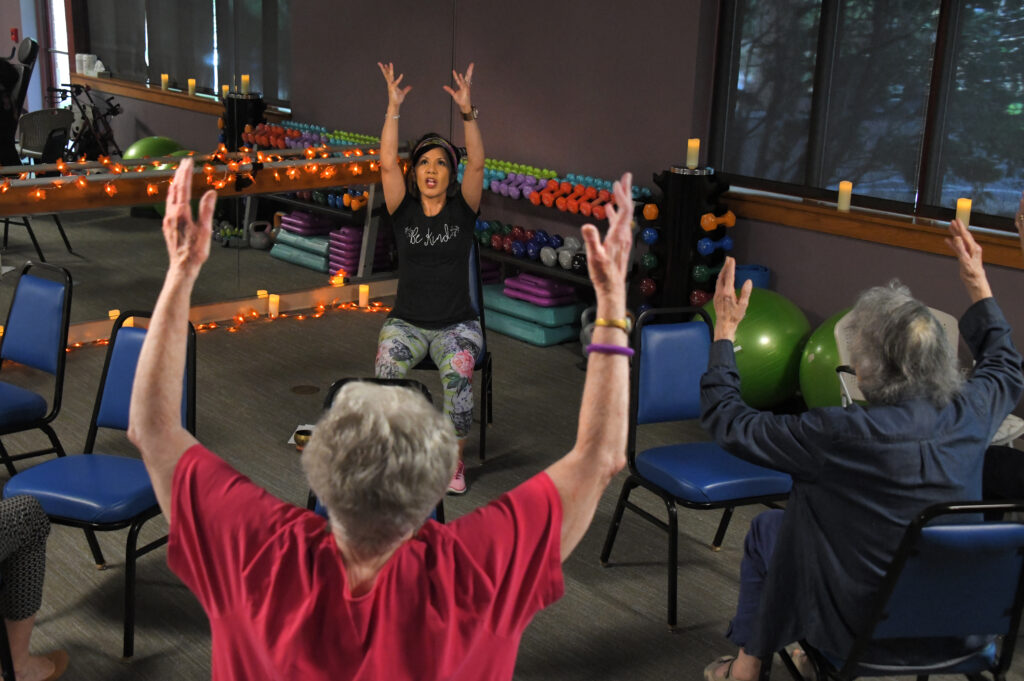
Chair yoga is a gentle form of yoga that’s done either sitting on a chair or using the chair for support while standing. It adapts traditional yoga poses so they’re accessible to people who may have limited mobility, balance issues, or difficulty getting down on the floor.
This practice helps improve flexibility, strength, and balance, boosts circulation and mobility, and promotes relaxation while reducing stress. This makes it an effective and safe way to stay active and support overall well-being at any age.
A typical chair yoga session begins with simple seated postures, such as gentle twists, stretches for the arms and legs, or movements that open the hips and shoulders. These exercises loosen stiff joints, improve posture, and increase flexibility in areas of the body that often become tight with age.
It can also include standing poses like modified lunges or gentle balance work, with the chair always nearby for stability. Breathing exercises are often incorporated throughout the practice, encouraging participants to slow down, deepen their breath, and cultivate a sense of calm. Sessions usually end with a short period of guided relaxation or meditation, leaving participants refreshed and grounded.
How to Get Started
To get started, you just need a sturdy chair without wheels and preferably without arms, and some comfortable clothes. The goal with chair yoga is to stretch, not cause pain. So go only as far as feels comfortable and don’t push beyond your limits.
If possible, consider joining a local chair yoga class. Many local senior centers, YMCAs, and community recreation centers offer chair yoga as part of their wellness or fitness programs. Some yoga studios and gyms may offer gentle yoga or chair yoga too. And if you’re enrolled in a Medicare Advantage plan, you may be able to access classes for free through SilverSneakers.com.
If attending an in-person class isn’t an option, you can also practice chair yoga at home. There are chair yoga apps and many videos you can access on YouTube to guide you through a routine.
Chair Exercise Options
As an alternative to chair yoga, there are chair exercises you can add to your routine that can help improve strength and balance, reduce joint pain and prevent falls.
To execute some of these exercises, you’ll need some resistance equipment like light dumbbells, water bottles, soup cans or resistance bands.
- Sit-to-stand: For this exercise, sit at the edge of the chair, feet hip-width apart. Stand up without using your hands, then slowly sit back down. Use hands lightly on the chair or use a walker or cane if needed for support.
- Seated marches: Sit tall and alternate lifting one knee at a time toward your chest.
- Seated bicep curls: With elbows tucked in, curl weights towards shoulders, then lower with control.
- Seated overhead press: Press weights overhead from shoulder height, then slowly lower.
- Seated leg extensions: Extend one leg straight out and hold for 2-3 seconds, then lower and repeat.
- Heel raises: Lift heels off the floor, pause, and lower back down.
For noticeable benefits, these exercises should be performed at least three days a week, doing three sets of 8 to12 repetitions.
Send your questions or comments to questions@savvysenior.org, or to Savvy Senior, P.O. Box 5443, Norman, OK 73070.



Is your diet causing UTIs? Here’s how it may be at fault
Tribune News Service
tribune-news-service@gazette.com
Updated 21 hours ago
Miriam FauziaThe Dallas Morning News UTIs can be painful, and they’re not something people like to talk about. But they happen often, affecting an estimated 60% of women and 20% of men in their lifetimes. While we might view these...

Tribune News Service
Reporter
Broomfield High School keeps 26 students out after confirmed measles case
Nicole C. Brambila nico.brambila@denvergazette.com
nico.brambila@denvergazette.com
Updated 7 hours ago
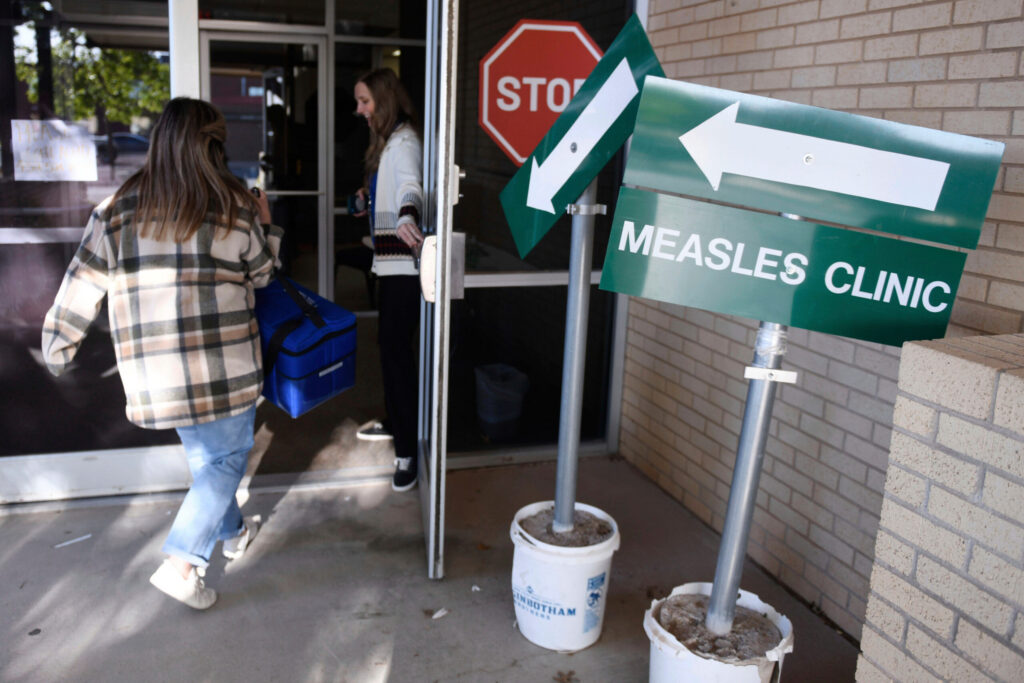
After state officials confirmed a measles case last week at Broomfield High School, 26 students are not allowed to attend class, the district said Monday. On Friday, school officials requested students who are not vaccinated against measles to not attend...


Unvaccinated child in Broomfield County tests positive for measles
Nicole C. Brambila nico.brambila@denvergazette.com
nico.brambila@denvergazette.com
Updated 2 days ago
Public health officials have confirmed a measles case in Boulder County. The child was not vaccinated against measles, mumps and rubella and had not traveled outside the state or had a known exposure, according to state health officials. The case...
As measles cases rise nationally, Colorado braces for imported infections
Nicole C. Brambila nico.brambila@denvergazette.com
nico.brambila@denvergazette.com
Updated 2 days ago
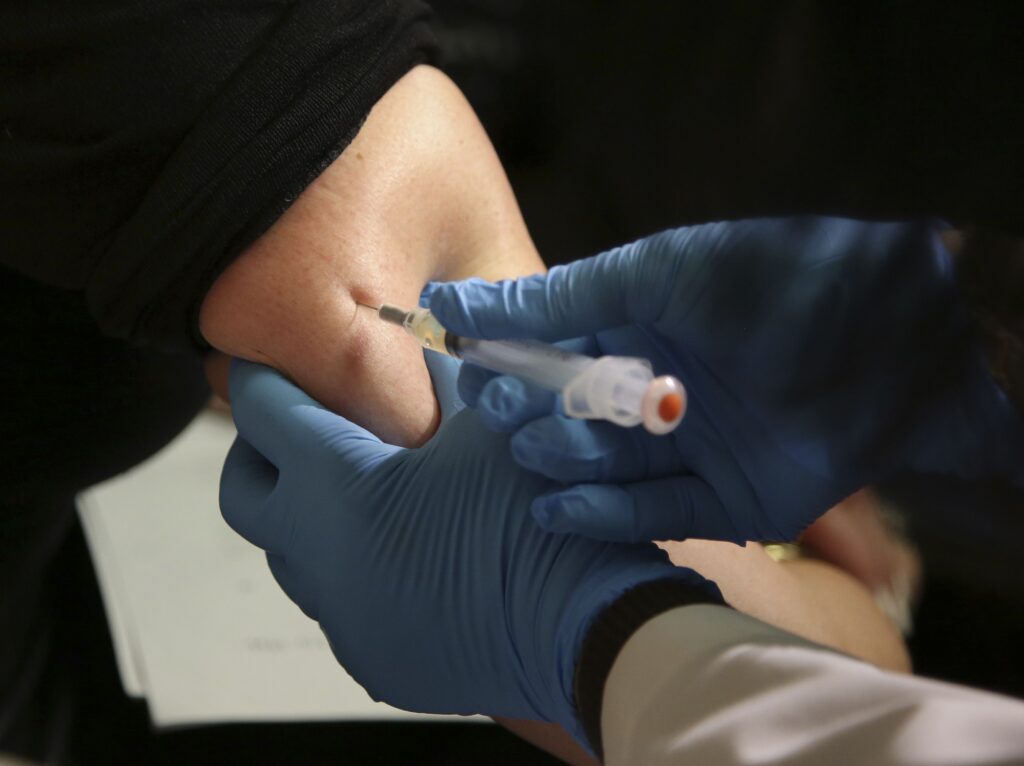
Colorado has had just one measles case this year, but that doesn’t mean Dr. Michelle Barron sleeps well at night. With spring break around the corner, Barron worries out-of-state travelers will bring more than their luggage to the Centennial State....

Ozempic, Wegovy list prices to be slashed by up to 50%
New York Daily News
new-york-daily-news@gazette.com
Updated 5 days ago
Weight loss drugmaker Novo Nordisk will cut the list prices of Ozempic and Wegovy by up to 50% beginning in 2027, the company announced on Tuesday. Wegovy currently carries a list price of $1,349 per month, while Ozempic is listed at $1,028 for a one-month...

New York Daily News
Reporter

Lawmakers propose raising excise taxes on alcohol, marijuana to fund mental health spending
Marissa Ventrelli
marissa-ventrelli@denvergazette.com
Updated 6 days ago
Colorado lawmakers hope to refer a measure to the November ballot that would increase excise taxes on alcohol and marijuana, with the revenue going toward mental health and civil commitment facilities around the state. House Bill 1301, sponsored by Rep....

Marissa Ventrelli
Reporter

Chevron faces $1.75 million proposed penalty for Galeton Well blowout
Scott Weiser
scott-weiser@denvergazette.com
Updated 6 days ago
The Colorado Energy and Carbon Management Commission proposed a $1.75 million penalty against Chevron for a well blowout last year at the Bishop A07-01 pad near Galeton. The cleanup could take four more years. The 2025 blowout sent contaminated fluids...

Scott Weiser
Reporter

Live Well: Fall back in love with your ticker this month
Jennifer Mulson
jennifer-mulson@denvergazette.com
Updated 1 week ago
Well, well, well, you thought you were going to get away without me mentioning your heart health this month, didn’t you? I don’t mean to be a downer, but the stats are sobering. According to the Centers for Disease Control...

Jennifer Mulson
Reporter

Colorado Medicaid probe uncovers millions of dollars in alleged transport fraud ring
Nicole C. Brambila nico.brambila@denvergazette.com
nico.brambila@denvergazette.com
Updated 1 week ago
Colorado Medicaid officials detected $25 million in abnormal billing over just four months two years ago — a surge that prompted a new state law and the suspension of dozens of providers in what authorities now describe as an organized...
Audit finds Caring for Denver Foundation misused taxpayer funds
Michael Braithwaite
michael.braithwaite@gazette.com
Updated 2 weeks ago
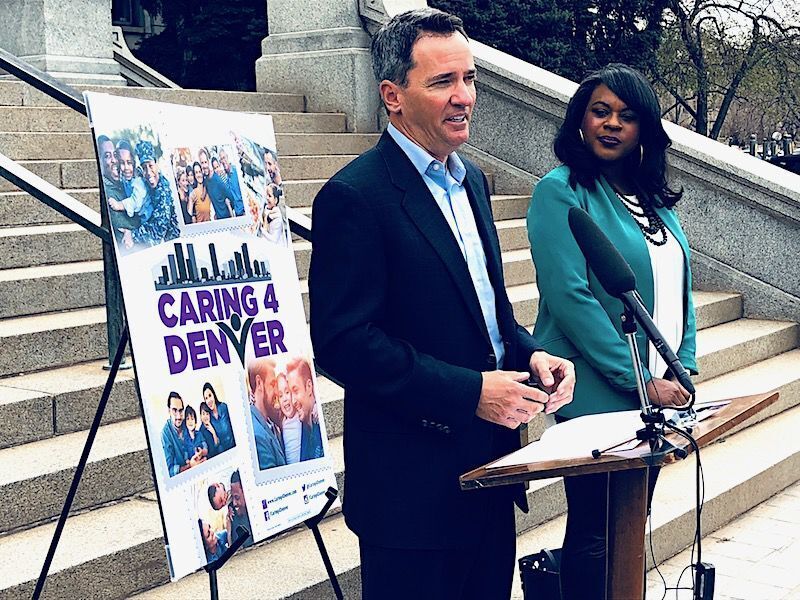
An audit of a nonprofit contracted by Denver to manage a fund intended for social services found the organization misused taxpayer dollars. The Caring for Denver Foundation, under a contract by the Denver Department of Public Health and Environment (DDPHE),...

Michael Braithwaite
Reporter
PREV
PREVIOUS

What's the deal with ... banana water?
By Deborah VankinLos Angeles Times If a can of coconut water and a banana smoothie had a baby, it might be banana water. The latest plant-based hydration beverage on the market is being touted as “the peel good beverage” that offers “a bunch of nutrients.” And it’s drumming up attention on social media. “Boyfriend says […]

Overdose deaths in Denver are climbing again, topping 2024 numbers
DENVER — The number of people overdosing and dying in Denver is up compared to last year. Now, advocates say something needs to change. After another year of hundreds of people dying of overdoses, those on the front lines are worn out. “It’s a lot. And you kind of get numb to it a little […]