







Frozen funds, vetoes and lawsuits: Why Colorado says it’s in Trump’s crosshairs


Colorado Democrats have accused President Donald Trump of deliberately targeting their state, arguing his administration is using federal powers to punish it for its policies and resistance.
But whether Colorado is being singled out — and why — depends largely on who is asked.
Since returning to office, Trump has openly criticized Democratic-led states, at times withholding federal funding or taking other punitive actions. In that regard, Colorado is not alone.
The president has justified those decisions by pointing to crime rates, immigration policies and what he describes as a lack of cooperation from blue-state leaders, as he began to pursue his agenda, many of which he had promised during the campaign.
There is no love lost between Colorado and Trump. The president has criticized the state’s mail-in voting system, questioned its immigration policies, and most recently attacked state leaders — including Gov. Jared Polis — for refusing to negotiate the release of former Mesa County Clerk Tina Peters from state prison, a dispute that has further escalated tensions between Colorado and the White House.
In fact, Colorado has drawn Trump’s ire, even before he won the presidency for the second time. Notably, the activities of Tren de Aragua, a Venezuelan gang that gained a foothold in metro Denver, became a focal point of his campaign. He promised to root out the gang, later launching “Operation Aurora,” named after Colorado’s third largest city by population, where TdA at one point controlled several apartment complexes.
That’s not to mention the legal attempt to kick him off the presidential ballot, which originated in Colorado and went all the way to the U.S. Supreme Court. Had that lawsuit succeeded, it would have heralded the end of his campaign to come back to the White House.
Some argued the tension is partly political.
U.S. Rep. Lauren Boebert has suggested that recent actions by Trump — including vetoing bipartisan legislation benefiting Colorado — may be tied to her vote with Democrats and some Republicans to release files related to convicted sex offender Jeffrey Epstein.
Others said it’s rooted in policy — a resistant state has gone into overdrive in suing Trump over his agenda to “unleash” American energy, crack down on illegal immigration, halt “diversity, equity and inclusion” and root out fraud and bloat in the federal government.
Colorado Attorney General Phil Weiser, joined by other Democratic leaders like U.S. Rep. Brittney Pettersen, insisted there is little doubt the state is being targeted more aggressively than other blue states, including Oregon, New York and California — a claim they said is backed by a growing list of lost funding, lawsuits and federal actions aimed at Colorado.
Still, much of that tension in Colorado is occurring in the legal front and over funding, unlike in Minnesota, Illinois and other parts of the country, where the illegal immigration crackdown, for example, has translated into the deployment of large federal forces and the National Guard.

Colorado losses — and costs — stack up
Not long after Trump was sworn into his second non-consecutive term in early 2025, the administration announced it would move the U.S. Space Command headquarters from Colorado to Alabama. Critics, including members of the Republican delegation here, called the move reckless for national security and expressed worries over what the change would do to the economy in Colorado Springs and the state.
Just as prominently, Trump has withheld funding for a variety of programs – from food benefits to road and water projects – something the administration has done to many blue states.
Those decisions have had ramifications for Colorado’s budget, according to state leaders.
In response, Weiser, who is running for Colorado governor, has filed 50 lawsuits against the Trump administration since the president took office in January last year.
On Jan. 8, Weiser filed an amended lawsuit to include measures taken by the Trump administration against the state in December and January. Many of those lawsuits have succeeded at the lower court levels and resulted in restoring funds, though the litigation is far from over.
Weiser said that in Trump’s first term, he filed only 11 lawsuits.
The scores of lawsuit he has filed this time around have so far cost Colorado more than $600,000 in 2025.
In an interview, Weiser said the numbers are alarming because Trump still has three years left in a four-year term.
Weiser maintained that the cost is worth it, since the lawsuits are meant to recoup billions in federal dollars earmarked for projects throughout Colorado.
In 2025, the Democratic-led Colorado legislature backed Weiser’s litigation campaign, giving Polis administration the authority to spend more than $1 million to fund legal battles against the Trump administration.
The feud between Colorado and the Trump administration escalated in December, when the federal government began efforts to release Tina Peters.
Peters is the former clerk and recorder of Mesa County who was convicted of criminal charges related to a security breach at her election office. She was sentenced to nine years in prison, which Trump and GOP officials like Boebert have called excessive. Even Polis suggested that Peters’ sentence is “harsh.”
Trump pardoned Peters in December, but because she was convicted on state charges, legal scholars and state leaders said he does not have the authority to secure her official release.
“God Bless Tina Peters, who is now, for two years out of nine, sitting in a Colorado Maximum Security Prison, at the age of 73, and sick, for the ‘crime’ of trying to stop the massive voter fraud that goes on in her State ( where people are leaving in record numbers!)” Trump said in several posts on Truth Social. “Hard to wish her a Happy New Year, but to the Scumbag Governor, and the disgusting ‘Republican’ (RINO!) DA, who did this to her (nothing happens to the Dems and their phony Mail In Ballot System that makes it impossible for a Republican to win an otherwise very winnable State!), I wish them only the worst.”
“May they rot in Hell. FREE TINA PETTERS!” the president added.
According to the governor’s office, since Dec. 5, Colorado has fought the federal government to save more than $868 million in funds.
Since the Peters’ feud escalated, the governor’s office said the Trump administration has taken the following actions against Colorado:
• Canceled $109 million in transportation funding, which will impact the following programs:
$66.4M for CDOT’s consolidated rail infrastructure and safety improvements program
$8.34M for CDOT’s EV Charger Reliability and Accessibility Accelerator Program
$10.7M for Ft. Collins’s bus rapid transit initiative
$11.7M for Fort Collins electric vehicle fleet + charging stations
$11.7M for CSU Pueblo’s research into hydrogen and natural gas power for rail
• Announced that it would dismantle the National Center for Atmospheric Research in Boulder
• Denied two major disaster declaration requests for the Elk and Lee fires and the Flooding in Western Colorado.
• The Department of Energy announced on X that it is cancelling $615 million in funding for renewable energy and climate efforts. The governor’s office said, besides the social media post, the state has not yet been officially notified.
• Trump vetoed Boebert’s Arkansas Conduit bill aimed at finishing a pipeline to supply clean drinking water to 50,000 Colorado residents. A veto override proposal fizzled in Congress a few days ago.
• The Department of Energy issued an order forcing the coal plant in Craig to remain open
According to the Attorney General’s Office, Trump’s attacks on Colorado went into “overdrive” in December. Besides the list provided by the governor’s office, Weiser added that the U.S. Department of Agriculture ordered Colorado to recertify eligibility and conduct in-person interviews for more than 100,000 households receiving SNAP food assistance.
Weiser’s office said the Trump administration threatened that the failure to comply could result in Colorado losing SNAP program funding.
Undergirding the federal government’s action is its campaign to “eliminate bureaucratic duplication and inefficiency while enhancing the government’s ability to detect overpayments and fraud.” Colorado’s food stamp payment error rate last year stood at 9.97%, higher than in neighboring Utah and Wyoming, which hovered at less than 6%, though not as large as Alaska’s 24.66% or New Mexico’s 14.61%.
Lauren Boebert spearheads unsuccessful veto override
When the Trump administration announced that it would push to dismantle the National Center for Atmospheric Research in Boulder, calling it a source for “climate alarmism,” Boebert said she supports the plan, agreeing that it shouldn’t be closed completely, but parts of it should be dismantled.
However, Boebert was less pleased with Trump when he used the first veto of his second term to quash her bill to fund the Arkansas Conduit, which would complete a pipeline aimed at providing clean drinking water for 50,000 rural Colorado residents.
Boebert speculated on whether it was her vote on the Epstein files or the Peters’ fallout that led to the veto. She spearheaded an effort to override the president’s veto during a House vote on Jan. 8, but the attempt failed. Only 35 Republicans joined Democrats in supporting the override, far short of the 75 Republican votes needed.
In his veto message, Trump said the project was not built after its approval in 1962 because it was economically “unviable.”
He said H.R. 131 “would continue the failed policies of the past by forcing Federal taxpayers to bear even more of the massive costs of a local water project — a local water project that, as initially conceived, was supposed to be paid for by the localities using it.”
This week, the Trump administration also announced it would freeze $10 billion in federal funds for child care centers in four states, including Colorado. The order came after reports of widespread fraud in Minnesota, which has been under the spotlight for years for Medicaid fraud, including a massive $300 million pandemic fraud case involving the nonprofit Feeding Our Future. Numerous other fraud cases are being investigated, including new allegations focused on child care centers.
It remains unclear why Colorado was included in the freeze, but the state receives $135.6 million in block grant funding annually, along with an additional $16.1 million in contingency funding. In December, more than 14,000 Colorado families received assistance through these programs.
A federal judge ruled on Friday that the administration cannot block federal money for child care subsidies and other programs aimed at supporting low-income families with children from flowing to five Democratic-led states for now.
When asked if Colorado has widespread fraud in child care centers, Weiser, who is running in the Democratic primary for governor, rejected the idea.
“There’s no basis to withhold this money. There are no allegations that I have heard of that involve any form of fraud,” Weiser said. “And the action here is a mean-spirited, harmful, and reckless action. It’s lacking in decency, lacking concern for kids. That’s what we’re talking about here. We’re talking about kids. We’re talking about their ability to live and to eat.”
Weiser said he will challenge the funding freeze in another lawsuit.
Pettersen, the congresswoman, told Colorado Politics it’s yet another example of Trump targeting Colorado, calling the latest action “devastating.”
“There is no evidence of widespread fraud,” Pettersen said. “And this is not how you should go about actually ensuring that there’s a transparent process, which we do in Colorado, and will continue to do. But ripping the rug out from all these families and using our kids as political pawns is cruel. This is not about anything other than the fact that Governor Polis was unwilling to bend the knee and transfer Tina Peters to a federal prison, so he is doing everything in his power to go after Coloradans, and the people that are going to get hurt the most are Colorado families.”
While Democrats frequently fault the president’s behavior, they have not been cooperative since Trump took office.
Colorado’s Democratic leaders have consistently criticized the Trump administration through social media, media appearances and town halls, and they have at times called for defiance of presidential orders.
In a video, for example, U.S. Rep. Jason Crow told military and intelligence personnel to disobey orders that they allege are “unlawful” and “unconstitutional.” None of the Democrats who appeared in the video, all veterans who served in the U.S. military, specified what “unlawful” or “unconstitutional” meant.
Of all Democrats, Polis has been the most willing to laud the president’s actions, with the latest nod of approval coming when Trump authorized the U.S. military to forcefully take Venezuelan President Nicolas Maduro. In the military operation, Maduro and his wife were captured on Jan. 3 and taken to New York, where they face criminal charges.
After applauding the capture, Polis told Colorado Politics, “Look, I’m happy when Trump does something good. I say great. The president did something good. When he does something bad, I criticize it.”
“I’m never afraid to express my opinion. I was thrilled with the potential reclassification of marijuana, and I spoke on behalf of so many Coloradans from Venezuela, including some that work on our staff that are thrilled that the tyrant has finally fallen,” Polis said. “And while there’s some trepidation about what comes next, there’s also a great hopefulness.”
When asked if Colorado should find a way to compromise and work with Trump, Weiser and Pettersen said it’s highly unlikely.
“So, we always should be trying to find ways that we can work together,” Pettersen said. “I’ve had two laws signed into law by Trump last year, for example. So, you know, always work to find ways to work across the aisle, but that’s not what he is. We don’t have a president who does that. He says, ‘It’s my way or you’re going to regret it’. And there is no statesmanship. There is no dedication to public service in this country. This is about Trump and has always been about Trump.”
As for the Tina Peters case, Weiser said the state cannot bend the knee to a “bully.”
“You do not give in to intimidation. My commitment is to defend the principles and to fight like hell for them against an administration whose bullying tactics cannot be allowed to succeed,” Weiser said.
Not all Trump actions have necessarily been adversarial to Colorado.
In December, through an executive order, Trump ordered the reclassification of marijuana, which means it will be listed as a less dangerous drug. Colorado legalized recreational marijuana years ago, and the industry, backed by Democrats, has long sought the drug’s reclassification. Others have lamented Trump’s decision.
A few days ago, Colorado leaders learned that the state would get $200 million each year for the next five years for rural health funding.
Away from the political fights, the president and his allies have pointed to broad-based changes they said would benefit Americans in Colorado and elsewhere in the country. Notably, they cited a large tax cut coming to working-class Americans following the passage of the federal budget last July. That budget, they said, means $10,000 or more in annual take-home pay for families, on top of no taxes on tips, overtime and Social Security.
Others have pointed to increases in child tax credits, and, more recently, major dips in the price of gas.
And the benefits are both broad and specific, they said. Last month, the Trump administration’s energy agency ordered one of three generating units at a Colorado power plant to remain available for operation amid an impending shutdown of the station and its supplying coal mines.
Democrats and environmentalists criticized the move, saying it would pass tens of millions of dollars in costs to Colorado ratepayers.
Craig Mayor Chris Nichols welcomed the order.
“It’s great for the community to keep those jobs active, even for a short period,” Nichols told Steamboat Pilot & Today.
The Associated Press contributed to this article.


Colorado lawmakers react along partisan lines to Donald Trump’s State of the Union address
Ernest Luning
ernest-luning@denvergazette.com
Updated 3 days ago
President Donald Trump could have been describing two different countries in Tuesday’s State of the Union address — one entering a “Golden Age” and the other enduring daily stress under a “lawless” regime — at least as far as the...

Ernest Luning
Reporter

Trump pulls endorsement from Jeff Hurd over tariffs, backs Colorado Republican’s primary challenger
Ernest Luning
ernest-luning@denvergazette.com
Updated 5 days ago
President Donald Trump on Saturday rescinded his endorsement of U.S. Rep. Jeff Hurd and threw his support behind the Colorado Republican’s primary challenger, Hope Scheppelman, citing the first-term incumbent’s “lack of support” for the administration’s tariff policy. The move comes...
Ernest Luning
Reporter
In a meeting Colorado GOP chair Brita Horn calls ‘illegal,’ Republicans vote to demand her resignation
Ernest Luning
ernest-luning@denvergazette.com
Updated 1 week ago
Roughly half the membership of the Colorado Republican Party’s state central committee on Saturday voted overwhelmingly to approve a resolution expressing “no confidence” in state GOP Chairman Brita Horn’s leadership and calling for her immediate resignation in an online meeting...
Ernest Luning
Reporter

Democrats Michael Bennet, Phil Weiser make their cases to be Colorado’s next governor ahead of primary
Ernest Luning
ernest-luning@denvergazette.com
Updated 5 days ago
Nearly eight months before ballots will be counted in Colorado’s race for the its open gubernatorial seat, voters are lining up behind two of the state’s leading Democrats, who are facing off in a primary that will likely determine which...
Ernest Luning
Reporter
Colorado GOP officers set competing meetings to hold ‘no-confidence’ votes on state chair Brita Horn
Ernest Luning
ernest-luning@denvergazette.com
Updated 1 week ago
Once again, members of the Colorado Republican Party’s central committee have scheduled separate, competing meetings to consider whether the state GOP’s governing body supports its chair, but this time neither meeting will be held under a bridge. State GOP Chair...
Ernest Luning
Reporter

Hickenlooper endorsed by Planned Parenthood Action, environmental group in Colorado’s U.S. Senate race
Ernest Luning
ernest-luning@denvergazette.com
Updated 1 week ago
A pair of progressive national groups that advocate for abortion rights and fighting climate change have endorsed U.S. Sen. John Hickenlooper’s bid for reelection, with both calling the Colorado Democrat a proven fighter for their causes. Planned Parenthood Action Fund...
Ernest Luning
Reporter

Democrats want to decouple Colorado from federal tax breaks
Marissa Ventrelli
marissa-ventrelli@denvergazette.com
Updated 1 week ago
Democratic members of Colorado’s House and Senate on Tuesday announced the introduction of a slew of bills that would reduce corporate tax deductions and sever Colorado’s tax regime from recent federal changes to the tax code. The federal tax changes...

Marissa Ventrelli
Reporter
National redistricting fight reaches Colorado with ballot measures targeting GOP-held congressional districts
Marianne Goodland
marianne-goodland@denvergazette.com
Updated 1 week ago
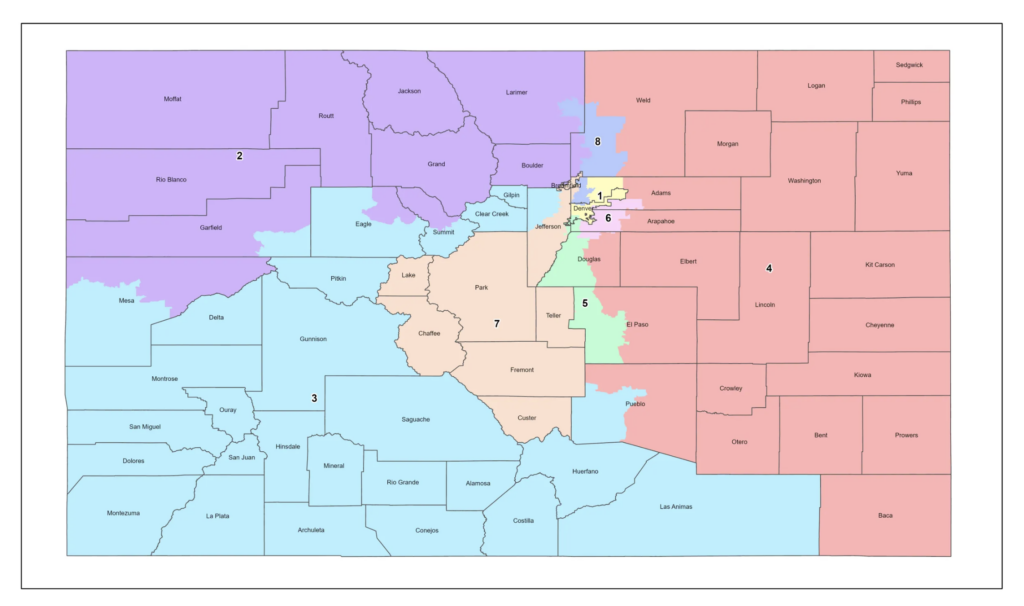
A Democratic-aligned group backed by the House Majority PAC filed four versions of a 2026 ballot measure Tuesday that would temporarily suspend Colorado’s independent congressional redistricting commission and redraw the state’s map in an effort to flip three Republican-held U.S....

Marianne Goodland
Reporter
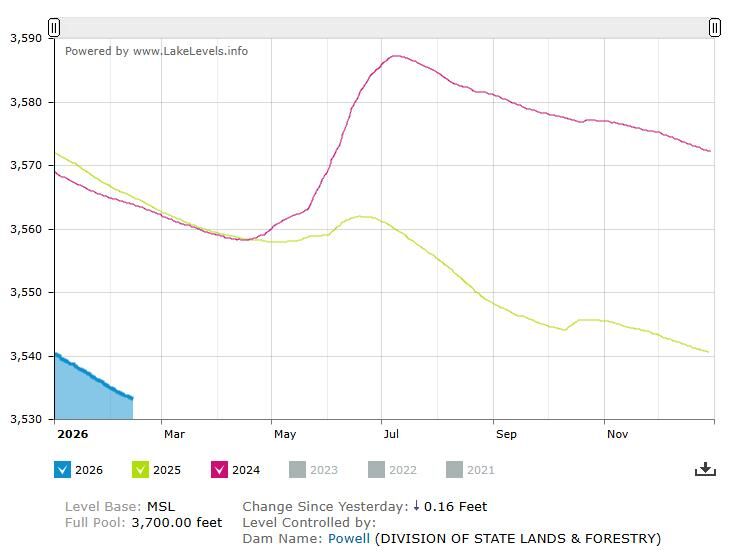
With the deadline missed, Bureau of Reclamation plans to move forward on Colorado River operations
Marianne Goodland
marianne-goodland@denvergazette.com
Updated 2 weeks ago
Feb. 14 was no Valentine for the seven states of the Colorado River, which failed to come up with an agreement by that deadline on how to manage the dwindling water resource beginning Oct. 1. The U.S. Department of the...
Marianne Goodland
Reporter
Ken Salazar donates archives to Borderlands project, hoping history helps unify country
Vince Bzdek
vince-bzdek@denvergazette.com
Updated 2 weeks ago
About the same time the Pilgrims were setting up shop 400 years ago in Plymouth, Ken Salazar’s family was scratching out a toehold in what is now New Mexico, helping to establish the city of Santa Fe. The Salazars had...

Vince Bzdek
Reporter
PREV
PREVIOUS

Man found shot dead near Westminster's Wolff Run Park, police seeking help
Police are asking Westminster residents for help after they found a man shot dead in a parking lot near Wolff Run Park Saturday morning. Officers responding to a welfare check in the 4700 block of West 76th Avenue around 7 a.m. Saturday found a man in his late 20s lying face down in a parking […]

Polis, Johnston help unveil mural to the West to kick off Stock Show
The 120th iteration of the National Western Stock Show kicked off Saturday morning by debuting a mural paying tribute to the American West. Unveiled in the second floor of the newly-opened Sue Anschutz-Rodgers Livestock Center, the mural, created by local artist Thomas “Detour” Evans, depicts Colorado’s geography, heritage and agriculture through a mixture of spray […]